Foresight needs more than just scenarios and analysis; it needs images, stories, metaphors, and emotional access to collective imagination. How can storytelling help people navigate complexity, uncertainty, and change? Through the work of internationally awarded filmmaker, story artist, and teacher, Alice Manieri, we explore imagination as a practical tool for foresight: a way to make abstract systems visible, transform knowledge into experience, and expand the cultural stories through which societies understand possible futures.
When did you first become interested in the relationship between stories and social change?
The first spark came from watching films by Japanese animator Hayao Miyazaki. Miyazaki movies are very imaginative, plus they are 2D animated. They don’t look like reality, and yet, they feel real. Films deeply touch us, shaking our emotion and questioning our perspective of the world. How is that possible? This is what sparked my journey as a storyteller.
How do you turn complex or abstract ideas into stories people can emotionally understand?
Art can be very abstract, but how do you use it to communicate abstract ideas? As an artist, I look for answers everywhere I can find them. So, since here the core is to understand how brains get connected to each other, I began to look into neuroscience.
What interested me most was how we create knowledge through our perception. I discovered that we learn by moving and physically perceiving the world. In a world that is constantly changing, what matters is to be able to catch these changes and adapt to them. So, how can movies give us a similar sense of perception when we are sitting in a chair and looking at a screen? It all comes down to mirror neurons. When we watch someone else perform an action, our brains naturally simulate that action, allowing us to experience it almost as if we were prforming it ourselves, even in movies. If characters are believable, the audience vividly experences the imaginative world through their actions. Once people can perceive an idea through action, they can understand it emotionally and rationally.
What did the process of making the microfilm “S4S” teach you about storytelling, systems, and making complexity more accessible?
In the process of making S4S*, the challenge was translating something highly abstract, the scientific method, into a perceivable story.
The key was finding actions that could embody the knowledge we wanted to communicate. It had to be very short, so everything needed to be synthesised into simple but meaningful experiences that audiences could immediately understand.
What I found interesting was the similarity between science and art. Both are ways of discovering the world. Scientists and artists might use different tools, but the underlying curiosity is remarkably similar. Working on S4S made me realise that storytelling and science are anything but opposing forces.
*S4S is a 2D animated microfilm acting as a brand and corporate piece to communicate and inspire the values and mission of School4SID (School for Science in Decision Processes). The film was screened at the European Parliament and presented at numerous international film festivals, where it received multiple awards. Watch the video here.
What can foresight practitioners learn from filmmakers and story artists?
The brain does not like to make leaps. You cannot simply present someone with a future vision and expect them to understand or believe it immediately. You need to start from a common ground; creating a bridge to connect your audience’s present reality to somewhere new. Stories are those bridges.
For foresight practitioners, this means that communication is not just about presenting conclusions. If you have gone through a long process of exploration and arrived somewhere radically different, you cannot simply hand over the answer. You often need to retrace the journey and invite people to travel it with you. Storytelling creates the chain of meaning that allows people to move from their current worldview toward a new one.
How do stories shape the futures a society can imagine?
I think our current knowledge, and therefore what we perceive as present reality, is already a story. Objects, ideas, and institutions only have meaning because of the relationships and actions connected to them. Pure data means nothing. Meaning emerges through connections. The stories we share collectively become the reality we inhabit.
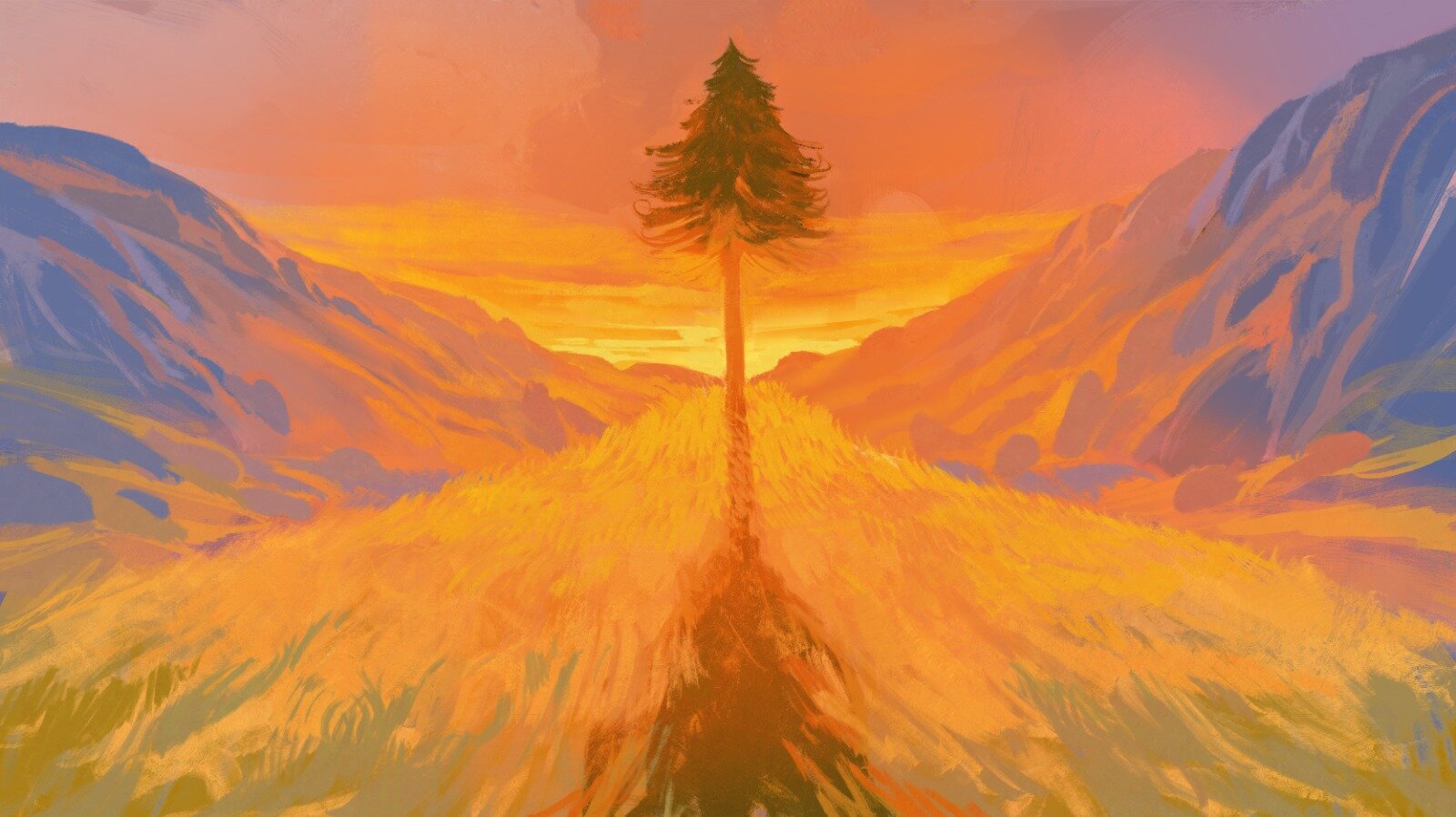
That means imagination is not only about the future, but it shapes the present every day. The boundaries of what we believe is possible determine what futures we can imagine. When those boundaries shift, new futures become visible. Something I am exploring now in a new project I am working on, “A Tree”, is a collection of stories and imagined futures based on a common question: what can we learn from trees?
What kinds of cultural narratives prevent people from imagining change?
The most dangerous narrative is the belief that nothing can change. When people nourish the conviction that what they know today is the absolute truth, the brain becomes trapped in a loop that prevents imagination from shifting the world we created. It is also a very powerful tool for propaganda. Imprisoning communities without doing anything other than telling a story. To imagine the future, we have to accept that our current understanding may be incomplete. That process is uncomfortable, but it is essential.
Can storytelling help people become more comfortable with uncertainty?
The stories we tell each other exist because they revolve around a conflict, which in itself is an element of uncertainty. Without this element of uncertainty, there is no story, it is just pure information. Every meaningful narrative places a character in an unknown situation of crisis that they need to resolve. If you think about the most well-known stories, they all talk about a hero going through a journey that is very painful. The outcome is uncertain until they reach the end, which may not necessarily be what the hero was expecting, but it becomes a newly acquired form of knowledge. In that sense, stories are already tools for exploring uncertainty and helping us live with it.
You describe your work as bringing clarity. What kind of clarity can art and storytelling offer in uncertain times?
For me, clarity is not about having all the answers. It’s about “removing the noise”. When we look at complex systems, we often can’t grasp how they function as a whole. Storytelling through art can help by highlighting specific elements without losing the perception of a bigger world. I don’t pretend to understand everything, but storytelling can create an environment where people see what really matters.
In uncertain times, that means helping the audience to ask the right questions and finding new paths. Art can’t eliminate uncertainty, but it can help us navigate it by making certain patterns, relationships, and possibilities visible. Therefore, we must remember that every storyteller has a perspective, and that perspective inevitably shapes the journey.
How do you avoid reducing complex topics into overly simple messages?
I deliberately place myself in uncomfortable situations. I try to remain open to doubt and to the possibility that I might be wrong. Finding a common ground is essential to connect with the audience. In this regard, familiar narrative structures and character archetypes can offer a useful starting point, creating a sense of comfort before gradually revealing deeper layers of complexity and raising new questions. Complexity survives when we remain willing to question our first assumptions.
What advice would you give to people trying to tell better stories about the future?
Put yourself in uncertain situations and learn to make peace with them. Beginnings are always difficult. Every creative process starts with discomfort, fear, and doubt. But once you accept uncertainty, it becomes a source of inspiration rather than anxiety. We all live in cultural stories that feel normal simply because we are immersed in them. The first step toward imagining a different future is to ask: why does this feel normal? You don’t need to be an artist to do that. You only need the willingness to challenge what everyone else takes for granted. That is often where imagination begins. Lastly, don’t fall into the belief that your brain is inflexible. Nature shaped us to be adaptable, which means we are capable of change. We simply need to begin by moving through that painful moment of uncertainty. In time, it becomes nothing more than a memory.