

The DLR Project Management Agency (DLR-PT) coordinated a study on digital citizen participation on behalf of the European Parliament's STOA Panel. Together with IQIB and DemocracyX, 94 digital participation tools were analysed and concrete recommendations for action were developed for the EU policy cycle.
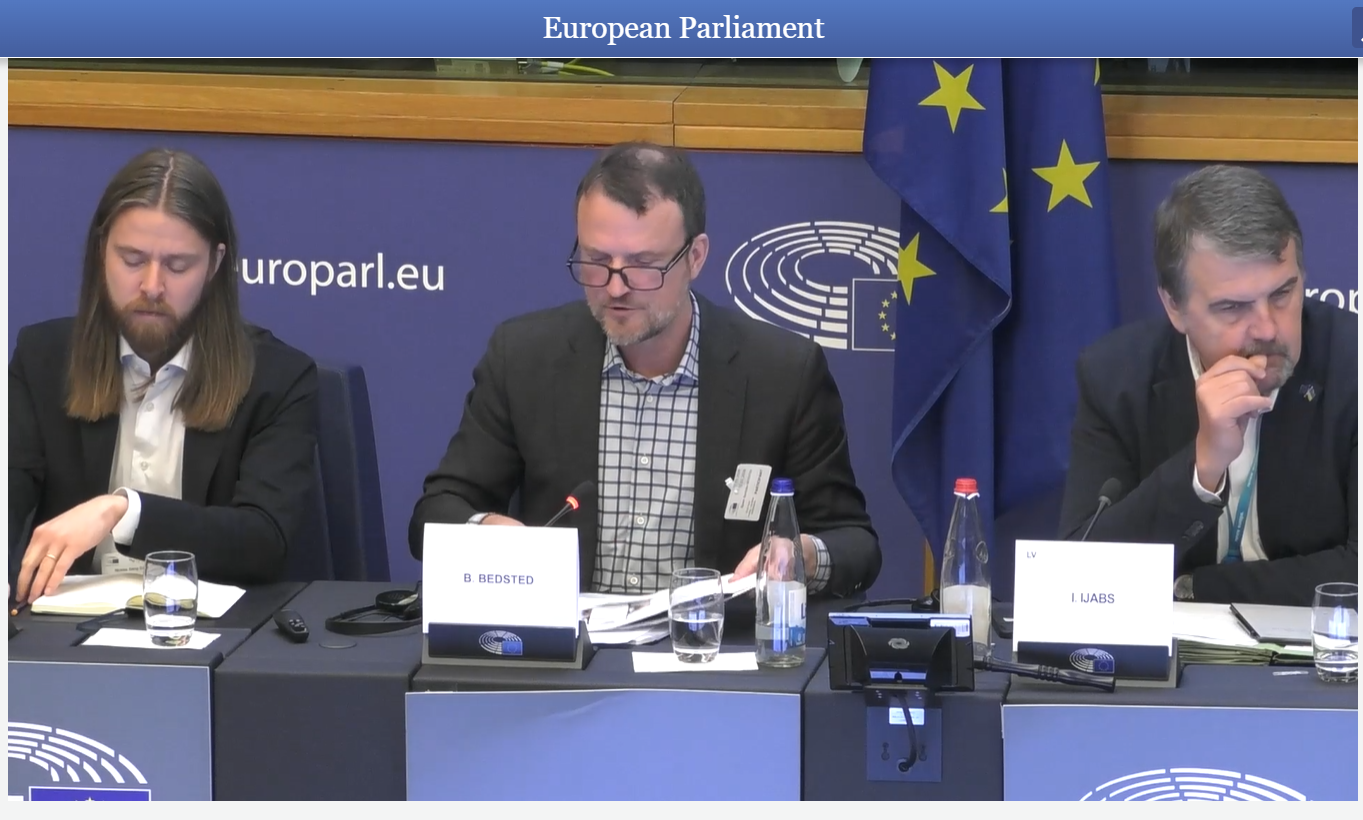
The decline in political participation, coupled with the widespread perception among citizens that they are distant from the decision-making processes in Brussels, poses a significant challenge to EU institutions. Could digital tools and Artificial Intelligence help bridge the gap between citizens and European politics? This question was addressed in a study coordinated by the DLR Project Management Agency and co-authored by IQIB and DemocracyX. Completed in January 2026, the study was presented to the European Parliament's STOA Panel – the Panel for the Future of Science and Technology – on 12 March.
94 digital tools and 11 case studies compared
In order to obtain a comprehensive picture of the available participation landscape, the research team first analysed 94 digital participation tools from Europe and around the world using a three-phase approach, categorising them according to their functionalities. Building on this, eleven representative use cases were examined in detail, including the European Citizens' Initiative, the Conference on the Future of Europe (CoFoE) with the Decidim platform, and local participation processes in Austria, Denmark, and Canada. In a third phase, European experts validated the preliminary results in a foresight workshop and discussed possible development scenarios for the use of AI in democratic participation processes.
AI in citizen participation: potential with clear limits
The use of AI in digital participation tools is still in its infancy. The study shows that, so far, AI has primarily been used as a background technology, for example for the automatic transcription of deliberation processes, clustering contributions, and machine translation. The potential for multilingual participation processes at the EU level is promising. At the same time, however, the study highlights significant risks. A lack of transparency due to 'black box effects', algorithmic bias, and inadequate data protection could undermine the democratic legitimacy of participation processes. AI should therefore always be used as an accountable, supportive tool, with clearly assigned human responsibility at the institutional level.
A key finding of the study is that the success of digital participation tools depends more on the political and institutional framework conditions than on the technology itself. For citizen participation to be democratically effective, a clear mandate, transparent procedures and visible feedback are required: citizens must be able to understand how their contributions have been incorporated into political decisions. Without this feedback mechanism, digital participation risks being perceived as purely symbolic, which would further erode trust in EU institutions. The study recommends that the EU view digital citizen participation as a strategic building block for strengthening the democratic foundation of the Union, rather than as a technocratic tool.
