Loading...

    Mentions of

    sorted by publishing date

    Last Edited: 5 days ago

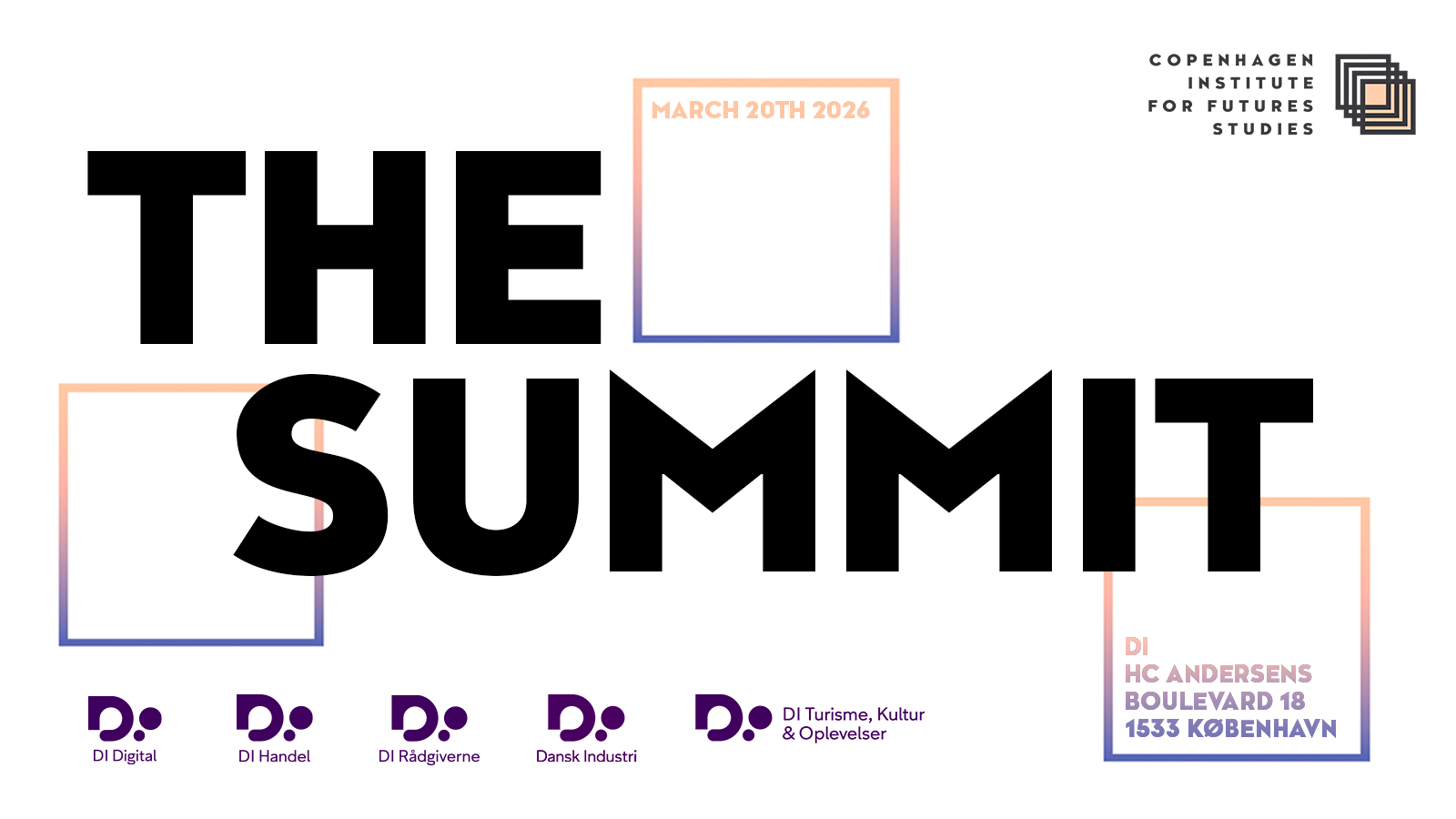
    The Summit 202620 March - 20 March 2026

    An annual gathering exploring the possible futures of emerging technologies. The Summit is a Nordic gathering for leaders, innovators, and forward-thinking organisations who want to explore the futures of emerging technologies and understand their profound impact on business, society, and organisational readiness. It serves as a meeting point for those who not only wish to follow developments in artificial intelligence, immersive experiences, and emerging technologies, but also want to shape how these forces influence the way we work, make decisions, and build future ecosystems. ‍ Hosted by the Confederation of Danish Industry (DI) and curated by the Copenhagen Institute for Futures Studies (CIFS), the conference focuses on foresight, technologies, preparedness, and futures-driven innovation. Through keynotes, panel discussions and focused dialogues, we examine both opportunity and risk, asking how innovation can be aligned with responsibility and long-term value creation. ‍ The Summit focuses on what lies ahead: Possible futures, strategic choices, and the readiness it takes to act responsibly as technologies evolve. It is not only about trends and tools, but about strategic foresight - identifying possible futures, and understanding the readiness it takes to act wisely and courageously as technologies continue to evolve.

    The 2026 edition takes place in Copenhagen on 20 March 2026 (09:00–18:00 CET) at H. C. Andersens Blvd. 18, 1553 København - Industriens Hus. Themes include the AI-mediated workplace, leadership in the future, emerging technologies (including AI agents, simulations and humanoids), the future consumer, retail in transformation, and the futures of foresight.

    The Summit is a Nordic gathering for leaders, innovators, and forward-thinking organisations exploring the futures of emerging technologies and their impact on business, society, and organisational readiness. Co-hosted by Danish Industry (DI) and curated by the Copenhagen Institute for Futures Studies (CIFS), the conference brings together keynotes, Nordic cases, and conversations on preparedness and responsible, meaningful action.

    The Summit 2026 – Industriens Hus, Copenhagen – exploring the possible futures of emerging technologies.

    Posted on: 23/02/2026
    Last Edited: a year ago

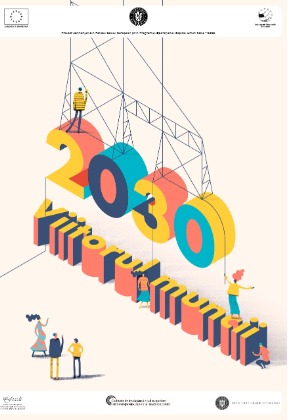
    The future of work in 2030March 2020

    An argument-based top of emerging professions

    There is a fascination with the future, as a repository of both opportunities and threats that affects all of us. Concern for what we call "the future of work" is part of this mosaic. Regardless of their geographical space, people think of their work as being, in varying doses, a source of material well-being, but also a component of their identity. Uncertainties about how will people work in the future – how will they earn income and build a purpose, a meaning through their work – is an important topic, and often a source of concern.
    What are we heading for? What kind of future is desirable? What is possible, respectively probable, from what we deem desirable? What can be done to get there? All these are legitimate questions that deserve our attention.
    In the context of recent waves of technological progress, the future of work is the subject of intensive controversy. Often in the public space there is an overwhelming emphasis on the impact of new technologies on work, neglecting other shaping forces relevant to labor market dynamics. Therefore, the purpose of this study is to open a wider conversation about the future of work on the 2030 horizon.

    The perspective used in this paper is a causal and hierarchical one: from drivers of change towards their impact on labor. Most studies on labor market developments start from a context modeled by several global megatrends. Following this logic, the second chapter describes the four main trends identified in literature: i) technological developments, especially automation; ii) globalization, especially cross-border flows and widening inequalities; iii) demographic changes, in particular the ageing population in the global North; iv) climate change, environmental degradation and the development of the green economy.
    Within these trends, ongoing or likely transformations have been identified that have or could have an impact on global labor market dynamics. The section describing each megatrend is accompanied by a box with what we call "signals of change" - contextualizing empirical data that serve as justifications/explanations of the phenomena described in that section. In the context of the global transformations we outline here, the fourth chapter presents a catalogue of emerging occupations, by which we mean both existing (highly dynamic) or incipient occupations and occupations that do not yet exist but are likely to exist in 2030 or beyond
    The third chapter was added later in the context of the Covid-19 pandemic and is a brief overview of the transformations in the global labor market – some already visible, others likely - due to this global crisis.

    ***

    The study was published in Romanian as part of the project POCU INTL - Quality in higher education: internationalization and databases for the development of Romanian higher education.

    Project webpage: pocu-intl.uefiscdi.ro

    Posted on: 09/12/2024