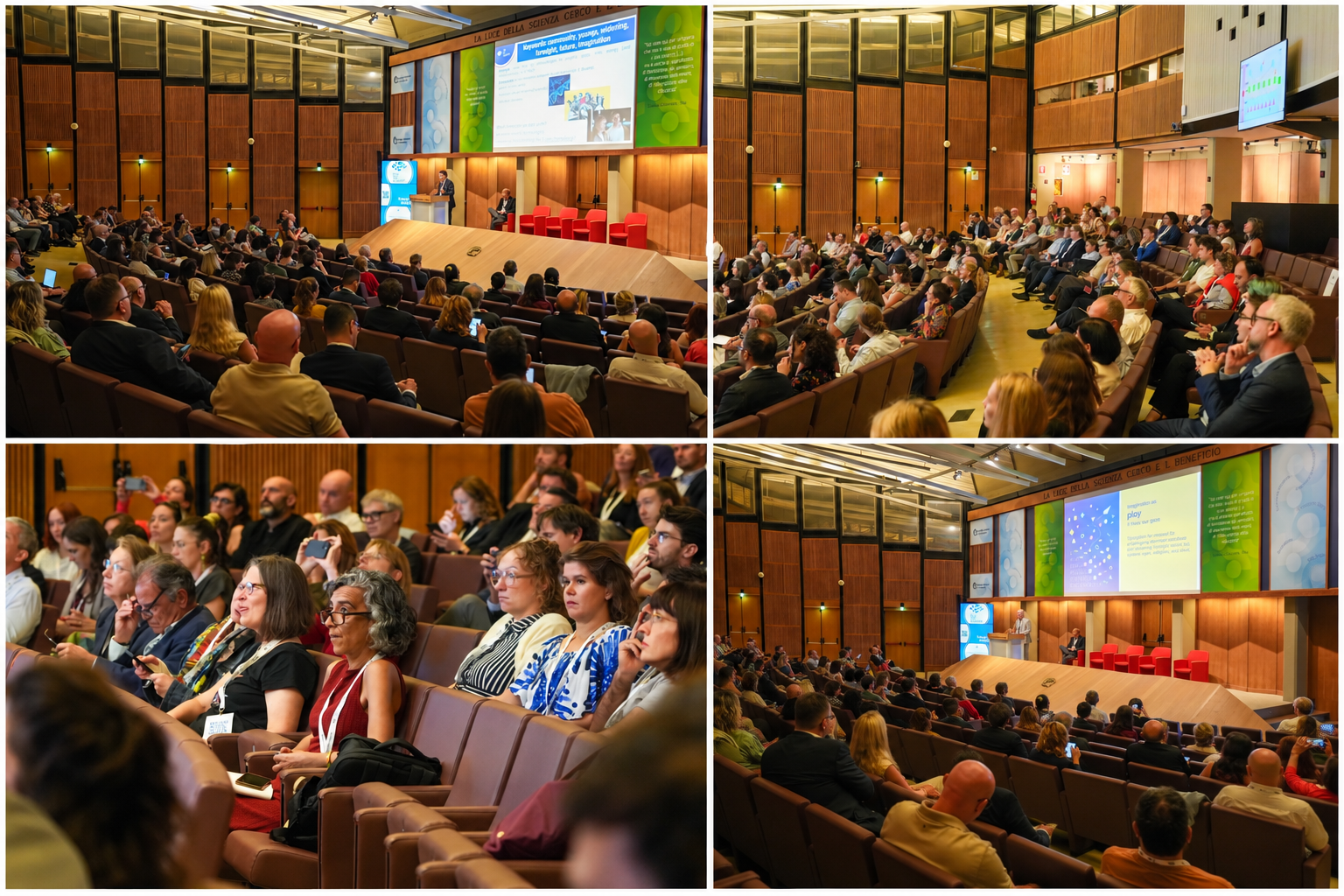
The Futures4Europe 2026 conference, “Daring to Imagine Otherwise”, took place in Rome on 30 September and 1 October 2026 as part of the Eye of Europe project. Conceived as the project’s closing event, it followed the first Futures4Europe conference held in Vienna in May 2025. This second edition focused on the role of imagination in foresight and in shaping futures, with the ambition of broadening the European foresight community and encouraging unconventional approaches to societal futures.
Interest in the event significantly exceeded initial expectations. The call for contributions, launched in January 2026, received 148 proposals, spanning academic presentations, workshops, visual and artistic formats, installations and other experimental approaches. Following the opening of registration, more than 250 registration requests were received.
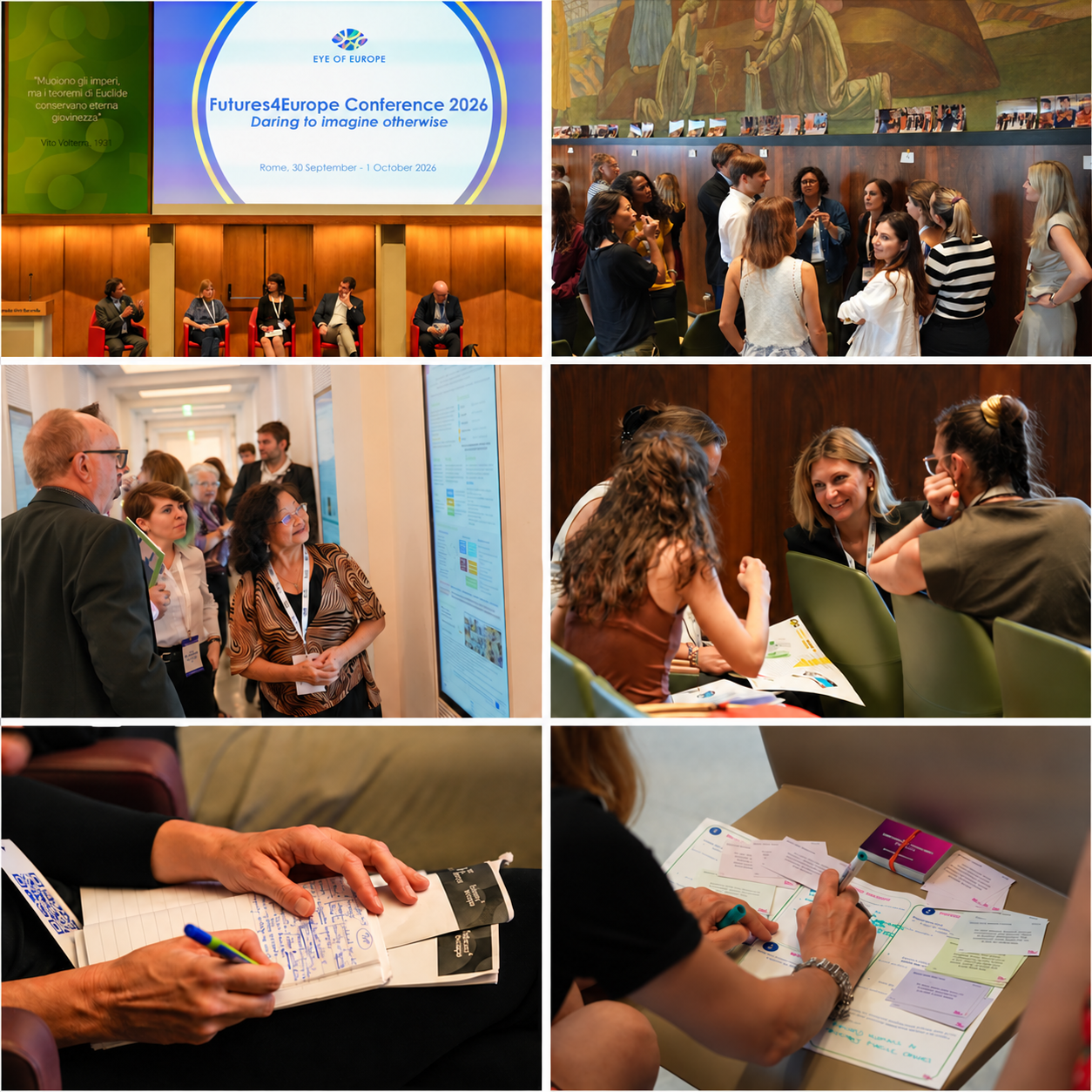
This strong response led the organisers to substantially adapt the original format. The final programme featured 49 oral contributions, 8 workshops, more than 30 posters and a range of side events, creating multiple opportunities for exchange, experimentation and collaboration.
A sincere thank you to everyone who contributed to making Futures4Europe 2026 possible. We hope these conversations and collaborations will continue well beyond the conference and contribute to imagining a wider range of possible futures.
Event and post-event materials will be shared in the coming weeks. Scroll down to have a look and bookmark this page in your favorites tp stay up to date !
About the conference
Europe and the world are living through times of profound change, marked by discontinuities, systemic crises, and far-reaching transitions. These challenges can also be understood as products of inherited and increasingly inadequate imaginaries. Such conditions urgently demand to re-open the future through renewed ways of probing the possible.
Foresight creates spaces where future imaginaries are produced, negotiated and contested and new relations between knowledge, values, and action can emerge. At the same time, foresight cultivates awareness of imaginative processes and supports their reflexive examination.
The Futures4Europe conference invites foresight practitioners, Research & Innovation experts, and future-sensitive thinkers, artists and creators to reflect on and expand imagination as a collective epistemic force—one that shapes how societies sense, interpret, and act toward the future.
Themes for the 2026 edition
- The role of imagination in anticipatory processes. This theme examines how imagination shapes the way futures are perceived, explored, and enacted. It focuses on the cognitive and affective mechanisms that enable futures imagination, as well as the methods and practices that cultivate, guide, or constrain imaginative capacity within foresight processes.
- Collective Imaginaries and the Myths of the Future. Futures are shaped by shared narratives, metaphors, and myths. This theme examines how collective imaginaries organise social expectations, how cultural production acts as a laboratory for the future, and how foresight can disrupt and renew dominant imaginaries of progress, crisis, or salvation.
- Plural Futures and Inclusive Foresight. This theme invites perspectives from diverse epistemologies and ontologies (e.g. Indigenous, postcolonial, feminist, ecological, AI-mediated), and explores how futures literacy, technologies, and inclusive foresight practices enable the imagination of multiple worlds.
- Foresight, Imagination, and Policy Action. Imagination shapes how futures enter policy and decision-making. This theme focuses on imaginative approaches to anticipatory governance, the translation of scenarios and visions into institutions, and the tensions between creativity, evidence, accountability, and political realities.
- Experiential, Embodied, and Affective Foresight. Beyond analysis and cognition, foresight often engages emotions, bodies, and lived experience. This theme highlights embodied, immersive, and artistic approaches, such as role-play, performance, installations, and XR, that deepen engagement with futures while raising ethical, relational, and inclusion-related questions.