Loading...

    Mentions of

    sorted by publishing date

    Last Edited: 24 days ago

    Futures4Europe Conference 2026 - call for contributions30 September - 01 October 2026

    Daring to imagine otherwise

    Futures4Europe Conference 2026

    The Futures4Europe Conference, to be held in Rome, returns for its second edition in Rome from 30th september to the 1st of october 2026, building on the inaugural event held in Vienna in May 2025. The conference series takes its name from futures4europe.eu, the online hub for foresight in Europe. Both the conference and the platform were developed within the EU-funded project Eye of Europe.

    Call for contributions

    Proposals should be submitted before 1st May 2026 at 18:00 CET through the form available at this link. Approximately 50 contributions will be selected by an evaluation committee and will be invited to join the conference in presence. 

    Europe and the world are living through times of profound change, marked by discontinuities, systemic crises, and far-reaching transitions. These challenges can also be understood as products of inherited and increasingly inadequate imaginaries. Such conditions urgently demand to re-open the future through renewed ways of probing the possible.

    Foresight creates spaces where future imaginaries are produced, negotiated and contested and new relations between knowledge, values, and action can emerge. At the same time, foresight cultivates awareness of imaginative processes and supports their reflexive examination.

    The Futures4Europe conference invites foresight practitioners, Research & Innovation experts, and future-sensitive artists and creators to reflect on and expand imagination as a collective epistemic force—one that shapes how societies sense, interpret, and act toward the future. 

    Themes for the 2026 edition
    The conference welcomes contributions on different interconnected aspects of imagination:

    1. The role of imagination in anticipatory processes. This theme examines how imagination shapes the way futures are perceived, explored, and enacted. It focuses on the cognitive and affective mechanisms that enable futures imagination, as well as the methods and practices that cultivate, guide, or constrain imaginative capacity within foresight processes.
    2. Collective Imaginaries and the Myths of the Future. Futures are shaped by shared narratives, metaphors, and myths. This theme examines how collective imaginaries organise social expectations, how cultural production acts as a laboratory for the future, and how foresight can disrupt and renew dominant imaginaries of progress, crisis, or salvation.
    3. Plural Futures and Inclusive Foresight. This theme invites perspectives from diverse epistemologies and ontologies (e.g. Indigenous, postcolonial, feminist, ecological, AI-mediated), and explores how futures literacy, technologies, and inclusive foresight practices enable the imagination of multiple worlds.
    4. Foresight, Imagination, and Policy Action. Imagination shapes how futures enter policy and decision-making. This theme focuses on imaginative approaches to anticipatory governance, the translation of scenarios and visions into institutions, and the tensions between creativity, evidence, accountability, and political realities.
    5. Experiential, Embodied, and Affective Foresight. Beyond analysis and cognition, foresight often engages emotions, bodies, and lived experience. This theme highlights embodied, immersive, and artistic approaches, such as role-play, performance, installations, and XR, that deepen engagement with futures while raising ethical, relational, and inclusion-related questions. 

    Formats and Contributions

    The conference welcomes a wide range of contribution formats, including:

    •  Academic presentations or articles
    •  Videos and visual narratives
    •  Installations and artistic or performative interventions
    •  Posters and interactive formats
    •  Foresight laboratories, tools, rituals for anticipation, and facilitation approaches fostering “out-of-the-box” futures thinking. 

    Contributions submitted by young foresight experts and future-sensitive artists are highly encouraged. 

    Attendance

    Participation is free of charge for all contributors with accepted proposals (papers, films, installations, etc.).

    Travel and accommodation costs are not covered by the conference organisers.

    The programme of the conference and the registrations for participation will be accessible later in 2026.

    For further info you can write to eoe_romeconference@cnr.it

    Attendance

    Participation is free of charge for all contributors with accepted proposals (papers, films, installations, etc.).
    Travel and accommodation costs are not covered by the conference organisers.
    The programme of the conference and the registrations for participation will be accessible later in 2026.
    For further info you can write to eoe_romeconference@cnr.it.

    Posted on: 15/01/2026

    Last Edited: 2 months ago

    Anticipation 2026 Conference01 July - 03 July 2026

    Anticipation 2026 is an interdisciplinary conference for rethinking how ideas about futures operate within conditions of uncertainty, indeterminacy, and unknowing. Bringing together researchers, designers, philosophers, policy makers, and practitioners, the conference opens space for exploring how futures are shaped through aesthetics, ethics, epistemologies and material practices. Registration opens on the 2nd of February 2026, but the call for abstracts is open now.

    From 1st to 3rd July 2026, the 6th Conference on Anticipation will be held at the Politecnico di Milano, Design Department. Anticipation 2026 invites participants to explore the entangled relations between futures, unknowing, and design. The overarching aim of the Conference Series and of the emerging field of Anticipation Studies is to create new perspectives on how individuals, groups, institutions, systems and cultures use ideas about futures to act in the present.

    The 6th International Conference on Anticipation will be held at the Design Department of Politecnico di Milano, one of Europe's leading institutions for design research and education. Located in the heart of Milan, a global capital of design, fashion, and innovation, the department stands as a site for examining the contemporary and future roles of design within complex societal, technological, and ecological systems. Politecnico di Milano’s Design Department is renowned for fostering experimental, practice-based, and transdisciplinary approaches that challenge conventional boundaries of design. It cultivates a vision of design as a powerful mode of inquiry.

    From critical design to foresight, from service design to post-human aesthetics, design at Politecnico di Milano nurtures an ecosystem where research, pedagogy, and practice interact to explore how futures are made and contested. The department brings together a diverse network of researchers, educators, and practitioners committed to advancing critical, speculative, and anticipatory design approaches while benefitting from ongoing exchanges with industry, cultural institutions, and grassroots communities. Its interdisciplinary structure includes dedicated labs and centers focused on areas such as communication and product design, service design, sustainable transitions, and design for social innovation. These spaces foster a culture of inquiry where prototyping, material experimentation, and reflective practice converge. The Bovisa campus offers state-of-the-art facilities, from fabrication workshops to immersive environments, supporting collaborative and transdisciplinary engagement.

    Posted on: 02/12/2025

    Post Image

    Last Edited: 3 months ago

    Navigating the Future of CCIs: A Backcasting Approach to Career Design

    The Cultural and Creative Industries (CCIs) are undergoing a rapid transformation, driven by emerging technologies like AI and immersive realities. This fast-moving landscape presents a crucial challenge: how do we effectively guide current professionals toward the emerging career opportunities of tomorrow? This is one of the questions we aim to tackle within the ekip project, the European Cultural and Creative Industries Innovation Policy Platform.

    The EKIP initiative, funded by Horizon Europe, is dedicated to understanding and accelerating these transitions through research, policy, and collaboration. For each sector it studies, EKIP brings together policymakers, researchers, and creative practitioners to translate emerging needs into actionable frameworks for change.

    Our foresight exercise, conducted within ekip's identification phase , addresses this challenge by mapping actionable career paths from the future back to the present. Our method employed social media listening to track real-time conversations across sectors, helping stakeholders anticipate change and enabling the co-creation of smarter innovation policies .

    Posted on: 05/11/2025

    Post Image

    Last Edited: 5 months ago

    The Future of Sustainability in a Post-Global World

    A New Sustainability Agenda Rooted in Access and Stability

    Sustainability in the Post-Global Era

    In the aftermath of decades of global integration, the model of hyperconnected markets is showing signs of retreat. Geopolitical instability, trade disputes, and resource scarcity are catalysing a structural shift that could reshape not only economies, but the very principles underpinning sustainability. Drawing from trend intelligence by Nextatlas, two pivotal developments emerge, developments that invite foresight professionals to rethink sustainability not as a static ideal, but as a dynamic field responsive to systemic transformation.


    The post-global era is not simply a reconfiguration of trade routes or supply chains; it marks a fundamental reframing of what society deems “sustainable.” In a world where inflation, scarcity, and volatility dominate headlines, environmental goals are becoming increasingly intertwined with economic and geopolitical concerns. 

    Nowhere is this reframing more evident than in the European Union, which has positioned itself as a global leader in linking sustainability with regulatory and economic frameworks. Through initiatives such as the European Green Deal, the Carbon Border Adjustment Mechanism, and stricter ESG reporting standards, the EU is setting benchmarks that extend far beyond its borders and reshape how sustainability is understood in practice.


    Nextatlas’ foresight model suggests a pivot: environmental degradation is no longer perceived as the singular sustainability threat. Instead, resource access, economic resilience, and supply chain transparency are becoming the new fault lines. This conclusion is grounded in more than a decade of Nextatlas’ machine learning work in cultural trend forecasting, built on a proprietary pipeline that ingests millions of data points each month from over 300,000 carefully selected sources, including social media users, niche influencers, scientific literature, design portfolios, and startup ecosystems. 


    Through natural language processing, semantic clustering, and visual analysis, these unstructured signals are structured into a dynamic semantic knowledge graph of thousands of interconnected micro-trends. By identifying early adopters with a demonstrated history of trend foresight, the model captures weak signals and emergent cultural dynamics before they reach the mainstream. With a 93% accuracy rate in trend prediction, this methodology provides a robust foundation for understanding the evolution from ecological awareness as individual virtue to sustainability as collective infrastructure.

    The Wasteless Economy
    The intentional rejection of overconsumption

    What was once framed as consumer minimalism is evolving into a more resilient, system-conscious behaviour: the Wasteless Economy. As global citizens face the tangible consequences of rising costs and diminished availability, consumption habits are adjusting accordingly. But unlike past recessions where thrift was reactive, today’s restraint is increasingly proactive and value-driven. In this new context, value is redefined by longevity, utility, and purpose. Careful selection, durability, and circular practices now consciously outweigh constant acquisition.


    This transformation has implications beyond market dynamics. It reflects a recalibration of what constitutes value and well-being in an era of systemic constraint. The Wasteless Economy aligns closely with long-term sustainability goals, emphasising durability, circularity, and resource efficiency, not just as ethical choices, but as strategies for social and economic stability. Amid persistent inflation and renewed tariffs on consumer goods, households are tightening their belts and are naturally drawn to buying less, buying smarter, and investing in lasting value. 

    Feeling the squeeze of both rising operational costs and evolving regulations, businesses are pivoting toward circular models, designing for durability, repairability, and reuse, not for sustainability branding, but as a smart financial strategy. Circular design reduces exposure to volatile supply chains and tariff-prone imports, while reinforcing consumer loyalty through accountability.


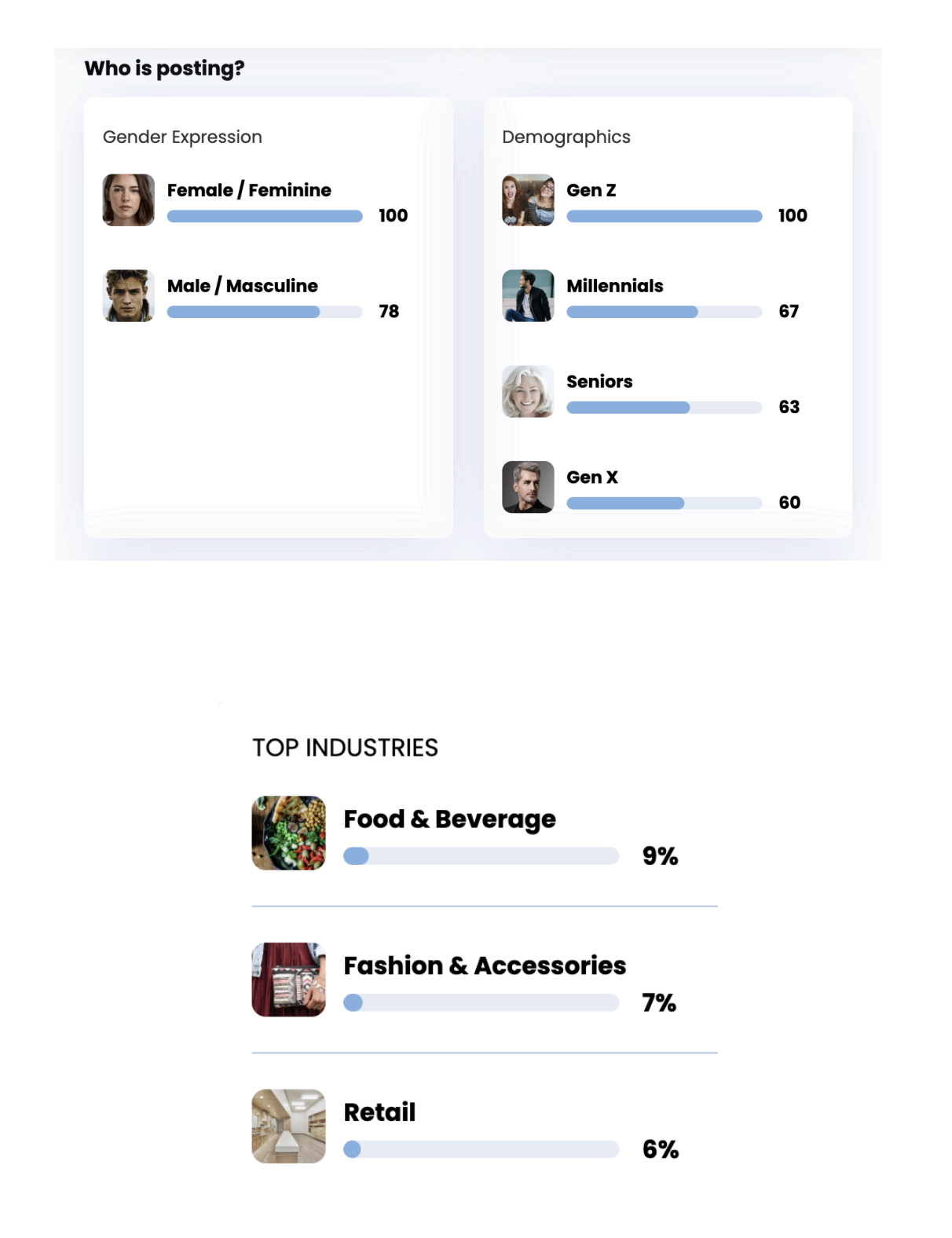
    This shift is most visible in food & beverage, fashion, and retail, industries where overproduction and disposability once defined the norm. Food companies must now design out surplus, embracing precision, seasonality, and resourcefulness as new standards of value. In fashion, longevity and modularity are replacing trend cycles, with resale and repair moving from fringe to fundamental. Retailers, in turn, are being called to transform from providers of endless choice into curators of care, offering fewer but better options that align with the values of restraint and longevity.

    For foresight practitioners, the shift underscores a key signal: in strained environments, sustainability flourishes not through moral appeal but through necessity. Efforts to design policy or governance around future-proofed systems must therefore centre not only on carbon metrics, but also on material longevity, repair ecosystems, and new models of sufficiency.

    Posted on: 23/09/2025

    Post Image

    Last Edited: 8 months ago

    What is Emerging Technologies Scanning and how it fits into Futures Studies practices

    Emerging Technologies Scanning (ETS) emerges as a practice within Futures & Foresight (Futures Thinking & Strategic Foresight)

    The introduction of a new technology is never an isolated event and never concerns only one market or one domain. There are invariably socio-cultural, political, economic, and environmental implications, as well as impacts, influences, “cross-pollination”, and correlations among different technologies.

    The very broad definition of technology itself betrays its intrinsic complexity: a vast field of research involving various technical and scientific disciplines, which examines the application and use of everything that can serve to solve problems. The term “technology” also refers to the aggregate of knowledge, skills, and tools used to design, create, and utilise objects, processes, systems, or services to meet human needs.

    An emerging technology, in particular, is one that is radically new and relatively fast-growing technology [it is not necessarily exponential, as the common dialectics of recent years have conditioned us to expect, yet this has little to do with the mathematical concepts of exponentiality; rapid growth does not imply exponentiality]. It is characterised by a certain degree of coherence (or consistency) that persists over time and has the potential to have a substantial impact on the socio-economic-political domains (understood as the players, institutions, and models of interactions between them, as well as all the processes of knowledge production associated with these domains).

    Its most significant impact lies in the future and thus in the emergency phase: an emerging technology is still quite uncertain and ambiguous. For this reason, it would be prudent to analyse its potential impacts in a timely manner, to avoid getting trapped in Amara’s Law.

    Posted on: 09/06/2025

    Post Image

    Last Edited: 10 months ago

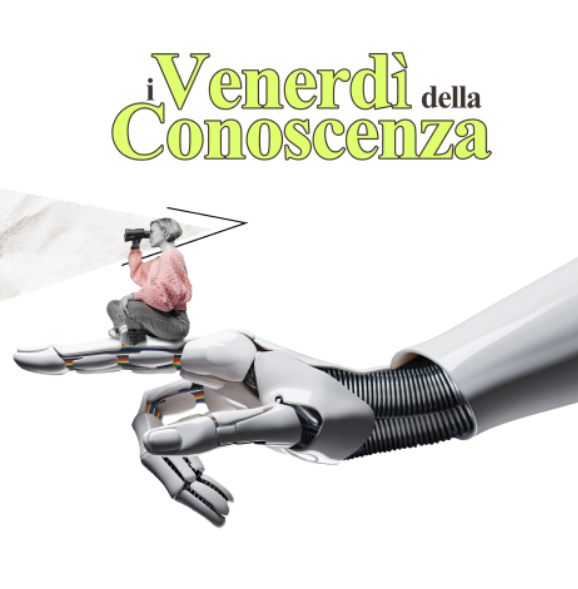
    Making the Future More Tangible for Citizens Through ‘Fridays of Knowledge’

    In the small seaside township of Diano Marina, Liguria Region, Italy, the local community has been organising frequent meetings to help people overcome growing fears of an increasingly uncertain future. This initiative, called ‘Fridays of Knowledge’, aims to equip the local community with scientific tools and knowledge to understand the risks and implications of new technologies in a dialogue together with students, academics, and journalists. Communication Manager for Fridays of Knowledge, Damiana Biga, tells Futures4Europe how this initiative sparks debates across different generations and backgrounds, fostering a sense of shared responsibility and curiosity.

    Posted on: 27/03/2025

    Post Image

    Last Edited: a year ago

    Interview with Pierfrancesco Moretti, Coordinator of the National Research Council of Italy

    Futures4Europe zoomed in on the perspective of one of the consortium's members of the Eye of Europe Project, Pierfrancesco Moretti, of the National Research Council of It...

    Posted on: 17/12/2024

    Last Edited: a year ago

    S&T Foresight - Energy

    Results for the working group Energy are available at: http://foresight.cnr.it/working-groups/wg-energy.html 

    Posted on: 25/11/2024