Last Edited: 19 days ago
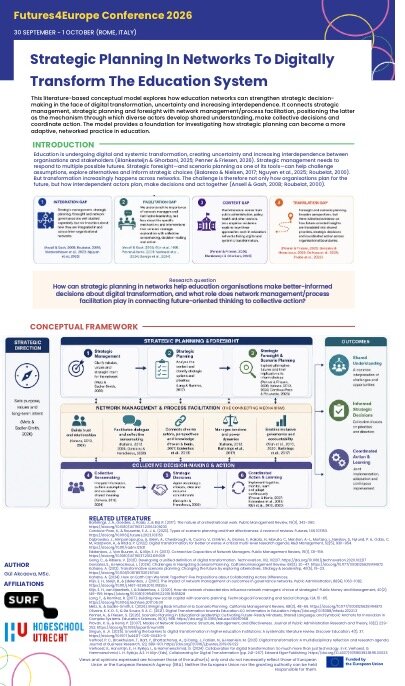
Strategic Planning in Networks to digitally transform the education system
Poster to connect key concepts and knowledge gaps

Posted on: 21/09/2026
sorted by publishing date
Last Edited: 19 days ago
Posted on: 21/09/2026
Last Edited: 24 days ago
Fostering Education and Skills Development is the second cycle in DLR Projektträger's Strategic Foresight series for the future European Partnership on Social Transformations and Resilience (STR), following the inaugural cycle on the future of work. It examines how Europe's education and skills systems can adapt to demographic decline, AI and digitalisation, and rising demands on learners' well-being over the next 10 to 15 years.
Desk research produced 26 initial trends, refined through expert interviews and then tested in an online survey of 132 experts across 22 countries, who prioritised the ten most significant developments. A workshop with 32 participants across Europe mapped the first-, second-, and third-order implications of each trend using the Futures Wheel method.
The ten trends include mounting teacher shortages (40% of EU teachers are already over 50, only 8% under 30), AI and digitalisation reshaping skill demands while widening existing gaps, declining student mental well-being, the twin transition deepening socioeconomic skill divides, the rising importance of social and emotional skills, and persistently low adult upskilling rates.
The report's best-case scenario for 2040 is structured around five pillars: a sustainable, empowered teaching workforce with competitive pay and manageable workloads; fair and responsible use of technology that closes rather than widens digital divides; well-being and social skills embedded as core parts of education, not add-ons; lifelong learning genuinely available to all age groups and backgrounds; and education systems resilient to demographic decline and the twin transition.
Posted on: 16/09/2026
Last Edited: a month ago
visit for more details: https://www.surf.nl/en/themes/futuring/tech-trends
see also: https://video.edu.nl/w/5wWDUqoE2XtYgoT1d167hk
Posted on: 09/09/2026
Last Edited: 5 months ago
As the future grows more complex and uncertain, young people in Cambodia are learning to navigate it with curiosity, creativity, and clarity. In September 2024, the European Union Delegation (EUD) to Cambodia hosted a 2.5-hour online foresight workshop with its Youth Sounding Board (YSB), using the Youth4Foresight Toolkit. The session introduced strategic foresight tools to help youth anticipate change, collaborate on ideas, and shape sustainable futures. Using Miro, participants explored trends related to climate action, public service transformation, and governance.
Why futures thinking matters
Cambodian youth are facing a web of intersecting challenges - from climate risks and water scarcity to inequities in education, healthcare, and digital access. Futures thinking offers them a way to not only react but lead proactively. The ability to think strategically about long-term possibilities, and act accordingly, is becoming a critical skill.
Methodology
Prior to the session, youth had participated in an introductory workshop to familiarize themselves with key foresight concepts. From that, five trends emerged as most relevant to Cambodia: shifting geopolitical power, green and digital transitions, resource scarcity, new governance systems, and "Basic Services 3.0" (health, education, justice).
During the main session, participants selected resource scarcity and basic services as the two core trends to explore through the Futures Wheel. They mapped i mmediate and secondary impacts—such as income inequality, food insecurity, and weak infrastructure—then identified strategies like improved public-private partnerships, climate legislation, and innovation in resource use to build long-term resilience.
Next, youth moved into a Three Horizons exercise, which helped them ref lect on current realities, envision desirable futures, and chart a pathway of innovation and action between the two.
Horizon 1 highlighted structural challenges: limited access to clean water, energy, and internet; weak healthcare; unskilled labor; and poor transport. These reinforced the sense that "business as usual" is no longer sustainable.
Horizon 2 focused on transitional innovations already emerging. Youth emphasized the importance of public-private collaboration, digital literacy, green skills, and inclusive transport. Highly supported ideas included promoting green tourism, separate city bus lanes, and youth networks.
Horizon 3 captured bold visions for a more inclusive Cambodia—with universal access to clean water and air, waste-free cities, thriving green public spaces, and stronger digital governance.
Participants also identified “Seeds of the Future”—existing initiatives like food banks, grassroots movements, and water treatment projects—that reflect Horizon 3 values but need scaling up.
Results & Discussion
Participants reported a mindset shift:
🗣️ “Before this, I didn’t give much thought to the future. Now, I find it essential for both my career and our community.”
🗣️ “Foresight helps me understand, predict, and align my work with long-term goals.”
🗣️ “The Three Horizons model was simple but powerful.”
While the session was well received, some challenges were noted:
- The online format limited peer-to-peer engagement.
- Some participants were hesitant to speak up; deeper facilitation could help.
- The single-session format was dense, splitting it into two shorter sessions may enhance reflection.
- Still, the session sparked high engagement and showed foresight’s value in building youth leadership and agency.
Looking Ahead
This Cambodia workshop is part of the broader Youth4Foresight initiative supported by INTPA. It signals growing momentum for inclusive, future-focused engagement in EU partner countries. Cambodian youth aren’t just imagining the future - they’re preparing to lead it.
Posted on: 26/03/2026
Last Edited: 5 months ago
The future of Angola and its youth are inextricably linked, as the country looks to capitalise on its demographic dividend, with over two-thirds of its population under the age of 25. The National Development Plan (2023-2027) prioritizes youth and human capital development to overcome barriers to long-term growth. The Youth4Foresight Toolkit, developed by Directorate General for International Partnerships of the European Commission, youth experts and EU Delegations worldwide proved to be instrumental in engaging young Angolans.
Engaging Young Voices for Change
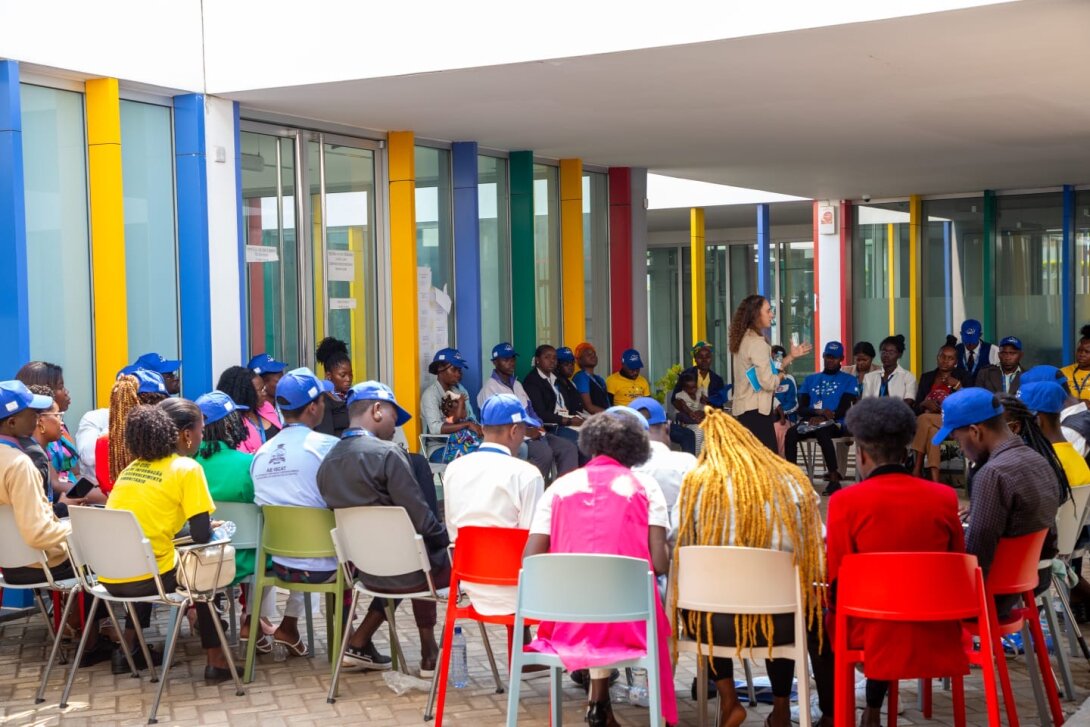
The Youth Forum in Malanje (in July 2024) centred on "Youth participation in local governance and its impact on human capital development" and brought together 52 youth participants (including 24 women and some young mothers) from five municipalities in Malanje province. The event focused on helping youth better understand national policies and explore ways how they can contribute meaningfully to local governance.
The Youth Forum was one of the events organised under the EU funded “Support to Civil Society in Local Governance in Angola (PASCAL)” action, which aims to contribute to economic growth and social development through an inclusive, heterogeneous and effective participation of civil society in the governance process.
A key element of the forum was the application of structured long-term thinking by using the techniques and guidance from the Youth4Foresight Toolkit. Through Three Horizons methodology, young participants explored different future scenarios and created actionable recommendations.
This same tool was also applied during the Youth Forum in Huambo, another Angolan province, where it proved equally successful in engaging youth and fostering forward-looking dialogue.
Foresight in Action: Three Horizons Methodology
The Three Horizons technique enabled participants to envision a preferred future for their region and Angola. Divided into groups, they assessed the present, identified trends and challenges, and developed transition ideas.
Discussions highlighted youth concerns: education, healthcare, and local economic development, alongside challenges like poor infrastructure, inadequate education quality and limited access to essential services.
Participants formulated key recommendations for policymakers, such as creating youth-centred programs, youth centres and vocational training facilities, and stressed the importance of policies that improve access to education, healthcare, and economic opportunities, particularly in rural areas.
Yong people found the forum groundbreaking and meaningful, with one stating, "We have never participated in such an experience," emphasizing the importance of youth voice. Young mothers expressed hope for their children's futures and appreciated meeting others outside their villages, reflecting the workshop's deep impact in fostering hope and agency and ownership over their future.
The Impact of Youth4Foresight
The structured, adaptable methodologies of the toolkit encouraged inclusive discussions, giving youth a voice in shaping the strategies outlined in Angola’s National Development Plan 2023-2027. As a result, the recommendations produced in the workshop were directly relevant to local realities and can guide policymakers in enhancing youth participation and development.
Using foresight techniques empowered young people to reflect on their aspirations, critically analyse their present situation, and propose realistic solutions. The Youth4Foresight Toolkit has been successfully used in several countries by EU Delegations to engage with youth as a part of the Youth Action Plan in EU external action.
Posted on: 26/03/2026
Last Edited: a year ago
The Cultural and Creative Industries (CCIs) are undergoing a rapid transformation, driven by emerging technologies like AI and immersive realities. This fast-moving landscape presents a crucial challenge: how do we effectively guide current professionals toward the emerging career opportunities of tomorrow? This is one of the questions we aim to tackle within the ekip project, the European Cultural and Creative Industries Innovation Policy Platform.
The EKIP initiative, funded by Horizon Europe, is dedicated to understanding and accelerating these transitions through research, policy, and collaboration. For each sector it studies, EKIP brings together policymakers, researchers, and creative practitioners to translate emerging needs into actionable frameworks for change.
Our foresight exercise, conducted within ekip's identification phase , addresses this challenge by mapping actionable career paths from the future back to the present. Our method employed social media listening to track real-time conversations across sectors, helping stakeholders anticipate change and enabling the co-creation of smarter innovation policies .
Posted on: 05/11/2025
Last Edited: a year ago
Posted on: 11/09/2025
Last Edited: a year ago
Imagination, in common discourse, is often relegated to a secondary domain of thought – a frivolous, playful, and unreliable mental activity confined to childhood, the arts, or, at best, applied creativity. A “magic box” that opens only when logical rigor relaxes, when attention drifts toward invention and fantasy. Yet this view, however seductive, is ultimately reductive – if not misleading.
When examined through the lens of contemporary cognitive science, imagination instead reveals itself as a profound and complex cognitive function. Not only does it actively participate in processes of knowing, but it also constitutes one of their foundational dimensions. It is the mental faculty through which we construct alternative worlds, test hypothetical scenarios, and explore the unknown without needing to experience it directly. Far from being a mere appendage to rational thought, it serves as one of its key structural supports.
Even more striking is what emerges from recent scientific research: imagination possesses a metacognitive character. This means it does not merely generate mental content that diverges from reality, but is also capable of reflecting on itself – monitoring and adjusting its own trajectories, becoming the object of awareness and intentional regulation. In other words, imagining is not just about conjuring what is absent from the world, but also about knowing one is imagining, directing that act toward specific goals, and assessing its quality, limitations, and implications.
This represents a genuine epistemological shift – recasting imagination not as a passive or automatic process, but as a strategic ally of thought. Within this framework, imagination emerges as a faculty that weaves together multiple dimensions of our cognitive experience:
It is within this layered and dynamic space that imagination assumes a renewed role: no longer a retreat into the unreal, but a critical tool for probing the possible. It becomes the lens through which we may observe not only what is, but what could be – and, through this, reconfigure our relationship with the present.
It enables us to anticipate without predicting, and to plan without constraining.
In educational, professional, and social contexts – and even more so within the fields of Futures Thinking and Foresight – this reconceptualization of imagination as a metacognitive skill proves to be strategically essential. To anticipate the future is not to guess what will occur, but to cultivate a gaze that can recognize alternatives, navigate uncertainties, and imagine trajectories not yet in existence. Doing so requires more than creativity; it demands a deep literacy in conscious imagination.
To rediscover imagination through a metacognitive lens is to restore its dignity as an epistemic, transformative, and educational faculty. A faculty not only capable of generating visions, but also of sustaining, interrogating, and refining them. A power to be reintegrated into our intellectual and civic formation – so that it may help us not only to imagine different worlds, but to understand the conditions that make them possible.
Posted on: 09/06/2025
Last Edited: 10 months ago
After an extensive synthesis of the OECD’s existing work on the teaching profession over the years, the need to explore professional roles and identity became obvious. The roles and responsibilities of teachers have seen significant changes over the past decade. Education, childhood, labour markets and society as a whole have experienced considerable changes, prompting the need to think about the effects of changes on the teaching profession. The OECD Centre for Educational Research and Innovation (CERI) project on New Professionalism and the Future of Teaching project researched how professionalism has evolved, including the importance of working with others to confront increasingly complex contexts, so called “connective professionalism”. Based on the evidence base and ideas for next practice, the project developed a methodology to help diverse stakeholders in education to construct a shared vision on what the teaching profession could look like in the future.
This study in Wales (United Kingdom) is the second in a series of three education system studies conducted in 2023 and 2024. Various stakeholders, including teachers, school leaders, researchers, teacher educators, teacher unions, and professionals (potentially) supporting teachers and schools provided feedback on their ambitions for the future of teaching in Wales. Choosing among a set of ambitions to better connect teachers with other professionals within the school community, other education providers (such as universities and teacher education colleges) and broader society, they shared their judgements of what would be high priority and also how big a change this would be from the current context. Would it be an ambition for transformation over a period of many years? Or would it be possible to build on existing mechanisms or initiatives? Or could this ambition be achieved by improvements over the short term?
Different perspectives were gathered in two main ways. First, via an online survey. Second, via two stakeholder workshops in Bangor and Cardiff where a total of six working groups collectively constructed scenarios for the future of teaching. Each working group comprised individuals with different roles and responsibilities in or around schools. They worked with the results of the survey and selected priority ambitions to support their vision on the future of teaching. These provided stimulus for their discussions, but their specific visions grew out of a mutual exchange of professional experiences from different perspectives within and surrounding teaching in Wales.
Of course, this study in no way aims to be representative or comprehensive. It draws on the work of a group of willing professionals with a stake in Wales education who offered to share their expertise. This initial effort to anticipate and increase deeper, structured thinking about medium- and long-term scenarios for teacher professionalism and empowerment offers input on how to strengthen the teaching profession in Wales. Potential benefits for the system include long-term strategic thinking regarding the Welsh teacher workforce and finding solutions to issues that transcend the short term.
While constructing their scenarios for the future of teaching, stakeholders reflected on four research questions set for this study by the team at Welsh Government in consultation with the OECD.
How do we develop teacher professional identity and a more collaborative profession? The set of future scenarios envisage a focus on collective professional identity at a school level. There would be particular focuses on peer-to-peer interactions as well as school-to-school exchanges. Time and space would be provided to support a variety of exploration that involves building innovations, following passions and interests, engaging in shared learning, working with colleagues, communities and other partners.
How could a career development perspective for all staff in schools contribute to a vibrant and thriving workforce? Career development would be an integral focus to support the workforce. This would include visible and diverse career pathways that follow and invest in career journeys. Teachers would be supported to engage in their own professional growth journey and collaborations that enrich their professional work. Career pathways would allow for flexibility and lifelong learning opportunities that support a dynamic workforce.
How can all who work in schools encourage innovation and the examination of professional roles in schools as learning organisations? Valuing innovative practices requires alignment at all levels to define what innovation looks like at a school level. This includes strengthening collaborative practices that support reflection, experimentation, partnering and sharing. Support includes time and space to work as part of a professional community. It is important to build connections across innovations to reduce duplication of effort and to maximise shared learning.
And how could investment in the professional identity of teachers, especially in secondary schools, make the profession in those settings more attractive? Teachers should be able to align their intrinsic motivation to their teaching, keeping their practice closer to their professional interests and qualities, and having a sense of autonomy in their work. Investing in continuous, bespoke support and professional development enhances teacher well-being, strengthens their professional identity, and makes the teaching profession more attractive and rewarding. Meaningful development opportunities, recognition, and leadership roles enhances the profession’s appeal and fosters long-term commitment.
The OECD identified seven key elements that feature across a set of four preferred future scenarios for the future of teaching in Wales. Arguably, all would be important to the future of teaching and many are common to several of the scenarios. In particular, diverse professional roles and careers, healthy working environment, school leadership, community support/ partnerships, school-university partnerships, innovation and communication feature to some extent across all four scenarios. Governance and accountability were explicitly featured in three scenarios.
The study also underlines the importance of thinking in more nuanced ways about the existing teacher workforce and potential new recruits. There is a rich diversity of professionals working within schools in Wales, with different motivations, life phases, passions, ambitions and professional development needs. An evidence-informed set of seven Welsh teacher personas provides input to stress test the set of future scenarios. What would different teachers find attractive in the future scenarios that were developed? Would it be particularly attractive to experienced teachers? Would newer recruits hold some reservations? Would it match what younger people will be looking for in their working lives? Overall, the Welsh teacher personas responded positively to the suggested scenarios for the teaching profession in Wales.
This report presents results of the initial reflection and provides tools to extend the exercise going forward.
Source: OECD - Publications
Posted on: 15/04/2025
Last Edited: 2 years ago
What if education wasn’t controlled by institutions but shaped by learners, communities, and technology? Using backcasting, I explored a future where learning is decentralized, open, and driven by collaboration—and mapped the steps to get there.
This vision is inspired by discussions between Sara Skvirsky (IFTF Research Director) and Katherine Prince (VP of Foresight & Strategy, KnowledgeWorks), as well as the 2020 Forecast: Creating the Future of Learning - a report that, even today, feels like a glimpse into what’s coming.
🔹 How do we get there?
- From institutional control to collective intelligence
- From passive learning to a culture of creation
- From centralized credentials to peer-validated knowledge
- From rigid curriculums to dynamic, adaptive education
🎥 Watch the short film exploring this future!
Posted on: 18/02/2025
Last Edited: 10 months ago
The foresight study focused on school education (ISCED levels 1-3) in the EU. It aimed at:
The development of the scenarios was based on the factors of change1, identified through desk research, horizon scanning, and extensive stakeholder involvement. More than 80 European Commission officials, school education experts, representatives of teacher, student and headmaster umbrella organisations, and other stakeholders, from across the EU, contributed to the study, by participating in four workshops, a Delphi survey, and interviews.
Posted on: 29/01/2025
Last Edited: 10 months ago
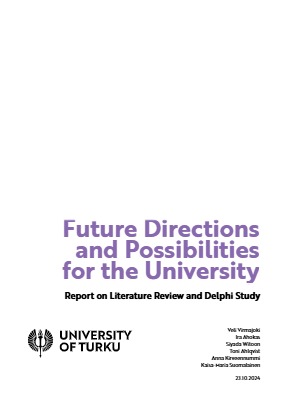
What lies ahead for universities? A new futures research study from the University of Turku maps multiple pathways and tensions that could transform how universities teach, research, and serve society.
Introduction
Researchers of the University of Turku have published a comprehensive report "Future directions and possibilities for the university: Report on literature review and Delphi study" (Virmajoki et al. 2024) about the possible future trajectories of the university of Turku. The report, which is uploaded here and also available on utupub.fi, is part of a larger project - Strategic Foresight and Futures Thinking Initiative.
The report, conducted by the Strategic Planning Unit of the University of Turku together with Finland Futures Research Centre (FFRC), contains the results of the analysis of the operating environment of universities. Operating environment here refers to the broader context of trends, challenges, and conditions - both nationally and globally - that affect how universities function and perform their core activities in teaching and research. While the report has as its scope the University of Turku, its findings and especially the approach are more broadly relevant, particularly in Europe.
Analysis of Operating Environment as Research
The analysis of the operating environment was primarily based on a literature review and a subsequent Delphi survey. We reviewed over 200 scientific texts relevant to the subject. It quickly became evident how multifaceted and unique universities are. Scenarios—a common tool in foresight—would not be sufficient on their own to understand the possible futures of universities. Therefore, we first categorised universities into 10 different dimensions, such as societal purpose, international orientation, and educational organization, and identified different directions for development for each dimension. This allowed us to create a multidimensional description of possible development paths for universities, yielding in total 30 different paths and their combinations. The reality is somewhere between the idealized end-points.
In addition to helping understand various possible futures, the analysis where several dimensions and their paths are explained also provides a tool for the university units to examine their own position in relation to these possible developments. University units can differ significantly from one another, and no analytical tool that accounts for these differences can be sufficient. Our report offers such a tool by enabling discussion – with agreements and disagreements – of different development trajectories from the perspectives of diverse traditions and practices that can be found within any university.
Possibilities and Desirability – The Delphi Study
It was not only important to understand the possible futures universities may face. Equally crucial at the University of Turku was to understand what university members – researchers, students, administration, and other staff – think about these futures. To achieve such understanding, we conducted a Delphi study to ask what university members consider probable and desirable when it comes to the future. The statements were designed to provoke thoughts and bring out views that might not emerge in more traditional discussions. In addition to the probability and desirability assessments, we gathered valuable insights from the open comment sections, which often reveal perspectives that might be overlooked in the literature review.
Some Key Results
While the most interesting results cannot all be included in this text, some should be highlighted to provide a sense of the nature of the study.
First, universities are continuously balancing societal impact, economic goals, and fundamental research. The demands from the side of the wider society often pull in different directions. The Delphi study showed that working towards a societal mission is seen as desirable, but market orientation is expected to be more likely. A common thought and worry seems to be that universities are likely to shift towards more commercial interests, despite the tension this creates with their social responsibilities not measurable in economic terms.
Second, global research collaboration and local relevance create a significant tension. Universities aim to be part of global networks, while also expected to contribute to their local communities. The Delphi study revealed varying opinions on this balance. Some see global engagement as essential, while others stress the importance of local ties. Whether a university can succeed in both areas or must focus on one is a central question. The geopolitical tensions and the regional clusters this might create adds another path that might make the question between local and global even more difficult and multidimensional.
Third, in teaching, the main tension seems to lie between scalable, mass-oriented education and more personalised, tailored teaching. Scalable teaching allows universities to reach more students, but the Delphi study showed that personalized methods are considered more desirable. Yet, the study also indicated that standardised models are, according to the members of the university, more likely to prevail due to the scarcity of resources. Technology and its development will be an integral part of both scalable and personalised teaching paths (and everything in between) but different technological solutions might be associated with different paths.
Significance for the University Sector
The project and the report highlight the value of combining an analysis of the university operating environment and a more detailed study of the views of the university community. On the one hand, an analysis of the environment and the paths therein provides a tool to navigate the prospects and risks. On the other hand, the analysis of the members’ perspective helps the university understand where we stand now and what are the paths that the members recognise. Together, these two provide a robust view on the strategic status and importance of different possible trajectories for universities’ operating environment.
The research has broad applicability across universities worldwide. Through its dimensions and models, any higher education institution can map out and discuss likely trajectories, desired directions, and concerning paths ahead - regardless of their unique features. By combining extensive research literature with a Delphi study, the report opens a window into the possible futures of universities – or rather a map that can be used to navigate the long-term issues that these long-standing institutions face.
References
Virmajoki, V., Ahokas, I., Witoon, S., Ahlqvist, T., Kirveennummi, A., & Suomalainen, K.-M. (2024). Future directions and possibilities for the university: Report on literature review and Delphi study. A Report by University of Turku Strategic Planning Unit in collaboration with the Finland Futures Research Centre (FFRC). ISBN 978-952-249-617-1.
Posted on: 13/12/2024
Last Edited: 10 months ago
Posted on: 09/11/2024