Loading...

    Mentions of

    sorted by publishing date

    Last Edited: 2 months ago

    THE DEMOGRAPHIC TURN09 December - 09 December 2025

    ACTIONS NEEDED FOR RESEARCH, INNOVATION, AND POLICY IN EUROPE?

    Curious about how Europe’s demographic trends may transform the R&I landscape?


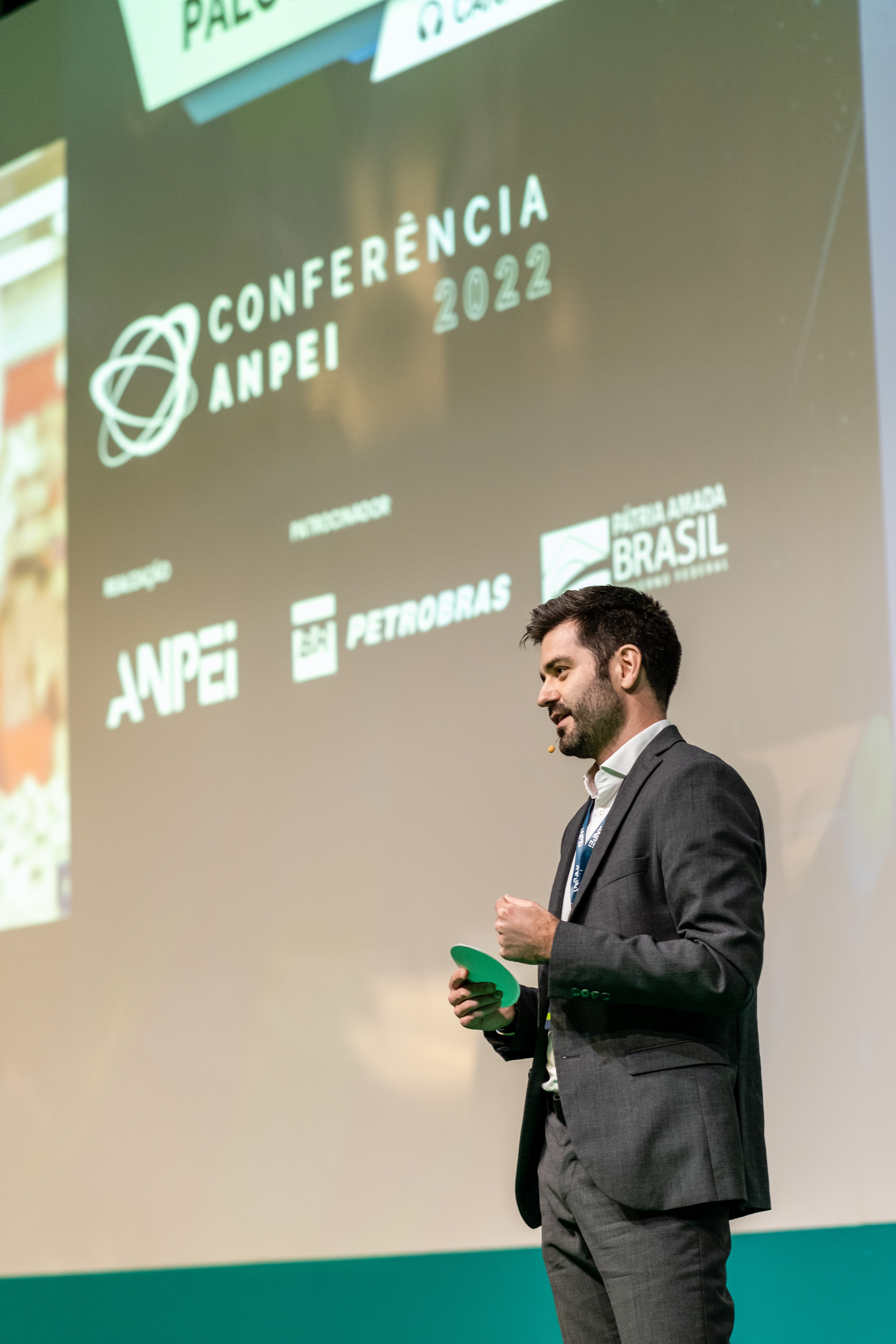
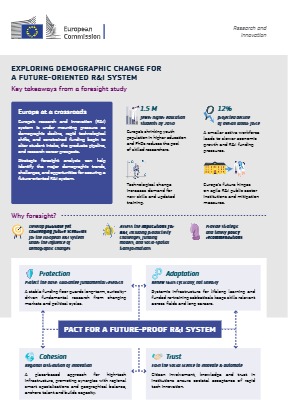
    On 10 December 2025, DG Research & Innovation hosted a hybrid event at the DG RTD Library in Brussels to present the Foresight-on-Demand (FOD) study: “The Demographic Turn: Actions Needed for Research, Innovation and Policy in Europe?”


    FOD team members guided the audience through:

    • Background data showing a shrinking youth population, a declining workforce, and growing fiscal pressures on R&I funding.
    • A six-step Foresight Process combining horizon scanning, scenario-building, and windtunneling to anticipate future challenges.
    • Four Scenarios illustrating different pathways for Europe’s R&I system.
    • Strategic actions to protect fundamental research, foster lifelong learning, strengthen regional innovation, and build societal trust in technology.


    👏 A big thank you to the panelists and speakers:

    • Erik Canton (Deputy Head of Unit – Common R&I Strategy and Foresight Service, DG Research & Innovation)
    • Nicola Francesco Dotti (Chief Economist Unit – Common R&I Strategy and Foresight Service, DG Research & Innovation)
    • Brikena Xhomaqi (The Lifelong Learning Platform)
    • Alex Petropoulos (Centre for Future Generations)
    • Thomas Estermann (European University Association)
    • Maciej Krysztofowicz (EU policy Lab, Joint Research Centres)
    • Viola Peter (FOD team, Technopolis Group)
    • Michal Nadziak (FOD team, 4CF)
    • Katarzyna Figiel (FOD team, 4CF)

    And to all participants for an engaging exchange on how to build a more adaptive and resilient EU R&I system.


    Missed the event? Explore the below documentation !


    Posted on: 27/11/2025

    Last Edited: 10 months ago

    Updating the national smart specializations in RomaniaJanuary 2021

    The results of the consultations conducted in 2020 regarding the update of smart specializations at the national level

    Posted on: 11/04/2025

    Post Image

    Last Edited: a year ago

    Emerging risks and opportunities for EU internal security stemming from new technologies

    A technology foresight exercise to support EU policy development and Law Enforcement Agencies in the fields of Resilience of Critical Entities and Fighting Crime and Terr...

    This report explores the transformative potential of Key Enabling Technologies in addressing
    emerging security challenges within the European Union. By conducting foresight analysis, the report
    evaluates technologies such as artificial intelligence, advanced sensing, blockchain, and drones,
    highlighting their ability to enhance law enforcement and critical infrastructure resilience, and fighting
    crime and terrorism, while exposing vulnerabilities, such as misuse by criminal actors or regulatory
    gaps.
    The findings emphasise the need for proactive EU policies to both support technology transformation
    and mitigate risks, including strategic investments in secure innovation, legal harmonisation, and
    addressing societal resilience. This report aligns with the Commission’s 2024–2029 priorities,
    supporting a prosperous, secure, and resilient Europe through actionable insights into emerging
    security challenges. The recommendations aim to foster effective public-private collaborations,
    ensure regulatory coherence across Member States, and promote technological solutions that balance
    security needs with ethical and societal values, reinforcing the EU’s position as a leader in sustainable,
    innovation-driven policy-making in internal security. 

    Posted on: 11/03/2025

    Last Edited: a year ago

    Vision beyond consensus - The Delphi method for collective foresightFebruary 2025

    Eye of Europe Foresight Starter Video #3

    This video introduces viewers to the Delphi method, a tool of futures research and foresight. Although it gets its name from the ancient Greek oracle, the modern incarnations of the method are powered by technology. Even so, the difficulties of reaching consensus and the influence of group dynamics on rational argumentation remain. If you are participating in a Delphi process, this video is an essential introduction to the method.

    This video is third part of a series of videos introducing foresight workshop methods for the Eye of Europe project funded by the EU.

    Posted on: 05/03/2025

    Last Edited: a year ago

    "The future of quantum computing: what matters now"

    Foresight study on behalf of the German Federal Ministry for Economic Affars and Climate Action

    The DLR-PT conducted a comprehensive foresight study for the BMWK to explore the current progress and challenges in quantum computing. Using DLR-PT's innovative Strategic Impact Navigation Assessment Model (SINAVI), the study employed a range of methods including trend analysis, expert interviews and multi-stage Delphi surveys. Based on these findings, DLR-PT created a forward-looking scenario for 2032 and used the backcasting method to identify key strategies for advancing quantum computing in Germany. The findings were enriched with data from an accompanying performance review of the funding initiative, for which DLR-PT was also responsible. The result was a holistic, actionable roadmap that highlights both the achievements and future potential of the funding programme.

    Posted on: 17/02/2025

    Last Edited: a year ago

    Expectations and assumptions for the future in the Work Programme 2021-2022 of Horizon EuropeJanuary 2023

    Foresight on Demand (FoD)

    This report presents the results of a study on “Expectations and assumptions for the future in the Work Programme 2021-2022 of Horizon Europe”. The study scanned the HE Work Programme 2021-2022 for assumptions and expectations about the future and conducted a Delphi survey of experts on the likely time of realization of those expectations and assumptions. The analysis revealed three over-lapping but distinct types of challenges associated with assumptions and expectations that should be recognised in future workprogrammes: policy chal-lenges, diversification challenges and reflexivity challenges.

    Posted on: 30/01/2025

    Last Edited: a year ago

    Scenarios for the future of school education in the EUSeptember 2023

    A Foresight Study

    The foresight study focused on school education (ISCED levels 1-3) in the EU. It aimed at:

    • developing four scenarios, describing potential alternative futures of the school education in the EUby 2040.
    • identifying the preferred scenario developments.
    • providing recommendations on the policy measures that could be introduced, or strengthened, tohelp school education in the EU move towards the preferred future scenario.

    The development of the scenarios was based on the factors of change1, identified through desk research, horizon scanning, and extensive stakeholder involvement. More than 80 European Commission officials, school education experts, representatives of teacher, student and headmaster umbrella organisations, and other stakeholders, from across the EU, contributed to the study, by participating in four workshops, a Delphi survey, and interviews.

    Posted on: 29/01/2025

    Last Edited: a year ago

    Mission Area: Adaptation to Climate Change, Including Societal TransformationJuly 2021

    Foresight on Demand Brief in Support of the Horizon Europe Mission Board

    This final report summarises the results of the actions to support the Mission Board for “Adaptation to Climate Change, including Societal Transformation” with forward-looking evidence.

    In accordance with the Request, the proposed services, approaches to be adopted, and the concrete nature and form of the outputs have been shaped and validated through close interaction with the Mission Board (MB) via the Mission Secretariat, run by relevant European Commission (EC) services, throughout the implementation of the action.

    As a result of the interactions with the Mission Secretariat, the following actions were taken:

    1. Preparing a short paper Input to Mission Board on scoping activities & tasks
      (Deliverable 1)
    2. Analysing national and regional funding programmes of selected countries for
      projects on Climate Change Adaptation, and conducting interviews with selected
      Mission Board members in preparation of a foresight workshop.
    3. Preparing an input paper for the foresight workshop Input Document FoD CCA
      Workshop, 23 January 2020 (Deliverable 2).
    4. Holding a foresight workshop (23 January 2020) with Mission Board members,
      European Commission representatives (Mission Secretariat), and foresight experts,
      and summarising the results of the workshop. The workshop served to identify
      barriers and solutions, enablers and impacts of climate change adaptation in a variety
      of thematic fields, including health, water, food and agriculture.
    5. Developing and implementing a Delphi survey on assessing key aspects of the draft
      paper of the Mission Board. The survey addressed climate experts. They assessed
      future targets in thematic fields (e.g. financial risks, health, social infrastructure), and
      ranked related measures and R&I fields for importance.
    6. Preparing and analysing the results of the Delphi survey: Delphi Survey results,
      July/August 2020 (Deliverables 3 and 4).

    The report is structured along these deliverables.

    Posted on: 20/01/2025

    Last Edited: a year ago

    Mission Area: Healthy Oceans, Seas, and Coastal and Inland WatersJuly 2021

    Foresight on Demand Brief in Support of the Horizon Europe Mission Board

    This report provides the findings from the ‘Foresight on Demand’ project supporting the Horizon Europe
    Mission Board for Healthy Oceans, Seas, Coastal and Inland Waters in its task of defining specific
    Mission(s) to be addressed in Horizon Europe. The overarching goal of the project was to support the
    reflections of the Mission Board from a forward-looking perspective.

    The team of experts was set up by the ‘Foresight on Demand’ consortium to provide the Board with wellversed
    expertise in both foresight methodology as well as thematic developments on the future of
    oceans and water. The objective was to think along with the board and to stimulate the debates by
    raising surprising and challenging issues based on forward-looking analysis and exploration. The project
    provided the Mission Board with new information, (systemic) insights and/or alternative future visions
    that connect the extremely multi-dimensioned topics tackled by this Mission Board.

    The project had started with the scoping phase of identifying focal areas of which results were discussed
    in the meeting with the Mission Board. Subsequently, the foresight team explored further future
    uncertainties and knowledge gaps via a real-time Delhi survey to stakeholders. The scoping phase
    began with the scanning of 33 foresight reports looking towards 2050, foresight databases and news
    feeds to address long-term developments and emerging signals of change. In particular, the foresight
    expert team developed five focal areas, which were presented to the Mission Board to provide
    interconnected insights as well as challenging and provocative ideas to enrich their work. The five focal
    areas are summarised in the table below:

    After the initial phase of scanning and analysing emerging issues and synthesising the findings into five
    focal areas the results were discussed with the Mission Board. In the meeting the discussion led the
    Mission Board request the foresight team to continue the foresight work and identify further data and
    knowledge gaps related to oceans and waters, the recovery of oceans and waters and their role in
    climate change mitigation.

    In line with foresight practice as well as with the Mission Board’s explicit desire to involve a wider public,
    the study engaged stakeholders via a real-time Delphi method highly suitable to address future
    uncertainties. The Delphi method is a structured group communication process, dealing with subjects,
    on which often unsure and incomplete knowledge is available, that are judged upon by experts. The
    idea is that the respondents can learn from the views of others, without being unduly influenced by the
    hierarchies or other societal structures and power relations.
    Invitations to the survey were sent to stakeholder groups in different sectors of society, in particular:
    research and development, policy, industry and civil society. Approx. 3000 European stakeholders were
    invited. The survey platform was open two weeks in February 2020 leading to the total of 238 registered
    participants of which 138 finished the survey.

    Participants assessed the total of 15 future statements and proposed new ones to be considered by the
    Mission Board, in three areas: i) oceans and other water ecosystems, ii) the recovery of healthy oceans
    and waters and iii) the role of oceans and waters in climate mitigation. The results of the assessments
    presented in mean values are summarised in the following table in each of the three areas.

    The findings form the survey can be summarised on each of the areas as follows:

    • Oceans and other water ecosystems: In this area, all proposed issues are accepted as
      important but, with the current attitude towards marine and water ecosystems, respondents
      believed that actions will not be sustained properly. The reason for this lack of consistency
      between “right things to do” and what is actually done probably resides in cultural gaps that
      make it difficult to pass from theoretical analyses and legislation to action, with the reversal of
      current trends. Nonetheless, the survey indicates consensus about the adoption of the
      ecosystem approach, recognising that humans, with their cultural diversity, are an
      integral component of ecosystems
      and emphasizing the need for collaboration between the
      scientific community, the economic sector, policymakers and the public at large.
    • The recovery of healthy oceans and waters: In this area, the survey showed a remarkable
      consistency, from all stakeholders, on the actions contributing to healthy oceans and waters.
      This point could almost guarantee the success of the mission as it seems that the society
      understands the enormous contribution of healthy oceans and waters on the planet earth.
      Although the list of what can be achieved in the near future could be endless, the fact that we
      have to include society at large in addressing challenges, should be our first step.
    • The role of oceans and waters in climate mitigation: The respondents provided a global
      impression that Europe can be leader in several fields of climate mitigation. If, however, the
      rest of the world is not addressing these efforts of climate mitigation, the role of Europe will not
      have significant impact. There is no single major technological solution that, alone, would curb
      the climate change, a goal that might be achieved by a mix of technologies and regulations, at
      the right geographic scale, and as early as possible. Furthermore, positive and negative
      impacts of each technology have to be assessed carefully as very little is still known on the
      mid-term and long-term impacts of the different technologies available today. Much more
      research and stakeholder cooperation are required to select the right technologies and
      the optimum strategies on time
      , in order to avoid unmanageable trends.
    • Further areas to be explored: Next to the topics proposed by the foresight expert team,
      stakeholders were asked to suggest other topics that should be understood better and acted
      upon in the EU. Three main topics emerged: research and research infrastructure, civil
      society, and corporate social responsibility
      .

    Final remarks and recommendations

    The first part of the foresight study led to the descriptions of five possible focal areas for European
    innovation action in the realm of oceans and waters: 1. Climate-resilient coastlines, 2. Clean water for
    the blue planet, 3. Vital aquatic ecosystems, 4. Open digital twin of oceans and waters, 5. Humans at
    sea. All these focal areas have similar magnitudes, notably if we consider an extensive view of "humans
    at sea" not only as an island network but as a continuum between a vulnerable and densely populated
    low elevation zone and a potentially harmful but also rich coastal ocean. In view of addressing the focal
    areas or their elements in the future actions towards sustainable development in Europe, it is worth
    prioritising such efforts in relation with the general theory of systems that establishes the hierarchy of
    systems in three spheres showing that human activities and economy are nested into natural systems
    and must obey their laws. Traditional illustrations of sustainability, however, show only a small overlap
    of the three spheres, this overlap representing sustainability.

    The real-time Delphi survey confirmed that there is a need for a holistic approach leading to more
    structured actions. This is widely recognized but seldom satisfied. Too specific actions, undertaken while
    ignoring the behaviour of the rest of the ecosystems, may lead to temporary success but will surely not
    improve the overall situation. This calls for enhanced efforts in improving ocean literacy at all levels,
    from the scientific community (too focused on reductionistic approaches) to the economic, social and
    industrial sectors. Furthermore, the conceptual landscape embracing water ecosystems (linking oceanic
    and inland waters) is very fragmented, with the high risk that while fixing specific problems other
    problems are created. Hence, we conclude with three recommendations.

    1. Adopt a holistic approach for balanced actions that calls for improving water literacy at all
      levels of society.
    2. Create networks of interest using a common (not too technical) language embracing water
      ecosystems (including both oceanic and inland waters) to overcome fragmentation in society.
    3. Conduct holistic impact assessments and establish monitoring mechanisms of measures
      implemented to fix specific problems to avoid creating in parallel new problems in complex
      ecosystems.

    Posted on: 20/01/2025

    Last Edited: a year ago

    After the new normal: Scenarios for Europe in the post Covid-19 worldNovember 2021

    The Covid-19 pandemic has shattered our sense of ‘normal’, and amplified uncertainties and issues at the core of what the future may hold. The project ‘After the new normal: Scenarios for Europe in the post Covid-19 world’ examined possible futures of 2040 for the EU emerging from the crisis of the pandemic, as possible contexts for EU R&I. The five scenarios described in this report chart different possible post-Covid-19 evolution paths, creating new perspectives on key EU R&I policy issues.

    Control over technological development

    Across all scenarios, the ability of the European Union to exert control over future technological development - through regulation, standardisation, and the enforcement of policy - entails wide ranging socio-economic implications for the broader society.

    The EU share of global R&D is shrinking, and there is an unavoidable, growing EU dependence on technologies developed and produced elsewhere in the world, most notably in the US or China. There is also an ever-increasing influence of private firms on technological development, including large multinationals, which remain largely outside public control as regards potential societal consequences of the deployment of those technologies. The challenges these trends may pose to the ability of the EU to exercise control over technological development will depend on the speed of the recovery from the Covid-19 crisis and on the character of the relationships that will be built during the recovery effort.

    Resilience, adaptability and preparedness for future crises

    Resilience, adaptability and preparedness require an anticipatory R&I policy including ways of identifying, monitoring and addressing threats and developing new emergency response capacities that involve science in systemic roles: as a generator of advice, as a capacity for quick analysis, monitoring of the challenge and evaluating the efficacy of responses, as well as a generator of new responses and tools against the crisis. Preparedness should include:

    1. ‘Wind-tunnelling’ new plans, policies, and institutions through worst-case scenarios for alternative crises.
    2. Exploring regularly new modes of assessing threats and trialing emergency responses, which offer the possibility to explore hidden opportunities.
    3. Engaging research with all branches of government to share findings about threats and opportunities, and to foster more integrated and coordinated responses.

    The key role of education

    The Covid-19 crisis precipitates the introduction of a new wave of educational technologies, opening up new possibilities and engendering new challenges and risks. This could be heralding new opportunities for improving the relations
    between science and education, and therefore strengthening the contributions of science to society, as well as new challenges of fracturing value and belief systems, populism and fake news. The availability of public funds for education and the role that private companies will play in new educational developments will be critical. EU R&I policy can contribute to improving the links between science, technology and education by supporting local experimentation in education in a framework that could help diffuse good practices across the EU.

    EU level financing for R&I

    After nearly 50 years of Framework Programme, EU direct funding for R&I projects has become part of the institutional backbone of the EU. The scenarios remind us that this is not given and that the EU budget is subject to political negotiations despite its importance for the maintenance of R&I capacity in different Member States. There is a continuous need for ensuring that the EU gets value for money out of its investments in R&I including the recognition of the benefit that Member States and EU policies across the board gain from the EU Framework Programme.

    Regional disparities in R&I performance

    The persistence of regional disparities in R&I performance has been a problem for the EU for a long time, and one that the EU has yet to resolve. The scenarios remind us that such disparities can develop into deep divide across the economy and politics of the European Union. Furthermore, the scenarios demonstrate how some modes of recovery can be better suited for enabling the more equitable generation of economic and social value from R&I, particularly in those regions facing greater present day challenges. Emphasis in social innovation, social entrepreneurship and frugal innovation in the EU instruments may make important contributions to overcoming regional disparities.

    Defining future priorities in R&I policy

    R&I policy priority-setting processes and the extent to which R&I priorities are driven by concerns with the past, current and future challenges vary across Member States of the EU. This affects the definiton of joint priorities as well as the diversity and vibrancy of the EU innovation ecosystem. Scenarios that explored conditions of challenging polarisation between different national interests and between public and private interests, highlight the importance of public engagement and especially of engagement with new actors, such as social-purpose companies, in the definition of future priorities of EU R&I policy as well as in the governance and implementation of the R&I effort.

    Other emerging issues of relevance to EU R&I policy

    Additional emerging issues that may deserve particular attention in the coming years include:

    • Several scenarios suggest that there will be both a greater need and stronger willingness for Member States to collaborate closely on matters of R&I policy.
    • The widening of the range of actors as well as of policies that matter for R&I, linked to the growing policy attention to system change will become an important challenge for coordination of efforts and policy coherence.
    • With their strong emphasis on competitiveness and growth objectives, the established rationales underpinning EU R&I policy are increasingly out of synch with the needs of societal and world challenges.
    • As the landscape of European knowledge systems continues to evolve, R&I policy must realise its influential role in shaping broader change and adopt socio-economic disparities and environmental concerns as guiding principles.

    All scenarios suggest the need for stepping up collective capability and willingness to actively engage in open and collaborative R&I relationships, both within Europe and with the world beyond Europe. This is obvious in relation to some of the global challenges Europe is aiming to address, but also with regard to emerging technologies where international alliances are decisive for establishing common standards and regulation. In order to ensure a relevant global role of Europe in the world, it is essential to build upon a strong, stable and coherent home base in R&I.

    This report is also available on Zenodo.  

    Posted on: 07/01/2025

    Last Edited: a year ago

    Future Directions and Possibilities for the UniversitySeptember 2024

    Report on Literature Review and Delphi Study

    What lies ahead for universities? A new futures research study from the University of Turku maps multiple pathways and tensions that could transform how universities teach, research, and serve society.

    Introduction
    Researchers of the University of Turku have published a comprehensive report "Future directions and possibilities for the university: Report on literature review and Delphi study" (Virmajoki et al. 2024) about the possible future trajectories of the university of Turku. The report, which is uploaded here and also available on utupub.fi, is part of a larger project - Strategic Foresight and Futures Thinking Initiative.   

    The report, conducted by the Strategic Planning Unit of the University of Turku together with Finland Futures Research Centre (FFRC), contains the results of the analysis of the operating environment of universities. Operating environment here refers to the broader context of trends, challenges, and conditions - both nationally and globally - that affect how universities function and perform their core activities in teaching and research. While the report has as its scope the University of Turku, its findings and especially the approach are more broadly relevant, particularly in Europe.

    Analysis of Operating Environment as Research
    The analysis of the operating environment was primarily based on a literature review and a subsequent Delphi survey. We reviewed over 200 scientific texts relevant to the subject. It quickly became evident how multifaceted and unique universities are. Scenarios—a common tool in foresight—would not be sufficient on their own to understand the possible futures of universities. Therefore, we first categorised universities into 10 different dimensions, such as societal purpose, international orientation, and educational organization, and identified different directions for development for each dimension. This allowed us to create a multidimensional description of possible development paths for universities, yielding in total 30 different paths and their combinations. The reality is somewhere between the idealized end-points.

    In addition to helping understand various possible futures, the analysis where several dimensions and their paths are explained also provides a tool for the university units to examine their own position in relation to these possible developments. University units can differ significantly from one another, and no analytical tool that accounts for these differences can be sufficient. Our report offers such a tool by enabling discussion – with agreements and disagreements – of different development trajectories from the perspectives of diverse traditions and practices that can be found within any university.

    Possibilities and Desirability – The Delphi Study
    It was not only important to understand the possible futures universities may face. Equally crucial at the University of Turku was to understand what university members – researchers, students, administration, and other staff – think about these futures. To achieve such understanding, we conducted a Delphi study to ask what university members consider probable and desirable when it comes to the future. The statements were designed to provoke thoughts and bring out views that might not emerge in more traditional discussions. In addition to the probability and desirability assessments, we gathered valuable insights from the open comment sections, which often reveal perspectives that might be overlooked in the literature review.

    Some Key Results
    While the most interesting results cannot all be included in this text, some should be highlighted to provide a sense of the nature of the study.

    First, universities are continuously balancing societal impact, economic goals, and fundamental research. The demands from the side of the wider society often pull in different directions. The Delphi study showed that working towards a societal mission is seen as desirable, but market orientation is expected to be more likely. A common thought and worry seems to be that universities are likely to shift towards more commercial interests, despite the tension this creates with their social responsibilities not measurable in economic terms.

    Second, global research collaboration and local relevance create a significant tension. Universities aim to be part of global networks, while also expected to contribute to their local communities. The Delphi study revealed varying opinions on this balance. Some see global engagement as essential, while others stress the importance of local ties. Whether a university can succeed in both areas or must focus on one is a central question. The geopolitical tensions and the regional clusters this might create adds another path that might make the question between local and global even more difficult and multidimensional.

    Third, in teaching, the main tension seems to lie between scalable, mass-oriented education and more personalised, tailored teaching. Scalable teaching allows universities to reach more students, but the Delphi study showed that personalized methods are considered more desirable. Yet, the study also indicated that standardised models are, according to the members of the university, more likely to prevail due to the scarcity of resources. Technology and its development will be an integral part of both scalable and personalised teaching paths (and everything in between) but different technological solutions might be associated with different paths.

    Significance for the University Sector
    The project and the report highlight the value of combining an analysis of the university operating environment and a more detailed study of the views of the university community. On the one hand, an analysis of the environment and the paths therein provides a tool to navigate the prospects and risks. On the other hand, the analysis of the members’ perspective helps the university understand where we stand now and what are the paths that the members recognise. Together, these two provide a robust view on the strategic status and importance of different possible trajectories for universities’ operating environment.

    The research has broad applicability across universities worldwide. Through its dimensions and models, any higher education institution can map out and discuss likely trajectories, desired directions, and concerning paths ahead - regardless of their unique features. By combining extensive research literature with a Delphi study, the report opens a window into the possible futures of universities – or rather a map that can be used to navigate the long-term issues that these long-standing institutions face.

    References
    Virmajoki, V., Ahokas, I., Witoon, S., Ahlqvist, T., Kirveennummi, A., & Suomalainen, K.-M. (2024). Future directions and possibilities for the university: Report on literature review and Delphi study. A Report by University of Turku Strategic Planning Unit in collaboration with the Finland Futures Research Centre (FFRC). ISBN 978-952-249-617-1.
    Posted on: 13/12/2024

    Last Edited: a year ago

    Strategic Foresight in the Western BalkansSeptember 2021

    Recovery on the Horizon

    The report outlines three scenarios of possible futures for Research and Innovation (R&I) policies in the Western Balkans in 2035. Using a Strategic Foresight approach, the report supports policy makers in creating an enabling environment for R&I policies to thrive and in deciding on priorities for strategic investments for the future. 

    The scenarios in the report are based on an extensive co-creation process with more than 700 R&I experts from the Western Balkans, representing academia, civil society, the private sector, international organisations, and central and sub-national governments. To provide inspiration for the implementation of future-proof R&I policies, the report also includes initial roadmaps. 

    These are designed to inspire decision-makers by setting targets and the actions needed to develop their R&I systems for the benefit of all citizens in the Western Balkans. The project was launched in July 2020 and the final study was presented at the EU-WB Ministerial Meeting in October 2021.

    Posted on: 04/12/2024

    Post Image

    Last Edited: a year ago

    Czech Priorities

    Megatrends and Grand Societal Challenges Summary

    A proposal for a methodology to identify Megatrends and Grand societal challenges with a significance for Research and Innovation in the Czech Republic

    Posted on: 25/11/2024

    Post Image

    Last Edited: a year ago

    The Word on The Tweet

    Social Media Signals on The Future of Democracy

    Social media provides a window into current debates, social issues and topics that are relevant to communities. This blog post summarises EUARENAS future-thinking work that used social media signals as its starting point to explore the future of democracy.

    Posted on: 25/11/2024

    Last Edited: a year ago

    Harvesting ChangeDecember 2022

    Harnessing Emerging Technologies and Innovations for Agrifood System Transformation

    FAO’s Office of Innovation is working with partners on an FAO Chief Scientist initiative on Foresight on emerging agrifood technologies and innovations, aligned with the UN 2.0 process and the FOFA 2022: engaging all key actors of agricultural innovation systems in the foresight on emerging technologies and innovations to better prepare for alternative futures, feeding it into anticipatory action, and convening the global community for constructive dialogue and knowledge exchange. The aim is to support policymakers, investors and innovation actors in their approaches and decision-making. The study assesses a selection of technologies and innovations, which potentially could be of paramount importance in addressing agrifood challenges until 2050, as well as the most important trends and drivers that will influence the emergence of agrifood technologies and innovations and their triggers of change, including some regional aspects. The goal is also to build plausible future scenarios for the evolvement of the emerging technologies and innovations in the future with the time horizon of 2050 to inform future-oriented policymaking. The report is built with inputs from a multistakeholder Delphi survey and online workshops with experts.

    Posted on: 10/11/2024

    Last Edited: a year ago

    Technology Foresight for Public Funding of InnovationAugust 2023

    Methods and Best Practices

    In times of growing uncertainties and complexities, anticipatory thinking is essential for policymakers.
    Technology foresight explores the longer-term futures of Science, Technology and Innovation. It can be used
    as a tool to create effective policy responses, including in technology and innovation policies, and to shape
    technological change.


    In this report we present six anticipatory and technology foresight methods that can contribute to anticipatory
    intelligence in terms of public funding of innovation: the Delphi survey, genius forecasting, technology roadmapping, large language models used in foresight, horizon scanning and scenario planning.


    Each chapter provides a brief overview of the method with case studies and recommendations.
    The insights from this report show that only by combining different anticipatory viewpoints and approaches
    to spotting, understanding and shaping emergent technologies, can public funders such as the European
    Innovation Council improve their proactive approaches to supporting ground-breaking technologies. In this
    way, they will help innovation ecosystems to develop.

    Posted on: 28/10/2024