Loading...

    Mentions of

    sorted by publishing date

    Last Edited: 4 months ago

    2025 Strategic Foresight ReportAugust 2025

    The world has changed dramatically in the last few years. We are seeing the erosion of the international rules-based order, the impacts of climate change and environmental degradation are worsening faster than expected, and security becoming a central focus in all policies. In addition, we are facing intersecting EU-specific challenges. The EU has shown strength, unity and transformative resilience in responding to recent crises. However, the scale and complexity of the challenges ahead require a proactive and forward-looking approach. 2025 Strategic Foresight Report presents "Resilience 2.0", an approach to ensuring the EU thrives in turbulent times through 2040 and beyond. It builds on the recent European Preparedness Strategy and recognises the need to scan proactively not only for emerging risks but also for future opportunities, and to consider unfamiliar or even hard-to-imagine scenarios.

    Intersecting EU-specific challenges
    📌The simultaneous quest for economic competitiveness and strategic autonomy: requiring careful policy design to mitigate possible tensions.
    📌Balancing the approach to technology: ensuring an EU values-based innovation model.
    📌Pressures on people’s well-being and societal resilience: addressing demographic trends, regional disparities, demands on physical and mental health, and risks to the environment.
    📌Threats to democracy and fundamental values: addressing external and internal pressures on democracy, algorithm-driven polarisation, and disinformation.

    👉 Read more

    Posted on: 30/09/2025

    Last Edited: 4 months ago

    ESPAS Annual Conference: Europe Towards 204013 November - 13 November 2025

    Charting a course in a new era of conflict and competition

    The European Strategy and Policy Analysis System (ESPAS) annual conference will be held in Brussels on Thursday 13 November. As in previous years, the conference will be co-hosted by the European Commission and the European Parliament.

    At a time of global upheaval and uncertainty, this conference will focus on the future and the strategic choices facing the European Union as it charts its own course in the coming decade and more. Decision-makers are frequently faced with multiple and sometimes overlapping crises to which they are required to find quick solutions. The need to think about the longer-term and how to build our collective resilience to deal with shocks and unforeseeable threats - to be able to 'stay the course' - has rarely been more pressing.

    The speakers at this 12th annual ESPAS Conference will aim to shed light on some of the fundamental challenges Europe will face in the fields of technology, geopolitics, democracy and intergenerational fairness. And together we will explore possible scenarios for charting a course towards 2040. How can the European Union harness transformative technologies such as AI? Where should it position itself in a new world order, and how can we shape it? How can European democracy be revitalised and societies respond to creeping authoritarianism? How can we build a new intergenerational fairness agenda?

    These and other epoch-defining challenges decision-makers face cannot simply be overcome using short-term fixes. Politicians are increasingly looking for anticipatory, longer-term thinking that offers them pathways to improved policy outcomes. Foresight, with its inherent ability to harness collective intelligence and promote long-term thinking, plays an increasingly important role in supporting European policy-makers to make the right strategic choices.

    Our aim in ESPAS is to help European Union policy-makers prepare better for the shocks and opportunities that come our way, but also to offer a structured approach with practical tools to look beyond today's challenges. This annual ESPAS conference with leading political figures, civil society representatives, policy experts and foresight practitioners offers a unique platform to bring foresight and policy-making together in a European context. It also provides a significant and timely opportunity to explore new ideas for Europe's future, and to help shape its priorities for the coming decades.

    👉 See the programme 

    Posted on: 30/09/2025

    Last Edited: 8 months ago

    Future Topics for European Research AreaMay 2025

    Eye of Europe Policy Brief No. 1

    This policy brief provides insights into the thematic areas addressed in the first five Eye of Europe workshops. It also informs about the upcoming workshops and the futures4europe platform, the online home of the European foresight community, where visitors can explore a rich collection of foresight projects, showcase their work, and discover foresight-related upcoming events.

    Posted on: 17/06/2025

    Last Edited: 9 months ago

    Global Trends to 2040March 2024

    Choosing Europe’s Future

    This is the fourth ESPAS (European Strategy and Policy Analysis System) global trends report since the establishment of this inter-institutional EU foresight process in the early 2010s. As on previous occasions, it is being published in a year when the European Union embarks on a new five-year institutional cycle. The report analyses the key global trends towards the year 2040 and their possible impact on the Union, and sets out some strategic choices and questions that Europe's leaders may need to address in the coming five years and beyond. The report is the product of a unique collaborative process over the past year involving officials from across the nine ESPAS institutions and bodies.

    The report sets the centrality of geopolitics as a transversal trend, given the on-going shift from an era of cooperation to an era of competition as well as the deepening fragmentation of the international system and the acceleration of major global transitions. The Report highlights how the borders between EU internal policy and external policy are blurring nowadays and will probably blur even more in the future. The primacy of geopolitics is outlined across the various trends identified in the report: from the economic challenges to demography, from the environmental and climate crisis to the energy transition, from the quest for equality to the technological acceleration, and including health, democracy and the broader changes on how we live.

    The publication concludes by outlining the strategic imperatives for the incoming EU leadership. It calls for a multifaceted approach to establish the EU as a smart global power, ensure a socially equitable green transition, navigate economic risks, update the economic model, innovate within a balanced regulatory framework, and strengthen social cohesion.

    Between now and 2040, Europe and the world will undergo profound geopolitical, economic, technological and social change. The generation now growing up will live in a world that we can only imagine. However, integrating long-term goals into short to medium-term decision-making can boost our chances of leaving a world that is in better shape to the next generation. The more we understand the challenges ahead, the better we can anticipate and prepare for the changes to come. There are grounds for optimism. The EU has arguably been able to make progress in the past precisely when the challenges seemed overwhelming. When pressed, it can marshal reserves of determination and ingenuity. The next EU leadership will need to draw deeply on these reserves in the years ahead.

    Source: EEAS Global Trends to 2040: Choosing Europe’s Future

    Posted on: 30/04/2025

    Last Edited: 10 months ago

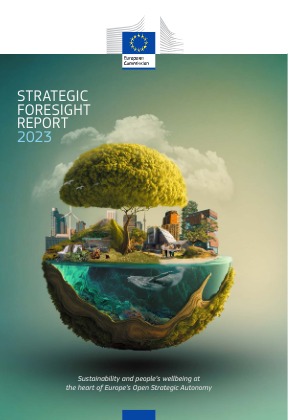
    Strategic Foresight ReportJune 2023

    Sustainability and People’s Wellbeing at the Heart of Europe’s Open Strategic Autonomy

    The EU is engaged in a profound and ambitious transition to achieve climate neutrality and sustainability in the next few decades. This sustainability transition will be key to strengthen the EU's Open Strategic Autonomy, ensure its long-term competitiveness, uphold its social market economy model and consolidate its global leadership in the new net-zero economy. To succeed, the EU will need to address several challenges and make choices that will affect our societies and economies at an unprecedented pace and scale.

    The 2023 report provides an overview of the challenges we face and proposes ten areas for action to achieve a successful transition. To equip policymakers with economic indicators which also consider wellbeing, it proposes to adjust Gross Domestic Product (GDP) to take account of different factors such as health and the environment.

    This approach will bolster the EU's Open Strategic Autonomy and global standing in its pursuit of a resilient net-zero economy. 

    Overcoming key social and economic challenges

    As it goes through the sustainability transition – which encompasses both economic and social sustainability ­– the EU is facing several challenges. For example:

    • Evolving geopolitical shifts are shaping public opinion and how governments across the globe act, challenging international cooperation on global issues, such as climate change or the energy transition.
    • The need for a new economic model, focused on the wellbeing of people and nature, decoupling economic growth from resource use and shifting to more sustainable production and consumption. Up to 75% of Eurozone businesses are highly dependent on natural resources. Economic, social and environmental sustainability are inextricably linked.
    • Growing demand for adequate skills for a sustainable future. The availability of workers equipped with appropriate technical and soft skills will be crucial for the EU's competitiveness: 85% of EU firms today lack staff with the competences needed to navigate the green and digital transitions.
    • The sustainability transition requires unprecedented investments. Achieving it will depend on securing sufficient funding both from the public and private sectors.

    Ten areas for action
    Today's report identifies ten areas where our policy response is needed to ensure that the sustainability transition remains focused on the wellbeing of people and society:

    1. Ensure a new European social contract with renewed welfare policies and a focus on high-quality social services.
    2. Deepen the Single Market to champion a resilient net-zero economy, with a focus on Open Strategic Autonomy and economic security.
    3. Boost the EU's offer on the global stage to strengthen cooperation with key partners.
    4. Support shifts in production and consumption towards sustainability, targeting regulation and fostering balanced lifestyles.
    5. Move towards a ‘Europe of investments' through public action to catalyse financial flows for the transitions.
    6. Make public budgets fit for sustainability through an efficient tax framework and public spending.
    7. Further shift policy and economic indicators towards sustainable and inclusive wellbeing, including by adjusting GDP for different factors.
    8. Ensure that all Europeans can contribute to the transition by increasing labour market participation and focusing on future skills.
    9. Strengthen democracy with generational fairness at the heart of policymaking to reinforce the support for the transitions.
    10. Complement civil protection with ‘civil prevention' by reinforcing the EU's toolbox on preparedness and response.

    Source: European Commission - Press Corner - 2023 Strategic Foresight Report

    Posted on: 15/04/2025

    Last Edited: 10 months ago

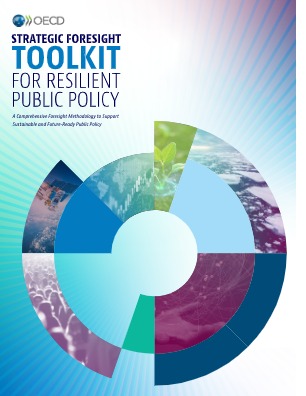
    Strategic Foresight Toolkit for Resilient Public PolicyDecember 2024

    A Comprehensive Foresight Methodology to Support Sustainable and Future-Ready Public Policy

    By exploring 25 evidence-based potential disruptions across environmental, technological, economic, social, and geopolitical domains, the Strategic Foresight Toolkit for Resilient Public Policy helps anticipate challenges and opportunities that could reshape the policy landscape between 2030 and 2050. These disruptions are not predictions, but hypothetical future developments identified through extensive research, expert consultations, and workshops. The Strategic Foresight Toolkit features a five-step foresight process, guiding users to challenge assumptions, create scenarios, stress-test strategies, and develop actionable plans. It includes facilitation guides and case studies to support effective implementation. Each disruption is accompanied by insights on emerging trends, potential future impacts, and both immediate and long-term policy options to ensure resilience and preparedness. Designed for policymakers, public administrators, and foresight practitioners, this publication is designed to promote holistic, strategic and evidence-informed decision-making. It aims to support countries and organisations in using strategic foresight to design and prepare robust and adaptable public policies for a range of possible futures. With its practical methodology and forward-looking approach, the Strategic Foresight Toolkit is a vital resource for building sustainable, resilient, and effective public policies.

    Source: OECD - Publications 

    Posted on: 15/04/2025

    Post Image

    Last Edited: 10 months ago

    Co-Creating Futures of Democracy in Europe

    YouthDecide 2040 is looking for participants to join our regional workshops

    📣 YouthDecide 2040 is looking for participants to join our regional workshops and co-create the future of European democracy!

    Be part of a one-and-a-half-day immersive workshop where diverse voices come together to imagine and shape resilient, thriving European democracies.

    🗣️💬 Through creative, participatory foresight activities, we will explore different visions of democracy in 2040—your perspective matters!

    🧭 The wider, the better
    Are you a European resident over 18? This call is for you!
    We're fostering intergenerational discussions on the future of European democracy, centring youth voices (18-34).

    🔓 The call for applications will remain open through May 2025. 

    Posted on: 10/04/2025

    Last Edited: a year ago

    Democracy – a long term project?27 February - 27 February 2025

    Eye of Europe Pilot Workshop

    Event takeaways:

    The workshop offered a structured journey—reflecting on the past of liberal democracies, examining current research on key pillars like institutions, participation, and media, and exploring possible futures through the lens of four science fiction novels that imagine future democratic developments

    • Senior scientist at “Our World in Data”, Bastian Herre gave an alarming as well as reconciling view into the deterioration of liberal democracies worldwide as well as in Europe. Yet, he pointed out that most of our present democracies are built on solid institutions and they are most likely to be resilient against internal and external attacks.
    • Michel Debruyne of Beweging.net introduced results from comparative country research from the INVOLVE Democracy project. Among the factors stablizing liberal democracies long-term are the quality of trust in public institutions and policies as well as making participation possible for all citizens. However, when looking at public policies and social benefits, the picture is more ambiguous: while public health expenditure is considered a stabilizing factor, high expenditure in pensions might result in distrust. More definite in destabilizing democracy in a country are corruption and low quality of public transport.
    • The RECLAIM project is researching the significance of expression of information disorder and democratic stability. The protection of the public sphere is identified as a cornerstone of democracy. Of similar importance are public service social media as well as a better regulation of social media companies. In his presentation Maximilian Conrad, University of Iceland, also pointed out the significance of the education factor, not only for children but also for adults, including science education and media literacy. Destabilizing factors are, among others, disruptive technologies, fragmented public spheres and distrust in traditional journalism and science.
    • In the MeDeMAP presentation, Maren Beaufort, Austrian Academy of Sciences focused on the role of (social) media and stated that traditional information media and pluralism, thinking long-term and endorsing a culture of diversity are crucial in maintaining democratic values. Investigative journalism plays a special role as it uncovers corrupt activities and disguised the foes of democracy. What we cannot expect is a consensus in social media bubbles. Definitely destabilizing liberal democracies is the exclusion of citizens from discourses; and also the suppression of media as well as the lack of self-criticism within journalism. Still open are questions such as: How to prevent democracies dying at the hands of elected leaders—who subvert the very process that brought them to power.
    • An outlook into diverse futures of democratic values was presented in the “Literary Quartet”, where four passionate readers of science fiction literature gave their interpretation of four different novels dedicated to the longevity of democratic life in the future. What we can learn from novel like Infomocracy (2016), The Lost Cause (2023), The Left Hand of Darkness (1969), and The Ministry for the Future (2020)? The discussion extracted visions of pluralist and diverse societies where humans can change their identity, experiment with new forms of governance in local communities, where central governments are resolved and where people find ways to cope with climate change by supporting each other.

    This workshop is part of a series of “Eye of Europe” pilot activities taking place during 2025, aimed at exploring various futures and their implications for R&I policy.

    The workshop was open to a wide audience - experts and non-experts - interested in questions of future democracies.

    Posted on: 21/01/2025

    Last Edited: a year ago

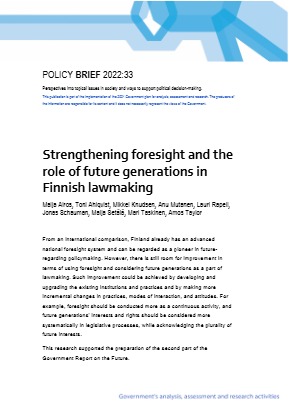
    Strenthening foresight and the role of future generations in Finnish lawmakingOctober 2022

    POLICY BRIEF 2022:33

    This is the short English-language Policy Brief from the research project Foresight and Future Generations in Law-Making (FORGE). FORGE examined issues of future-regarding lawmaking in an interdisciplinary manner, combining expertise on futures studies, political science, and jurisprudence. The aim of the study was to analyse the status of future generations and their rights in current legislative processes, and to map and compare practices for foresight and consideration of future generations in different political contexts, nationally and internationally. The purpose of the project was to increase understanding on i) how future generations can be better taken into account in policymaking; ii) how foresight can be better utilised in lawmaking. 

    The FORGE-project was unique – there had not previously been a study with a similar scope in Finland and comparable international examples are, to the best knowledge of the authors, extremely rare. FORGE supported the preparation of the second part
    of the Government Report on the Future. The project was funded by the Government’s analysis, assessment and research activities (VN TEAS) and was conducted during 1/2022–11/2022 by researchers of the University of Turku, Åbo Akademi University and Tampere University.

    Findings:

    From an international comparison, Finland already has an advanced national foresight system and can be regarded as a pioneer in futureregarding policymaking. However, there is still room for improvement in terms of using foresight and considering future generations as a part of lawmaking. Such improvement could be achieved by developing and upgrading the existing institutions and practices and by making more incremental changes in practices, modes of interaction, and attitudes. For example, foresight should be conducted more as a continuous activity, and future generations’ interests and rights should be considered more systematically in legislative processes, while acknowledging the plurality of future interests.

    Development proposals:

    Full lenght-report available in Finnish

    In addition to the 12-page Policy Brief summarising the FORGE projects' finding in English, The Prime Minister's Office has published the full 203-page report in Finnish. This can be found here below.

    Posted on: 08/01/2025

    Post Image

    Last Edited: a year ago

    Shaping Democracy’s Futures in Moldova

    Foresight lessons from a critical crossroads: Democratizing youth futures and using foresight for innovations in democracy tech

    I had the privilege to participate in a democracy conference and hackathon in Moldova in October, just days before the country’s pivotal EU referendum and presidential elections. Organized by the Alliance of Democracies Foundation in collaboration with local partner Yep Moldova and supported by USAID and the New Democracy Fund, the event was a hub of creativity, democratic innovation and a dose of foresight.

    Posted on: 16/12/2024

    Post Image

    Last Edited: a year ago

    How Combining Participatory Democracy and Foresight Practices Can Foster Political Innovation

    A journey in participatory democracy through challenges (and opportunities) of future-thinking approaches.

    Posted on: 25/11/2024

    Post Image

    Last Edited: a year ago

    The Word on The Tweet

    Social Media Signals on The Future of Democracy

    Social media provides a window into current debates, social issues and topics that are relevant to communities. This blog post summarises EUARENAS future-thinking work that used social media signals as its starting point to explore the future of democracy.

    Posted on: 25/11/2024

    Last Edited: a year ago

    Eye of Europe Foresight Pilot TopicsJuly 2024

    Eleven exciting topics have been selected by the Eye of Europe Consortium for Foresight Workshops to take place in 2025-2026

    The Eye of Europe (EoE) project has reached an important milestone: Using an interactive approach, the members of the consortium came up with eleven exciting topics that will be addressed in Foresight Workshops with experts, citizens, entrepreneurs, scientists, policymakers, journalists and many other stakeholder groups within the coming 16 months. In the workshops, Eye of Europe partners will apply both established and novel Foresight approaches to dive deep into topics of common interest to stakeholders across the European Research Area. These workshops will take place in cities such as Madrid, Prague, Berlin, Bucharest, Paris and Thessaloniki, as well as online.

    The final set of topics for EoE pilot workshops is as follows:

    • Democracy – a long term Project: This online workshop will gather domain experts to shed light on a large spectrum of future challenges to democracy.
    • The Knowledge of our Civilisation(s) in 2040: In this two-day Berlin based workshop participants with diverse domain expertise will explore the future of knowledge in human civilisation in the face of multiple drivers of change.
    • European Industrial Decarbonisation: This two-day workshop in Madrid will gather diverse stakeholders to debate alternative pathways of industrial decarbonisation for Europe in the face of different geopolitical scenarios.
    • Emotion Ecosystems: This Bucharest based two-day workshop will investigate the impact of technologies like affective computing and brain-machine interface on individuals and collectives with different stakeholder groups.
    • Democracy and Technology: In this workshop citizens in Prague will jointly reflect on democratic approaches to risks connected with new technologies and their impacts on various societal groups.
    • Aging and Assisted Living Technologies: This workshop in Berlin with international research and policy actors is dedicated to future ways of integrating smart and digital technologies into assisted living and care for older adults.
    • Fashion Futures: In two Thessaloniki based workshops citizens and domain experts will explore the future of sustainable fashion in interaction with values and identities both with a regional and international perspective.
    • Public Policy and Change of Diets: In this workshop in Paris a diverse group of citizens will reflect on policy inroads into future pathways towards healthy and sustainable diets.
    • Science and Conflicts: In this online workshop, experts and actors of the science system will jointly dive into possible implications of growing geopolitical tensions for science.
    • Future of Knowledge and Emotions: This futures survey will provide input for the two interrelated topics the future of knowledge and the future of emotion ecosystems that will feed the respective workshops.


      These Eye of Europe Foresight pilot workshops have a twofold purpose.

      First of all, the workshops serve the project’s aspirations expressed by Eye of Europe coordinator, Radu Gheorghiu, namely to nurture the “vibrant community of individuals engaging in a conversation about our collective future” and to fuel the “continuous loop of dialogue, learning and inspiration”.

      Secondly, by addressing topics of common interest to R&I actors across ERA and major R&I challenges, they aim to mobilise collective anticipatory intelligence. In particular, we hope to shed light on the evolution of research and innovation and its contribution to a wide range of important future questions.

      How did the team arrive at these topics?

      The topic generation process involved three major elements:
    • Analysis of R&I strategy documents from a range of different EU countries
    • interviews with R&I actors from different positions in ERA’s research and innovation ecosystem,
    • and interactive discourse among EoE partner organisations.

      It was important to the topic identification team, led by Pier Francesco Moretti from CNR - Consiglio Nazionale delle Ricerche in Italy, not to remain at the surface of the challenges that are expressed in key documents but to dive deeper into underlying root causes and dynamics. So when in the document analysis, topics like energy, artificial intelligence, digitalisation, health and security emerged at top positions, we strived to identify crosscutting underlying aspects.

    Posted on: 23/10/2024