Loading...

    Mentions of

    sorted by publishing date

    Last Edited: 12 days ago

    Workshop „Democracy and Technology “13 March - 13 March 2026

    A foresight workshop on the impact of technology on democracy organised by the Technology Centre Prague

    Democracy and Technology — a foresight pilot workshop organised by the Technology Centre Prague — will take place on 13 March 2026 in Prague.

    Democracy, its principles, as well as societal challenges and public debates are increasingly influenced by new and emerging technologies. To strengthen democratic principles, participation, public engagement, and citizens’ understanding of technology-related policies and strategies, it is necessary to deepen research into the interactions between technology and society. This also requires examining potential health, environmental, ethical, and other risks associated with new technological applications, as well as their impacts on different societal groups (for example, age groups, women and men, and social groups).

    This face-to-face workshop with citizens will focus on assessing the impacts of new technologies on society and democracy as a whole. With a group of 30–50 participants, various long-term scenarios and their key drivers will be discussed and developed through group discussions. The workshop will use the Manoa foresight method, which explores long-term impacts and their interconnections by considering current weak signals, trends, and ongoing changes. The method incorporates cultural, environmental, and other assumptions, not only technological or economic factors. The outcomes may include surprising or even radical scenarios, encouraging participants to expand their imagination and test strategies under extreme conditions.

    The workshop is open to the general public. Participation requires being at least 18 years old, having completed primary education, and ensuring gender balance among participants. Everyone who wishes to contribute to the topic is welcome, drawing on their own experience as citizens who use modern technologies daily and live in democratic societies that are increasingly challenged by geopolitical changes.

    The workshop is part of a series of “Eye of Europe” pilot activities taking place during 2026, aimed at exploring possible futures and their implications for research and innovation (R&I) policy.

    Date: 13/03/2026
    Location: Ve Struhách 27, Prague 6, Czech Republic
    Format: In-person

    For more information, please contact: vacatkova@tc.cz

    Posted on: 27/01/2026

    Post Image

    Last Edited: 18 days ago

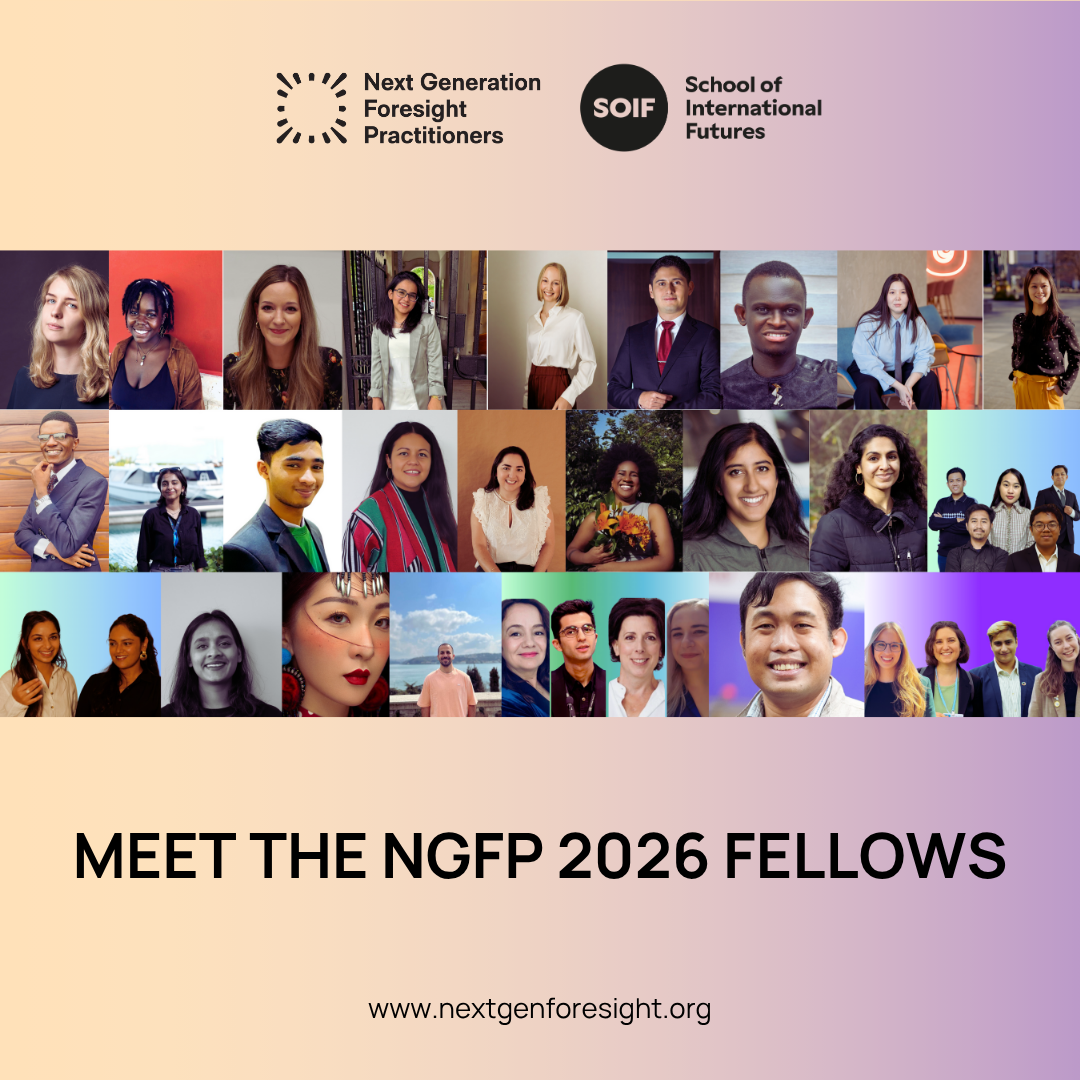
    Meet the NGFP 2026 Fellows

    This year’s fellowship features 25 projects, created by emerging futures and foresight practitioners from 24 countries.

    The Next Generation Foresight Practitioner (NGFP) Fellowship is an initiative of the School of International Futures (SOIF). The annual Fellowship is designed to help change the status quo and democratise the futures and foresight field with diverse perspectives from younger generations in under-represented geographies and communities.
    In addition, the Next Generation Foresight Practitioner – Young Voices (NGFP-YV) Awards, in partnership with Teach the Future, showcases the emerging ideas of youth 12-17 years of age.

    Over 6,000 expressions of interest were received this year, with 777 final submissions. Additionally, Young Voices Award partner organisation Teach the Future received 550 youth expressions of interest and 305 completed submissions.

    Posted on: 21/01/2026

    Post Image

    Last Edited: 2 months ago

    FARSIGHT podcast

    Listen to narrated articles and conversations with the world’s foremost futures thinkers.

    The podcast covers a range of topics about the future and foresight. 

    Posted on: 01/12/2025

    Post Image

    Last Edited: 5 months ago

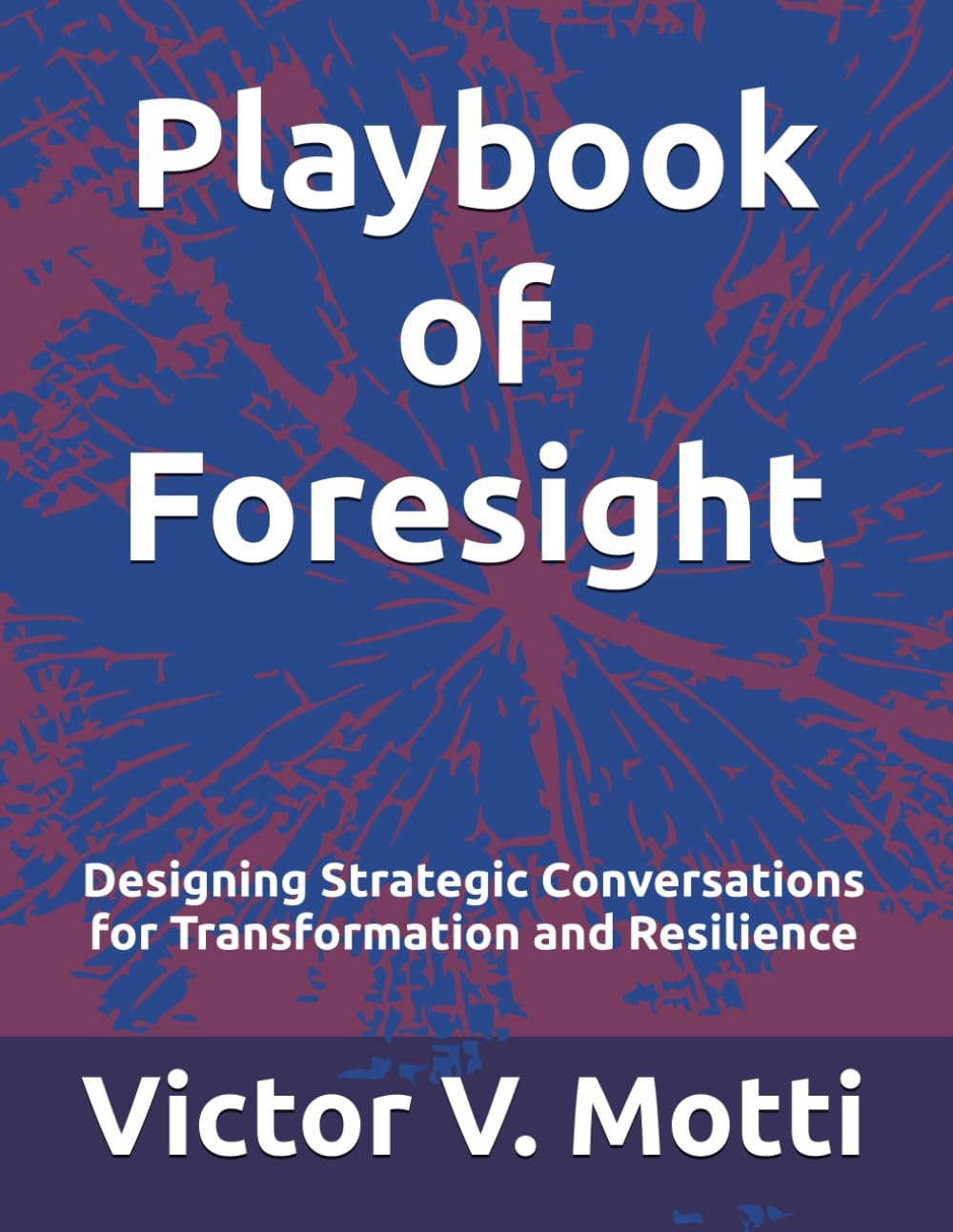
    Playbook of Foresight

    Designing Strategic Conversations for Transformation and Resilience

    Posted on: 11/09/2025

    Post Image

    Last Edited: 6 months ago

    AI can’t replace human foresight, but it can help us see further, faster

    In today’s volatile and interdependent world, uncertainty is not a temporary disruption. It is a defining feature. Strategic foresight has become a critical capability for navigating complexity, enabling decision-makers to anticipate change, surface emerging risks, and imagine alternative futures. At this inflection point, Large Language Models (LLMs) offer a profound augmentation to how we conduct foresight, but not a replacement. In this context, the Policy Foresight Unit of the European Parliamentary Research Service has recently published “Augmented foresight: The transformative power of generative AI for anticipatory governance ”.

    Let’s be clear. AI cannot foresee the future. It does not reason with intent or understand human values. What it can do is dramatically increase our speed, scale, and scope in making sense of potential futures, if used judiciously and critically.

    The cognitive extension of human futures thinking

    Generative AI can be understood as a cognitive prosthetic, a tool that extends human perception, memory, and pattern recognition. LLMs excel at identifying latent patterns in unstructured data, surfacing weak signals, and generating coherent narratives based on probabilistic inference. These capacities are particularly useful in exploratory foresight, where practitioners seek to widen the aperture of plausible futures. That is why, at 4CF we have created 4CF Sprawlr - the next-generation AI-powered debate and ideation platform designed to transform the way we brainstorm, strategize, and make decisions, as well as to challenge the assumptions of participants.

    Moreover, during horizon scanning, LLMs can process thousands of documents across domains in real-time, clustering insights, filtering noise, and flagging emergent issues. This ability to synthesize vast and diverse information ecosystems supports faster and more responsive foresight cycles. But raw data synthesis is not foresight. True anticipatory intelligence requires contextual judgment, ethical discernment, and interpretive framing, capacities that remain uniquely human.

    Narrative construction and scenario intelligence

    Scenario planning, a cornerstone of foresight, benefits from AI in powerful ways. GenAI can help identify key drivers, test interdependencies, and co-develop scenarios that are internally consistent and plausibly disruptive. When used in parallel (“AI swarms”), different models can triangulate and refine assumptions, improving narrative robustness.
    From a cognitive science perspective, LLMs excel at narrative generation because human cognition is fundamentally narrative-driven. We make sense of complex information by constructing stories, and AI's narrative fluency can mirror and support this innate process. However, plausibility does not equal probability or desirability, and this is where human oversight is critical.
    Moreover, GenAI can model second- and third-order effects, encouraging deeper exploration of cascading impacts. But it struggles with ambiguity and values-laden trade-offs, areas where human foresight is indispensable.

    New frontiers

    One of the most intriguing applications of GenAI in foresight is the use of generative agents, simulated personas capable of expressing realistic, contextually grounded responses. These tools can be embedded in scenario narratives to create dynamic, dialogical futures. Emerging research shows that synthetic respondents can replicate human survey responses with high fidelity in controlled environments. They enable simulations of behavioral dynamics in policymaking, urban planning, or public health where direct access to participants is limited. Yet, the epistemic status of these agents remains debated. Are they truly proxies for human complexity, or merely statistical echoes? Their outputs must be seen as exploratory artifacts, not empirical evidence, informing, but not determining, foresight conclusions.

    Bias, blind spots, and the illusion of objectivity

    Despite their capabilities, LLMs come with significant epistemological risks. Their training data is historically bounded and socioculturally skewed. Without critical intervention, they risk amplifying dominant worldviews and suppressing marginalized perspectives, exactly the opposite of what good foresight should do. This reinforces what foresight scholars have long argued: that the future is not a neutral space, but one shaped by power, values, and competing imaginaries. AI outputs can reflect and reproduce systemic biases unless de-biased through intentional prompt design, algorithmic transparency, and participatory governance frameworks.

    Moreover, the fluency of LLM-generated text can create a false sense of authority, leading to overreliance or reduced critical engagement. Practitioners must remain reflexive and iterative, treating AI outputs as inputs for dialogue, not doctrine.

    Augmented intelligence, not artificial intuition

    There’s a philosophical tension at the heart of this conversation. Foresight is not merely an analytical process, it is also a normative, imaginative, and ethical act. It involves asking: What kind of future do we want? Whose futures are we considering? What trade-offs are we willing to make? Generative AI does not possess values. It does not dream, hope, or fear. These are deeply human faculties, and they are essential to meaningful foresight. That said, when used well, GenAI can be a strategic co-pilot: accelerating discovery, enabling richer scenario exploration, and expanding access to foresight methods across disciplines and organizations.

    Co-evolving with the machine

    In sum, the integration of GenAI into foresight practice should be viewed not as a technological leap, but as a sociotechnical evolution. The most effective foresight processes will be those that combine human insight, ethical reasoning, and narrative richness with the analytic power and generative capabilities of AI. To paraphrase a growing sentiment: the future will not be written by AI alone, but by humans who know how to work with it wisely. The real promise of GenAI lies in partnership, not replacement. Because while AI may help us see further, it is still up to us to choose the path, interpret the terrain, and navigate uncertainty with courage, care, and imagination.
    Posted on: 07/08/2025

    Post Image

    Last Edited: 8 months ago

    What is Emerging Technologies Scanning and how it fits into Futures Studies practices

    Emerging Technologies Scanning (ETS) emerges as a practice within Futures & Foresight (Futures Thinking & Strategic Foresight)

    The introduction of a new technology is never an isolated event and never concerns only one market or one domain. There are invariably socio-cultural, political, economic, and environmental implications, as well as impacts, influences, “cross-pollination”, and correlations among different technologies.

    The very broad definition of technology itself betrays its intrinsic complexity: a vast field of research involving various technical and scientific disciplines, which examines the application and use of everything that can serve to solve problems. The term “technology” also refers to the aggregate of knowledge, skills, and tools used to design, create, and utilise objects, processes, systems, or services to meet human needs.

    An emerging technology, in particular, is one that is radically new and relatively fast-growing technology [it is not necessarily exponential, as the common dialectics of recent years have conditioned us to expect, yet this has little to do with the mathematical concepts of exponentiality; rapid growth does not imply exponentiality]. It is characterised by a certain degree of coherence (or consistency) that persists over time and has the potential to have a substantial impact on the socio-economic-political domains (understood as the players, institutions, and models of interactions between them, as well as all the processes of knowledge production associated with these domains).

    Its most significant impact lies in the future and thus in the emergency phase: an emerging technology is still quite uncertain and ambiguous. For this reason, it would be prudent to analyse its potential impacts in a timely manner, to avoid getting trapped in Amara’s Law.

    Posted on: 09/06/2025

    Post Image

    Last Edited: 9 months ago

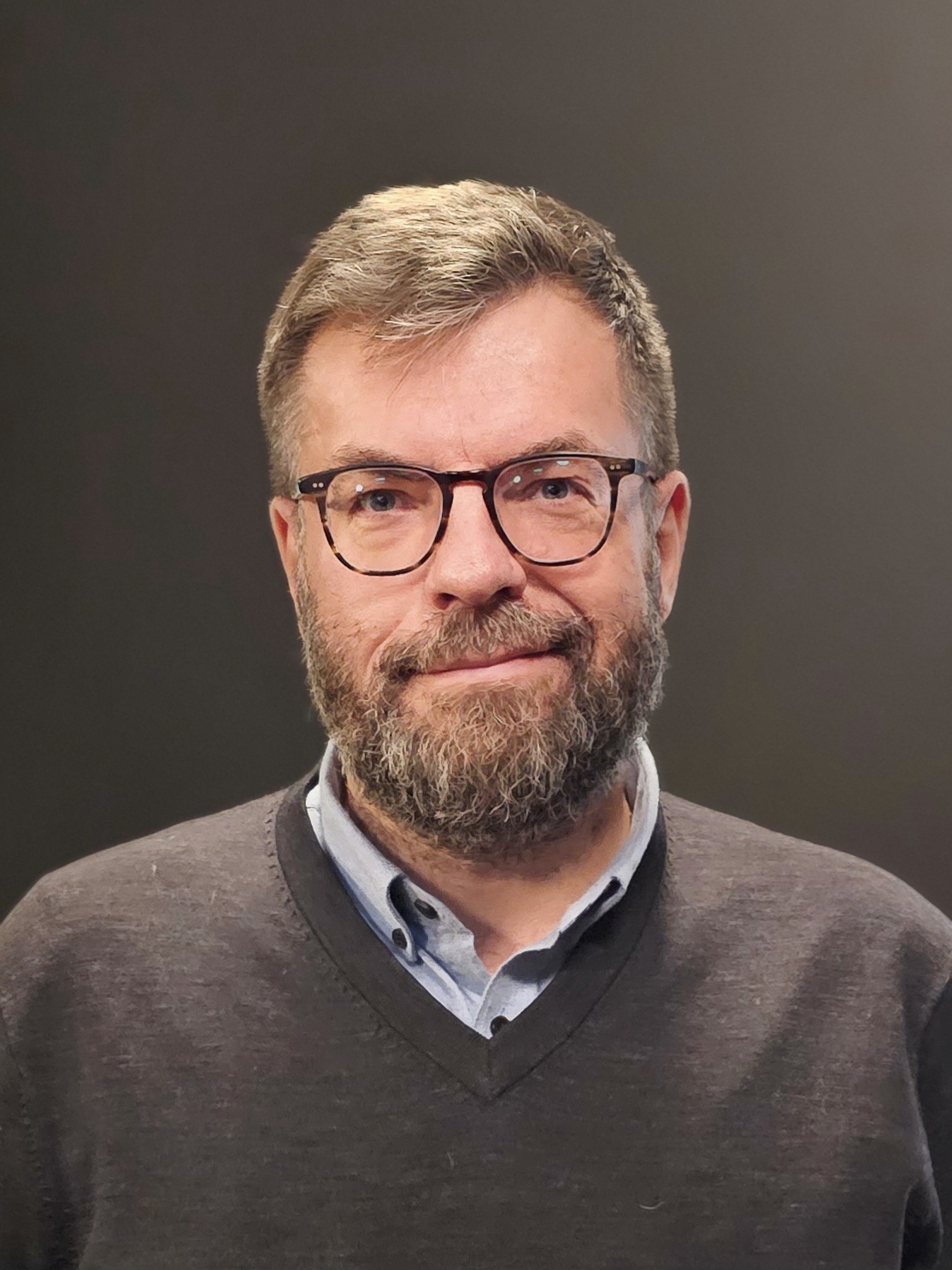
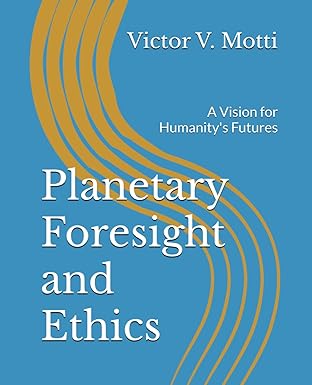
    Planetary Foresight and Ethics

    New Book

    Summary

    Core Themes
    The book reimagines humanity’s future through planetary foresight, blending historical wisdom with planetary stewardship. It critiques linear Western progress narratives and advocates for a hybrid, cyclical vision of history, emphasizing pluralistic identities and reverence for life.

    Structural Framework
    Organized into thematic sections, the work begins with “The Mysterious Lord of Time,” challenging linear temporality and introducing non-linear, culturally diverse historical perspectives. “Evolving Belief Systems” contrasts Indo-Iranic, Mesopotamian, and Hellenic thought with Abrahamic traditions, highlighting ancient influences on modern pluralism.

    Imagination and Futures
    The “Histories of Imagination” section explores myth and storytelling as drivers of civilization, while “Scenarios of Future Worlds” applies foresight methodologies to geopolitical and technological evolution, emphasizing ecological consciousness. The final chapters expand to cosmic intelligence and ethics, framing humanity’s role within universal interconnectedness.

    Ethical Vision
    Central to the thesis is a call for planetary identity and stewardship, merging forgotten wisdom traditions with modern foresight to navigate ecological and technological uncertainties. The book positions itself as both a philosophical guide and practical framework for ethical transformation in an era of global crises.

    Key Argument
    Motti asserts that humanity is transitioning from a “Second Nomad Age” (characterized by fragmentation) toward a “Second Settlement Age” marked by planetary consciousness, requiring creative complexity and ethical vigilance.

    Posted on: 23/04/2025

    Post Image

    Last Edited: 10 months ago

    Co-Creating Futures of Democracy in Europe

    YouthDecide 2040 is looking for participants to join our regional workshops

    📣 YouthDecide 2040 is looking for participants to join our regional workshops and co-create the future of European democracy!

    Be part of a one-and-a-half-day immersive workshop where diverse voices come together to imagine and shape resilient, thriving European democracies.

    🗣️💬 Through creative, participatory foresight activities, we will explore different visions of democracy in 2040—your perspective matters!

    🧭 The wider, the better
    Are you a European resident over 18? This call is for you!
    We're fostering intergenerational discussions on the future of European democracy, centring youth voices (18-34).

    🔓 The call for applications will remain open through May 2025. 

    Posted on: 10/04/2025

    Last Edited: a year ago

    Innovation 2030

    Investigating & monitoring the changing conditions, trends and needs for the Region of Central Macedonia

    As radical innovations are having a profound impact globallyon the macroeconomic environment, the Region of Central Macedonia is monitoringclosely following the developments, trends and variables that favour or affect it or negatively affecting its development.
    Institutions and executives from the private and public sector have explored through a participatory and dynamic process (Thematic Participatory Workshop) the variables that will the innovation and entrepreneurship environment of the region with time horizon 2030, identified their dynamics and evaluated their interaction. The findings provided input to the working group for the development of four scenarios that will define the future of innovation in the region of Central Macedonia in the coming decade. These scenarios identified
    the development of a proposal of three strategic axes, developing in a stepwise manner in three different periods, which will strengthen the resilience of the region and prepare it to face the conditions in these four futures.

    The study is available in Greek.

    Posted on: 21/02/2025

    Last Edited: a year ago

    Horizon scanning — tips and tricksJuly 2023

    A practical guide - Eionet Report

    This document provides guidance on how to conduct a structured horizon scanning process to identify emerging developments that could have potential impact in the future, and in particular on the environment. It starts with an overview of the guide (Chapter 1) and an introduction to horizon scanning (Chapter 2) in connection with the concept of futures literacy. It then provides a step-by-step approach for conducting a structured horizon scanning process (Chapter 3), including a variety
    of diverse sources for spotting signals, different frameworks for signal scanning and several options to unpack and analyse the collected signals and patterns of change through creative methods and exercises. It also proposes a few different and complementary ways of communicating the findings to relevant stakeholders, networks and communities. Lastly, it suggests some tools (Chapter 4) that can be used to strengthen the scanning process. The annexes offer a detailed comparison of such tools and a glossary of terms related to futures literacy.

    Posted on: 30/01/2025

    Last Edited: a year ago

    Institutionalising foresight capability (and creating wide foresight communities) in the R&I system05 December - 06 December 2022

    Mutual Learning Exercise- Research and Innovation Foresight

    FCT, ISEG - Lisbon School of Economics and Management and the European Commission (Directorate-General for Research and Innovation) promoted, on December 5, a workshop with the active participation of representatives from all sectors of the National Research and Innovation System (R&I), and representatives of European states participating in this MLE-Mutual Learning Exercise, in order to discuss and agree on possible guidelines and joint work with a view to an institutionalization of capabilities and the creation of foresight communities in this system.

    The following day, December 6th, FCT hosted the meeting of this network that has, besides Portugal, representatives from Austria, Belgium, Czech Republic, Finland, Norway, Romania and Slovenia.   

    Posted on: 21/01/2025

    Post Image

    Last Edited: a year ago

    Shaping Democracy’s Futures in Moldova

    Foresight lessons from a critical crossroads: Democratizing youth futures and using foresight for innovations in democracy tech

    I had the privilege to participate in a democracy conference and hackathon in Moldova in October, just days before the country’s pivotal EU referendum and presidential elections. Organized by the Alliance of Democracies Foundation in collaboration with local partner Yep Moldova and supported by USAID and the New Democracy Fund, the event was a hub of creativity, democratic innovation and a dose of foresight.

    Posted on: 16/12/2024

    Last Edited: a year ago

    FOD II Kick-off Meeting09 October - 10 October 2024

    Brussels meeting of the Foresight on Demand (FOD) consortium to kick-off FOD II

    Foresight on Demand (FOD) is a rapid foresight response mechanism organised in a framework contract, and aims at providing quick forward-looking inputs to policymaking by leveraging the best available foresight knowledge. It addresses the growing need for quicker and more responsive foresight to inform policymaking in an increasingly turbulent environment.

    Representatives of all twenty FOD partner organisations and representatives of different client authorities met in person during a lunch-to-lunch meeting in Brussels taking place at IDEA consult premises from October 10 to October 11, 2024.

    47 people participated in the meeting that focussed on getting to know all FOD partners, especially the new partner organisations of FOD II, gaining insights on expectations of client authorities, as well as on updating the FOD consortium on ongoing and upcoming requests and discussing the FOD service provision processes. The meeting offered the opportunity to exchange in group discussions, during the FOD partner art gallery, where partners presented their organisations and services through art pieces and creative work, and informally during lunch, coffee and at the social dinner.

    The meeting revealed inspiring insights on lessons learned during FOD I (2019-2023), on promoting the FOD framework for potential projects, as well as on emerging topics potentially relevant to the current FOD II (2024-2028) period.


    Posted on: 09/12/2024

    Last Edited: a year ago

    Futures of Technologies09 June - 11 June 2025

    Mutual Shaping of Socio-Technical Transformations

    Futures Conference 2025 focuses on the futures of technologies, their development, importance, role and risks as a driver of social change. What are the effects of social and environmental changes on technological development and vice versa?

    ‘Futures of Technologies’ is the 25t h international Futures Conference of the Finland Futures Research Centre and Finland Futures Academy, University of Turku. It is organised together with the VTT Technical Research Centre of Finland Ltd during 10–12 June 2025 in Turku, Finland.

    Keynote Speakers
    Ali Aslan Gümüşay is professor of Innovation, Entrepreneurship & Sustainability at LMU Munich and head of research group Innovation, Entrepreneurship & Society at the Humboldt Institute for Internet & Society Berlin. His research focuses on values, meaning and hybridity in entrepreneurship; grand challenges, sustainability and new forms of organizing; digitalization, management and innovation as well as impact, scholarship and futures.

    Cynthia Selin is a pioneering social scientist and strategic foresight expert known for developing innovative methodologies to navigate complex change and advance the theoretical boundaries of anticipation. An Associate Fellow at the Saïd Business School, University of Oxford, and core faculty in the Oxford Scenarios Programme, Dr. Selin also founded Scenaric, a consulting firm that equips organizations to tackle uncertainty and shape resilient futures.

    Philip Brey is professor of Philosophy and Ethics of Technology at the University of Twente. He is member of the management team (and former chairman) of the 4TU Center for Ethics & Technology, a partnership of the universities of Twente, Delft, Eindhoven and Wageningen with more than 60 researchers.

    Jerome C. Glenn co-founded and directs The Millennium Project, a leading global participatory think tank with over 70 Nodes around the world. He is assisting the UN Council of Presidents of the General Assembly on the UNGA’s role in governance of Artificial General Intelligence, author/editor forthcoming Global Governance of Artificial General Intelligence (De Gruyter), lead author State of the Future 20.0 and Future Work/Tech 2050: Scenarios and Actions and co-editor Futures Research Methodology 3.0 with Ted Gordon. Glenn has directed over 80 futures research projects and is a member of the IEEE SA P2863 Organizational Governance of AI working group.
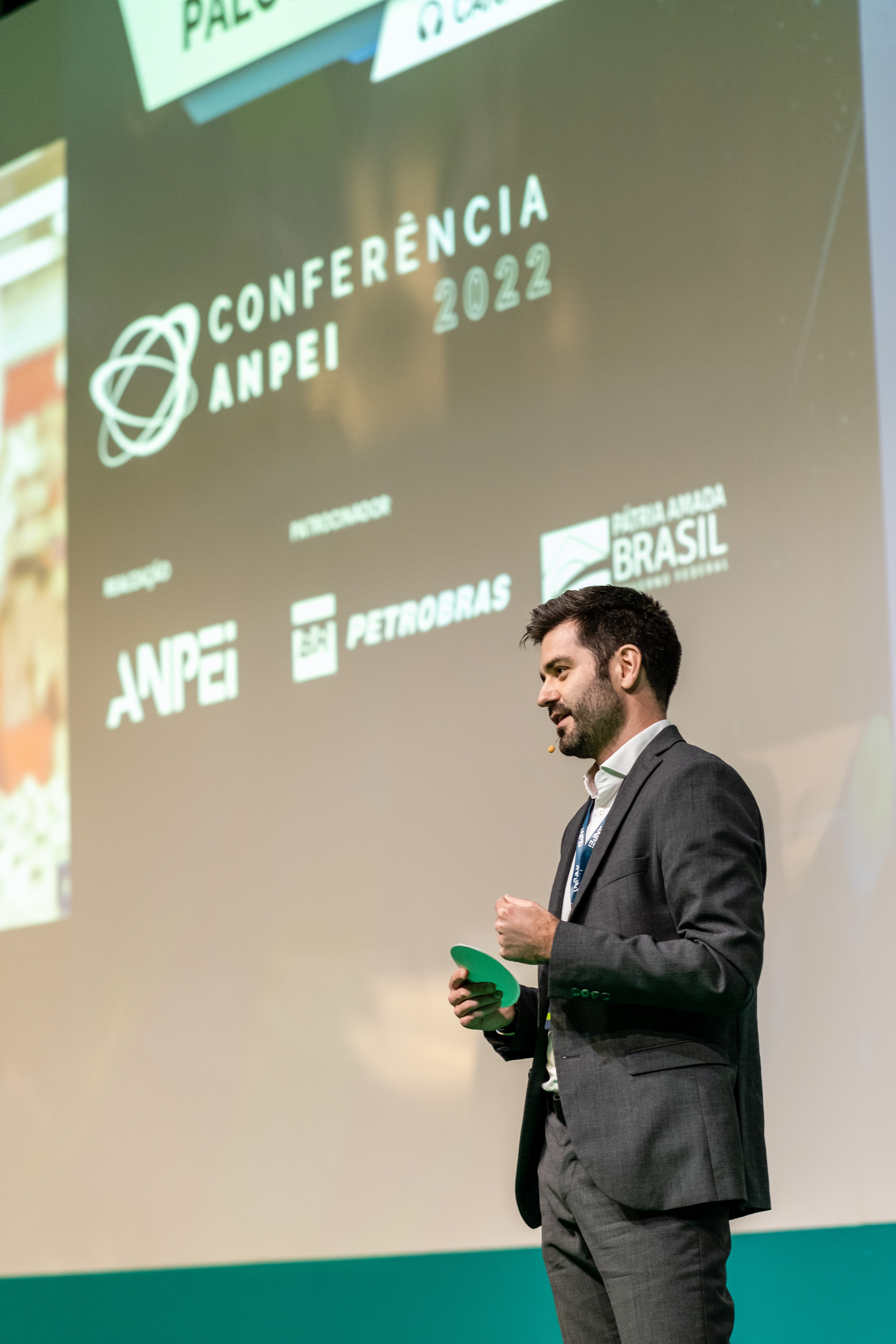
    Rohit Talwar (CEO, Fast Futures, UK) was recently in the top three in 'the Global Gurus Top 30 futuris' rankings for 2025. He is an inspirational futurist and the CEO of Fast Future, delivering award-winning keynote speeches, executive education, foresight, research, consultancy, and coaching. Rohit was delivered over 2000 speeches, workshops, and consulting assignments for clients in 80+ countries across six continents. He is the co-author and lead editor of nine books and over 50 reports on the emerging future and appears regularly on TV and in print media around the world. 

    Read more about the Keynotes. 

    Conference Newsletters

    Posted on: 25/11/2024