Loading...

    sorted by publishing date

    Post Image

    Last Edited: 13 days ago

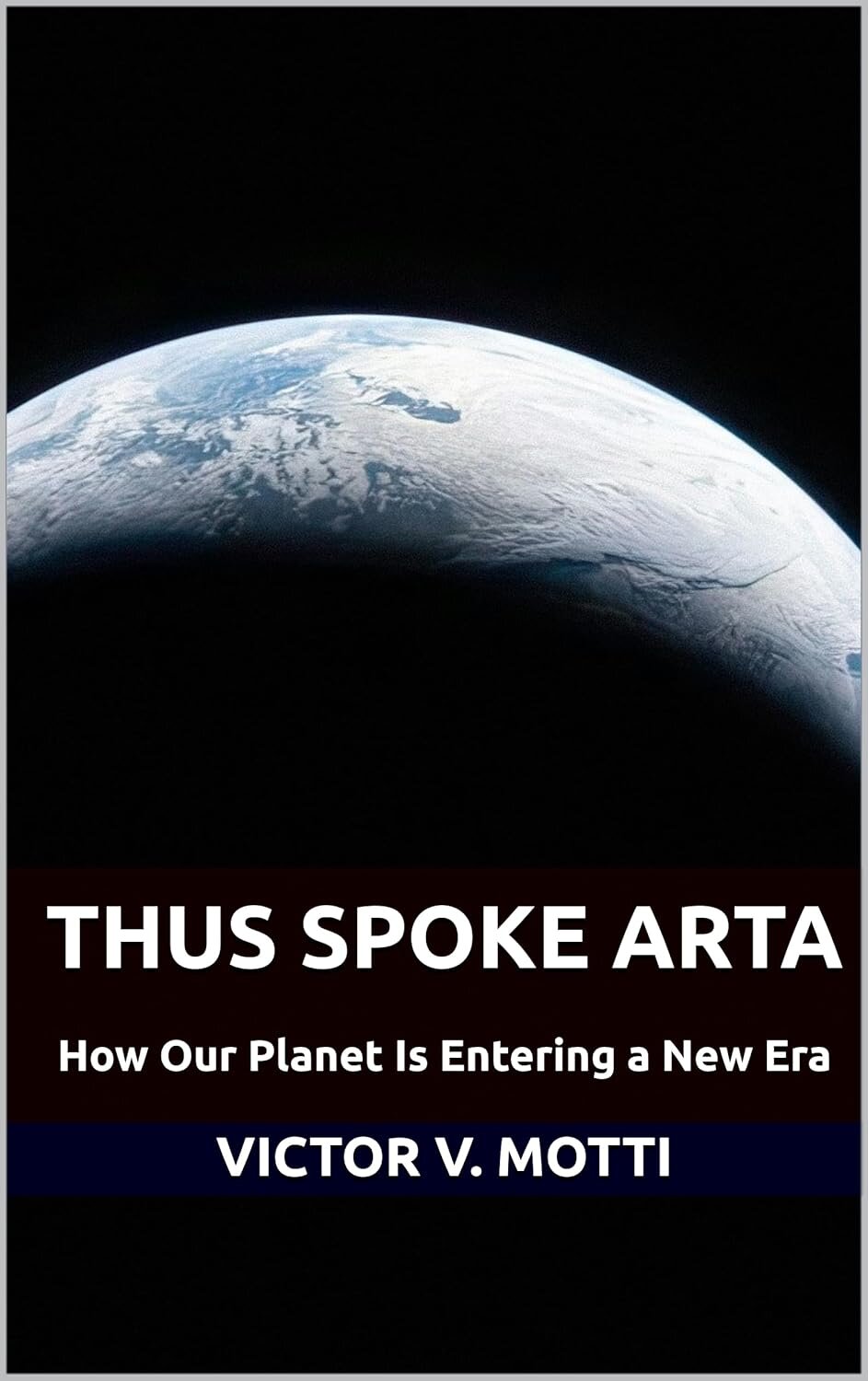
    Thus Spoke Arta

    How Our Planet Is Entering a New Era

    We are living through a transition that feels, at once, like collapse and awakening. The crises surrounding us—ecological breakdown, technological acceleration, geopolitical fragmentation—are often treated as separate problems. But they are not. They are symptoms of a deeper rupture: a failure in how we perceive reality itself.


    This is the beginning of the “Big Shift.” Not merely a historical turning point, but a transformation in consciousness. The dominant frameworks through which humanity has understood itself—nation, progress, even “humanity” as a unified moral subject—are no longer sufficient. They fragment under pressure because they were never grounded in the deeper fabric of existence. They abstracted us from the Earth, from each other, and ultimately from being itself.


    Long before modern crises, ancient traditions understood something we have forgotten: the Earth is not an object. It is a living, sacred reality. Early liturgical texts and cosmologies did not separate matter from meaning. To speak of the Earth was already to speak of order, of balance, of participation in a larger whole. This was not “ecology” in the modern scientific sense—it was a lived metaphysics.


    What has been lost is not knowledge in the narrow sense, but a way of knowing. The modern world, in its pursuit of control and clarity, reduced reality to what can be measured, extracted, and optimized. Technology is not the root problem; it is an extension of this perception. We did not simply build machines—we built a worldview that sees the world as machine.


    And so we arrive at a strange paradox: we speak constantly of “saving humanity,” yet we do not even know what “humanity” means. It is an abstraction, a moral placeholder, often detached from real conditions and embedded inequalities. In trying to center humanity, we displaced the Earth. And in doing so, we undermined the very conditions that make human life possible.


    A different orientation is needed. Not a rejection of humanity, but a re-centering within a larger field of existence. To love the Earth is not a poetic gesture—it is an ethical necessity. It means recognizing that harm to ecosystems is not external damage but a form of self-destruction. It means reframing ethics from human-centered to Earth-centered, from domination to participation.


    This is where the future becomes most uncertain—and most significant. Artificial intelligence and emerging technologies are often framed in terms of capability and risk. But the deeper question is ontological: what kind of intelligence are we creating? If intelligence is participation, then ethical design requires more than safeguards—it requires alignment with the structures of reality itself.


    We stand, then, at a threshold. The path forward is not a return to the past, nor a blind leap into technological futurism. It is a synthesis—a planetary civilization that draws from ancient wisdom while engaging modern knowledge. A civilization that recognizes the plurality of perspectives without losing sight of underlying unity.


    This requires new forms of leadership, new frameworks of foresight, and a redefinition of progress. Not growth for its own sake, but alignment with the conditions that sustain life and meaning.


    Ultimately, the future is not something we predict. It is something we participate in. Every action, every perception, contributes to the unfolding of reality. The question is not whether change is coming—it is whether we are capable of aligning with it.


    To become planetary beings is not to transcend the Earth, but to belong to it fully. To act with awareness that we are not separate observers, but active participants in a living, dynamic cosmos.


    The shift has already begun. The only question is whether we recognize it—and whether we are willing to follow it to its conclusion.

    Posted on: 28/05/2026

    Last Edited: 4 months ago

    Futures4Europe Conversations: Film as Future LensJanuary 2026

    In this episode of Futures4Europe Conversations, Bianca Dragomir speaks with George Cârstocea, who teaches in the Cinema and Media Studies Program at the University of Southern California. His courses range from an Introduction to Cinema—exploring film in dialogue with other arts and technologies—to classes on comedy and animation, Romanian cinema, and science fiction.

    This video interview explores film as a powerful mediator of futures: how speculative stories play with current assumptions about what is possible, desirable, or inevitable; how imaginaries of the future are constructed and circulated; why some narratives lean toward heroic salvation while others turn to comedy or irony; and how dark or hopeful visions affect our emotional and collective orientation toward what lies ahead.

    The interview is structured into eight chapters:

    • Chapter 1. Teaching Cinema: How It All Began
    • Chapter 2. Students in Uncertain Times
    • Chapter 3. What Makes a Movie Worthwhile?
    • Chapter 4. Do SF Movies See Into the Future?
    • Chapter 5. What Happens When Stories Stir Us?
    • Chapter 6. Do Dark Stories Limit Our Imagination?
    • Chapter 7. How Do Films Imagine Hopeful Futures?
    • Chapter 8. “Flexibility Is Life — Hardening Is Death”

    The conversation is also sprinkled with film recommendations—some may be familiar, others perhaps unexpected. Give it a listen. And if you’re planning a movie night, you might want to take George’s recommendations into account.

    Posted on: 17/02/2026

    Last Edited: 5 months ago

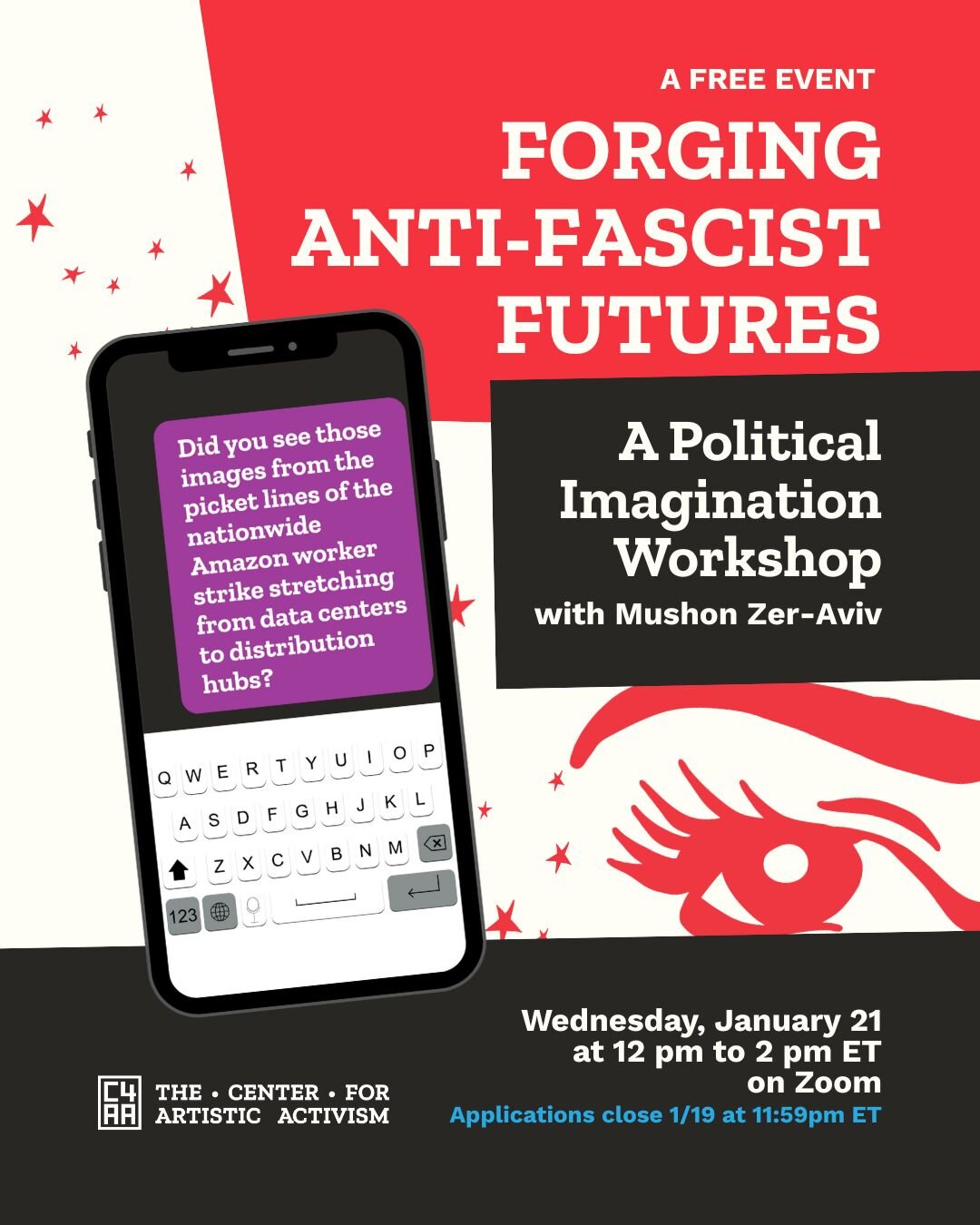
    Forging Anti-Fascist Futures21 January - 21 January 2026

    When the present feels like a closed future, one capacity becomes essential: political imagination.

    On Wednesday, January 21 (12–2pm ET), the Center for Artistic Activism (C4AA) is hosting a free online workshopForging Anti-Fascist Futures — led by Mushon Zer-Aviv.

    Participants will use Future Screenshots, a method for creating fictional artifacts from possible futures (a chat, a map, a headline, a prompt) and mapping them on the Futures Cone (probable → possible → preposterous). These aren’t predictions — they’re tools for surfacing assumptions and clarifying what feels doable now.

    🆓 Free • ⚠️ Limited seats • ⏰ Applications close Jan 19 at 11:59pm ET

    Read more about the workshop approach. 

    Posted on: 20/01/2026

    Post Image

    Last Edited: a year ago

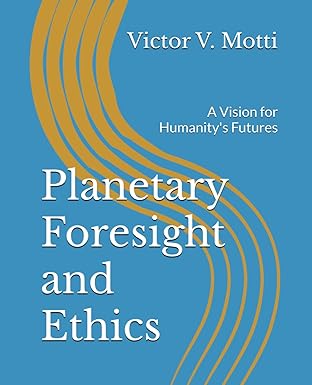
    Planetary Foresight and Ethics

    New Book

    Summary

    Core Themes
    The book reimagines humanity’s future through planetary foresight, blending historical wisdom with planetary stewardship. It critiques linear Western progress narratives and advocates for a hybrid, cyclical vision of history, emphasizing pluralistic identities and reverence for life.

    Structural Framework
    Organized into thematic sections, the work begins with “The Mysterious Lord of Time,” challenging linear temporality and introducing non-linear, culturally diverse historical perspectives. “Evolving Belief Systems” contrasts Indo-Iranic, Mesopotamian, and Hellenic thought with Abrahamic traditions, highlighting ancient influences on modern pluralism.

    Imagination and Futures
    The “Histories of Imagination” section explores myth and storytelling as drivers of civilization, while “Scenarios of Future Worlds” applies foresight methodologies to geopolitical and technological evolution, emphasizing ecological consciousness. The final chapters expand to cosmic intelligence and ethics, framing humanity’s role within universal interconnectedness.

    Ethical Vision
    Central to the thesis is a call for planetary identity and stewardship, merging forgotten wisdom traditions with modern foresight to navigate ecological and technological uncertainties. The book positions itself as both a philosophical guide and practical framework for ethical transformation in an era of global crises.

    Key Argument
    Motti asserts that humanity is transitioning from a “Second Nomad Age” (characterized by fragmentation) toward a “Second Settlement Age” marked by planetary consciousness, requiring creative complexity and ethical vigilance.

    Posted on: 23/04/2025

    Last Edited: a year ago

    Second Eye of Europe Pilot in Fashion Futuring14 April - 14 April 2025

    Eye of Europe Pilot Workshop to be held in April, in Thessaloniki, Greece

    As a partner of the Eye of Europe Project, Helenos will implement its second pilot on Fashion Futuring, investigating potential links among objects, fiction, culture, and systems to understand how the values of the systems/societies can shape the future of fashion.

    The worskhop was relized on 14th of April, 2025 at MOMus- Museum of Modern Art, Thessaloniki, Greece


    Context
    Have you ever wondered why people in Ancient Egypt (3100-30 BCE) wore hair wigs? Or why samurai have been associated with kimonos, while feminine full skirts are linked with the post-war America of the ‘50s? There are numerous examples of fashion items that represent specific periods and places. 

    But what does that signify?
    In ancient Egypt, men wearing hair wigs was considered an honor and a symbol of equalization to women, as women were regarded as wise and sacred. Similarly, in Tokugawa Japan (1603 – 1868), when samurai lived, clothing indicated one’s rank and role within the highly structured feudal society, while in post-war America, fashion was influenced by the idealized image of the suburban family, emphasizing domesticity and traditional gender roles.
    The common space of all three examples is that - throughout the centuries - fashion has served people and societies as a way of self-expression, a sign of social status, also revealing the prevailing social norms and beliefs.

    Today, our highly complex and uncertain world requires strategic tools that will help us create new sustainable development trajectories. Fashion not only reveals unique and collective identities, norms, and ethics but is also associated with environmental issues. It is one of the largest pollutant industries, prompting a shift in the way we produce and consume fashion items. How might the climate crisis change our attitudes, and how does this impact the fashion industry?


    What is Fashion Futuring?
    Fashion Futuring is an innovative approach that investigates potential links among objects, fiction, culture, and systems to understand how the values of the systems/societies can shape the future of fashion. It suggests a significant shift in the future of fashion approach, moving away from short-term trends and financial forecasting as primary factors for fashion production, towards sustainable, more humane means of fashion producing and consuming.


    The pilot
    The upcoming pilot in April is targeted towards domain experts in fashion & foresight. The workshop consists of a 7-stage methodology based on Garcia (2023), where participants will be encouraged to share their personal experiences and values, co-create a fictional future, and work together to design a fictional fashion item based on this future. The workshop will utilize various foresight methods, primarily core design, what-if scenario development, and strategic thinking.

    That will be the second pilot in Fashion Futuring implemented by Helenos. The first pilot was held in January 2025 in Thessaloniki, involving local citizens. This upcoming workshop aims to contribute to a collective knowledge pool, helping to create a comprehensive understanding of the future of fashion and sustainability.


    This workshop will be implemented in English.

    For more information, please contact the following emails: 

    stavros.mantzanakis@helenosconsulting.eu (Stavros Mantzanakis)

    eliza.savvopoulou@helenosconsulting.eu (Eliza Savvopoulou)

    Posted on: 07/02/2025