Loading...

    Mentions of

    sorted by publishing date

    Last Edited: 18 days ago

    Foresight as a Key Social Infrastructure for EuropeDecember 2025

    A Manifesto of the Research&Innovation Foresight Community

    Preamble
    Across Europe, the use of foresight for Research and Innovation (R&I) policy is growing, but unevenly. In many places, it still sits at the margins of policymaking, and its full potential—to inspire broader societal change—is not yet realised.

    The European R&I foresight community, made up of practitioners, policymakers, researchers, and future-oriented thinkers, is
    becoming stronger and more connected. The Eye of Europe project, supported by the European Commission, helps this
    community grow through the online hub futures4europe.eu, as well as workshops, conferences and shared learning spaces.

    This manifesto stems from a “foresight on foresight” workshop held in Mamaia, Romania (18–19 September 2025), coordinated by UEFISCDI and the Austrian Institute of Technology. 30 foresight practitioners and R&I policy experts from across Europe gathered to imagine how foresight could better support R&I policy and practice. Furthermore, these contents have also been discussed and enriched during Eye of Europe’s final mutual learning event held in Chișinău, Moldova (23–24 October 2025).

    This manifesto recognises the growing importance of foresight—not only within European R&I systems but also at the interface between R&I and society—repositioning the field as a driver of inspiration and renewal in shaping Europe’s futures.

    Foresight as a Key Social Infrastructure for Europe
    Vision 2030 in a nutshell

    Research and Innovation (R&I) foresight is a shared space of imagination and inquiry, enabling Europe to live creatively with emergence and diversity. Beyond agenda-setting, it cultivates futures literacy across science, policy, and society — expanding our capacity to sense, interpret, and engage with novelty.

    Embracing the open and interdependent nature of the world, foresight complements evidence with creativity and plural ways of knowing. It guides Europe’s research and innovation ecosystems to act with openness, responsibility, and imagination — co-creating sustainable and just futures as a shared public good.

    🔵 EXTENDED ROLE OF R&I FORESIGHT
    In 2030 R&I foresight enables boundary spanning, connecting sectoral policies, disciplines, and perspectives. Its value lies not only in generating agendas or scenarios, but in reshaping worldviews, reframing challenges, cultivating agency, enabling collective reflection, and inspiring transformative action

    🔵 OPEN AND INCLUSIVE SPACES
    In 2030 foresight thrives on openness, diversity, and empathy. It creates spaces where people engage not only as experts or institutional actors, but as whole humans— bringing values, worldviews, emotions, and lived experiences into the co-creation of futures.
    Trust grows from transparency, fairness, and shared ownership of both processes and outcomes. While AI expands access to knowledge, human judgment, engagement creativity, and responsibility remain essential.

    🔵 FUTURES LITERACY AS A FOUNDATIONAL CAPACITY
    Futures literacy becomes both a foundation and a legacy of R&I foresight. It strengthens the collective ability to recognise assumptions, navigate uncertainty, and act with intention amid complexity.
    Foresight processes evolve into open spaces for learning and experimentation, cultivating anticipatory competence among experts, policymakers, and citizens. Through its practices and communication, R&I foresight contributes to a societal diffusion of futures thinking, enhancing collective intelligence and agency.

    🔵 A MATURE COMMUNITY OF PRACTICE
    Foresight gains professional depth through dedicated academic programmes and practitioner networks. A wide variety of organisations embed foresight cultures that encourage reflection, experimentation, and communication. Shared infrastructures such as futures4europe.eu evolve into open, dynamic platforms for collaboration, knowledge exchange, and innovation in foresight.

    Download the document at the top of the page to read the full version.
    Posted on: 21/01/2026

    Last Edited: 4 months ago

    Embodying the future

    Horizon scanning for emerging technologies and breakthrough innovations in the field of human-like AI systems

    This technology foresight brief documents the process and findings of a horizon scanning exercise, in the context of FUTURINNOV (FUTURe-oriented detection and assessment of emerging technologies and break-through INNOVation) a collaboration between the European Innovation Council (EIC) and the Joint Research Centre (JRC), aiming to support the EIC's strategic intelligence through foresight and other anticipatory methodologies.
    The workshop, held online on 19 June 2025, had as its primary goal the evaluation and prioritisation of trends and signals related to emerging technologies and breakthrough innovations across all technology readiness levels (TRLs) within human-like AI systems. Signals for the workshop were gathered from experts, literature review, and text/data mining of patents, publications, and EU-funded projects.
    These signals were then scrutinised for their significance to the field's future by a diverse group of sector experts, which led to the identification of twelve key topics: enhancing human-AI collaboration; trustworthy and explainable AI; neurosymbolic AI; general-purpose neuro-symbolic methods; personalised medicine; embodied intelligence; emotion-aware AI; multi-agent frameworks; human-AI collective cognition; brain-inspired AI; addressing AI’s energy demand; and next generation LLMs.
    Several contextual factors that shape the development and uptake of AI are highlighted across social, technological, economical, environmental and political and regulatory domains, including: AI literacy; inter-disciplinary and inclusive development of models; benchmarking practices; and sustainability.
    The outcomes of this exercise may be used to inform future funding topics for EIC Challenges and other EC calls. They can also provide input for EIC and EC reports, as well as supporting other EU policy initiatives.

    Posted on: 24/09/2025

    Last Edited: 4 months ago

    Healing the FutureJuly 2025

    Horizon scanning for emerging technologies and breakthrough innovations in the field of cell and gene therapies

    This brief documents the process and findings of a horizon scanning exercise, in the context of FUTURINNOV (FUTURe-oriented detection and assessment of emerging technologies and break-through INNOVation) a collaboration between the European Innovation Council (EIC) and the Joint Research Centre (JRC), aiming to support the EIC's strategic intelligence through foresight and other anticipatory methodologies.

    The workshop, held online on 15 May 2025, had as its primary goal the evaluation and prioritisation of trends and signals related to emerging technologies and breakthrough innovation, across all technology readiness levels (TRLs), within cell and gene therapies.

    Signals for the workshop were gathered from experts, literature review, and text/data mining of patents, publications, and EU-funded projects. These signals were then scrutinised for their significance to the field's future by a diverse group of sector experts, which led to the identification of seven key topics: in vivo gene therapy; microphysiological pre-clinical models; stem cells in multiple applications; new tools for advanced tissue delivery; in silico & AI; conversion of tumour cells; and emerging genome and epigenome-based therapies.

    Participants also highlighted various contextual factors that could influence the development, adoption, and uptake of emerging technologies within this field, including in domains such as: competitiveness and geopolitics; talent and expertise; cross-border and cross-sector collaboration; funding, economic and market conditions; regulatory, safety and ethical challenges; health and RDI ecosystems; and infrastructure and manufacturing.

    Posted on: 24/09/2025

    Last Edited: 4 months ago

    Eyes on the future Volume 3

    Signals from recent reports on emerging technologies and breakthrough innovations to support European Innovation Council strategic intelligence

    This literature review is part of the FUTURINNOV project—a collaboration between the European Commission’s Joint Research Centre and the European Innovation Council and SMEs Executive Agency—focuses on surfacing signals of emerging technologies and some breakthrough innovations.
    This literature review report focuses on signals based on emerging technologies developed by non-EU countries and summarises findings in a final selection of 30 signals and trends clustered according to the 10 critical technology areas defined by the European Commission, as well as through other frameworks such as the Strategic Technologies for Europe Platform and the EIC’s portfolios and specific taxonomy. The report identifies topics, including climate-adaption tech, neurotech, digital and network security and critical raw materials, as areas deserving of further research and development.
    The report provides insights for the EIC to anticipate technological developments and address potential security concerns, ensuring the EU's position at the forefront of global innovation.

    Posted on: 23/09/2025

    Last Edited: 4 months ago

    Signal CardsJune 2025

    Signal Cards from ESPAS Horizon Scanning

    The Signals Cards present emerging issues identified through the ESPAS Horizon Scanning activity. Apart from using them to inform the regular Horizon Scanning newsletters, they work well as conversation starters in (foresight) workshops to get people into the right headspace to think about and interact with the future. The Signal Cards are a fun and interactive tool ideal for workshops to expand thinking, foster imagination and explore different potential futures. 

    How to use the cards

    Instructions provided with the cards contain four different short exercises that can be used at the beginning of a workshop to broaden the thinking, spark imagination and encourage looking forward.

    You can start your workshop with a quick exercise to

    📌 find relevant signals of change for your topic

    📌 challenge the common perspective

    📌 explore different aspects of novelty or

    📌 think about the culminating effects various signals might have together.

    If you have more time, you can dive deeper into the signals and explore their potential impacts for example in the beginning of a (foresight) project. Participants can envision a world where some of the signals become reality and brainstorm what might be the consequences. This can help to pinpoint areas for further analysis. You can find detailed instructions for all these exercises in the Signal Cards file. Or feel free to create your own activities with the Signals Cards!

    Download the Signal Cards, follow the enclosed detailed instructions and see how they can transform your next workshop.

    Print the chosen cards (ideally on thick paper, 2 pages per A4 sheet to get A5 sized cards) or paste them as pictures to a digital platform for online workshops.

    Read more from the blog.

    Posted on: 23/09/2025

    Last Edited: 4 months ago

    ESPAS Horizon Scanning Issue 8June 2025

    This is the eighth report from the ESPAS horizon scanning process which looks at “signals of change” – emerging trends and
    issues – that may appear marginal today but could become important for the EU in the future.

    Read all the Issues here.  

    Posted on: 23/09/2025

    Last Edited: 5 months ago

    Emotion ecosystems 2040July 2025

    Workshop report

    The foresight workshop Emotion Ecosystems 2040 was conducted on 📅 24-25th of June 2025, as part of the project Eye of Europe

    Over the course of the two-day workshop, the participants explored the theme of emotion ecosystems by working through a structured process in three facilitated groups, whose composition shifted at key moments. The work began by framing the concept of “emotion ecosystems” in terms of a curated set of societal tensions, each expressing the strain between a shared aspiration and its undesirable consequences: 🌀 Hyperconnection vs Isolation; 🌍Craving for unity vs Tribal polarization; 🩹 Healing collective traumas vs Solitary coping ...and more.

    To delve into these tensions, participants applied the Causal Layered Analysis (CLA) framework twice: first, 🔍to examine the present by unpacking common narratives, systemic structures, shared worldviews, and deep cultural metaphors; and then again, in a creative key, 💡to imagine preferable futures. This second phase involved reconstructing alternative metaphors, beliefs, and systemic designs, supported by a short horizon scanning exercise based on a set of pre-existing and participant-generated key drivers of change. 

    Posted on: 12/09/2025

    Last Edited: 5 months ago

    Futures Thinking and Strategic Foresight in ActionApril 2025

    Insights from the Global South

    Our societies are facing increasingly complex sets of risks, and the rapid pace of change is challenging existing governance systems. There is a growing acknowledgement of the need to transform current approaches to policymaking and decision-making to become more futureoriented in support of anticipatory action and building long-term resilience.

    The UN Summit of the Future, held in September 2024, marked a pivotal moment in global governance. The Pact for the Future, including its annexes on a Global Digital Compact and a Declaration on Future Generations, was adopted by the UN General Assembly by consensus and committed to a broad range of priorities to ensure that the multilateral system is better able to
    address the realities of today and prepare for the challenges of tomorrow.

    To contribute to fostering a culture of anticipation and preparedness, and to building a multilateral system that remains relevant for current and future generations, the UN Futures Lab/Global Hub and the International Science Council (ISC) have collaborated to better understand the concrete and transformational role of futures thinking and strategic foresight in informing decision-making and action. Futures thinking and strategic foresight are key to helping us address complex issues and deal with significant uncertainty – and to embedding long-term perspectives that consider policy implications on future generations.

    Drawing on case studies from the Global South , this joint paper demonstrates the versatility of foresight practices with a focus on tangible actions for decision-makers and policymakers. It also illustrates how these approaches can support anticipatory governance and resilience building, offering lessons learned and practical recommendations.

    The selection of 14 case studies presented in this report reflect balance across geographies, themes, sectors, stakeholders, and foresight tools. The case studies illustrate a range of impacts, primarily through a typology of approaches by desired outcomes as outlined below:

    📌Local and Indigenous Knowledge, Sources, and Practices

            📌Building Local Capacities and Durable Solutions from Community-Led Initiatives

            📌Multistakeholder Partnerships and Collaborations

            📌Organizational Development

            📌Sector-Wide Policy Development and Innovation

            📌Futures Empowered by Technological Advancements and Innovation

            📌Improved Social Outcomes/Social Well-Being for Marginalized Communities

            📌Rebuilding Narratives

    🔗Source: UN Futures Lab/Global Hub and the International Science Council (2025). Futures Thinking and Strategic Foresight in Action: Insights from the Global South, New York. unfutureslab.org/project/futures-thinking-and-strategic-foresight-in-action-insights-from-the-global-south

    Posted on: 11/09/2025

    Last Edited: 5 months ago

    Scenario workshops on the future of food10 September - 10 September 2025

    the consumer acceptance of functional and processed food and alternative proteins

    EIT Food Consumer Observatory is organising online workshops focusing on the consumer acceptance of functional and processed food and alternative proteins by 2035. The online workshops are organised on September 11 and 18, from 10 to 13 hours CET. This is an open invitation to participate. It is free, just write us to consider your participation and learn more about the process: info@if-institute.org

    What to expect in the workshops:
    Before the workshops: Read this brief background document to familiarise yourself with the approach and prepare for the workshops.
    During the workshops: Discuss and participate by writing your comments via MS Teams chat and the Miro board sticky notes. Note that the workshops will be recorded to enable automated transcription in Teams.
    After the workshops: The expert team will develop scenario narratives, which are presented and discussed further in another workshop on November 4th 10-13 CET, which allows the reflection of scenario implications for the current agrifood ecosystem. Finally, a policy brief will be published end of the year.

    Last year, we did a similar process focusing on the future of new food products and experiences and One Health. More information here:
    https://if-institute.org/futures-of-food-consumption-in-2035-in-europe-on-sustainability-health-and-technology 

    Posted on: 02/09/2025

    Last Edited: 6 months ago

    Futures of R&I Foresight18 September - 19 September 2025

    Vision building workshop

    𝗙𝘂𝘁𝘂𝗿𝗲𝘀 𝗼𝗳 𝗥&𝗜 𝗙𝗼𝗿𝗲𝘀𝗶𝗴𝗵𝘁 𝘄𝗼𝗿𝗸𝘀𝗵𝗼𝗽 unfolded on September 18-19th on Romania’s seaside coast — two breezy summer days that provided the perfect setting for a rich exploration of “foresight about foresight.”

    Co-hosted by Executive Agency for Higher Education, Research, Development and Innovation Funding - UEFISCDI and AIT Austrian Institute of Technology, and part of the 𝗘𝘆𝗲 𝗼𝗳 𝗘𝘂𝗿𝗼𝗽𝗲 𝗽𝗿𝗼𝗷𝗲𝗰𝘁 (a Coordination and Support Action funded by the European Commission), the event brought together the community of practice working to 𝘀𝘁𝗿𝗲𝗻𝗴𝘁𝗵𝗲𝗻 𝗥𝗲𝘀𝗲𝗮𝗿𝗰𝗵 & 𝗜𝗻𝗻𝗼𝘃𝗮𝘁𝗶𝗼𝗻 (𝗥&𝗜) 𝗳𝗼𝗿𝗲𝘀𝗶𝗴𝗵𝘁 𝗶𝗻 𝗘𝘂𝗿𝗼𝗽𝗲.

    Our shared ambition was to imagine a vision that is grounded in reality and lived experience, yet bold enough to inspire the next decade of foresight’s contribution to R&I.

    Discussions flowed through several stages:
    🌍 reflecting on today’s foresight landscape, particularly within R&I in Europe
    🔎 identifying likely drivers of change for R&I in society by 2040
    🧭 probing the forces that could reshape foresight itself by 2040 and finally,
    🚀 envisioning the role and capabilities foresight will need to support R&I in 2040.

    A vision document capturing the outcomes of the workshop will be shared in due course, once the many insights, contributions, and reflections have been carefully woven together. 

    Posted on: 17/08/2025

    Last Edited: 6 months ago

    Report on the assessment of the digital competencies needed in the Romanian civil serviceFebruary 2025

    Taking into account relevant policies at the national and European Union levels

    Romania’s public administration faces deep-rooted structural challenges that hinder the development of digital competencies and slow progress in both digital transformation and human resources management (HRM) reforms. While digital competencies are essential to achieving Romania’s public sector modernization goals, they are not a standalone solution. In this context, the government of Romania, assisted by the World Bank through the Technical Support Instrument (TSI), aims to develop a General Digital Competence Framework for Civil Servants.

    This report if one of the outputs of the TSI project; its goal is to identify the digital competencies necessary at the intersection of Romania’s digital transformation and HRM reform agendas, laying the groundwork for a more capable and future-ready public administration. The report employs a comprehensive multi-layered analysis, incorporating: a top-down review of national and EU strategies, policies, and regulations; a bottom-up analysis of job descriptions, focus groups, interviews, and working groups; international best practices in public sector digital competencies; and a foresight perspective to anticipate future digital skill needs.

    Chapter VI | Foresight: fit-for-future digital roles in the public administration describes the foresight exercise carried out by Institutul de Prospectiva and the World Bank, which was aimed at ensuring that the proposed digital competency framework will remain future-ready, enabling civil servants to navigate digital transformation, deliver citizen-centric services, and address complex policy challenges with agility and innovation. The process was meant to inform the definition of specific digital roles that are needed in the future, but also to allow the formulation of recommendations regarding the general digital competencies of public administration employees.

    The foresight methodology utilized horizon scanning and scenarios (both explorative and normative), as essential tools in helping policymakers navigate uncertainty by exploring various probable and/or desirable futures. This foresight exercise focused on the year 2032, a timeframe suited for significant structural transformation in public administration, allowing for the development and maturity of complex digital systems.

    In terms of process, the scenario-building process was based on an iterative consultation process. It built on inputs developed by the foresight team from Institutul de Prospectiva and was progressively refined through three online working sessions with international experts from the World Bank and the Joint Research Centre (JRC) and a final in-person workshop with local experts from the public administration and the private sector in Romania.
    The figure below provides a concise overview of the scenario-building steps.

    📌The Baseline Scenario “Romanian Digital Administration in 2032” provides a ‘current paradigm’ case: It takes the current Romanian strategic documents in the field of digital transformation as a starting point. It assumes that the key goals set in these
    documents are generally met by 2032. The logic is the following: assuming Romania’s current digitalization paradigm (and
    associated digital roles) turn out mostly as planned, what is the gap between this best-case baseline and the digital society scenarios for 2032?

    📌The Context Scenario about the “Digital society in Romania in 2032” is an exploratory scenario, meaning it describes a probable future rather than one driven by a deliberate vision of a desirable future society. The core scenario integrates high-impact, high-probability trends - or drivers of change -identified in the initial horizon scanning phase. While these drivers describe the evolution of the European and global contexts, their advancement has been partially adjusted to reflect specific conditions in Romania. In addition to the core scenario, four other narratives were built around drivers of change previously identified as having high impact as well as a rather high degree of uncertainty. These new dimensions largely complement rather than challenge the core scenario.

    📌The five Aspirational Scenarios 2032 describe visions regarding the digital transformation of the Romanian public administration, going beyond the trajectory set in the baseline scenario. They examine a range of potential paths/options that could contribute, individually or in various combinations, to a more ambitious and impactful digital transformation in the public administration. Each scenario revolves around a key dimension. Primarily, these dimensions emerge from Romania’s current policy discourse and strategic documents, where they are often mentioned but with limited precision or commitment. Additionally, they reflect elements of the context scenario, incorporating anticipated societal developments by 2032, as
    well as digital trends and paradigm shifts observed in public administrations in the EU and worldwide.

    A list of key digital roles follows the baseline and aspirational scenarios, outlining the expertise civil servants need to bring them to life. These roles do not distinguish between in-house and outsourced expertise, as that remains a separate decision.


    Posted on: 11/08/2025

    Last Edited: 6 months ago

    CIFS’ 10 Principles for Strategic Foresight

    The Copenhagen Institute for Futures Studies has a long history and proven track-record of working with corporations and organisations worldwide, applying strategic foresight to specific societal and business challenges.

    These are our 10 principles for strategic foresight that serves as the foundation for how we approach strategic foresight as a discipline. We have compiled and refined the principles from our own extensive experience, as well as drawn inspiration from other thinkers and practitioners within the field. Organisations with a culture of strategic foresight fare better. However, every
    strategic foresight project is different, and should be based on its own specific context, premises and objectives. Some are large-scale, deeply integrated into the organisation, while others are more lightweight and ad hoc. 

    Large-scale and comprehensive setups are not necessarily needed to benefit and learn from strategic foresight, and every organisation or team is capable of developing simple processes that give them the ability to better anticipate the future.
    Situation should define approach.

    Posted on: 24/07/2025

    Post Image

    Last Edited: 8 months ago

    What is Emerging Technologies Scanning and how it fits into Futures Studies practices

    Emerging Technologies Scanning (ETS) emerges as a practice within Futures & Foresight (Futures Thinking & Strategic Foresight)

    The introduction of a new technology is never an isolated event and never concerns only one market or one domain. There are invariably socio-cultural, political, economic, and environmental implications, as well as impacts, influences, “cross-pollination”, and correlations among different technologies.

    The very broad definition of technology itself betrays its intrinsic complexity: a vast field of research involving various technical and scientific disciplines, which examines the application and use of everything that can serve to solve problems. The term “technology” also refers to the aggregate of knowledge, skills, and tools used to design, create, and utilise objects, processes, systems, or services to meet human needs.

    An emerging technology, in particular, is one that is radically new and relatively fast-growing technology [it is not necessarily exponential, as the common dialectics of recent years have conditioned us to expect, yet this has little to do with the mathematical concepts of exponentiality; rapid growth does not imply exponentiality]. It is characterised by a certain degree of coherence (or consistency) that persists over time and has the potential to have a substantial impact on the socio-economic-political domains (understood as the players, institutions, and models of interactions between them, as well as all the processes of knowledge production associated with these domains).

    Its most significant impact lies in the future and thus in the emergency phase: an emerging technology is still quite uncertain and ambiguous. For this reason, it would be prudent to analyse its potential impacts in a timely manner, to avoid getting trapped in Amara’s Law.

    Posted on: 09/06/2025

    Last Edited: 8 months ago

    Emerging applications of neurotechnology and their implications for EU governance

    A technology foresight study

    This report sums up recent developments in neurotechnology, that is, technology that can read and modify activity from the central nervous system. Some devices record information from the brain, and others deliver stimulation to the brain (and some do both).
    These technologies are rapidly advancing and are likely to have a profound impact on various aspects of society. In the near future, neurotechnology is set to revolutionise the way we approach a range of policy areas, from healthcare, education, employment, law enforcement and security, to more obvious areas such as technology, digital and research.
    The report analyses advances in the technologies for monitoring and stimulating the brain, some of which are incorporated into neurotechnology devices. It acts as a horizon-scan of new and emerging uses of these technologies, and takes these as inputs to pose a range of questions for the consideration of policymakers.

    Read more from the blogpost by the author.

    Posted on: 28/05/2025

    Post Image

    Last Edited: 9 months ago

    Planetary Foresight and Ethics

    New Book

    Summary

    Core Themes
    The book reimagines humanity’s future through planetary foresight, blending historical wisdom with planetary stewardship. It critiques linear Western progress narratives and advocates for a hybrid, cyclical vision of history, emphasizing pluralistic identities and reverence for life.

    Structural Framework
    Organized into thematic sections, the work begins with “The Mysterious Lord of Time,” challenging linear temporality and introducing non-linear, culturally diverse historical perspectives. “Evolving Belief Systems” contrasts Indo-Iranic, Mesopotamian, and Hellenic thought with Abrahamic traditions, highlighting ancient influences on modern pluralism.

    Imagination and Futures
    The “Histories of Imagination” section explores myth and storytelling as drivers of civilization, while “Scenarios of Future Worlds” applies foresight methodologies to geopolitical and technological evolution, emphasizing ecological consciousness. The final chapters expand to cosmic intelligence and ethics, framing humanity’s role within universal interconnectedness.

    Ethical Vision
    Central to the thesis is a call for planetary identity and stewardship, merging forgotten wisdom traditions with modern foresight to navigate ecological and technological uncertainties. The book positions itself as both a philosophical guide and practical framework for ethical transformation in an era of global crises.

    Key Argument
    Motti asserts that humanity is transitioning from a “Second Nomad Age” (characterized by fragmentation) toward a “Second Settlement Age” marked by planetary consciousness, requiring creative complexity and ethical vigilance.

    Posted on: 23/04/2025

    Last Edited: 10 months ago

    Securing the Future

    Horizon scanning for emerging technologies and breakthrough innovations in the field of digital and network security

    This science for policy brief documents the process and findings of a horizon scanning exercise, part of a series under the FUTURINNOV (FUTURe-oriented detection and assessment of emerging technologies and break-through INNOVation) project, a collaboration between the European Innovation Council (EIC) and the Joint Research Centre (JRC), aiming to bolster the EIC's strategic intelligence through foresight and anticipatory methodologies.
    The workshop, held on 13 November 2024, had as its primary goal the evaluation and prioritisation of trends and signals on emerging technologies and breakthrough innovation, across all technology readiness levels (TRLs), within the digital and network security domain. Signals for the workshop were gathered from experts, literature review, and text/data mining of patents, publications, and EU-funded projects.
    These signals were then scrutinised for their significance to the field's future by a diverse group of sector experts which led to the identification of eight key topics: deepfake detection, quantum-resistant algorithms, interoperability for end-to-end encrypted messaging systems, privacy and security in virtual reality, false data injection attack detection, inter-satellite communication, privacy-preserving machine learning, and tiny solar-powered drones capable of near-perpetual flight.
    Participants also highlighted various factors that could influence the development, adoption, and promotion of these emerging technologies including: tensions between privacy and security, emerging geopolitical threats, technological and regulatory enablers, trust and transparency, and the economic barriers that shape technological development and adoption.
    Posted on: 16/04/2025

    Last Edited: 10 months ago

    Participatory Foresight on Next Generation Online PlatformsNovember 2024

    Future of Platformisation in Europe – closing event guide

    This study involves the execution of a comprehensive, two-year foresight exercise on next-generation online platforms. Using participatory foresight techniques, the study team will analyse the potential impacts of the rapidly evolving platform ecosystem on the European Union's society and economy. The study aims to enhance the Commission's understanding of the potential challenges and opportunities associated with the ongoing platformisation trends in various policy areas. In addition, the study will contribute to strengthening the European Commission's capabilities in using participatory foresight techniques to inform policymaking in the future. The study comprises 10 policy papers delivered in three sets. The study will harness the participatory foresight methodology to achieve its objectives. Participatory foresight is a technique focused on exploring different future scenarios and their impacts while actively engaging stakeholders in co-creation and co-assessment exercises. For each set of policy papers, the foresight process will include analysis and synthesis of pertinent technological and societal trends, assessment of various wildcards and the definition of the main scenarios and impacts. Some of the methods used in the study include visioning, roadmapping, backcasting and scenario analysis. For each set of policy papers, the study team will organise two participatory foresight meetings with a wide variety of stakeholders.

    Posted on: 15/04/2025

    Last Edited: 10 months ago

    Navigating New HorizonsJune 2024

    A Global Foresight Report on Planetary Health and Human Wellbeing

    To help navigate current and future uncertainty and disruptive change, while effectively delivering on its mandate, UNEP has been implementing an institutionalized approach to strategic foresight and horizon scanning with the view to developing an anticipatory and future-oriented culture. This mirrors the growing interest and demand for foresight that is also reinforced by the United Nations reform agenda and the Secretary-General’s report on ‘Our Common Agenda’, which calls for all UN agencies, as well as all UN member states, to engage foresight practices more deeply and apply the derived insights to address global systemic risks. This process has culminated in the development of the present report “Navigating New Horizons – A Global Foresight Report on Planetary Health and Human Wellbeing”, produced by UNEP in collaboration with the International Science Council. The report calls for the world to pay heed and respond to a range of emerging challenges that could disrupt planetary health and wellbeing. It presents insights on eight critical global shifts that are accelerating the triple planetary crisis of climate change, biodiversity and nature loss and pollution and waste. Eighteen signals of change – identified by hundreds of global experts and distilled through regional and stakeholder consultations that included youth – offer a glimpse into potential disruptions, both positive and negative, that the world needs to keep a watching brief on. 

    The report outlines how to create an enabling environment for better decision-making by creating a new social contract, embracing agile and adaptive governance, and increasing integrated accessible data and knowledge. The report offers a stark reminder of the interconnectedness and fragility of our systems in the 21st Century and warns that prioritizing short-term gains over anticipatory action and preparedness jeopardizes long-term prosperity and planetary health. However, it also points to the tremendous potential and human ingenuity that can be leveraged in the spirit of discovery and cooperation to deliver solutions across the triple crisis. The outcomes of the report will be integrated into UNEP’s strategic planning, potentially influencing the next UNEP Medium-Term Strategy, presenting an opportunity to consider expanding programmes in areas like artificial intelligence, new technology, and robotics in agriculture, prompting discussions on the level of engagement in these issues. This will ultimately serve UNEP in adopting a proactive posture and modernize tools for efficiency and cost savings.
    Source: UN Environment - Document Repository - Knowledge Repository - UNEP Publications - Technical Reports  

    Posted on: 15/04/2025

    Last Edited: 10 months ago

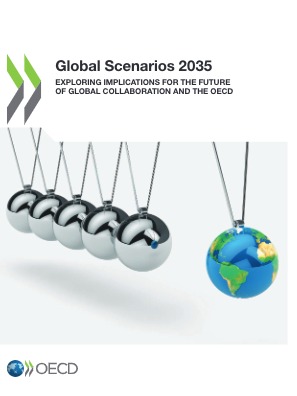
    Global Scenarios 2035April 2021

    Exploring Implications for the Future of Global Collaboration and the OECD

    In 2021, both the world and the OECD are at crossroads. The COVID-19 global pandemic has brought sudden disruption and heightened uncertainty on top of existing transformational changes such as digitalisation, geopolitical realignments, rising social inequalities and division, environmental crises and new threats to democratic governance. In this context, organisations everywhere face the challenge of modernising and adapting to remain relevant, without knowing what the future will look like or entail. The OECD in particular is entering an important period for reflection about its future, coinciding with the Organisation’s 60th anniversary and transition to a new Secretary-General.

    This report uses a strategic foresight approach to inform reflection on how best to prepare the OECD to meet the needs of a highly unpredictable future. It was developed by the OECD’s Strategic Foresight Unit to demonstrate how navigating the future of global collaboration and the Organisation’s role within it will require ongoing exploration and dialogue about what may be possible, and desirable, in the future.

    The report begins by exploring drivers of change that could significantly affect the future of global collaboration in public policy. For example, geopolitical realignments and heightened rivalries may undermine trust just as emerging risks to humanity make global collaboration more essential than ever before. The growing centrality of digital technologies may lead countries to develop separate digital ecosystems, threatening interconnection and interdependence between states. Platform companies are gaining significance in – and influence over – human lives, and may be poised to play an even greater role in shaping global standards and societal outcomes. Accelerated uptake of virtual reality could create new patterns of human settlement and interaction, and foster new powerful social movements and identities. Finally, an emerging bioeconomy and circular economy may transform global value chains, while a rapid expansion of private sector involvement in space opens new areas of economic activity.

    Next, the report presents three scenarios for how the world could be very different than expected in 2035. While representing just three of an infinite number of possibilities, these scenarios were selected and developed for their potential to challenge current assumptions and raise important questions for the future of global collaboration and the OECD.

    1.Multitrack World explores a scenario where humanity has formed into several separate and largely parallel clusters, each operating within its own data infrastructure and digital ecosystem. This scenario raises questions about how the OECD could best serve as a bridge between competing entities, and how to advance universal global principles in a context of potentially diverging values and definitions of well-being.

    2.Virtual Worlds explores a scenario where the majority of human experience takes place in highly immersive and engaging virtual reality spaces, and where there is strong pressure by citizens for such spaces to be globally connected and interoperable. This scenario raises questions about what kinds of governance may be needed to address policy issues in and concerning virtual space, and what relationships with non-state actors the OECD may need in order to make an effective contribution to global collaboration in this newly dominant dimension of human life.

    3.Vulnerable World explores a scenario where humanity faces a number of critical existential threats and opportunities that require an unprecedented level of near-perfect global collaboration in order to safeguard its vital common interests. This scenario raises questions of how effective governance of the global commons can be realised in these key areas, and the potential contribution of the OECD.

    Taken together, these scenarios suggest a number of strategic considerations for how the OECD could prepare to meet the evolving needs of the global community in the face of a highly dynamic and uncertain future. These considerations relate to the purpose, values, representation, operations and future readiness of the Organisation.

    In terms of purpose, the possibility of different future divisions and alliances in the global system suggest the OECD may need to strengthen its bridge-building role, particularly on key issues of global concern. This in turn requires an assessment of which values should guide various aspects of the Organisation’s work, with an emphasis on evidence-based analysis and well-being serving as a potential framework when working across competing economic and political systems.

    In terms of representation, the OECD may need a greater ability to work closely with non-member governments and various non-state actors in a world where these have a growing influence over global policy standards and outcomes. The scenarios also raise a number of operational considerations, including ensuring the OECD’s capacity to play a leadership role in virtual space. Finally, the scenarios suggest the OECD needs to strengthen its ability to prepare for uncertainty and respond to emerging priorities such as existential threats.

    The aim of this paper is to inform discussion on how best to prepare the OECD to meet the needs of a highly unpredictable future. Its intended audience is all those who have a stake and role in decisions about the future of the Organisation. This includes first and foremost member countries and OECD management and staff, but also the much broader community of countries, organisations and citizens who participate in and benefit from the activities of the OECD.

    Source: OECD - Publications 

    Posted on: 15/04/2025

    Last Edited: 10 months ago

    German Call for Papers: Foresight in Theorie und Praxis13 April - 03 May 2025

    As part of the "Foresight in Theory and Practice" track at the INFORMATIK FESTIVAL 2025 in Potsdam

    Die gegenwärtige Zeit ist geprägt von rasanten und oft gleichzeitig stattfindenden Veränderungen und
    Entwicklungen: Technologien wie Künstliche Intelligenz (KI), neue regulative Anforderungen wie die CSRD
    oder der EU AI Act sowie gesellschaftliche und politische Herausforderungen sorgen für dynamische und
    disruptive Zukunftsperspektiven mit spezifischen Anforderungen an die Resilienz und das
    Innovationsmanagement. Die strategische Vorausschau (Foresight) gewinnt aus diesem Grund sowohl in
    Unternehmen als auch in der Forschung zunehmend an Bedeutung.

    Der Workshop „Foresight in Theorie und Praxis“ dient daher als Forum, um Akteure aus Unternehmen und
    wissenschaftlichen Einrichtungen zusammenzubringen und Erfahrungswerte sowie Kooperationspotenziale
    der strategischen Vorausschau zu diskutieren. Insbesondere soll dabei auch die Bedeutung der Informatik
    für den Aufbau und die Weiterentwicklung eines Foresight-Prozesses berücksichtigt werden. 

    Folgende Fragestellungen bieten eine Orientierung über die thematischen Schwerpunkte des Workshops:

    1. Welche Forschungsansätze im Bereich Foresight existieren bereits? Wo gibt es weiteren
      Forschungsbedarf?
    2. Wie werden Forschungsansätze derzeit bereits in der Praxis angewandt? Wodurch zeichnen sich
      diese aus und wo liegen die Grenzen?
    3. Wie gestaltet sich strategische Vorausschau in Unternehmen? Wie unterscheidet sich diese in
      Großunternehmen und KMU?
    4. Wie kann strategische Vorausschau in wissenschaftlichen Einrichtungen umgesetzt werden? Wo
      liegen Unterschiede zur unternehmerischen Herangehensweise, wo gibt es Gemeinsamkeiten?
    5. Wie können digitale Technologien (z. B. IT-Anwendungen, KI) die strategische Vorausschau
      unterstützen und verbessern? Welche Ressourcen und Kompetenzen sind hierfür erforderlich?

    Die Beiträge zum Workshop können verschiedene Aspekte von Foresight bzw. strategischer Vorausschau
    behandeln. Mögliche Themen sind (nicht abschließend):

    • Methoden der strategischen Vorausschau
    • Anwendung von Foresight in Unternehmen
    • Anwendung von Foresight in wissenschaftlichen Einrichtung
    • Digitale Technologien zur Unterstützung von Foresight (z. B. KI, Big Data, Simulationen)
    • KI und Foresight
    • Simulationstechniken
    • Datenanalysen/Datenmangement
    • Szenariotechniken
    • Trendanalysen
    • Horizon Scanning
    • Innovationsmanagement
    • Organisatorische und kulturelle Herausforderungen der strategischen Vorausschau
    • Regulatorische und ethische Aspekte von Foresight
    • Unternehmensstrategie und Foresight
    • Risikomanagement mit Foresight
    • Best Practices und Praxisberichte

    Zielgruppe des Workshops sind Forschende und Anwendende aus dem Bereich strategische Vorausschau
    bzw. Foresight sowie:

    • Fach- und Führungskräfte aus Unternehmen, die strategische Vorausschau in ihre Planung
      integrieren
    • Beratende im Bereich Zukunftsforschung und Trendanalyse
    • Verantwortliche für Innovations- und Technologiemanagement
    • Entscheidungsträger*innen in Politik und Verwaltung, die zukunftsorientierte Strategien entwickeln
    • IT-Experten*innen und Entwickler*innen von digitalen Foresight-Tools
    • Wissenschaftler*innen und Studierende mit Interesse an Foresight-Methoden

    HINWEISE ZUR EINREICHUNG

    Einreichungsfrist für Workshop-Beiträge: 04.05.2025
    Benachrichtigung der Autoren: 02.06.2025
    Einreichungsfrist für LNI-Beiträge: 11.06.2025
    Workshop: 19.09.2025

    Die Einreichung der Beiträge erfolgt als PDF über EasyChair.

    Für die Beiträge sind die LNI-Vorlagen zu verwenden.

    Beiträge können in deutscher oder englischer Sprache verfasst werden und sollten folgenden Umfang nicht überschreiten:

    Full Paper: 10-12 Seiten

    Short Paper: 6 Seiten

    Work-In-Progress-Paper: 3-5 Seiten

    Praxisbeiträge aus der Industrie: 3-5 Seiten

    Posted on: 14/04/2025

    Last Edited: 10 months ago

    Emotion ecosystems 204024 June - 25 June 2025

    “The fabric of society is woven with emotional threads, from empathy to outrage, and it is these feelings that shape both harmony and conflict in the world.” — Dalai Lama

    Emotion Ecosystems 2040 — the foresight workshop hosted by Executive Agency for Higher Education, Research, Development and Innovation Funding (UEFISCDI) within the Eye of Europe project — was an inspiring, mind-expanding experience! The co-creation workshop was held on 📅24-25 June 2025 at 📌Conacul Cozieni, near Bucharest, Romania.

    💡The event explored the concept of emotion ecosystems — the dynamic, interwoven emotional currents that shape our collectives, whether in communities, institutions, or digital spaces.
    To capture this complexity, the event brought together voices from across Europe and from various disciplines: social psychology, psychotherapy, anthropology, philosophy, cultural history, spirituality, political science, art and the creative industries, journalism, media studies, science and technology studies, and robotics.

    One portion of the workshop was dedicated to surfacing emotional tensions that mark our time:
    🌀 Hyperconnection vs Isolation; 🌍Craving for unity vs Tribal polarization; 🩹 Healing collective traumas vs Solitary coping ...and many more. Using Causal Layered Analysis, participants unpacked these tensions through multiple layers — from surface narratives and systemic structures to the deeper worldviews and metaphors/myths that sustain them.

    From there, each working group leaned into the future:
    💡 by exploring drivers of change relevant for the tension discussed in their group, and then
    💡 by discussing and proposing new metaphors, worldviews, beliefs, and systems that could soften or transform these tensions. Ultimately, the goal was to imagine what more desirable emotional futures might look like.

    Posted on: 14/04/2025

    Post Image

    Last Edited: a year ago

    GIZ‘s latest foresight work on geopolitics and sustainable development

    Future-proofing the organization

    For years, the world has been described as being in a state of perma-crisis. As a federal enterprise working in the fields of international cooperation for sustainable development and international education, the Deutsche Gesellschaft für Internationale Zusammenarbeit (GIZ) GmbH is strongly affected by the political and economic environment in which it operates. This is why it is important for GIZ to understand the underlying drivers of change and possible future developments so that it can prepare for the future and the challenges it will face, ultimately making the organization and its staff more resilient.

    With its broad network of staff and international experts in over 120 partner countries, GIZ is well equipped to monitor and differentiate relevant signals and developments. At headquarters, a dedicated foresight team addresses future issues at a corporate level and contributes to the company's strategic decision-making.

    GIZ’ foresight report 2024

    Sustainable development is GIZ’s core business. The 2030 Agenda provides the framework for GIZ’s global activities. As the year 2030 is getting closer, the question is: will the negotiations on a new agenda be successful? But one thing is clear: any negotiation process and subsequent implementation will be increasingly shaped by geopolitical factors. This is why, the 2024 foresight report of GIZ, focuses on geopolitics, sustainable development and the global agenda for the next decade.

    In total, the views of more than 100 GIZ colleagues from GIZ's HQ and the field structure were incorporated into the report through various workshops. In addition, the report is based on extensive analysis of secondary sources, and interviews with more than 30 experts from various (international) institutions to ensure that the report also reflects perspectives from outside GIZ.

    The scenarios (strongly condensed for this post) are based on the four archetypes of the Manoa School of Futures Studies and Jim Dator, which represent four recurring paths of human civilization found in all cultures. Each scenario is supplemented by two to three short wildcards, some of which are listed here as examples.

    Posted on: 18/03/2025

    Last Edited: a year ago

    Mobilising the future

    Horizon scanning for emerging technologies and breakthrough innovations in the field of mobility

    This report documents the process and findings of a horizon scanning exercise, part of a series under the FUTURINNOV (FUTURe-oriented detection and assessment of emerging technologies and breakthrough INNOVation) project, a collaboration between the European Innovation Council (EIC) and the Joint Research Centre (JRC), aiming to bolster the EIC's strategic intelligence through foresight and anticipatory methodologies.
    The workshop, held on 16 October 2024, had as its primary goal the evaluation and prioritisation of trends and signals on emerging technologies and breakthrough innovation, across all tech7-nology readiness levels (TRLs), within the broad Mobility domain, broken-down into four key areas: transport systems, networks and multimodality; automotive and roads; rail/freight and logistics and aviation and airports.
    Signals for the workshop were gathered from experts, literature review, and text/data mining of patents, publications, and EU-funded projects. These signals were then scrutinised for their significance to the field's future by a diverse group of sector experts which led to the identification of 22 different key topics across the key areas above. These signals can be seen as hotspots of innovation that deserve the EIC’s attention for possible future support.
    Participants also highlighted various factors that could influence the development, adoption, and promotion of these emerging technologies, which are presented in the report as drivers, enablers and barriers, and analysed specifically in each of the 4 key areas.

    Posted on: 17/03/2025

    Post Image

    Last Edited: a year ago

    Emerging risks and opportunities for EU internal security stemming from new technologies

    A technology foresight exercise to support EU policy development and Law Enforcement Agencies in the fields of Resilience of Critical Entities and Fighting Crime and Terr...

    This report explores the transformative potential of Key Enabling Technologies in addressing
    emerging security challenges within the European Union. By conducting foresight analysis, the report
    evaluates technologies such as artificial intelligence, advanced sensing, blockchain, and drones,
    highlighting their ability to enhance law enforcement and critical infrastructure resilience, and fighting
    crime and terrorism, while exposing vulnerabilities, such as misuse by criminal actors or regulatory
    gaps.
    The findings emphasise the need for proactive EU policies to both support technology transformation
    and mitigate risks, including strategic investments in secure innovation, legal harmonisation, and
    addressing societal resilience. This report aligns with the Commission’s 2024–2029 priorities,
    supporting a prosperous, secure, and resilient Europe through actionable insights into emerging
    security challenges. The recommendations aim to foster effective public-private collaborations,
    ensure regulatory coherence across Member States, and promote technological solutions that balance
    security needs with ethical and societal values, reinforcing the EU’s position as a leader in sustainable,
    innovation-driven policy-making in internal security. 

    Posted on: 11/03/2025

    Last Edited: a year ago

    Identifying STI developments contributing to the capability of planetary ecosystems to flourishApril 2022

    Results of a Delphi survey

    This report showcases the results of the two-round Dynamic Argumentative Delphi survey carried out within the project “S&T&I for 2050. Science, Technology and Innovation for Ecosystem Performance – Accelerating Sustainability Transitions”. The overarching ambition of this project is the “identification and mapping of future scientific and technological developments that can radically improve ecosystem performance”. The main outcome is to provide “reflections towards the 2nd Strategic Plan of Horizon Europe (HE), in its broad direction to support the Sustainable Development Goals.”

    To this end, quantitative and qualitative methods were employed, among which this report refers to:  

    • Patent and bibliometric analysis for selecting the most dynamic Science, Technology and Innovation (STI) domains; 
    • Horizon scanning through web mining and human evaluation for identifying key STI directions and specific examples of technological/scientific breakthroughs within these directions; 
    • Dynamic Argumentative Delphi engaging relevant experts from around the world in an argument-based exploration regarding the contribution of STI to the capability of ecosystems to flourish from now to 2050. 

    Posted on: 04/03/2025

    Last Edited: a year ago

    Innovation 2030

    Investigating & monitoring the changing conditions, trends and needs for the Region of Central Macedonia

    As radical innovations are having a profound impact globallyon the macroeconomic environment, the Region of Central Macedonia is monitoringclosely following the developments, trends and variables that favour or affect it or negatively affecting its development.
    Institutions and executives from the private and public sector have explored through a participatory and dynamic process (Thematic Participatory Workshop) the variables that will the innovation and entrepreneurship environment of the region with time horizon 2030, identified their dynamics and evaluated their interaction. The findings provided input to the working group for the development of four scenarios that will define the future of innovation in the region of Central Macedonia in the coming decade. These scenarios identified
    the development of a proposal of three strategic axes, developing in a stepwise manner in three different periods, which will strengthen the resilience of the region and prepare it to face the conditions in these four futures.

    The study is available in Greek.

    Posted on: 21/02/2025

    Last Edited: a year ago

    Horizon scanning — tips and tricksJuly 2023

    A practical guide - Eionet Report

    This document provides guidance on how to conduct a structured horizon scanning process to identify emerging developments that could have potential impact in the future, and in particular on the environment. It starts with an overview of the guide (Chapter 1) and an introduction to horizon scanning (Chapter 2) in connection with the concept of futures literacy. It then provides a step-by-step approach for conducting a structured horizon scanning process (Chapter 3), including a variety
    of diverse sources for spotting signals, different frameworks for signal scanning and several options to unpack and analyse the collected signals and patterns of change through creative methods and exercises. It also proposes a few different and complementary ways of communicating the findings to relevant stakeholders, networks and communities. Lastly, it suggests some tools (Chapter 4) that can be used to strengthen the scanning process. The annexes offer a detailed comparison of such tools and a glossary of terms related to futures literacy.

    Posted on: 30/01/2025

    Last Edited: a year ago

    Scenarios for the future of school education in the EUSeptember 2023

    A Foresight Study

    The foresight study focused on school education (ISCED levels 1-3) in the EU. It aimed at:

    • developing four scenarios, describing potential alternative futures of the school education in the EUby 2040.
    • identifying the preferred scenario developments.
    • providing recommendations on the policy measures that could be introduced, or strengthened, tohelp school education in the EU move towards the preferred future scenario.

    The development of the scenarios was based on the factors of change1, identified through desk research, horizon scanning, and extensive stakeholder involvement. More than 80 European Commission officials, school education experts, representatives of teacher, student and headmaster umbrella organisations, and other stakeholders, from across the EU, contributed to the study, by participating in four workshops, a Delphi survey, and interviews.

    Posted on: 29/01/2025

    Last Edited: a year ago

    Impact of the COVID-19 pandemic on European Consumer Behaviour - Foresight Study - Final ReportJune 2022

    This foresight study's purpose was to anticipate future challenges for consumer policy in the context of the twin transition and the short- and long-termed impacts of the COVID-19 pandemic on consumer behaviour, consumption patterns and markets in Europe with a time horizon of 2025 to 2030. In order to find answers to the complex questions of uncertain future developments the foresight team combined several approaches of foresight for anticipatory governance. This includes a systematic horizon scanning of existing reports for weak signals of change in all fields of society such as societal developments, technology, economy, environment, policy and values. The literature and data based information collection was combined with explorative exercises like a scenario development, a visioning process and a gap analysis to develop new ideas for policy options. The engagement of stakeholders and experts on consumer policy was crucial throughout the whole process, in particular for the analysis of influencing factors, alternative scenarios and suggestions for policy actions. 

    With its anticipatory and exploratory nature, the study was a pilot project for the implementation of comprehensive strategic foresight in DG JUST. Accordingly, the project was also used to build capacity for foresight in dealing with future uncertainty. Representatives of several departments of the DG actively participated in the workshops in all four steps of the process and thus got to know and tested the methods of foresight. These include participatory and qualitative foresight methods such as horizon scanning and scoping for identifying key future trends, scenario and vision development for exploring different possible futures and identifying challenges, and roadmapping approaches for developing options for action. Another important
    element of the study was the intensive involvement of stakeholders in all steps of the process, especially in the development and discussion of future scenarios and in the development of new policy ideas.

    The DG can use the various results of the Foresight process for the further future-proof implementation of the New Consumer Agenda. The trends examined for the scenarios can be reviewed at regular intervals with regard to new developments and impacts on consumption and consumer protection. The scenarios provide an overview of possible futures of consumption in Europe after the COVID-19 pandemic and serve for exploring the scope of possible developments. The visions for consumer protection and empowerment, especially of vulnerable groups and consumers with special needs, summarise stakeholders' expectations for consumer policy in the next 10 years. The action fields prioritised together with stakeholders for consumer policy in and after the pandemic and the ideas for policy actions can now be used by the EC to set its own priorities and develop ideas into concrete actions. The EC may not want to take up all the ideas presented here, but the suggestions can provide guidance on which issues are of high importance from a stakeholder perspective in the COVID-19 crisis.

    Posted on: 29/01/2025

    Last Edited: a year ago

    Mission Area: Healthy Oceans, Seas, and Coastal and Inland WatersJuly 2021

    Foresight on Demand Brief in Support of the Horizon Europe Mission Board

    This report provides the findings from the ‘Foresight on Demand’ project supporting the Horizon Europe
    Mission Board for Healthy Oceans, Seas, Coastal and Inland Waters in its task of defining specific
    Mission(s) to be addressed in Horizon Europe. The overarching goal of the project was to support the
    reflections of the Mission Board from a forward-looking perspective.

    The team of experts was set up by the ‘Foresight on Demand’ consortium to provide the Board with wellversed
    expertise in both foresight methodology as well as thematic developments on the future of
    oceans and water. The objective was to think along with the board and to stimulate the debates by
    raising surprising and challenging issues based on forward-looking analysis and exploration. The project
    provided the Mission Board with new information, (systemic) insights and/or alternative future visions
    that connect the extremely multi-dimensioned topics tackled by this Mission Board.

    The project had started with the scoping phase of identifying focal areas of which results were discussed
    in the meeting with the Mission Board. Subsequently, the foresight team explored further future
    uncertainties and knowledge gaps via a real-time Delhi survey to stakeholders. The scoping phase
    began with the scanning of 33 foresight reports looking towards 2050, foresight databases and news
    feeds to address long-term developments and emerging signals of change. In particular, the foresight
    expert team developed five focal areas, which were presented to the Mission Board to provide
    interconnected insights as well as challenging and provocative ideas to enrich their work. The five focal
    areas are summarised in the table below:

    After the initial phase of scanning and analysing emerging issues and synthesising the findings into five
    focal areas the results were discussed with the Mission Board. In the meeting the discussion led the
    Mission Board request the foresight team to continue the foresight work and identify further data and
    knowledge gaps related to oceans and waters, the recovery of oceans and waters and their role in
    climate change mitigation.

    In line with foresight practice as well as with the Mission Board’s explicit desire to involve a wider public,
    the study engaged stakeholders via a real-time Delphi method highly suitable to address future
    uncertainties. The Delphi method is a structured group communication process, dealing with subjects,
    on which often unsure and incomplete knowledge is available, that are judged upon by experts. The
    idea is that the respondents can learn from the views of others, without being unduly influenced by the
    hierarchies or other societal structures and power relations.
    Invitations to the survey were sent to stakeholder groups in different sectors of society, in particular:
    research and development, policy, industry and civil society. Approx. 3000 European stakeholders were
    invited. The survey platform was open two weeks in February 2020 leading to the total of 238 registered
    participants of which 138 finished the survey.

    Participants assessed the total of 15 future statements and proposed new ones to be considered by the
    Mission Board, in three areas: i) oceans and other water ecosystems, ii) the recovery of healthy oceans
    and waters and iii) the role of oceans and waters in climate mitigation. The results of the assessments
    presented in mean values are summarised in the following table in each of the three areas.

    The findings form the survey can be summarised on each of the areas as follows:

    • Oceans and other water ecosystems: In this area, all proposed issues are accepted as
      important but, with the current attitude towards marine and water ecosystems, respondents
      believed that actions will not be sustained properly. The reason for this lack of consistency
      between “right things to do” and what is actually done probably resides in cultural gaps that
      make it difficult to pass from theoretical analyses and legislation to action, with the reversal of
      current trends. Nonetheless, the survey indicates consensus about the adoption of the
      ecosystem approach, recognising that humans, with their cultural diversity, are an
      integral component of ecosystems
      and emphasizing the need for collaboration between the
      scientific community, the economic sector, policymakers and the public at large.
    • The recovery of healthy oceans and waters: In this area, the survey showed a remarkable
      consistency, from all stakeholders, on the actions contributing to healthy oceans and waters.
      This point could almost guarantee the success of the mission as it seems that the society
      understands the enormous contribution of healthy oceans and waters on the planet earth.
      Although the list of what can be achieved in the near future could be endless, the fact that we
      have to include society at large in addressing challenges, should be our first step.
    • The role of oceans and waters in climate mitigation: The respondents provided a global
      impression that Europe can be leader in several fields of climate mitigation. If, however, the
      rest of the world is not addressing these efforts of climate mitigation, the role of Europe will not
      have significant impact. There is no single major technological solution that, alone, would curb
      the climate change, a goal that might be achieved by a mix of technologies and regulations, at
      the right geographic scale, and as early as possible. Furthermore, positive and negative
      impacts of each technology have to be assessed carefully as very little is still known on the
      mid-term and long-term impacts of the different technologies available today. Much more
      research and stakeholder cooperation are required to select the right technologies and
      the optimum strategies on time
      , in order to avoid unmanageable trends.
    • Further areas to be explored: Next to the topics proposed by the foresight expert team,
      stakeholders were asked to suggest other topics that should be understood better and acted
      upon in the EU. Three main topics emerged: research and research infrastructure, civil
      society, and corporate social responsibility
      .

    Final remarks and recommendations

    The first part of the foresight study led to the descriptions of five possible focal areas for European
    innovation action in the realm of oceans and waters: 1. Climate-resilient coastlines, 2. Clean water for
    the blue planet, 3. Vital aquatic ecosystems, 4. Open digital twin of oceans and waters, 5. Humans at
    sea. All these focal areas have similar magnitudes, notably if we consider an extensive view of "humans
    at sea" not only as an island network but as a continuum between a vulnerable and densely populated
    low elevation zone and a potentially harmful but also rich coastal ocean. In view of addressing the focal
    areas or their elements in the future actions towards sustainable development in Europe, it is worth
    prioritising such efforts in relation with the general theory of systems that establishes the hierarchy of
    systems in three spheres showing that human activities and economy are nested into natural systems
    and must obey their laws. Traditional illustrations of sustainability, however, show only a small overlap
    of the three spheres, this overlap representing sustainability.

    The real-time Delphi survey confirmed that there is a need for a holistic approach leading to more
    structured actions. This is widely recognized but seldom satisfied. Too specific actions, undertaken while
    ignoring the behaviour of the rest of the ecosystems, may lead to temporary success but will surely not
    improve the overall situation. This calls for enhanced efforts in improving ocean literacy at all levels,
    from the scientific community (too focused on reductionistic approaches) to the economic, social and
    industrial sectors. Furthermore, the conceptual landscape embracing water ecosystems (linking oceanic
    and inland waters) is very fragmented, with the high risk that while fixing specific problems other
    problems are created. Hence, we conclude with three recommendations.

    1. Adopt a holistic approach for balanced actions that calls for improving water literacy at all
      levels of society.
    2. Create networks of interest using a common (not too technical) language embracing water
      ecosystems (including both oceanic and inland waters) to overcome fragmentation in society.
    3. Conduct holistic impact assessments and establish monitoring mechanisms of measures
      implemented to fix specific problems to avoid creating in parallel new problems in complex
      ecosystems.

    Posted on: 20/01/2025

    Last Edited: a year ago

    IMAGING THE FUTURE

    Horizon scanning for emerging technologies and breakthrough innovations in the field of medical imaging and AI

    This report documents the process and findings of a horizon scanning exercise, part of a series under
    the FUTURINNOV (FUTURe-oriented detection and assessment of emerging technologies and break-
    through INNOVation) project, a collaboration between the European Innovation Council (EIC) and the
    Joint Research Centre (JRC), aiming to bolster the EIC's strategic intelligence through foresight and
    anticipatory methodologies.


    The workshop, held on 17 September 2024, had as its primary goal the evaluation and prioritisation
    of trends and signals on emerging technologies and breakthrough innovation, across all technology
    readiness levels (TRLs), within the EIC's Medical Imaging and AI portfolio.
    Signals for the workshop were gathered from experts, literature review, and text/data mining of pa-
    tents, publications, and EU-funded projects. These signals were then scrutinised for their significance
    to the field's future by a diverse group of sector experts which led to the identification of eight key
    topics: generative AI for healthcare; digital twins; multimodal data analysis; explainable AI in medical
    imaging; application of AI to specific diseases/conditions; XR - augmented and virtual realities; tensor-
    valued diffusion encoding, and AI-generated synthetic data for training AI. Furthermore, the workshop
    identified additional wild cards with high novelty and disruptive potential such as: blockchain, edge
    computing and differential privacy for secure, AI-driven medical imaging and collaborative healthcare
    optimisation and quantum medical imaging.


    Participants also highlighted various factors that could influence the development, adoption, and pro-
    motion of these emerging technologies, which can be grouped under the following categories: Tech-
    nological advancements and cross-sector applications; data infrastructure, AI models, and regulatory
    frameworks; workforce, education and societal factors; clinical efficiency and patient outcomes; trust,
    ethics, and AI adoption; financial pressures and industry investment in AI healthcare.

    Posted on: 13/01/2025

    Last Edited: a year ago

    Final Report: S&T&I 2050April 2023

    Science, technology and innovation for ecosystem performance: accelerating sustainability transitions

    This report presents the results of a the project S&T&I for 2050: science, technology and innovation for ecosystem performance – accelerating sustainability transitions. The project’s overarching goal was to identify and map future scientific and technological developments, which can radically improve ecosystem performance.

    The project was conducted along several phases:

    • Based on literature review, the project team developed three perspectives on future relations between humans and nature and humans’ role in the flourishing of planetary ecosystems. The three perspectives are: i) protecting and restoring ecosystems, ii) co-shaping socio-ecological systems, and iii) caring within hybrid collectives
    • A two-round Dynamic Argumentative Delphi (DAD) online survey explored the most dynamic scientific and technological developments. The survey engaged over 600 experts globally in enriching, assessing and prioritizing STI directions in terms of their potential to contribute to the capability of planetary ecosystems to flourish from now to 2050.
    • Drawing in on the three perspectives and the results of the DAD survey, six case studies on core sustainability issues explored the three perspectives. Reflections on implications for R&I policies in the context of the European Green Deal conclude each of the six case studies: i) Law for Nature; ii) Land Use Futures; iii) Soil to Soul; iv) Accelerating transitions to regenerative economy; v) Ecosystems and Micro-and Nano Cosmos; vi) Data as Representation

    Posted on: 12/12/2024

    Last Edited: a year ago

    The National Strategy for Research Innovation and Smart Specialization 2022-2027August 2022

    The National Strategy for Research, Innovation, and Smart Specialisation (SNCISI) 2022–2027 represents Romania’s comprehensive approach to fostering a modern, sustainable, and impactful research and innovation ecosystem. Coordinated by the Ministry of Research, Innovation, and Digitalization (MCID), this strategy aligns with Romania’s national development goals and its commitments under the European Research Area (ERA). SNCISI is designed to address pressing societal challenges, stimulate economic transformation, and elevate Romania’s global standing in research and innovation.

    This strategy highlights the pivotal role of research, development, and innovation (RDI) in driving sustainable growth, advancing scientific discovery, and creating new technologies that directly enhance quality of life, productivity, and economic competitiveness. At its core, the SNCISI aims to integrate the principles of open science, ensure inclusivity in research priorities, and align Romania’s efforts with global and European benchmarks.

    Through SNCISI, Romania emphasises a dual commitment: first, to support foundational and applied research excellence by creating favourable conditions for researchers, institutions, and private stakeholders; second, to catalyse public-private collaboration that addresses challenges like climate change, digitalization, and health crises. The strategy views science and innovation not merely as tools for economic growth but as vital contributors to societal well-being and global problem-solving.

    SNCISI’s development is rooted in an extensive consultative process involving regional and national stakeholders, ensuring that the strategy is representative of Romania’s diverse socioeconomic landscape. It integrates input from academia, government, industry, and civil society to outline actionable pathways that connect research activities with tangible societal and economic outcomes.

    The strategy is framed around four major objectives (OGs) and five smart specialisation domains that align with regional and national strengths. These axes ensure a coherent alignment of resources, infrastructure, and expertise to drive both regional and national priorities forward.

    Objectives include:

    OG1: Developing the research, development, and innovation system.
    OG2: Supporting innovation ecosystems tied to smart specialisations.
    OG3: Mobilising towards innovation by enhancing collaboration with the private sector.
    OG4: Increasing European and international collaboration.
    The SNCISI underscores a commitment to modernising infrastructure, attracting and retaining talented researchers, and fostering an innovation-driven economy. Through its structured framework, it also ensures that public funds are allocated effectively to stimulate high-impact, sustainable outcomes.

    Posted on: 09/12/2024

    Last Edited: a year ago

    The future of work in 2030March 2020

    An argument-based top of emerging professions

    There is a fascination with the future, as a repository of both opportunities and threats that affects all of us. Concern for what we call "the future of work" is part of this mosaic. Regardless of their geographical space, people think of their work as being, in varying doses, a source of material well-being, but also a component of their identity. Uncertainties about how will people work in the future – how will they earn income and build a purpose, a meaning through their work – is an important topic, and often a source of concern.
    What are we heading for? What kind of future is desirable? What is possible, respectively probable, from what we deem desirable? What can be done to get there? All these are legitimate questions that deserve our attention.
    In the context of recent waves of technological progress, the future of work is the subject of intensive controversy. Often in the public space there is an overwhelming emphasis on the impact of new technologies on work, neglecting other shaping forces relevant to labor market dynamics. Therefore, the purpose of this study is to open a wider conversation about the future of work on the 2030 horizon.

    The perspective used in this paper is a causal and hierarchical one: from drivers of change towards their impact on labor. Most studies on labor market developments start from a context modeled by several global megatrends. Following this logic, the second chapter describes the four main trends identified in literature: i) technological developments, especially automation; ii) globalization, especially cross-border flows and widening inequalities; iii) demographic changes, in particular the ageing population in the global North; iv) climate change, environmental degradation and the development of the green economy.
    Within these trends, ongoing or likely transformations have been identified that have or could have an impact on global labor market dynamics. The section describing each megatrend is accompanied by a box with what we call "signals of change" - contextualizing empirical data that serve as justifications/explanations of the phenomena described in that section. In the context of the global transformations we outline here, the fourth chapter presents a catalogue of emerging occupations, by which we mean both existing (highly dynamic) or incipient occupations and occupations that do not yet exist but are likely to exist in 2030 or beyond
    The third chapter was added later in the context of the Covid-19 pandemic and is a brief overview of the transformations in the global labor market – some already visible, others likely - due to this global crisis.

    ***

    The study was published in Romanian as part of the project POCU INTL - Quality in higher education: internationalization and databases for the development of Romanian higher education.

    Project webpage: pocu-intl.uefiscdi.ro

    Posted on: 09/12/2024

    Last Edited: a year ago

    Foresight kit for entrepreneurial mindsJune 2023

    The FOReSiGHT project
    FOReSiGHT - Flexibility and Resilience in Digital Transformation and Intelligent Automation - Advanced Skills and Tools for Academia and Entrepreneurs is a 30-month roject implemented between 2020 - 2023 by a consortium of 7 partners universities, SMEs, NGOs) from 5 countries: Romania, Germany, Italy, Croatia and Belgium.
    Overall, FOReSiGHT aims at creating a digital collaboration platform between universities and companies to anticipate and deliver future skills on intelligent automation, digital transformation & algorithmic governance, and foresight, thus fostering resilience and flexibility.

    The Foresight Kit for Entrepreneurial Minds
    This generation of students needs to embrace the idea of the future with a sense of activism and design. We encourage them to regard the future as a malleable and constructible set of possibilities. This attitude is in stark contrast with people- the youth included- feeling they are witnesses to the future unfolding, or merely in the position to adapt to change as it occurs. Future minded students are the ones exploring, imagining and deliberating potential futures. Students with entrepreneurial ambitions are invited to use the tools in this kit to go even further than imagining and debating the future; they are invited to co-create futures that are desirable for the ecosystems/communities/ clients they aim to serve.
    We trust this foresight kit for entrepreneurial minds will provide useful guidance for young people interested in shaping the future. While this is an intellectual journey aimed at university students, the kit is meant to support facilitators in organizing and running a foresight experience. Thus, the kit describes the procedural steps for organizing a foresight process for students interested in generating entrepreneurial ideas that may address the challenges and opportunities of the future, as opposed to merely speculating the opportunities of the present.

    Posted on: 06/12/2024

    Last Edited: a year ago

    Foresight on Demand: “Foresight towards the 2nd Strategic Plan for Horizon Europe”July 2023

    This is the final report from a foresight study that aimed at supporting the development of the Strategic Plan of Horizon Europe (2025-2027). The study lasted for 18 months and involved a wide range of activities that this report aims at presenting.

    These activities aimed at providing early-stage strategic intelligence and sense-making contributions – issues, trends, perspectives, ideas - that could contribute novel elements to the more structured processes of strategic planning that were to follow. The work followed two important directions that were recommended by EFFLA (2012)1 as core elements of bringing foresight into EU R&I policy: knowledge-based review and broad engagement.

    Knowledge based review was conducted with the help of the 40 experts who constituted the team that worked on the project. All these experts have contributed as authors to the authorship of the different chapters of this report. About 300 additional experts contributed to the project through its numerous workshops that helped shape the scenarios and ideas about their policy implications, and through membership in the on-line platform of the project at www.futures4europe.eu, which reached 307 people. Last, we acknowledge the 943 experts who responded to our final consultation survey on the implications of our foresight for the directions of EU R&I policy.

    The foresight process
    The foresight process in support of the 2nd Strategic Plan comprised a wide spectrum of activities:
    • As a reference point for the exploratory work, the explicit and implicit impact assumptions of the 1st Strategic Plan were identified and visualised with the help of a qualitative system analysis and modelling tool for causal loop analysis.
    • An exploratory analysis of forward-looking sources (e.g. foresight reports, web-based horizon scanning) was conducted to identify relevant trends and signals of unexpected developments. These were discussed in online workshops and on www.futures4europe.eu.
    • An outlook on emerging developments in the global and European context of EU R&I policy was developed drawing on a major online workshop in autumn 2021 with some 60 participants, experts and policy makers, who worked with multi-level context scenarios and specific context narratives about emerging disruptions.
    • On that basis and in close consultation with the European Commission involving another major workshop in February 2022 which brought together 80 participants, Expert Teams were set up to develop disruptive scenarios in five areas of major interest. Each team ran several internal workshops but also involved further experts and Commission staff in their work, both through the online platform and through a final policy-oriented workshop. The foresight work within the areas of interest resulted in five deep dives on the following topics:
    > Climate change, Research, and Innovation: Radical Options from Social Change to Geoengineering
    > Hydrogen Economy – A radical alternative
    > The EU in a Volatile New World - The challenge of global leadership
    > Global Commons
    > Transhumanist Revolutions
    • Further areas of interest identified since were explored through review papers aiming to capture major trends, developments and scenario sketches in relation to further disruptive developments
    > Social Confrontations
    > Artificial General Intelligence: Issues and Opportunities
    > The Interpenetration of Criminal and Lawful Economic Activities
    > The Future of Health
    • A third major workshop took place in October 2022 bringing together all the thematic strands of work and addressing possible R&I policy implications from this work. Participation in this workshop reached 250 individuals over 2 days.
    • Building on the workshop, the online Dynamic Argumentative Delphi survey Research4Futures collect suggestions from further experts and citizens about the implications of this foresight work for the priorities of EU R&I policy.

    This foresight study has been the most widely engaging foresight exercise yet aiming to support EU R&I policy. Through this broad engagement, the study did not only develop intelligence for the 2nd Strategic Plan of Horizon Europe but also contributed to the development of an EU R&I foresight community, one that is an asset for future R&I policies across Europe. 

    Posted on: 30/11/2024

    Post Image

    Last Edited: a year ago

    Emerging challenges for global commons

    The concept of the global commons refers to resource domains that fall outside national jurisdiction, to which all have access, including high seas, airspace, outer space and cyberspace. Given the growing significance of these domains and related resources for states and other global and local players across a range of purposes, defining the global commons concept has become more complex.

    Posted on: 25/11/2024

    Post Image

    Last Edited: a year ago

    Hydrogen Economy in "Europe 2040"

    Hydrogen is „just“ an elementary molecule consisting of two hydrogen-atoms. Why is there so much fuss about this simple molecule that even a whole economy should or could be built upon it? The reaction of hydrogen (H2) with oxygen releases a lot of energy while forming pure water. In the other direction, water can be divided into hydrogen (H2) and oxygen with the help of electricity (there are of cause also other hydrogen building reactions mostly built on fossil fuels/biomass); this is simple chemistry. Compared to fossil fuels, water is nearly unlimited on the planet.

    Posted on: 25/11/2024

    Post Image

    Last Edited: a year ago

    S&T&I for 2050 Project Approach and Methodology

    The project “S&T&I for 2050” is structured around five intertwined tasks:

    Posted on: 25/11/2024

    Post Image

    Last Edited: a year ago

    Addressing Underlying Assumptions

    Tips and Tricks on Horizon Scanning

    The 'Horizon Scanning – Tips and Tricks' publication provides an insightful step-by-step support on how to run an effective horizon scan - and how to address underlying biases while doing so.

    Posted on: 25/11/2024

    Post Image

    Last Edited: a year ago

    ORION

    Meet Your Co-Pilot in Horizon Scanning

    Paulo Carvalho has been working in the field of futures and foresight for more than 25 years. On one hand, he is a professor in foresight, strategy and innovation at the Faculty of Economics and Management at the University of Lisbon. On the other hand, he founded a foresight company five years ago, IF Insight Foresight, focussing on consulting, horizon scanning and strategic intelligence, as well as other strategy and innovation projects. He talked to Futures4Europe about Insight Foresight’s recently developed tool ORION and how it could revolutionise foresight practices.

    Posted on: 25/11/2024

    Last Edited: a year ago

    Futures of using nature in rural and marine Europe in 2050July 2023

    Scenarios and policy implications

    The study focuses geographically on Europe and looks toward 2050, on regimes of stewardship of land and sea and address the role of ownership, access and use rights in rural areas (cities excluded), multiple uses of spaces (both land and sea), biodiversity, food (both aquaculture, fisheries and agriculture), energy (use of renewables), raw materials (mining etc.), carbon removal and storage, adaptation to climate change. While the challenges are global, they are addressed especially from the European research and innovation policy perspective. 

    The immense social and technological evolution of the Anthropocene continues transforming the Earth’s surface and its dynamics through extensive (mis-)use of its resources, both on the land and in the sea. This policy brief develops scenarios on rural and marine areas in Europe in 2050 and subsequent implications to today’s R&I policy in Europe. Each scenario considers i) Economy and technology, ii) Demographics, lifestyles and values, iii) Governance and iv) Environment.

    In Scenario A, European Civic Ecovillages pursue self-sufficiency and contribute to establishing a cooperative, locally oriented, caring economy restoring the ecosystem carrying capacities in land and sea. In Scenario B on Sustainable High-tech Europe, European businesses enjoy global leadership in regenerative and multi-functional high-tech solutions for energy, aquaculture and agriculture. In Scenario C on the United States of Europe, centrally planned Europe is divided between intensive use of land and sea and large conservation areas. Scenario D on European Permacrisis portrays Europe in a post-growth and politically scattered context that leads to low rates of innovation and fragmented use of land and sea.

    None of the scenarios features a decisive solution to the global climate and biodiversity crises. Scenario A forcefully targets the resolution of the biodiversity crisis in Europe, by aligning human practices with nature, but provides little support to global climate and biodiversity crises. Scenario B proactively tackles the biodiversity crisis both in Europe and internationally but struggles with the fragmentation of efforts and with scaling up good practices and wider impact to curb the crisis. Scenarios C and D with intensive use of nature reduce biodiversity. Thanks to European-wide coordination Scenario C can protect vast areas with positive impacts to biodiversity, whereas Scenario D also struggles with the major fragmentation of conservation efforts and its detrimental impact on biodiversity. Such challenges illustrate the importance of balanced approaches in developing both local and global solutions to climate and biodiversity crises.

    All scenarios depict a future of rural and marine areas in the context of extreme weather events and ecological crises, all be it with different intensities. Social developments, instead, range from major social confrontations to more collaborative and inclusive practices. Their policy implications include, among others, the need to address major risks of patchy land use that hamper the sufficient size of ecosystems and diminish resilience. The scenarios also touch upon integrated spatial planning of urban, rural and marine areas, and how the effective use of spaces can benefit from the further extension of user rights. Future research could explore if and how land ownership models in some rural areas could be replaced or complemented with public ownership and user rights. Furthermore, policy implications include a need for balancing sustainability with food affordability and security in different modalities of agriculture and aquaculture. The challenges of climate and biodiversity crises addressed by the scenarios suggest that balanced approaches are needed in developing both local and global solutions.

    This brief is the result of one of eight Deep Dive Foresight Studies in the project ‘European R&I Foresight and Public Engagement for Horizon Europe’ conducted by the Foresight on Demand’ consortium for the European Commission. During the spring of 2023, an expert team identified factors of change and organised two scenario and one policy implications workshops also engaging experts from academia, business and public administration around Europe. The process was also supported by discussions in the Horizon Europe Foresight Network.

    Posted on: 18/11/2024

    Last Edited: a year ago

    Eyes on the FutureOctober 2024

    Signals from Recent Reports on Emerging Technologies and Breakthrough Innovations to Support European Innovation Council Strategic Intelligence - Volume 2

    This report, part of the FUTURINNOV project—a collaboration between the European Commission’s Joint Research Centre and the European Innovation Council and SMEs Executive Agency—provides the second literature review of third-party reports, in a continuous workstream that surfaces periodically cross-sector emerging technologies and breakthrough innovations.
    It summarises findings in a final selection of 30 signals and trends through an iterative methodology focused on their potential impact and novelty.
    These findings are categorised and analysed across the 10 critical technology areas defined by the European Commission, as well as through other frameworks such as the Strategic Technologies for Europe Platform and the EIC’s portfolios and specific taxonomy.
    The report concludes with a cross-cutting analysis and offers recommendations to support the EIC’s strategic intelligence, particularly in prioritising innovation funding.
    Additionally, it aims to raise awareness among EU policymakers about technological developments that may not yet be widely known.

    Posted on: 13/11/2024

    Last Edited: a year ago

    Materialising the FutureOctober 2024

    Horizon Scanning for Emerging Technologies and Breakthrough Innovations in the Field of Advance Materials for Energy

    This report documents the process and findings of a horizon scanning exercise, part of a series under the FUTURINNOV (FUTURe-oriented detection and assessment of emerging technologies and breakthrough INNOVation) project, a collaboration between the European Innovation Council (EIC) and the Joint Research Centre (JRC), aiming to bolster the EIC's strategic intelligence through foresight and anticipatory methodologies.
    The workshop, held on 13 May 2024, had as its primary goal the evaluation and prioritisation of trends and signals on emerging technologies and breakthrough innovation, across all technolo-gy readiness levels (TRLs), within the EIC's Advanced Materials portfolio and with a particular fo-cus on their use in the Energy sector.


    Signals for the workshop were gathered from experts, literature review, and text/data mining of patents, publications, and EU-funded projects. These signals were then scrutinised for their sig-nificance to the field's future by a diverse group of sector experts which led to the identification of nine key topics: accelerated material design/synthesis; biomaterials as part of the circular economy; advanced materials allowing new applications; closed loop battery recycling; innova-tions in catalysis; organic batteries for sustainable energy storage; design to performance bat-teries; design to cost batteries; and electrochemical water treatment. Furthermore, the workshop identified additional wild cards with high novelty and disruptive potential such as: circularity of materials (safe and sustainable by design); membranes / separators; process optimisation; 3D printing of electrode materials for energy and environmental engineering applications; and use of AI for the study of materials.
    Participants also highlighted various factors that could influence the development, adoption, and promotion of these emerging technologies, which can be grouped under the following categories: governance and compliance frameworks; funding; collaboration and knowledge exchange; sustainable and efficient development; infrastructure and technological advancement and limita-tions; industry and market dynamics and constraints; innovation and risk management; supply chain and raw materials; and talent development.

    Posted on: 13/11/2024

    Last Edited: a year ago

    Identifying Future Critical Technologies for Space, Defence and Related Civil IndustriesDecember 2022

    A Technology Foresight Exercise to Support Further EU Policy Developments

    This publication is a Science for Policy report by the Joint Research Center (JRC), the European Commissions's science and knowledge service.

    It aims to provide evidence-based scientific support to the European policymaking process. The contents of this publication do not necessarily reflect the position or opinion of the European Commission. Neither the European Commission nor any person acting on behalf of the Commission is responsible for the use that might be made of this publication. This report is based on research of the JRC. It does neither include any information or data collected in the context of the EU Observatory of Critical Technologies, nor does it prejudge the future work of the Observatory. For information on the methodology and quality underlying the data used in this publication for which the source is neither Eurostat nor other Commission services, users should contact the referenced source. The designations employed and the presentation of material on the maps do not imply the expression of any opinion whatsoever on the part of the European Union concerning the legal status of any country, territory, city or area or of its authorities, or concerning the delimitation of its frontiers or boundaries. 

    Posted on: 10/11/2024

    Last Edited: a year ago

    (DIS)ENTANGLING THE FUTUREAugust 2024

    Horizon-scanning for Emerging Technologies and Breakthrough Innovations in the Field of Quantum Technologies

    This report documents the process and findings of a horizon scanning exercise, part of a series under the FUTURINNOV (FUTURe-oriented detection and assessment of emerging technologies and breakthrough INNOVation) project, a collaboration between the European Innovation Council (EIC) and the Joint Research Centre (JRC), aiming to bolster the EIC's strategic intelligence through foresight and anticipatory methodologies.


    The workshop, held on 24 April 2024, had as its primary goal the evaluation and prioritisation of trends and signals on emerging technologies and breakthrough innovation, across all technology readiness levels (TRLs) and within the EIC's Quantum technologies portfolio.


    Signals for the workshop were gathered from experts, literature review, and text/data mining of patents, publications, and EU-funded projects. These signals were then scrutinised for their significance to the field's future by a diverse group of sector experts which led to the identification of nine key topics: quantum sensing; quantum algorithms for lattice-based computational fluid dynamics models; materials for quantum; Artificial Intelligence for quantum; error correction; solid-state scalability; quantum for Artificial Intelligence; quantum as a service – metacloud; and quantum computers. Furthermore, the workshop identified additional wild cards with high novel-ty and disruptive potential such as quantum sensing AI on edge and molecular spin qubits.
    Participants also highlighted various factors that could influence the development, adoption, and promotion of these emerging technologies, which can be grouped under the following categories: technical advancements; investment and infrastructure support; cross-sector collaboration; regulatory navigation; talent acquisition; market maturity; and application utility.

    Posted on: 08/11/2024

    Last Edited: a year ago

    Eyes on the FutureMay 2024

    Eyes on the Future - Signals from recent reports on emerging technologies and breakthrough innovations to support European Innovation Council strategic intelligence - Volume 1

    This report provides a literature review of publications authored by numerous external organisations. It summarises 34 signals and trends of emerging technologies and breakthrough innovations across the 11 primary categories of a taxonomy defined by the European Innovation Council (EIC). The authors investigate not only what is deemed most novel in multiple application domains but what is worth the attention of European Union (EU) policy audiences involved with priority-setting and decision-making.


    This work that has led to this literature review (1) reviews and evaluates 186 reports and articles on emerging technologies, (2) captures 489 signals, of which 86 have been short-listed and 34 selected for this report, (3) creates an internal database of signals which is used to digest and analyse the evolution of signals and novel technologies (4) connects signals with EIC portfolios and other European Commission (EC) initiatives such as policies surrounding critical technologies and Strategic Technologies for Europe Platform (STEP) investments that, together with the primary and secondary levels of the EIC taxonomy, provide multiple types of analysis and insights (5) draws conclusions that aim to support the EIC’s funding prioritisation and additionally, provide reflections on EIC portfolio setting.


    By using the best publicly-available data to produce a harmonised internal database, along with an appropriate filtering and selection methodology, the authors aim to provide a support platform for future-oriented technology analysis of relevance for other EU policy-making initiatives.

    Posted on: 08/11/2024

    Last Edited: a year ago

    Deep Dive: Transhumanist RevolutionsDecember 2022

    The twelve scenarios in this deep dive are informed by transhumanism, portraying futures in which the human condition – our bodies, functions, and lives – and the features of societies are fundamentally transformed by technology. Even though scenarios are built along the lines of particular scientific and/or technological advancements, the discussion spreads over sociotechnical ensembles and the re-conceptualization of the relationship between technology and society by 2040.

    The work leading to this report started with a horizon scanning exercise to identify a series of technological innovations and scientific breakthroughs that may be considered key factors towards re-engineering human nature. In parallel, the authors explored diverse narratives regarding the human condition and significance in the world, dreams and fears embodied in the so-called collective imaginary, echoing through myths and fantasies to literature, cinematography and the wider culture. At the intersection of these explorations, twelve topics were selected and further expanded into scenarios. They are not intended to cover the full spectrum of themes regarding human enhancement, but present a relevant ‘sample’ of potential future trajectories.

    We propose these narratives as exploratory scenarios, describing futures where both positive and negative consequences are palpable. They are not normative, outlininga vision of the future deemed desirable. We invite readers to regard them as devices for imagining the future and debating the future. They aim to nurture a reflection on the dynamics of change, future opportunities and potential threats, and in doing so they contribute to future preparedness.

    Three types of scenarios were developed:

    • The first type describe futures where scientific and technological advancements enhance embodied experiences: Sensory augmentation: extending human senses beyond the natural limits and adding sensorial modalities which are not native to humans. Sensory and brain stimulation, psychedelic microdosing: inducing altered states of consciousness, for healing purposes or for fostering new perspectives on being human. Molecular therapies for delaying aging; and new artificial reproductive technologies allowing people to be fertile until much older age.
    • The second type explore futures where human capabilities are extended by embodying non-biological means: a significant share of elderly people using exoskeletons for prolonging active life, for maintaining their mobility or as a form of assisted living; brain-computer interfaces leveraged in semi-automatized work environments, to improve learning outcomes, and to control smart devices; Brain to brain communication supporting cognitive and emotion sharing, leading to the creation of ‘hive minds’ covering multiple aspects of life.
    • The third type focus on the simulation and replication of the human body and mind: Digital body twins allowing alert signals for disease prevention and the simulation of the short- and long-term effects of a person’s behavior on their health and body; Digital twins of the brain allowing testing hypotheses in cognitive science, in mental health studies, responses to different types of treatments; Digital immersive worlds – gaming/ fantasy worlds or ‘mirror worlds’ that are replicating real-life environments – hosting interactions among people and automated entities; Digital replicas of the deceased changing the socio-political understanding of grief; and Artificial agents with complex underlying computational procedures (including e.g. self-reflection, development of value system, affective computing) and sophisticated interfaces calling for new theoretical frameworks of consciousness.


      ***
      The twelve scenarios presented in this deep dive are part of the Foresight towards the 2nd Strategic Plan of Horizon Europe project, which was conducted by Foresight on Demand Consortium on behalf of the European Commission’s Directorate-General for Research and Innovation (DG RTD).

    Posted on: 28/10/2024

    Last Edited: a year ago

    Technology Foresight for Public Funding of InnovationAugust 2023

    Methods and Best Practices

    In times of growing uncertainties and complexities, anticipatory thinking is essential for policymakers.
    Technology foresight explores the longer-term futures of Science, Technology and Innovation. It can be used
    as a tool to create effective policy responses, including in technology and innovation policies, and to shape
    technological change.


    In this report we present six anticipatory and technology foresight methods that can contribute to anticipatory
    intelligence in terms of public funding of innovation: the Delphi survey, genius forecasting, technology roadmapping, large language models used in foresight, horizon scanning and scenario planning.


    Each chapter provides a brief overview of the method with case studies and recommendations.
    The insights from this report show that only by combining different anticipatory viewpoints and approaches
    to spotting, understanding and shaping emergent technologies, can public funders such as the European
    Innovation Council improve their proactive approaches to supporting ground-breaking technologies. In this
    way, they will help innovation ecosystems to develop.

    Posted on: 28/10/2024

    Last Edited: a year ago

    Scanning Deep Tech HorizonsAugust 2023

    Participatory Collection and Assessment of Signals and Trends

    The Joint Research Centre (JRC) and the European Innovation Council (EIC) conducted a series of Horizon Scanning exercises across six EIC programme managers’ (PM) portfolios as part of an ongoing collaborative effort to strengthen EIC strategic intelligence capacity through the use and development of anticipatory approaches. The fields covered include: Space Systems & Technologies; Quantum Technologies; Agriculture & Food; Solar Fuels & Chemicals; Responsible Electronics and Architecture, Engineering & Construction.


    The main findings of this Horizon Scanning – the identification and analysis of ‘signals’ from nascent research, technologies, or trends on the periphery of the mainstream – show opportunities for investment in emerging technologies and breakthrough innovations that can advance EU competitiveness while also serving to support the EU’s long-term policy and societal visions.
    Other insights were taken from this exercise, namely the identification of drivers, enablers and barriers to technology development and adoption, that could be the starting ground of further foresight exercises and policy initiatives.


    The report highlights three main themes – sustainability, energy, and scalability, which are overarching across signals, drivers, enablers and barriers. And concludes with a series of recommendations to streamline Horizon Scanning activities in the specific context and needs of the EIC.

    Posted on: 28/10/2024

    Last Edited: a year ago

    Everybody is looking into the future!August 2023

    A Literature Review of Reports on Emerging Technologies and Disruptive Innovation

    Growing volatility, uncertainty, complexity and ambiguity, present leading challenges in policy-making nowadays. Anticipatory thinking and foresight are of utmost importance to help explore trends, risks, emerging issues, and their potential implications and opportunities in order to draw useful insights for strategic planning, policy-making and preparedness.


    This report is a part of the “Anticipation and monitoring of emerging technologies and disruptive innovation” (ANTICIPINNOV) project, a collaboration between the European Commission Joint Research Centre with the European Innovation Council (EIC).


    The findings include a set of 106 signals and trends on emerging technologies and disruptive innovations across several areas of application based on a review of key reports on technology and innovation trends and signals produced by public and private entities outside of the EU institutions. Its goal is to strengthen the EIC’s strategic intelligence capacity through the use and development of anticipatory approaches that will - among other goals – support innovation funding prioritisation. Other insights were extracted, namely those related with the scope of the EIC Programme Manager portfolios.

    Posted on: 28/10/2024

    Last Edited: a year ago

    Webinar Platform driven horizon scanning in practice24 September - 24 September 2024

    A step-by-step guide to navigating the space between artificial and human intelligence

    4strat is running an online session on Horizon Scanning as a method for navigating uncertainty and exploring emerging signals. 

    Join foresight practitioners Ullrich Lorenz and Ana Z. Keser for a dive in into:

    🔎 Weak Signals & Sense Making: How to identify early indicators of change and make sense of them in a complex environment. 

    📌 Scanning sources & practices: Explore best practices for gathering data from diverse sources to uncover opportunities and risks.

    🌐 Tools & AI: Learn how AI and digital platforms are enhancing the scanning process, making it more efficient and insightful.   

    What to expect: 

    ▪️ Practical guidance on how Horizon Scanning can support strategic decision-making and long-term planning.

    ▪️ In-depth insights from experienced foresight professionals on how to execute a platform-driven Horizon Scanning. 

    ▪️ A structured approach to integrating both human expertise and AI in identifying Weak Signals and emerging trends.

    Interested in Joining this free webinar? Register here.

    Posted on: 15/10/2024