Last Edited: 2 days ago
Erik Knol1
Mapping, Connecting, Activating
Posted on: 06/02/2026
sorted by publishing date
Last Edited: 2 days ago
Posted on: 06/02/2026
Last Edited: 12 days ago
Democracy and Technology — a foresight pilot workshop organised by the Technology Centre Prague — will take place on 13 March 2026 in Prague.
Democracy, its principles, as well as societal challenges and public debates are increasingly influenced by new and emerging technologies. To strengthen democratic principles, participation, public engagement, and citizens’ understanding of technology-related policies and strategies, it is necessary to deepen research into the interactions between technology and society. This also requires examining potential health, environmental, ethical, and other risks associated with new technological applications, as well as their impacts on different societal groups (for example, age groups, women and men, and social groups).
This face-to-face workshop with citizens will focus on assessing the impacts of new technologies on society and democracy as a whole. With a group of 30–50 participants, various long-term scenarios and their key drivers will be discussed and developed through group discussions. The workshop will use the Manoa foresight method, which explores long-term impacts and their interconnections by considering current weak signals, trends, and ongoing changes. The method incorporates cultural, environmental, and other assumptions, not only technological or economic factors. The outcomes may include surprising or even radical scenarios, encouraging participants to expand their imagination and test strategies under extreme conditions.
The workshop is open to the general public. Participation requires being at least 18 years old, having completed primary education, and ensuring gender balance among participants. Everyone who wishes to contribute to the topic is welcome, drawing on their own experience as citizens who use modern technologies daily and live in democratic societies that are increasingly challenged by geopolitical changes.
The workshop is part of a series of “Eye of Europe” pilot activities taking place during 2026, aimed at exploring possible futures and their implications for research and innovation (R&I) policy.
Date: 13/03/2026
Location: Ve Struhách 27, Prague 6, Czech Republic
Format: In-person
For more information, please contact: vacatkova@tc.cz
Posted on: 27/01/2026
Last Edited: 18 days ago
Preamble
Across Europe, the use of foresight for Research and Innovation (R&I) policy is growing, but unevenly. In many places, it still sits at the margins of policymaking, and its full potential—to inspire broader societal change—is not yet realised.
The European R&I foresight community, made up of practitioners, policymakers, researchers, and future-oriented thinkers, is
becoming stronger and more connected. The Eye of Europe project, supported by the European Commission, helps this
community grow through the online hub futures4europe.eu, as well as workshops, conferences and shared learning spaces.
This manifesto stems from a “foresight on foresight” workshop held in Mamaia, Romania (18–19 September 2025), coordinated by UEFISCDI and the Austrian Institute of Technology. 30 foresight practitioners and R&I policy experts from across Europe gathered to imagine how foresight could better support R&I policy and practice. Furthermore, these contents have also been discussed and enriched during Eye of Europe’s final mutual learning event held in Chișinău, Moldova (23–24 October 2025).
This manifesto recognises the growing importance of foresight—not only within European R&I systems but also at the interface between R&I and society—repositioning the field as a driver of inspiration and renewal in shaping Europe’s futures.
Foresight as a Key Social Infrastructure for Europe
Vision 2030 in a nutshell
Research and Innovation (R&I) foresight is a shared space of imagination and inquiry, enabling Europe to live creatively with emergence and diversity. Beyond agenda-setting, it cultivates futures literacy across science, policy, and society — expanding our capacity to sense, interpret, and engage with novelty.
Embracing the open and interdependent nature of the world, foresight complements evidence with creativity and plural ways of knowing. It guides Europe’s research and innovation ecosystems to act with openness, responsibility, and imagination — co-creating sustainable and just futures as a shared public good.
🔵 EXTENDED ROLE OF R&I FORESIGHT
In 2030 R&I foresight enables boundary spanning, connecting sectoral policies, disciplines, and perspectives. Its value lies not only in generating agendas or scenarios, but in reshaping worldviews, reframing challenges, cultivating agency, enabling collective reflection, and inspiring transformative action
🔵 OPEN AND INCLUSIVE SPACES
In 2030 foresight thrives on openness, diversity, and empathy. It creates spaces where people engage not only as experts or institutional actors, but as whole humans— bringing values, worldviews, emotions, and lived experiences into the co-creation of futures.
Trust grows from transparency, fairness, and shared ownership of both processes and outcomes. While AI expands access to knowledge, human judgment, engagement creativity, and responsibility remain essential.
🔵 FUTURES LITERACY AS A FOUNDATIONAL CAPACITY
Futures literacy becomes both a foundation and a legacy of R&I foresight. It strengthens the collective ability to recognise assumptions, navigate uncertainty, and act with intention amid complexity.
Foresight processes evolve into open spaces for learning and experimentation, cultivating anticipatory competence among experts, policymakers, and citizens. Through its practices and communication, R&I foresight contributes to a societal diffusion of futures thinking, enhancing collective intelligence and agency.
🔵 A MATURE COMMUNITY OF PRACTICE
Foresight gains professional depth through dedicated academic programmes and practitioner networks. A wide variety of organisations embed foresight cultures that encourage reflection, experimentation, and communication. Shared infrastructures such as futures4europe.eu evolve into open, dynamic platforms for collaboration, knowledge exchange, and innovation in foresight.
Download the document at the top of the page to read the full version.
Posted on: 21/01/2026
Last Edited: 2 months ago
Curious about how Europe’s demographic trends may transform the R&I landscape?
On 10 December 2025, DG Research & Innovation hosted a hybrid event at the DG RTD Library in Brussels to present the Foresight-on-Demand (FOD) study: “The Demographic Turn: Actions Needed for Research, Innovation and Policy in Europe?”
FOD team members guided the audience through:
👏 A big thank you to the panelists and speakers:
And to all participants for an engaging exchange on how to build a more adaptive and resilient EU R&I system.
Missed the event? Explore the below documentation !
Posted on: 27/11/2025
Last Edited: 4 months ago
From methodology to results, the new “INNOVATION LANDSCAPE 2040” study by the Region of Central Macedonia proves that innovation is a deeply human phenomenon — not merely a technocratic process reserved for startups, executives of large corporations and researchers. Based on a participatory workshop involving people from the region’s ecosystem, the study highlights, beyond a favorable investment climate, human capital and a supportive culture as key ingredients for the future of innovation in Central Macedonia.
Innovation will save us. Or maybe not. Often presented as the “recipe” for economic growth and improved performance indicators — a kind of magic formula known only to a select few — innovation tends to be treated as an exclusive club, with unknown entry requirements.
In reality, things are quite different, though. The African proverb “it takes a village to raise a child” applies perfectly to innovation: a process inherently collaborative and adaptable to constantly changing external conditions. Even the emergence of a single new idea depends on mechanisms often invisible to the naked eye — systems and networks of people who interact, exchange ideas, and share experiences. At the same time, global phenomena such as (geo)political turmoil, climate change and its impact on tourism and agriculture, and Artificial Intelligence with the automation of many processes, are redefining our priorities and needs, shaping new challenges and opportunities for innovation.
Posted on: 21/10/2025
Last Edited: 4 months ago
This report presents the outcomes of the Geopolitical Industrial Decarbonisation Scenarios workshop, convened on behalf of the Eye of Europe Horizon Europe project by the Insight Foresight Institute. Bringing together 30 participants from across the European Union—including policymakers at EU, national, and regional levels, industry leaders, energy and climate specialists, and foresight and forecasting experts—the workshop explored how the EU can navigate mounting geopolitical uncertainty while accelerating industrial decarbonization on a 2050 horizon.
The discussion was structured around two core aims. First, participants examined a suite of forward-looking geopolitical scenarios, assessing how divergent power dynamics, energy trade patterns, and technological trajectories could either hinder or catalyse the transition to a net-zero industrial base in the EU countries. Particular attention was paid to supply-chain resilience, strategic autonomy in critical materials, and the interplay between carbon border adjustments and global climate diplomacy. Second, the workshop sought to surface emergent research and innovation (R&I) needs and opportunities that would equip EU actors to thrive across the scenarios. Priorities highlighted include advanced electrification processes for hard-to-abate sectors, low-carbon hydrogen and synthetic-fuel value chains, circular-economy business models, and data-driven tools for real-time decarbonisation monitoring.
Outputs from the session feed directly into the Eye of Europe project’s multi-workshop learning cycle. Immediate products comprise this extended report for attendees; aggregated insights captured in the public Pilot Logbook Part I – What we did and Part II – What we learned; and distilled policy recommendations to be released in the Eye of Europe Policy Brief: Foresight Perspectives on Key R&I Topics. Beyond documentation, the Insight Foresight Institute will leverage the findings to stimulate agenda-setting dialogues with EU bodies and industrial stakeholders, ensuring that identified R&I pathways inform Horizon Europe programming and other EU-level funding instruments. Workshop materials and presentations are retrievable via the futures4europe.eu knowledge-sharing portal, reinforcing the project’s commitment to an open foresight community.
Posted on: 03/10/2025
Last Edited: 4 months ago
Europe’s research and innovation (R&I) system is under mounting pressure as demographic decline, rapid technological
shifts, and constrained funding begin to alter student intake, the graduate pipeline, and research career prospects. By 2050, Europe could face 1.5 million fewer higher education students and a 12% decline in the labour force. These trends call for bold, future-oriented strategies.
Comissionned by DG Research & Innovation, the Foresight-on-Demand project team adopted a structured foresight architecture designed to translate broad uncertainties into actionable strategy. A hybrid and multi-stage strategic foresight methodology was used to systematically assess the impact of demographic change on the European R&I system.
What you'll find in this report:
Posted on: 25/09/2025
Last Edited: 5 months ago
As innovation has a profound impact on many aspects of political, economic, social, and
geostrategic environment worldwide, the Region of Central Macedonia closely follows the
developments, trends and variables that favor and support it or negatively affect its development.
Stakeholders, private and public sector executives and citizens, explored through a
participatory and dynamic process (Thematic Participatory Workshop) the variables that will
affect the innovation and entrepreneurship environment of the region by 2040, identified their
dynamics and evaluated their interaction. The findings were the input of the working group
for the development of five scenarios that will determine the future of innovation in Central
Macedonia over the next fifteen years. Building upon scenario-driven insights, seven strategic
policy recommendations have been formulated to systematically strengthen regional resilience
mechanisms and prepare communities for diverse conditions across different alternative
futures (five scenarios): Development, Collapse, Transformation and Discipline.
The seven examined Megatrends that directly or indirectly affect the region and may affect
innovation developments are Climate Change & Environmental Degradation, Resource
Depletion, the Demographic Problem, Urbanization and Growth of the Middle Class,
Technological Explosion, Hyperconnectivity and Cybersecurity, the Dawn of the Global
South and Polarization. Digital transformation, changes in the employment model, digital
nomads, the rise of populist parties and woke agendas, trust in institutions, urban farming, a
shift in urban agriculture, pressure on social welfare systems and the health sector, geopolitical
turmoil, brain drain, crowdfunding, tightening of the legislative framework for the protection of
intellectual rights and personal data, strict environmental regulations and greenwashing will
be some of the effects of these forces.
In a narrow context, scanning the future identified four Drivers of Change that have a significant
impact on the area of innovation and require the attention of policymakers: (a) Political Unrest
and Confused Democracy, (b) Employment 4.0: Transition to new work conditions, (c) The
Era of Convergence: Digital Superiority and Skills, and finally (d) Social Values as a Lever
for Legislative Change."
However, the innovative environment in the future can be identified through a wide range of
scenarios. The need to develop a set of distinct scenarios led to the study of uncertainties
that affect the environment in an unpredictable way, interact with each other drastically and
play a key role in understanding the conditions that will be created in the future of innovation
in the region, and in choosing five uncertainties that their developments over time define the
futures we chose, as most likely to shape the innovation and entrepreneurship ecosystem in
the region of Central Macedonia. The five Uncertainties highlighted by the working group are:
[1] Political and Geopolitical Uncertainty: Buckle up, turbulence expected
[2] Business Uncertainty: Anticipated Outcomes and Corporate Transformations
[3] Regulatory Frameworks for Innovation: Ethics Considerations, Strategic Directions
and Development
[4] Navigating the Era of Disconnection: Addressing Workplace Loneliness and Social
Uncertainty [5] The Impact of Climate Change on Tourism.
This study was realized for the Region of Central Macedonia, GR and was co-funded from the European Union (ΕΣΠΑ 2021-2027)
Posted on: 12/09/2025
Last Edited: 5 months ago
The Eye of Europe project conducted a pilot workshop focused on Aging and Assisted Living Technologies (AALT) to examine their potential impact on European society and research and innovation (R&I) policy, particularly in the context of demographic changes such as aging populations and increased chronic health issues. The workshop aimed to anticipate the societal and policy implications of integrating smart and digital technologies into assisted living and care for older adults. Using the futures wheel method, participants explored future developments across three main areas: institutional long-term care, home-based care, and the inclusion of individuals with special needs in the workplace. The workshop was structured around three future assumptions for the year 2035, envisioning that AALT will become standard practice in long-term care facilities, widely used in private households, and successfully integrated in workplaces to support employees with special needs. Through this anticipatory approach, the workshop identified overarching effects of AALT on society and highlighted the importance of these technologies in shaping future policy and innovation strategies. This workshop was part of a broader series of foresight pilots designed to engage diverse stakeholders, test foresight methodologies, and contribute lessons to the Eye of Europe community and its online foresight platform. The attached report summarizes the results of the workshop and discusses the findings in the context of Europe R&I policy.
Posted on: 04/09/2025
Last Edited: 6 months ago
𝗙𝘂𝘁𝘂𝗿𝗲𝘀 𝗼𝗳 𝗥&𝗜 𝗙𝗼𝗿𝗲𝘀𝗶𝗴𝗵𝘁 𝘄𝗼𝗿𝗸𝘀𝗵𝗼𝗽 unfolded on September 18-19th on Romania’s seaside coast — two breezy summer days that provided the perfect setting for a rich exploration of “foresight about foresight.”
Co-hosted by Executive Agency for Higher Education, Research, Development and Innovation Funding - UEFISCDI and AIT Austrian Institute of Technology, and part of the 𝗘𝘆𝗲 𝗼𝗳 𝗘𝘂𝗿𝗼𝗽𝗲 𝗽𝗿𝗼𝗷𝗲𝗰𝘁 (a Coordination and Support Action funded by the European Commission), the event brought together the community of practice working to 𝘀𝘁𝗿𝗲𝗻𝗴𝘁𝗵𝗲𝗻 𝗥𝗲𝘀𝗲𝗮𝗿𝗰𝗵 & 𝗜𝗻𝗻𝗼𝘃𝗮𝘁𝗶𝗼𝗻 (𝗥&𝗜) 𝗳𝗼𝗿𝗲𝘀𝗶𝗴𝗵𝘁 𝗶𝗻 𝗘𝘂𝗿𝗼𝗽𝗲.
Our shared ambition was to imagine a vision that is grounded in reality and lived experience, yet bold enough to inspire the next decade of foresight’s contribution to R&I.
Discussions flowed through several stages:
🌍 reflecting on today’s foresight landscape, particularly within R&I in Europe
🔎 identifying likely drivers of change for R&I in society by 2040
🧭 probing the forces that could reshape foresight itself by 2040 and finally,
🚀 envisioning the role and capabilities foresight will need to support R&I in 2040.
A vision document capturing the outcomes of the workshop will be shared in due course, once the many insights, contributions, and reflections have been carefully woven together.
Posted on: 17/08/2025
Last Edited: 8 months ago
On May 20, 2025, the international workshop “Eye of Europe: Aging and Assisted Living Technologies (AALT)” took place at the headquarters of VDI/VDE Innovation + Technik GmbH in Berlin. The event was organized within the framework of the EU-funded project Eye of Europe, which aims to strengthen the integration of foresight methods into European research and innovation (R&I) policy-making.
The workshop’s objective was to analyze the societal impacts and potential of assistive technologies for aging, from both demographic and technological innovation perspectives. It particularly focused on the relevance of AALT for future policy strategies across the European Research Area (ERA).
23 international experts from academia, policy, civil society, social care, engineering, and business took part in the event. Two keynote contributions from the fields of technology foresight (Dr. Simone Ehrenberg-Silies, VDI/VDE-IT) and smart health (Christian Gräff, Smart Health Living Center Berlin) set the stage. Participants then applied the “Futures Wheel” foresight method to systematically map direct and indirect effects of technological developments in the AALT field.
The Futures Wheel proved to be a highly effective tool for visualizing complex cause-and-effect relationships under uncertainty and initiating future-oriented planning processes. The workshop offered an interdisciplinary platform for exchange, discussion, and strategic foresight.
The program was complemented by an informal pre-event on May 19, which included a visit to the Futurium museum and a joint dinner at a traditional Berlin restaurant.
Posted on: 18/06/2025
Last Edited: 8 months ago
The event was the last out of five Mutual Learning Events series, each with over thirty foresight practitioners and/or research and innovation policy-makers experts from across the European Union (EU). The format of these workshops has been designed to allow for mutual exchange and learning among participants: a few keynotes as well as interactive sessions where all participants can share their experience, ideas and questions.
The series of events was organised as part of the project Eye of Europe, a Coordination and Support Action funded by the Horizon Europe Programme, aimed at enhancing the integration of foresight practices into science, technology, and innovation (STI) policymaking across the EU. The Technology Centre Prague (TC Prague, Czechia) together with the National Agency for Research and Development of Republic of Moldova as the local organiser have overseen organising this event. Technology Centre Prague, which is responsible for all the MLEs and their content, is a key Czech national think tank and academia-based NGO which has a long and rich experience in supporting knowledge-based policymaking as well as in foresight processes and expert-based forward-looking exercises and trainings. National Agency for Research and Development (NARD) is the Moldovan government authority responsible for implementing the national programme on research and innovation, promoting excellence, and supporting collaborative projects through competitive funding and partnership initiatives.
The topic of Foresight culture in Europe: How to use foresight for (STI) knowledge-based policy making? The topic brought discussions on importance of collaboration among researchers, policymakers, and industry experts in
foresight activities and explored ways to break down silos and promote knowledge exchange across disciplines in
Moldova as well as in the rest of Europe or even globally.
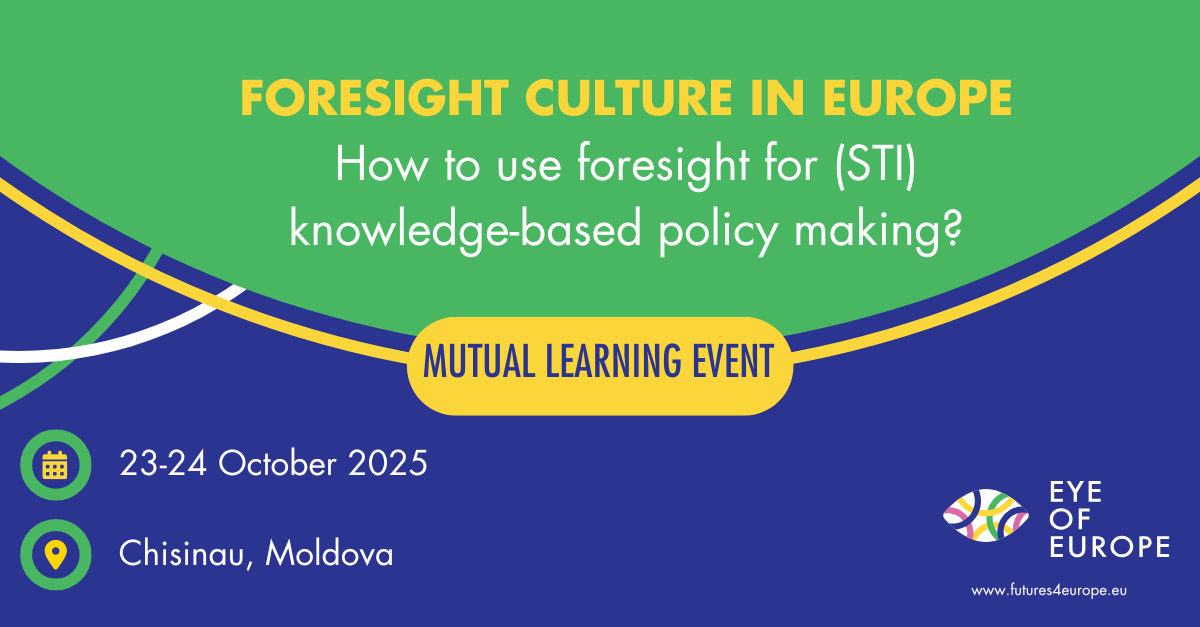
On 23–24 October 2025, we gathered in Chișinău, Moldova, for the final chapter of the Eye of Europe Mutual Learning series. Hosted by the National Agency for Research and Development of Moldova, this two-day event brought together over 40 foresight practitioners, policy makers, and representatives from ministries and research support agencies across Europe. The agenda was rich with presentations, case studies, and interactive sessions exploring how foresight is shaping research and innovation policy in diverse national contexts—from Moldova to Austria, Czechia, Estonia, Poland, Romania, and beyond. The event was an opportunity to reflect on the many faces of foresight across Europe and to present the diversity of approaches that shape how we anticipate and plan for the future.
Key Objectives
• Foster a shared European foresight culture supporting strategic R&I policymaking.
• Highlight diverse foresight practices and institutional approaches across member states.
• Strengthen capacity for future-oriented policy design and implementation.
• Transition from vision to action through practical foresight integration.
Key Takeaways
• Foresight is a strategic tool for innovation policy, resilience, and inclusiveness.
• There is growing momentum toward systematic foresight integration in governance.
• Co-creation, citizen engagement, and knowledge exchange are vital for foresight maturity in Europe.
• MLE in Chisinau highlighted the need to move from dialogue to tangible policy actions and institutional embedding.
The Eye of Europe project was recognised as a potential hub for foresight community-building and greater institutionalisation.
Posted on: 16/06/2025
Last Edited: 8 months ago
Imagination, in common discourse, is often relegated to a secondary domain of thought – a frivolous, playful, and unreliable mental activity confined to childhood, the arts, or, at best, applied creativity. A “magic box” that opens only when logical rigor relaxes, when attention drifts toward invention and fantasy. Yet this view, however seductive, is ultimately reductive – if not misleading.
When examined through the lens of contemporary cognitive science, imagination instead reveals itself as a profound and complex cognitive function. Not only does it actively participate in processes of knowing, but it also constitutes one of their foundational dimensions. It is the mental faculty through which we construct alternative worlds, test hypothetical scenarios, and explore the unknown without needing to experience it directly. Far from being a mere appendage to rational thought, it serves as one of its key structural supports.
Even more striking is what emerges from recent scientific research: imagination possesses a metacognitive character. This means it does not merely generate mental content that diverges from reality, but is also capable of reflecting on itself – monitoring and adjusting its own trajectories, becoming the object of awareness and intentional regulation. In other words, imagining is not just about conjuring what is absent from the world, but also about knowing one is imagining, directing that act toward specific goals, and assessing its quality, limitations, and implications.
This represents a genuine epistemological shift – recasting imagination not as a passive or automatic process, but as a strategic ally of thought. Within this framework, imagination emerges as a faculty that weaves together multiple dimensions of our cognitive experience:
It is within this layered and dynamic space that imagination assumes a renewed role: no longer a retreat into the unreal, but a critical tool for probing the possible. It becomes the lens through which we may observe not only what is, but what could be – and, through this, reconfigure our relationship with the present.
It enables us to anticipate without predicting, and to plan without constraining.
In educational, professional, and social contexts – and even more so within the fields of Futures Thinking and Foresight – this reconceptualization of imagination as a metacognitive skill proves to be strategically essential. To anticipate the future is not to guess what will occur, but to cultivate a gaze that can recognize alternatives, navigate uncertainties, and imagine trajectories not yet in existence. Doing so requires more than creativity; it demands a deep literacy in conscious imagination.
To rediscover imagination through a metacognitive lens is to restore its dignity as an epistemic, transformative, and educational faculty. A faculty not only capable of generating visions, but also of sustaining, interrogating, and refining them. A power to be reintegrated into our intellectual and civic formation – so that it may help us not only to imagine different worlds, but to understand the conditions that make them possible.
Posted on: 09/06/2025
Last Edited: 8 months ago
The introduction of a new technology is never an isolated event and never concerns only one market or one domain. There are invariably socio-cultural, political, economic, and environmental implications, as well as impacts, influences, “cross-pollination”, and correlations among different technologies.
The very broad definition of technology itself betrays its intrinsic complexity: a vast field of research involving various technical and scientific disciplines, which examines the application and use of everything that can serve to solve problems. The term “technology” also refers to the aggregate of knowledge, skills, and tools used to design, create, and utilise objects, processes, systems, or services to meet human needs.
An emerging technology, in particular, is one that is radically new and relatively fast-growing technology [it is not necessarily exponential, as the common dialectics of recent years have conditioned us to expect, yet this has little to do with the mathematical concepts of exponentiality; rapid growth does not imply exponentiality]. It is characterised by a certain degree of coherence (or consistency) that persists over time and has the potential to have a substantial impact on the socio-economic-political domains (understood as the players, institutions, and models of interactions between them, as well as all the processes of knowledge production associated with these domains).
Its most significant impact lies in the future and thus in the emergency phase: an emerging technology is still quite uncertain and ambiguous. For this reason, it would be prudent to analyse its potential impacts in a timely manner, to avoid getting trapped in Amara’s Law.
Posted on: 09/06/2025
Last Edited: 8 months ago
What if we could test-drive our future selves?
Most scenario workshops stay in the head. The Resonant Future Self Framework flips that script by letting participants embody possible futures through immersive narrative experiences - while their brains and bodies react in real time. Peaks of coherence in EEG and heart-rate variability become “north-star signals” that guide purpose discovery. The method weaves together generative AI, emotional storytelling, and biometric sensing to open a new path toward deeply felt, personal foresight.
First public presentation – Vienna, May 2025
The framework was introduced at the Futures4Europe Conference 2025 – Exploring Future-Oriented Collective Intelligence (Vienna, 15–16 May), organised by the AIT Austrian Institute of Technology as part of the Eye of Europe flagship initiative. The presentation focused on the conceptual foundations of the method, shared results from the first single-participant pilot study, and outlined how emotional resonance - measured through real-time physiological signals - can enrich scenario work with an embodied, intuitive layer of decision-making.
Next stop – AIMEDIA, Venice, July 2025
From 6–10 July, the project will be featured in the AI in Immersive Media track at the First International Conference on AI-based Media Innovation (AIMEDIA 2025) in Venice.
The presentation will cover the generative narrative pipeline that produces the six personalised future-self videos, share expanded pilot-study findings (including EEG and HRV analysis), and preview ongoing efforts to partially automate the scripting, visual generation, and video assembly process using tailored AI workflows.
While human editing and quality control remain essential, these steps point toward a future in which the method becomes faster, more scalable, and easier to adapt across educational, coaching, and wellbeing contexts.
Read more
To explore more about the method, goals, and future plans, visit the dedicated project page (link below).
Posted on: 08/06/2025
Last Edited: 10 months ago
Die gegenwärtige Zeit ist geprägt von rasanten und oft gleichzeitig stattfindenden Veränderungen und
Entwicklungen: Technologien wie Künstliche Intelligenz (KI), neue regulative Anforderungen wie die CSRD
oder der EU AI Act sowie gesellschaftliche und politische Herausforderungen sorgen für dynamische und
disruptive Zukunftsperspektiven mit spezifischen Anforderungen an die Resilienz und das
Innovationsmanagement. Die strategische Vorausschau (Foresight) gewinnt aus diesem Grund sowohl in
Unternehmen als auch in der Forschung zunehmend an Bedeutung.
Der Workshop „Foresight in Theorie und Praxis“ dient daher als Forum, um Akteure aus Unternehmen und
wissenschaftlichen Einrichtungen zusammenzubringen und Erfahrungswerte sowie Kooperationspotenziale
der strategischen Vorausschau zu diskutieren. Insbesondere soll dabei auch die Bedeutung der Informatik
für den Aufbau und die Weiterentwicklung eines Foresight-Prozesses berücksichtigt werden.
Folgende Fragestellungen bieten eine Orientierung über die thematischen Schwerpunkte des Workshops:
Die Beiträge zum Workshop können verschiedene Aspekte von Foresight bzw. strategischer Vorausschau
behandeln. Mögliche Themen sind (nicht abschließend):
Zielgruppe des Workshops sind Forschende und Anwendende aus dem Bereich strategische Vorausschau
bzw. Foresight sowie:
HINWEISE ZUR EINREICHUNG
Einreichungsfrist für Workshop-Beiträge: 04.05.2025
Benachrichtigung der Autoren: 02.06.2025
Einreichungsfrist für LNI-Beiträge: 11.06.2025
Workshop: 19.09.2025
Die Einreichung der Beiträge erfolgt als PDF über EasyChair.
Für die Beiträge sind die LNI-Vorlagen zu verwenden.
Beiträge können in deutscher oder englischer Sprache verfasst werden und sollten folgenden Umfang nicht überschreiten:
Full Paper: 10-12 Seiten
Short Paper: 6 Seiten
Work-In-Progress-Paper: 3-5 Seiten
Praxisbeiträge aus der Industrie: 3-5 Seiten
Posted on: 14/04/2025
Last Edited: 10 months ago
The Future of Sustainable Fashion event took place on Monday, January 20, 2025, at the MOMus - Museum of Modern Art in Thessaloniki, Greece. The workshop was implemented surrounded by the relative with the subject exhibition Collective Threads: Anna Andreeva at the Red Rose Silk Factory. This initiative was implemented by Helenos Consulting, a partner of the Eye of Europe Project, and aimed to engage local citizens.
Posted on: 04/04/2025
Last Edited: 10 months ago
Have you ever wondered how you will (still) be conducting research or teaching in 2050?
The Foresight on Demand consortium (FOD2) invites you to participate in a survey in context to “Demographic change: implications and opportunities for Europe’s R&I system by 2050”.
Your input will help identify weak signals, early trends, and unexpected ideas that could shape research careers, higher education, and innovation systems in Europe by 2050.
Whether you are noticing shifts in work culture, research or teaching models, funding landscapes, please take 10-15 minutes and share your thoughts ! The survey is open until April 18.
Posted on: 25/03/2025
Last Edited: a year ago
This report documents the process and findings of a horizon scanning exercise, part of a series under the FUTURINNOV (FUTURe-oriented detection and assessment of emerging technologies and breakthrough INNOVation) project, a collaboration between the European Innovation Council (EIC) and the Joint Research Centre (JRC), aiming to bolster the EIC's strategic intelligence through foresight and anticipatory methodologies.
The workshop, held on 16 October 2024, had as its primary goal the evaluation and prioritisation of trends and signals on emerging technologies and breakthrough innovation, across all tech7-nology readiness levels (TRLs), within the broad Mobility domain, broken-down into four key areas: transport systems, networks and multimodality; automotive and roads; rail/freight and logistics and aviation and airports.
Signals for the workshop were gathered from experts, literature review, and text/data mining of patents, publications, and EU-funded projects. These signals were then scrutinised for their significance to the field's future by a diverse group of sector experts which led to the identification of 22 different key topics across the key areas above. These signals can be seen as hotspots of innovation that deserve the EIC’s attention for possible future support.
Participants also highlighted various factors that could influence the development, adoption, and promotion of these emerging technologies, which are presented in the report as drivers, enablers and barriers, and analysed specifically in each of the 4 key areas.
Posted on: 17/03/2025
Last Edited: a year ago
The fourth Mutual Learning Event of the 𝐄𝐲𝐞 𝐨𝐟 𝐄𝐮𝐫𝐨𝐩𝐞 project took place in beautiful Budapest, focusing on "𝐅𝐨𝐫𝐞𝐬𝐢𝐠𝐡𝐭 𝐟𝐨𝐫 𝐋𝐨𝐧𝐠-𝐓𝐞𝐫𝐦 𝐕𝐢𝐬𝐢𝐨𝐧𝐢𝐧𝐠 𝐚𝐧𝐝 𝐏𝐫𝐢𝐨𝐫𝐢𝐭𝐲 𝐒𝐞𝐭𝐭𝐢𝐧𝐠."
The event featured presentations on European and national foresight exercises, highlighting diverse practices in shaping long-term visions and setting strategic priorities. These insights fueled lively discussions during two interactive sessions.
Over twenty participants from diverse stakeholder groups joined the event held in Budapest, Hungary: Eye of Europe partner organizations, representatives from the European Commission, R&I funding agencies, representatives of governmental bodies.
Presentations
This event is the fourth in a series of five MLEs planned in the project; the following event will be held in Chișinău, Moldova. All Eye of Europe MLEs are organized by Technology Centre Prague (TC), Eye of Europe partner and key Czech national think tank and academia based NGO with a rich experience with knowledge-based policy making support and (participatory as well as expert based) foresight activities.
The fourth Mutual Learning Event addressed topic of long-term visioning and priority-setting. The two-day foresight event gathered experts, policymakers and foresight practitioners to discuss among others participatory foresight practices, and the integration of foresight into policymaking. Presentations emphasized the importance of preparedness, stakeholder engagement, and the need for quality standards in foresight methodologies. Discussions highlighted challenges in mainstreaming foresight, including institutional commitment, regional disparities, and balancing expert input with participatory inclusiveness. Key takeaways included the need for clearer principles, stronger political support, and context-specific tools. Looking ahead, upcoming events in Romania, Moldova will serve to consolidate learnings and strengthen the foresight community’s role in shaping resilient, future-ready policies.
Posted on: 13/03/2025
Last Edited: a year ago
As radical innovations are having a profound impact globallyon the macroeconomic environment, the Region of Central Macedonia is monitoringclosely following the developments, trends and variables that favour or affect it or negatively affecting its development.
Institutions and executives from the private and public sector have explored through a participatory and dynamic process (Thematic Participatory Workshop) the variables that will the innovation and entrepreneurship environment of the region with time horizon 2030, identified their dynamics and evaluated their interaction. The findings provided input to the working group for the development of four scenarios that will define the future of innovation in the region of Central Macedonia in the coming decade. These scenarios identified

the development of a proposal of three strategic axes, developing in a stepwise manner in three different periods, which will strengthen the resilience of the region and prepare it to face the conditions in these four futures.
The study is available in Greek.
Posted on: 21/02/2025
Last Edited: a year ago
This report presents the results of a study on “Expectations and assumptions for the future in the Work Programme 2021-2022 of Horizon Europe”. The study scanned the HE Work Programme 2021-2022 for assumptions and expectations about the future and conducted a Delphi survey of experts on the likely time of realization of those expectations and assumptions. The analysis revealed three over-lapping but distinct types of challenges associated with assumptions and expectations that should be recognised in future workprogrammes: policy chal-lenges, diversification challenges and reflexivity challenges.
Posted on: 30/01/2025
Last Edited: a year ago
The energy crisis resulting from Russia’s invasion of Ukraine only underlines the urgency for the EU to reduce its dependency on fossil fuel, in order to reach climate neutrality by 2050, which is at the core of the European Green Deal. Decarbonising the industry, responsible for 17% of greenhouse gas emissions in the EU, is therefore key.
This first industrial technology roadmap under the new European research area (ERA) provides an evidence base on the state of play of low-carbon technologies in energy-intensive industries in the EU and available support instruments, and points to possible research and innovation action in view of accelerating development and uptake of these technologies. These possible ways forward build on contributions from industry, other research and innovation stakeholders, Member States, and relevant European partnerships.
This roadmap will feed into the transition pathway for the energy-intensive industries ecosystem under the EU industrial strategy and supports the work to accelerate the green and digital transitions under the ERA policy agenda.
Posted on: 30/01/2025
Last Edited: a year ago
This second industrial technology roadmap, under the European Research Area, sets out 92 circular technologies in the textile,
construction and energy-intensive industries, which address all stages of a material and product lifecycle. It indicates the means to develop and adopt these technologies, which can help reduce the impact of these industries on climate and the environment. It finds a leading position of EU companies in circular technologies, but also looks at the substantial research &
innovation investment needs at EU and national levels and necessary framework conditions to put in place. It builds on
contributions from industry, other R&I stakeholders, Member States, and relevant European partnerships.
Posted on: 29/01/2025
Last Edited: a year ago
FCT, ISEG - Lisbon School of Economics and Management and the European Commission (Directorate-General for Research and Innovation) promoted, on December 5, a workshop with the active participation of representatives from all sectors of the National Research and Innovation System (R&I), and representatives of European states participating in this MLE-Mutual Learning Exercise, in order to discuss and agree on possible guidelines and joint work with a view to an institutionalization of capabilities and the creation of foresight communities in this system.
The following day, December 6th, FCT hosted the meeting of this network that has, besides Portugal, representatives from Austria, Belgium, Czech Republic, Finland, Norway, Romania and Slovenia.
Posted on: 21/01/2025
Last Edited: a year ago
What lies ahead for universities? A new futures research study from the University of Turku maps multiple pathways and tensions that could transform how universities teach, research, and serve society.
Introduction
Researchers of the University of Turku have published a comprehensive report "Future directions and possibilities for the university: Report on literature review and Delphi study" (Virmajoki et al. 2024) about the possible future trajectories of the university of Turku. The report, which is uploaded here and also available on utupub.fi, is part of a larger project - Strategic Foresight and Futures Thinking Initiative.
The report, conducted by the Strategic Planning Unit of the University of Turku together with Finland Futures Research Centre (FFRC), contains the results of the analysis of the operating environment of universities. Operating environment here refers to the broader context of trends, challenges, and conditions - both nationally and globally - that affect how universities function and perform their core activities in teaching and research. While the report has as its scope the University of Turku, its findings and especially the approach are more broadly relevant, particularly in Europe.
Analysis of Operating Environment as Research
The analysis of the operating environment was primarily based on a literature review and a subsequent Delphi survey. We reviewed over 200 scientific texts relevant to the subject. It quickly became evident how multifaceted and unique universities are. Scenarios—a common tool in foresight—would not be sufficient on their own to understand the possible futures of universities. Therefore, we first categorised universities into 10 different dimensions, such as societal purpose, international orientation, and educational organization, and identified different directions for development for each dimension. This allowed us to create a multidimensional description of possible development paths for universities, yielding in total 30 different paths and their combinations. The reality is somewhere between the idealized end-points.
In addition to helping understand various possible futures, the analysis where several dimensions and their paths are explained also provides a tool for the university units to examine their own position in relation to these possible developments. University units can differ significantly from one another, and no analytical tool that accounts for these differences can be sufficient. Our report offers such a tool by enabling discussion – with agreements and disagreements – of different development trajectories from the perspectives of diverse traditions and practices that can be found within any university.
Possibilities and Desirability – The Delphi Study
It was not only important to understand the possible futures universities may face. Equally crucial at the University of Turku was to understand what university members – researchers, students, administration, and other staff – think about these futures. To achieve such understanding, we conducted a Delphi study to ask what university members consider probable and desirable when it comes to the future. The statements were designed to provoke thoughts and bring out views that might not emerge in more traditional discussions. In addition to the probability and desirability assessments, we gathered valuable insights from the open comment sections, which often reveal perspectives that might be overlooked in the literature review.
Some Key Results
While the most interesting results cannot all be included in this text, some should be highlighted to provide a sense of the nature of the study.
First, universities are continuously balancing societal impact, economic goals, and fundamental research. The demands from the side of the wider society often pull in different directions. The Delphi study showed that working towards a societal mission is seen as desirable, but market orientation is expected to be more likely. A common thought and worry seems to be that universities are likely to shift towards more commercial interests, despite the tension this creates with their social responsibilities not measurable in economic terms.
Second, global research collaboration and local relevance create a significant tension. Universities aim to be part of global networks, while also expected to contribute to their local communities. The Delphi study revealed varying opinions on this balance. Some see global engagement as essential, while others stress the importance of local ties. Whether a university can succeed in both areas or must focus on one is a central question. The geopolitical tensions and the regional clusters this might create adds another path that might make the question between local and global even more difficult and multidimensional.
Third, in teaching, the main tension seems to lie between scalable, mass-oriented education and more personalised, tailored teaching. Scalable teaching allows universities to reach more students, but the Delphi study showed that personalized methods are considered more desirable. Yet, the study also indicated that standardised models are, according to the members of the university, more likely to prevail due to the scarcity of resources. Technology and its development will be an integral part of both scalable and personalised teaching paths (and everything in between) but different technological solutions might be associated with different paths.
Significance for the University Sector
The project and the report highlight the value of combining an analysis of the university operating environment and a more detailed study of the views of the university community. On the one hand, an analysis of the environment and the paths therein provides a tool to navigate the prospects and risks. On the other hand, the analysis of the members’ perspective helps the university understand where we stand now and what are the paths that the members recognise. Together, these two provide a robust view on the strategic status and importance of different possible trajectories for universities’ operating environment.
The research has broad applicability across universities worldwide. Through its dimensions and models, any higher education institution can map out and discuss likely trajectories, desired directions, and concerning paths ahead - regardless of their unique features. By combining extensive research literature with a Delphi study, the report opens a window into the possible futures of universities – or rather a map that can be used to navigate the long-term issues that these long-standing institutions face.
References
Virmajoki, V., Ahokas, I., Witoon, S., Ahlqvist, T., Kirveennummi, A., & Suomalainen, K.-M. (2024). Future directions and possibilities for the university: Report on literature review and Delphi study. A Report by University of Turku Strategic Planning Unit in collaboration with the Finland Futures Research Centre (FFRC). ISBN 978-952-249-617-1.
Posted on: 13/12/2024
Last Edited: a year ago
The report provides a brief overview of the insights captured during the second Mutual Learning Event (MLE2) which was held online on September 26, 2024.
The MLE2 addressed topic of policy oriented communication of foresight results.
The topic brought information on:
• The strategies for effective communication of foresight results to policymakers and gaining stakeholders buy-in,
• The role of clear communication in translating foresight into actionable policies,
• Fostering foresight in R&I policy making process,
• Translating of complex foresight results into clear, concise and policy relevant messages,
• The identification of key stakeholders in policy making process,
• Tailoring engagement strategies.
The format of the Mutual Learning Events is designed with an emphasis on the interactive sessions where all participants can share their experience, ideas and questions. As part of the last event, group and plenary discussions in three interactive sessions were framed by five keynotes.
The following MLE2 highlights emerged from the discussion:
• Forward-looking activities face a range of challenges in communication,
• Presenting data only seems to be insufficient for the modern communication of foresight results,
• The rapid evolution of digital technology including generative AI and social media offer for foresight practitioners new approaches to communicate,
• Different media can be used for targeting different groups of audience,
• Tailoring forward-looking messages for different audiences is an approach to avoiding misunderstanding or misinterpretation,
• Uncertainty may also depend whether the forward-looking activities can predict future risk and benefits., therefore is always necessary to rely on evidence-based materials.
Five MLEs are planned in the Eye of Europe project, a Horizon Europe project which aims to enhance the integration of foresight practices into Research & Innovation policy-making across Europe and to foster a vibrant, cohesive R&I foresight community that contribute significantly, as a collective intelligence to shaping and guiding policy decisions. The third Mutual Learning Event “Integration of Foresight into the Research & Innovation Policy Cycle will be held on January 21st, 2025 also in an online format. The event will open a discussion on the need for adaptive and flexible policy frameworks to respond to rapidly changing technological, economic and societal landscapes.
All Eye of Europe MLEs are organized by the Technology Centre Prague (TC), Eye of Europe partner and key Czech national think tank and academia based NGO with a rich experience with knowledge-based policy making support and participatory as well as expert based foresight activities.
Posted on: 10/12/2024
Last Edited: a year ago
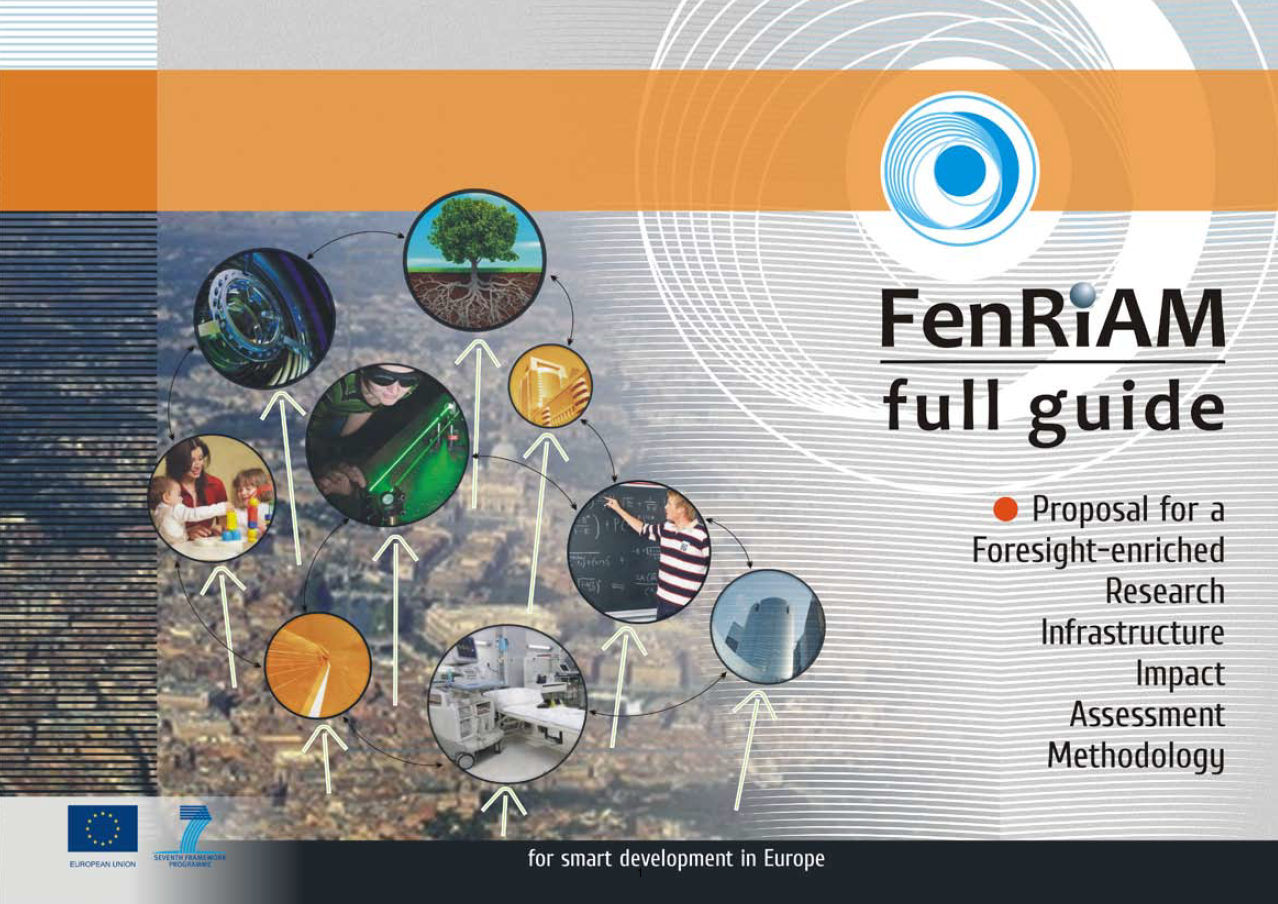
This guide has been produced within the European Commission funded project “Research Infrastructures: Foresight and Impact” (RIFI) aimed at developing a comprehensive methodological framework for assessing socio-economic (SE) im-pacts of future RI projects on hosting regions and communities. The main product of the project is the FenRIAM (Foresight enriched Research Infrastructure Impact Assessment Methodology) framework, presented in this guide.
Posted on: 09/12/2024
Last Edited: a year ago
The report provides a brief overview of the insights captured during the second Mutual Learning Event (MLE2) which was held online on September 26, 2024.
Posted on: 27/11/2024
Last Edited: a year ago
Making use of the four “Imaginaries for a Sustainable Europe* in 2050” presented by the European Environment Agency and the Eionet**
Posted on: 25/11/2024
Last Edited: a year ago
A proposal for a methodology to identify Megatrends and Grand societal challenges with a significance for Research and Innovation in the Czech Republic
Posted on: 25/11/2024
Last Edited: a year ago
The project “S&T&I for 2050” is structured around five intertwined tasks:
Posted on: 25/11/2024
Last Edited: a year ago
Sharing lessons learned in foresight practices and experiences is important for the exchange for an impactful foresight community. The Mutual Learning Exercise can help foster community building and foresight capacities in different member states.
Posted on: 25/11/2024
Last Edited: a year ago
Futures4Europe interviewed Eye of Europe’s Coordinator, Radu Gheorghiu, foresight expert at UEFISCDI, the Romanian Research & Innovation funding agency. What does the future look like for R&I in Europe? How does foresight play a role? Radu provides a glimpse into these questions and Eye of Europe’s central role in them.
Posted on: 25/11/2024
Last Edited: a year ago
This report provides a literature review of publications authored by numerous external organisations. It summarises 34 signals and trends of emerging technologies and breakthrough innovations across the 11 primary categories of a taxonomy defined by the European Innovation Council (EIC). The authors investigate not only what is deemed most novel in multiple application domains but what is worth the attention of European Union (EU) policy audiences involved with priority-setting and decision-making.
This work that has led to this literature review (1) reviews and evaluates 186 reports and articles on emerging technologies, (2) captures 489 signals, of which 86 have been short-listed and 34 selected for this report, (3) creates an internal database of signals which is used to digest and analyse the evolution of signals and novel technologies (4) connects signals with EIC portfolios and other European Commission (EC) initiatives such as policies surrounding critical technologies and Strategic Technologies for Europe Platform (STEP) investments that, together with the primary and secondary levels of the EIC taxonomy, provide multiple types of analysis and insights (5) draws conclusions that aim to support the EIC’s funding prioritisation and additionally, provide reflections on EIC portfolio setting.
By using the best publicly-available data to produce a harmonised internal database, along with an appropriate filtering and selection methodology, the authors aim to provide a support platform for future-oriented technology analysis of relevance for other EU policy-making initiatives.
Posted on: 08/11/2024
Last Edited: a year ago
The first Mutual Learning Event (MLE) took place on May 23, 2024 in Bratislava, Slovakia as part of the Horizon Europe project Eye of Europe, which aims to contribute to the maturing of a vibrant Research and Innovation (R&I) foresight community in Europe and to support the integration of foresight practices into R&I policy-making.
Forty participants from partner organizations and external representatives of ministries, governmental bodies, R&I funding agencies and the European institutions gathered in the premises of the Government Office of the Slovak Republic.
This MLE, organized by Technology Centre Prague (TC), focused on the identification of emerging needs and approaches in the practice of foresight for research and innovation. To this end, the MLE in Bratislava was structured along the following phases:
Posted on: 23/10/2024