Loading...

    Mentions of

    sorted by publishing date

    Last Edited: 4 months ago

    Geopolitical & industrial decarbonisation scenarios to identify R&I opportunities for the EUMay 2025

    How can the EU navigate amidst global uncertainties to foster a more resilient and effective path toward industrial decarbonisation?

    This report presents the outcomes of the Geopolitical Industrial Decarbonisation Scenarios workshop, convened on behalf of the Eye of Europe Horizon Europe project by the Insight Foresight Institute. Bringing together 30 participants from across the European Union—including policymakers at EU, national, and regional levels, industry leaders, energy and climate specialists, and foresight and forecasting experts—the workshop explored how the EU can navigate mounting geopolitical uncertainty while accelerating industrial decarbonization on a 2050 horizon.

    The discussion was structured around two core aims. First, participants examined a suite of forward-looking geopolitical scenarios, assessing how divergent power dynamics, energy trade patterns, and technological trajectories could either hinder or catalyse the transition to a net-zero industrial base in the EU countries. Particular attention was paid to supply-chain resilience, strategic autonomy in critical materials, and the interplay between carbon border adjustments and global climate diplomacy. Second, the workshop sought to surface emergent research and innovation (R&I) needs and opportunities that would equip EU actors to thrive across the scenarios. Priorities highlighted include advanced electrification processes for hard-to-abate sectors, low-carbon hydrogen and synthetic-fuel value chains, circular-economy business models, and data-driven tools for real-time decarbonisation monitoring.

    Outputs from the session feed directly into the Eye of Europe project’s multi-workshop learning cycle. Immediate products comprise this extended report for attendees; aggregated insights captured in the public Pilot Logbook Part I – What we did and Part II – What we learned; and distilled policy recommendations to be released in the Eye of Europe Policy Brief: Foresight Perspectives on Key R&I Topics. Beyond documentation, the Insight Foresight Institute will leverage the findings to stimulate agenda-setting dialogues with EU bodies and industrial stakeholders, ensuring that identified R&I pathways inform Horizon Europe programming and other EU-level funding instruments. Workshop materials and presentations are retrievable via the futures4europe.eu knowledge-sharing portal, reinforcing the project’s commitment to an open foresight community.

    Posted on: 03/10/2025
    Post Image

    Last Edited: 5 months ago

    The Future of Sustainability in a Post-Global World

    A New Sustainability Agenda Rooted in Access and Stability

    Sustainability in the Post-Global Era

    In the aftermath of decades of global integration, the model of hyperconnected markets is showing signs of retreat. Geopolitical instability, trade disputes, and resource scarcity are catalysing a structural shift that could reshape not only economies, but the very principles underpinning sustainability. Drawing from trend intelligence by Nextatlas, two pivotal developments emerge, developments that invite foresight professionals to rethink sustainability not as a static ideal, but as a dynamic field responsive to systemic transformation.


    The post-global era is not simply a reconfiguration of trade routes or supply chains; it marks a fundamental reframing of what society deems “sustainable.” In a world where inflation, scarcity, and volatility dominate headlines, environmental goals are becoming increasingly intertwined with economic and geopolitical concerns. 

    Nowhere is this reframing more evident than in the European Union, which has positioned itself as a global leader in linking sustainability with regulatory and economic frameworks. Through initiatives such as the European Green Deal, the Carbon Border Adjustment Mechanism, and stricter ESG reporting standards, the EU is setting benchmarks that extend far beyond its borders and reshape how sustainability is understood in practice.


    Nextatlas’ foresight model suggests a pivot: environmental degradation is no longer perceived as the singular sustainability threat. Instead, resource access, economic resilience, and supply chain transparency are becoming the new fault lines. This conclusion is grounded in more than a decade of Nextatlas’ machine learning work in cultural trend forecasting, built on a proprietary pipeline that ingests millions of data points each month from over 300,000 carefully selected sources, including social media users, niche influencers, scientific literature, design portfolios, and startup ecosystems. 


    Through natural language processing, semantic clustering, and visual analysis, these unstructured signals are structured into a dynamic semantic knowledge graph of thousands of interconnected micro-trends. By identifying early adopters with a demonstrated history of trend foresight, the model captures weak signals and emergent cultural dynamics before they reach the mainstream. With a 93% accuracy rate in trend prediction, this methodology provides a robust foundation for understanding the evolution from ecological awareness as individual virtue to sustainability as collective infrastructure.

    The Wasteless Economy
    The intentional rejection of overconsumption

    What was once framed as consumer minimalism is evolving into a more resilient, system-conscious behaviour: the Wasteless Economy. As global citizens face the tangible consequences of rising costs and diminished availability, consumption habits are adjusting accordingly. But unlike past recessions where thrift was reactive, today’s restraint is increasingly proactive and value-driven. In this new context, value is redefined by longevity, utility, and purpose. Careful selection, durability, and circular practices now consciously outweigh constant acquisition.


    This transformation has implications beyond market dynamics. It reflects a recalibration of what constitutes value and well-being in an era of systemic constraint. The Wasteless Economy aligns closely with long-term sustainability goals, emphasising durability, circularity, and resource efficiency, not just as ethical choices, but as strategies for social and economic stability. Amid persistent inflation and renewed tariffs on consumer goods, households are tightening their belts and are naturally drawn to buying less, buying smarter, and investing in lasting value. 

    Feeling the squeeze of both rising operational costs and evolving regulations, businesses are pivoting toward circular models, designing for durability, repairability, and reuse, not for sustainability branding, but as a smart financial strategy. Circular design reduces exposure to volatile supply chains and tariff-prone imports, while reinforcing consumer loyalty through accountability.


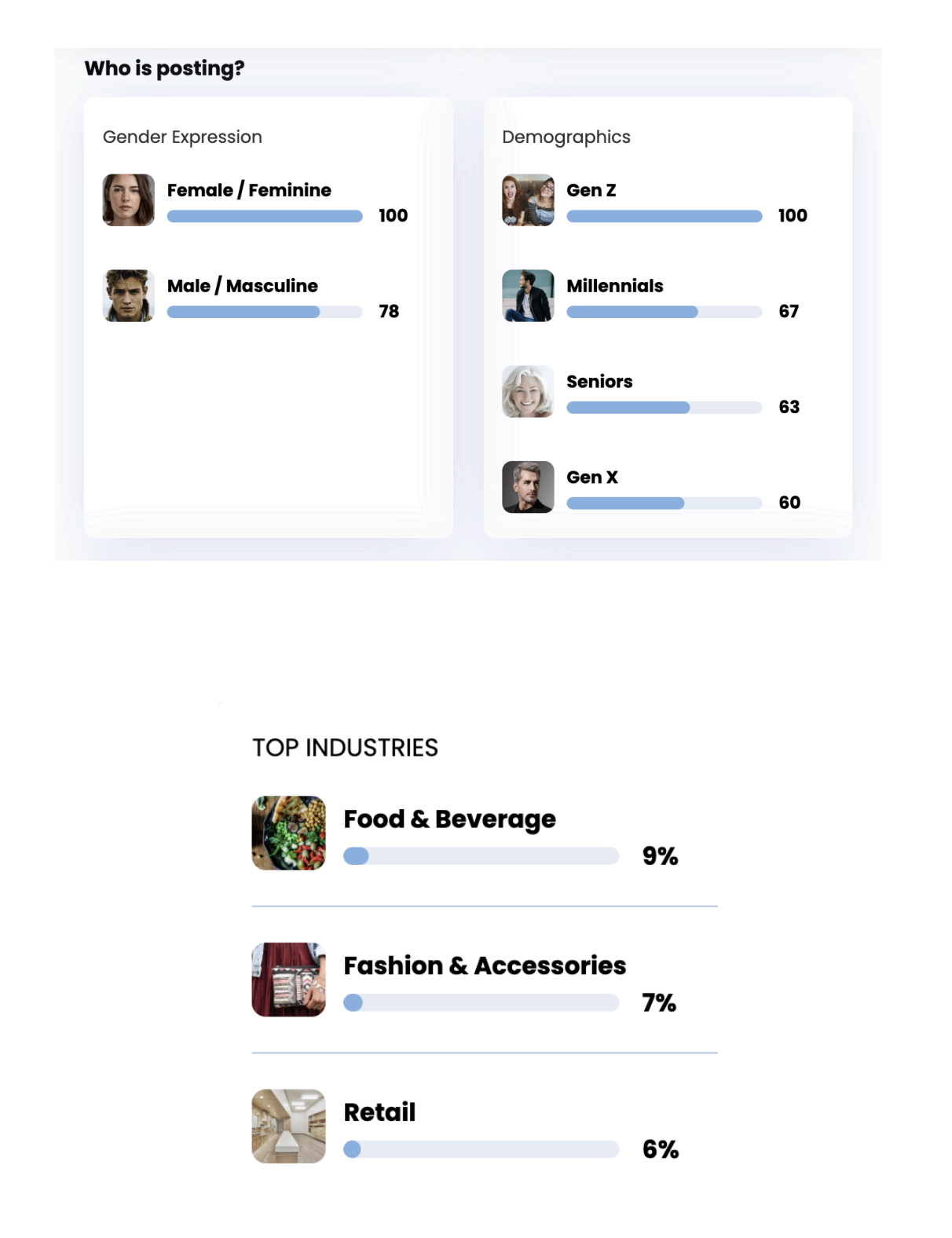
    This shift is most visible in food & beverage, fashion, and retail, industries where overproduction and disposability once defined the norm. Food companies must now design out surplus, embracing precision, seasonality, and resourcefulness as new standards of value. In fashion, longevity and modularity are replacing trend cycles, with resale and repair moving from fringe to fundamental. Retailers, in turn, are being called to transform from providers of endless choice into curators of care, offering fewer but better options that align with the values of restraint and longevity.

    For foresight practitioners, the shift underscores a key signal: in strained environments, sustainability flourishes not through moral appeal but through necessity. Efforts to design policy or governance around future-proofed systems must therefore centre not only on carbon metrics, but also on material longevity, repair ecosystems, and new models of sufficiency.

    Posted on: 23/09/2025

    Last Edited: 9 months ago

    UNIDO EGM on Technology Foresight for Circular Economy18 June - 15 May 2025

    Expert Group Meeting on Technology Foresight for Inclusive and Sustainable Industrial Development - Application to Circular Economy

    The United Nations Industrial Development Organization (UNIDO) is organizing a one-day Expert Group Meeting (EGM) on Strategic Technology Foresight for policy making on 18 June, 2025 in Vienna, Austria.

    The EGM will be oriented towards drawing lessons from experience of, and identifying future trends in, the use of technology foresight for strategic decision making. It will focus on sustainable development, and particularly on transitions towards a Circular Economy (which features as an example of the most recent experience).

    Posted on: 14/05/2025

    Last Edited: 9 months ago

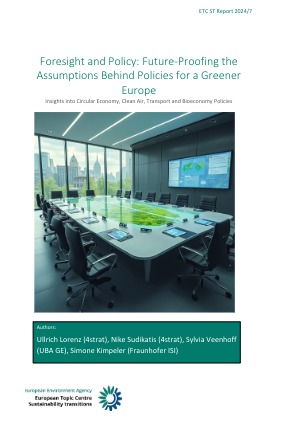
    Foresight and Policy: Future-Proofing the Assumptions Behind Policies for a Greener EuropeFebruary 2025

    Insights into Circular Economy, Clean Air, Transport and Bioeconomy Policies

    This report offers an in-depth foresight assessment that critically evaluates and questions the foundational assumptions of European environmental policies related to the Green Deal. To enhance the resilience of these frameworks, the two-year study utilises a comprehensive set of methods, including impact wheel analysis, Ishikawa diagrams, cross-impact analysis, semi-structured interviews, and causal layered analysis. This approach reveals the cascading effects, entrenched cognitive biases, and intricate interdependencies present in policy design. These techniques facilitate a detailed examination of specific policy areas while providing a systemic perspective on how the connections among circular economy, bioeconomy, clean air and health, and the decarbonisation of transport impact overall sustainability results. By harnessing these diverse foresight techniques, the assessment reveals that conventional policy narratives are often oversimplified, obscuring risks and trade-offs that, if unchallenged, may impede a successful transition to a sustainable Europe. The impact wheel and Ishikawa diagrams facilitate the structured identification of primary and secondary effects, while the cross-impact analysis maps the interactive dynamics between assumptions. Semi-structured interviews provide nuanced stakeholder perspectives that uncover underlying worldviews and metaphors shaping policy discourse when synthesised via causal layered analysis. The study offers actionable recommendations for enhancing policy resilience, promoting integrated governance, and fostering adaptive strategies capable of addressing the multipronged challenges posed by environmental uncertainty.

    Source: Eionet - ETCs- ETC Sustainability transitions (ETC ST) - Products  

    Posted on: 30/04/2025

    Last Edited: a year ago

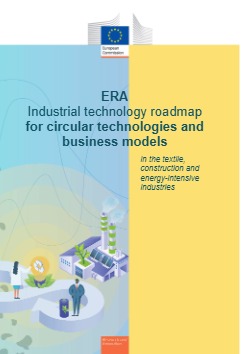
    ERA Industrial technology roadmapNovember 2022

    for circular technologies and business models technologies and business models: in the textile, construction and energy-intensive industries

    This second industrial technology roadmap, under the European Research Area, sets out 92 circular technologies in the textile,
    construction and energy-intensive industries, which address all stages of a material and product lifecycle. It indicates the means to develop and adopt these technologies, which can help reduce the impact of these industries on climate and the environment. It finds a leading position of EU companies in circular technologies, but also looks at the substantial research &
    innovation investment needs at EU and national levels and necessary framework conditions to put in place. It builds on
    contributions from industry, other R&I stakeholders, Member States, and relevant European partnerships.

    Posted on: 29/01/2025

    Last Edited: a year ago

    #EUGreenWeek - Loops 2.0: a dialogue with DIGIPRIME and EFPF01 June - Invalid Date

    Todays topic will be in alignment of the #EUGreenWeek 2022: EU GREEN DEAL - MAKE IT REAL. Together with DIGIPRIME and EFPF, we will take a closer look at digital technology to boost a more resillient economy!
    DIGIPRIME and EFPF are two Horizon 2020 projects focused on developing digital platforms.

    As the Horizon 2020 research program becomes Horizon Europe, what better time to witness how great ideas turned into real projects? LOOPS will be the opportunity to show what cutting-edge research has been produced, and which changes it can bring to our communities. For those who are not familiar with it, LOOPS is a live webinar series committed to spotlighting innovation in the field of circular economy and sustainability.

    Todays topic will be in alignment of the #EUGreenWeek 2022: EU GREEN DEAL - MAKE IT REAL. Together with DIGIPRIME and EFPF, we will take a closer look at digital technology to boost a more resillient economy!

    DIGIPRIME and EFPF, are two Horizon 2020 projects focused on developing digital platforms.

    Speakers of today will be Marcello Colledani from DIGIPRIME and Alexandros Nizamis from EFPF.

    The Secretary General of Veltha, Luca Polidory will be the host of todays episode.

    Check out DIGIPRIME here: https://www.digiprime.eu/

    Check out EFPF here: https://www.efpf.org/

    Watch here: https://www.youtube.com/watch?v=a9AK7SpmR34 

    Posted on: 07/12/2024

    Post Image

    Last Edited: a year ago

    Alternative Climate Scenarios 2040

    Coalition of Sustainable Communities

    This autumn, experts are developing alternative climate scenarios as part of a foresight project that helps prepare the 2nd Strategic Plan 2024-2027 of the Horizon Europe Framework Programme for R&I. The project is conducted by the “Foresight on Demand” Consortium on behalf of the European Commission, DG RTD. In a Deep Dive area “Climate change and R&I: from social change to geoengineering”, together with the other members of the expert team, I am developing, among others, this 'coalition of sustainable communities' scenario. Get involved, comment on the scenario and relate the scenario to recent developments!

    Posted on: 25/11/2024

    Post Image

    Last Edited: a year ago

    Connected Factories and their pathways for a circular economy

    A successful shift to a circular economy requires multidisciplinary skillsets that integrate both business and technology aspects. However, circular economy or sustainability practices are not often seen as competitive advantages for companies. The ConnectedFactories project focussed on devising potential pathways to digital manufacturing, including circular economy from a broader perspective.

    Posted on: 25/11/2024