Loading...

    sorted by publishing date

    Last Edited: 8 days ago

    4-Module Online Foresight Fundamentals Course03 September - 25 September 2026

    Foresight Fundamentals is a practical training program designed to help professionals understand and navigate uncertainty in a rapidly changing world.

    Grounded in strategic foresight and systems thinking, the course equips participants with future-oriented tools such as:

    01 Horizon Scanning
    02 Future Wheels
    03 Scenario Planning

    Starting from a real strategic challenge, participants explore multiple possible futures, uncover emerging trends and systemic shifts, and translate insights into strategic perspectives for decision-making.

    Learning objectives


    01
    Navigate uncertainty using foresight tools
    Apply strategic foresight and futures thinking to explore multiple possible futures, move beyond linear forecasting and work confidently with uncertainty in real business and organizational contexts.

    02
    Anticipate risks and opportunities early
    Identify emerging trends, weak signals and key drivers of change through horizon scanning and impact analysis, enabling earlier and better-informed strategic responses.

    03
    Think systemically about future challenges
    Use systems thinking to understand the interconnectedness of global, organizational, and societal systems, and to assess how changes in one area influence others.

    04
    Make better long-term strategic decisions
    Build and use future scenarios to test strategic options, support decision-making, and design resilient, flexible, and sustainable strategies aligned with long-term goals.

    Course takeaways
    By the end of this course, participants will be able to:

    Develop and implement strategic foresight processes within their organizations.

    Apply systems thinking to analyze complex challenges and design sustainable solutions.

    Build and use future scenarios to guide informed decision-making.

    Foster a culture of innovation and resilience, adaptable to emerging trends and disruptions.

    Workshop overview 

    Posted on: 08/06/2026

    Post Image

    Last Edited: 19 days ago

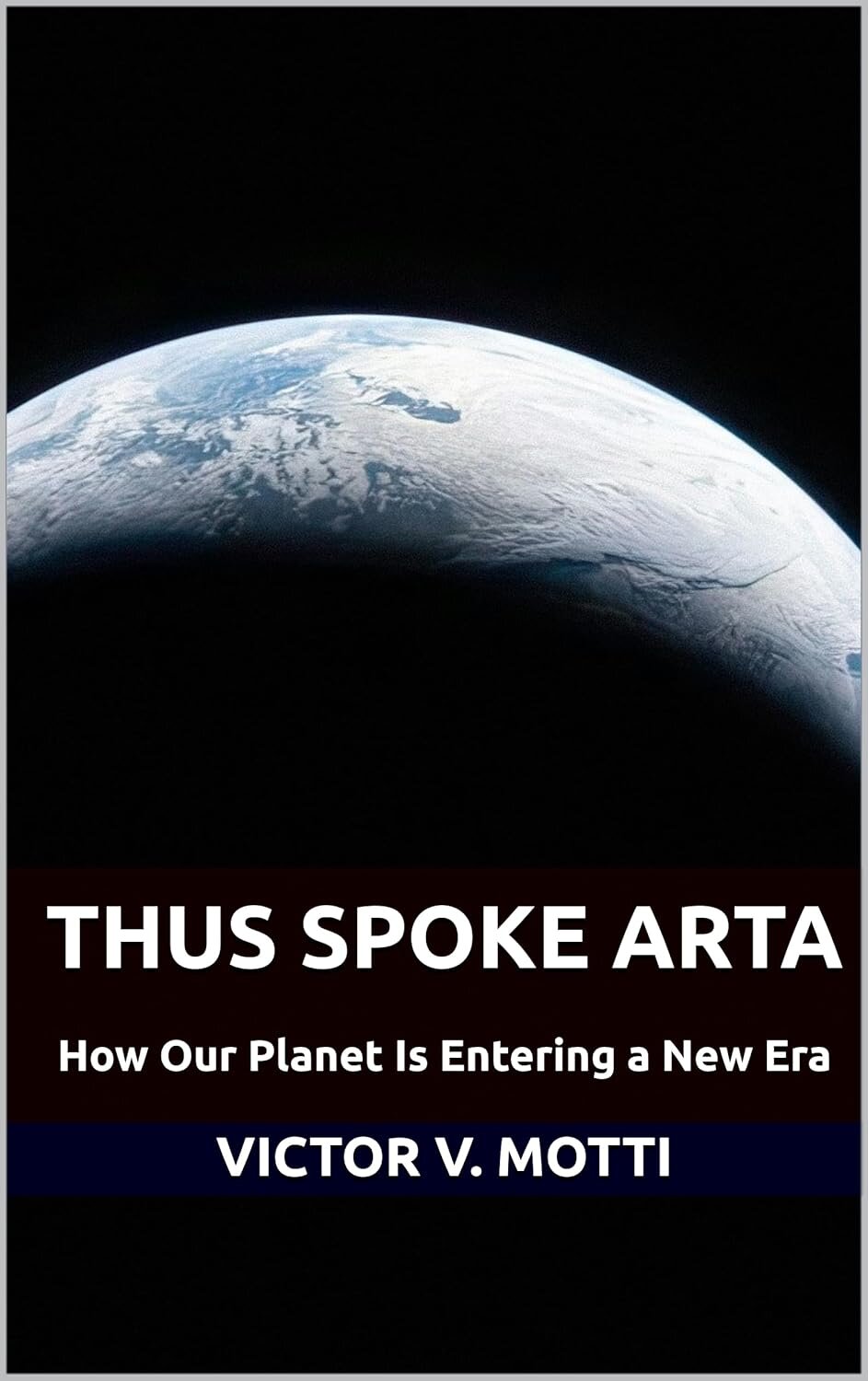
    Thus Spoke Arta

    How Our Planet Is Entering a New Era

    We are living through a transition that feels, at once, like collapse and awakening. The crises surrounding us—ecological breakdown, technological acceleration, geopolitical fragmentation—are often treated as separate problems. But they are not. They are symptoms of a deeper rupture: a failure in how we perceive reality itself.


    This is the beginning of the “Big Shift.” Not merely a historical turning point, but a transformation in consciousness. The dominant frameworks through which humanity has understood itself—nation, progress, even “humanity” as a unified moral subject—are no longer sufficient. They fragment under pressure because they were never grounded in the deeper fabric of existence. They abstracted us from the Earth, from each other, and ultimately from being itself.


    Long before modern crises, ancient traditions understood something we have forgotten: the Earth is not an object. It is a living, sacred reality. Early liturgical texts and cosmologies did not separate matter from meaning. To speak of the Earth was already to speak of order, of balance, of participation in a larger whole. This was not “ecology” in the modern scientific sense—it was a lived metaphysics.


    What has been lost is not knowledge in the narrow sense, but a way of knowing. The modern world, in its pursuit of control and clarity, reduced reality to what can be measured, extracted, and optimized. Technology is not the root problem; it is an extension of this perception. We did not simply build machines—we built a worldview that sees the world as machine.


    And so we arrive at a strange paradox: we speak constantly of “saving humanity,” yet we do not even know what “humanity” means. It is an abstraction, a moral placeholder, often detached from real conditions and embedded inequalities. In trying to center humanity, we displaced the Earth. And in doing so, we undermined the very conditions that make human life possible.


    A different orientation is needed. Not a rejection of humanity, but a re-centering within a larger field of existence. To love the Earth is not a poetic gesture—it is an ethical necessity. It means recognizing that harm to ecosystems is not external damage but a form of self-destruction. It means reframing ethics from human-centered to Earth-centered, from domination to participation.

    This is where the future becomes most uncertain—and most significant. Artificial intelligence and emerging technologies are often framed in terms of capability and risk. But the deeper question is ontological: what kind of intelligence are we creating? If intelligence is participation, then ethical design requires more than safeguards—it requires alignment with the structures of reality itself.


    We stand, then, at a threshold. The path forward is not a return to the past, nor a blind leap into technological futurism. It is a synthesis—a planetary civilization that draws from ancient wisdom while engaging modern knowledge. A civilization that recognizes the plurality of perspectives without losing sight of underlying unity.


    This requires new forms of leadership, new frameworks of foresight, and a redefinition of progress. Not growth for its own sake, but alignment with the conditions that sustain life and meaning.


    Ultimately, the future is not something we predict. It is something we participate in. Every action, every perception, contributes to the unfolding of reality. The question is not whether change is coming—it is whether we are capable of aligning with it.


    To become planetary beings is not to transcend the Earth, but to belong to it fully. To act with awareness that we are not separate observers, but active participants in a living, dynamic cosmos.


    The shift has already begun. The only question is whether we recognize it—and whether we are willing to follow it to its conclusion.

    Posted on: 28/05/2026

    Last Edited: 3 months ago

    Empowering Mozambique’s youth to shape their country’s futureDecember 2025

    Youth4Foresight Toolkit Use Case

    Mozambique is one of the youngest countries in the world, with more than 50% of the population under the age of 18. This youth bulge presents a unique demographic and economic opportunity but also places a significant strain on public services, particularly education. Facing challenges such as high unemployment, climate vulnerability, insecurity, and limited access to digital infrastructure, youth-led solutions are critical for building a “future-ready” country.
    The European Union Delegation (EUD) established a Youth Sounding Board (YSB) in 2023 to get input on EU policies by young Mozambicans, as a part of the EU’s Youth Action Plan, and since then they have been consulting them regularly, including for the latest Annual Action Plan 2026.

    In the context of the EU Global Gateway initiative and t he preparation for the EU's next long-term budget 2028-2034, the EU Delegation invited the YSB for a foresight exercises using the Youth4Foresight Toolkit to reflect on the long-term role of the youth and on the strategic priorities for energy, digital, and education in Mozambique. The exercise objectives were to strengthen the YSB members’ capacities and enhance their agency using foresight tools to critically engage with and influence policymaking processes, while providing insights for the upcoming EU programming in Mozambique. 


    The Three Horizons Workshop

    An online workshop for 20 YSB members, facilitated by the young people themselves, took place on 5 December 2025. The online format allowed for participation from YSB members from all over the country and both the preparation and the workshop were held in Portuguese, based on the Portuguese version of the Youth4Foresight Toolkit.

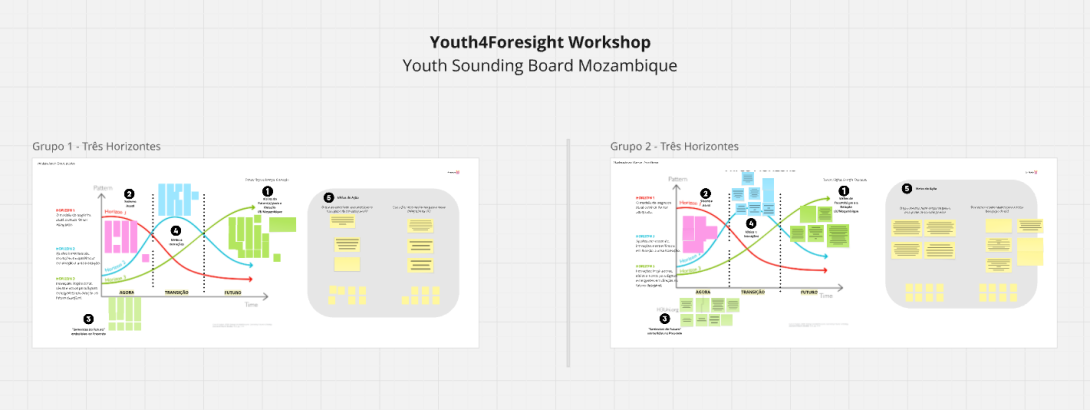
    The Youth Sounding Board used the Three Horizons tool to struc ture their brainstorming in steps:

    Horizon 3 (the desired future): participants imagined their inspirational future focusing on their aspired changes for the domains of energy, digital and education. 


    Horizon 1 (the current system): groups travelled back to the present to identify "business as usual" patterns that are no longer fit for purpose.


    Seeds of the Future: participants identified existing pioneers and grassroots initiatives that are already starting to bring their future vision to life.


    Horizon 2 (the transition): groups brainstormed innovations and collaborations needed to remove blockers and transition from the current system to the desired future.


    Action board: finally, considering the three horizons that they have outlined, the groups defined action statements for the YSB and recommendations for the EU Delegation. 

    The Outcomes

    Participants drafted a Declaration of Action and Commitments, outlining steps for current and future Youth Sounding Boards while providing recommendations for EU programming in energy, digital, and education sectors. Feedback was highly positive; members praised the tool's ability to foster structured creative thinking, with several planning to replicate the exercise in their local communities.

    The Three Horizons tool successfully empowered youth by enhancing their futures thinking skills. The outcomes will now inform EU planning for Mozambique, allowing YSB members to actively architect their country's development. 

    Posted on: 26/03/2026

    Last Edited: 3 months ago

    Vietnamese Youth use foresight to act and collaborateAugust 2024

    Youth4Foresight Toolkit Use Case

    Facing uncertainty around climate change, AI, and job security, youth in Vietnam took part in two foresight workshops where they explored future trends, used strategic tools, and built skills to respond to challenges and shape long-term solutions. 


    Why Futures Thinking Skills Matter for the Youth in Vietnam

    Young people across Vietnam and Southeast Asia are navigating a future shaped by climate change, environmental degradation, and the rapid rise of automation and AI. Many are concerned about job security and feel uncertain about what lies ahead. There’s also a growing sense of mistrust toward institutions and doubts about whether a sustainable and just future is truly being safeguarded. In the face of these realities, learning how to think strategically about the future - and take action - is becoming an essential skillset for youth.

    Exploring the Future Through Youth Collaboration & Foresight

    With the support of the European Commission, the EU Delegation in Vietnam organised two online foresight workshops for the Vietnam Youth Advisory Board (VYAB). The sessions were held in September 2024 and each session lasted 1.5 hours, tailored to the participants’ availability across time zones.

    The workshops brought together young people from VYAB and participants from neighboring countries to explore how futures thinking could help youth shape Southeast Asia’s future, especially around three EU priorities: the digital and circular economy, responsible entrepreneurship, and governance.

    Using the Youth4Foresight toolkit, participants engaged in interactive sessions via Miro, an online collaboration tool that was well received. The energy was high, especially as youth connected across the region and from different professional backgrounds to share ideas and build new perspectives. 


    Tools to Shift Mindsets and Spark Ideas

    To kick off, participants explored three warm-up exercises: imagining the world in 2050, rating uncertainties about the future, and identifying trends likely to shape the region. These activities encouraged reflection and helped shift thinking from the present to long-term possibilities. The future holds many paths, but once we begin to recognize them and take action, we can shape those possibilities into something better. 

    From Trends to Actions

    The workshops introduced two main foresight tools: the Futures Wheel and 3 Horizons.

    With the Futures Wheel, participants mapped the ripple effects of trends like digital transition, shifting global power dynamics, and resource scarcity. This helped them understand how one change could lead to another, revealing both risks and opportunities for regional action.


    The 3 Horizons exercise invited participants to reflect on current realities, imagine more desirable futures, and propose ways to get there. Working in teams based on EU priorities, they turned broad visions into concrete ideas and short-term actions. 


    Shared Futures, Shared Responsibility: A Key Takeaway

    Futures thinking proved to be a powerful tool in times of uncertainty. It allowed participants to think more strategically, adaptively, and collaboratively. As they described: "It gave structure to our ideas. We felt more in control of shaping what’s next."

    One of the strongest takeaways was the value of working together. By sharing ideas across the region and professional backgrounds, participants saw how collective thinking leads to more creative, inclusive, and actionable outcomes. It’s not just about imagining what’s coming - it’s about imagining it together.

    Youth left the workshops with stronger skills, renewed motivation, and a clearer sense of how they can lead change in their communities and beyond.

    Check out the toolkit and start building your future-thinking muscles! 

    Posted on: 26/03/2026

    Last Edited: 3 months ago

    Youth Futures in LesothoAugust 2024

    Youth4Foresight Toolkit Use Case

    Lesotho faces some of the highest inequality levels in the world, leaving young people vulnerable to poverty, unemployment, and forced migration. Nearly a third of the population is under 24, yet youth voices can stay absent from decision-making. Cultural norms discourage open deliberation between young people and adults, leaving many — especially young herders, returnees from South Africa, and young women and girls — without opportunities to shape their futures.

    The European Union, UNICEF, and the International Organization for Migration (IOM) launched the Youth Power Hub Programme in September 2024, with the goal of empowering young people as key players in governance and development at both local and national levels. To make the activities also future facing, the Youth4Foresight toolkit was used at the launch event. 


    Training foresight facilitators

    The toolkit, produced by European Commission, foresight experts and young people worldwide, offers a set of foresight techniques tailored for young people. Rather than relying on external foresight experts for a one-off workshop at the launch event, the EU and partners focused on embedding foresight within the Youth Power Hub itself. Local youth leaders participated in hybrid training on foresight fundamentals, specific tools, and facilitation skills.

    These facilitators then led a futures workshop for 100 participants, exploring ‘The Future of Youth Advocacy in Lesotho.’ A key tool used, part of the Youth4Foresight toolkit, was Three Horizons , a structured approach to understanding systems change and transitions. 

    Shifting mindsets, creating space for new ideas

    For many participants, this was the first time they had been invited to systematically and critically think about the future — not as something distant and abstract, but as something they could actively shape. One facilitator described the experience as “a permission slip to imagine beyond the immediate struggles we are navigating.” Others found clarity in seeing how interconnected issues like climate resilience, youth unemployment, and political participation required systemic solutions. By framing discussions in terms of possible futures rather than fixed positions, it created space for conversations that might otherwise have been constrained by political or institutional barriers.

    The workshop also empowered the young participants collectively convey their views on the Lesotho of the future to the decision makers present at the launch event, as a practical example of the dialogue that the Power Hub seeks to encourage.


    What’s next for foresight in the Youth Power Hub?

    Foresight is not a one-off intervention; it is a capability that grows over time. In a world where youth engagement is often reduced to consultation rather than real agency, the Youth4Foresight Toolkit offers young people a way to navigate uncertainty and define alternative futures they can build towards.

    Spanning from 2024 to 2029, the Youth Power Hub in Lesotho will actively involve young people in decision-making to strengthen citizen participation and build stronger, more inclusive communities. The project supports the Youth Action Plan in European Union external action for 2022-2027 , the first ever policy framework for a strategic partnership with young people around the world. 

    Posted on: 26/03/2026

    Last Edited: 3 months ago

    Cambodian Youth: Using futures thinking to anticipate change and lead boldlyAugust 2024

    Youth4Foresight Toolkit Use Case

    As the future grows more complex and uncertain, young people in Cambodia are learning to navigate it with curiosity, creativity, and clarity. In September 2024, the European Union Delegation (EUD) to Cambodia hosted a 2.5-hour online foresight workshop with its Youth Sounding Board (YSB), using the Youth4Foresight Toolkit. The session introduced strategic foresight tools to help youth anticipate change, collaborate on ideas, and shape sustainable futures. Using Miro, participants explored trends related to climate action, public service transformation, and governance. 


    Why futures thinking matters

    Cambodian youth are facing a web of intersecting challenges - from climate risks and water scarcity to inequities in education, healthcare, and digital access. Futures thinking offers them a way to not only react but lead proactively. The ability to think strategically about long-term possibilities, and act accordingly, is becoming a critical skill. 


    Methodology

    Prior to the session, youth had participated in an introductory workshop to familiarize themselves with key foresight concepts. From that, five trends emerged as most relevant to Cambodia: shifting geopolitical power, green and digital transitions, resource scarcity, new governance systems, and "Basic Services 3.0" (health, education, justice).

    During the main session, participants selected resource scarcity and basic services as the two core trends to explore through the Futures Wheel. They mapped i mmediate and secondary impacts—such as income inequality, food insecurity, and weak infrastructure—then identified strategies like improved public-private partnerships, climate legislation, and innovation in resource use to build long-term resilience.

    Next, youth moved into a Three Horizons exercise, which helped them ref lect on current realities, envision desirable futures, and chart a pathway of innovation and action between the two.

    Horizon 1 highlighted structural challenges: limited access to clean water, energy, and internet; weak healthcare; unskilled labor; and poor transport. These reinforced the sense that "business as usual" is no longer sustainable.


    Horizon 2 focused on transitional innovations already emerging. Youth emphasized the importance of public-private collaboration, digital literacy, green skills, and inclusive transport. Highly supported ideas included promoting green tourism, separate city bus lanes, and youth networks.


    Horizon 3 captured bold visions for a more inclusive Cambodia—with universal access to clean water and air, waste-free cities, thriving green public spaces, and stronger digital governance. 


    Participants also identified “Seeds of the Future”—existing initiatives like food banks, grassroots movements, and water treatment projects—that reflect Horizon 3 values but need scaling up.

    Results & Discussion

    Participants reported a mindset shift:

    🗣️ “Before this, I didn’t give much thought to the future. Now, I find it essential for both my career and our community.”
    🗣️ “Foresight helps me understand, predict, and align my work with long-term goals.”
    🗣️ “The Three Horizons model was simple but powerful.”

    While the session was well received, some challenges were noted:

    - The online format limited peer-to-peer engagement.
    - Some participants were hesitant to speak up; deeper facilitation could help.
    - The single-session format was dense, splitting it into two shorter sessions may enhance reflection.
    - Still, the session sparked high engagement and showed foresight’s value in building youth leadership and agency. 


    Looking Ahead

    This Cambodia workshop is part of the broader Youth4Foresight initiative supported by INTPA. It signals growing momentum for inclusive, future-focused engagement in EU partner countries. Cambodian youth aren’t just imagining the future - they’re preparing to lead it. 

    Posted on: 26/03/2026

    Last Edited: 4 months ago

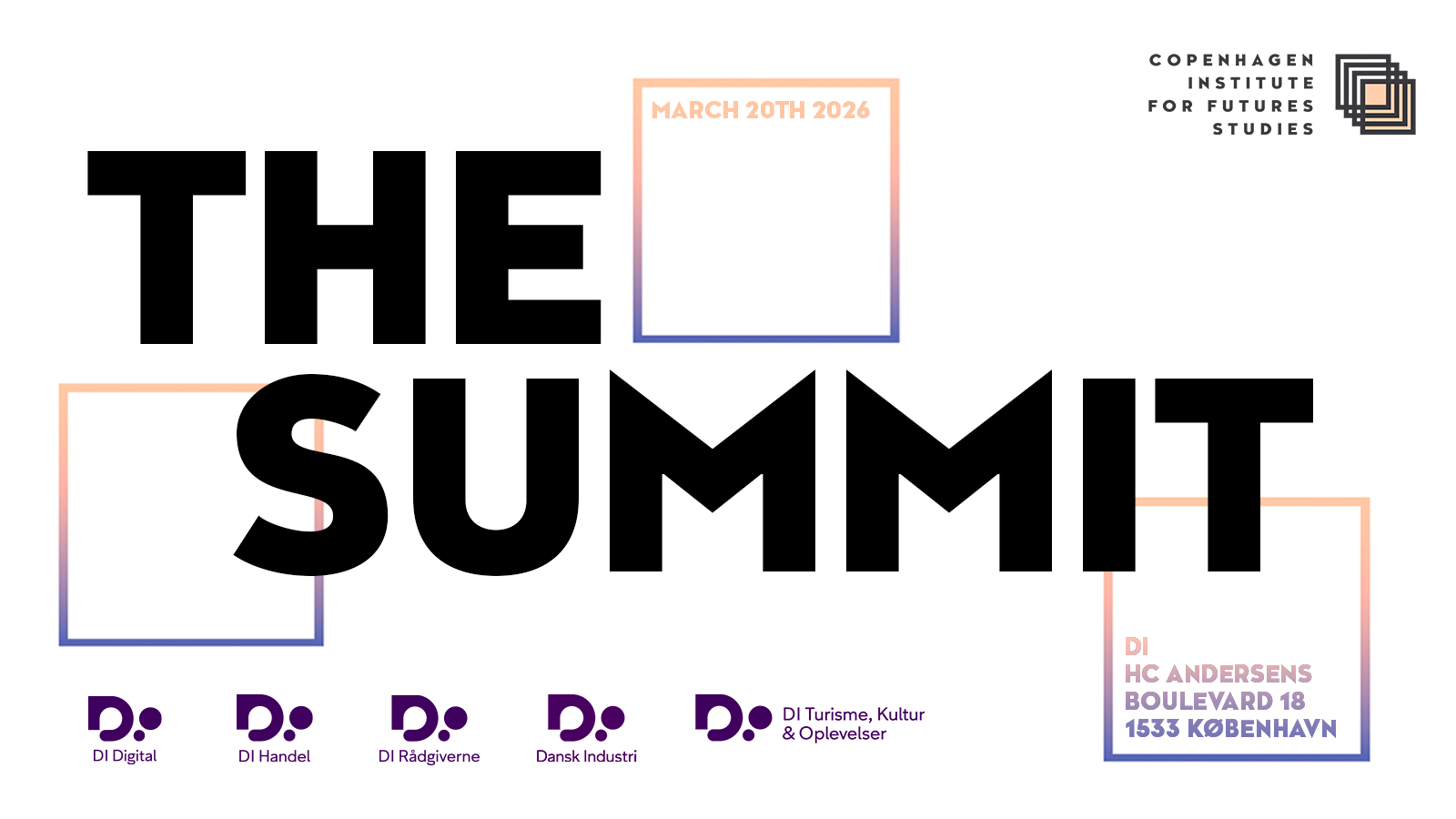
    The Summit 202620 March - 20 March 2026

    An annual gathering exploring the possible futures of emerging technologies. The Summit is a Nordic gathering for leaders, innovators, and forward-thinking organisations who want to explore the futures of emerging technologies and understand their profound impact on business, society, and organisational readiness. It serves as a meeting point for those who not only wish to follow developments in artificial intelligence, immersive experiences, and emerging technologies, but also want to shape how these forces influence the way we work, make decisions, and build future ecosystems. ‍ Hosted by the Confederation of Danish Industry (DI) and curated by the Copenhagen Institute for Futures Studies (CIFS), the conference focuses on foresight, technologies, preparedness, and futures-driven innovation. Through keynotes, panel discussions and focused dialogues, we examine both opportunity and risk, asking how innovation can be aligned with responsibility and long-term value creation. ‍ The Summit focuses on what lies ahead: Possible futures, strategic choices, and the readiness it takes to act responsibly as technologies evolve. It is not only about trends and tools, but about strategic foresight - identifying possible futures, and understanding the readiness it takes to act wisely and courageously as technologies continue to evolve.

    The 2026 edition takes place in Copenhagen on 20 March 2026 (09:00–18:00 CET) at H. C. Andersens Blvd. 18, 1553 København - Industriens Hus. Themes include the AI-mediated workplace, leadership in the future, emerging technologies (including AI agents, simulations and humanoids), the future consumer, retail in transformation, and the futures of foresight.

    The Summit is a Nordic gathering for leaders, innovators, and forward-thinking organisations exploring the futures of emerging technologies and their impact on business, society, and organisational readiness. Co-hosted by Danish Industry (DI) and curated by the Copenhagen Institute for Futures Studies (CIFS), the conference brings together keynotes, Nordic cases, and conversations on preparedness and responsible, meaningful action.

    The Summit 2026 – Industriens Hus, Copenhagen – exploring the possible futures of emerging technologies.

    Posted on: 23/02/2026

    Post Image

    Last Edited: 9 months ago

    The Future of Sustainability in a Post-Global World

    A New Sustainability Agenda Rooted in Access and Stability

    Sustainability in the Post-Global Era

    In the aftermath of decades of global integration, the model of hyperconnected markets is showing signs of retreat. Geopolitical instability, trade disputes, and resource scarcity are catalysing a structural shift that could reshape not only economies, but the very principles underpinning sustainability. Drawing from trend intelligence by Nextatlas, two pivotal developments emerge, developments that invite foresight professionals to rethink sustainability not as a static ideal, but as a dynamic field responsive to systemic transformation.


    The post-global era is not simply a reconfiguration of trade routes or supply chains; it marks a fundamental reframing of what society deems “sustainable.” In a world where inflation, scarcity, and volatility dominate headlines, environmental goals are becoming increasingly intertwined with economic and geopolitical concerns. 

    Nowhere is this reframing more evident than in the European Union, which has positioned itself as a global leader in linking sustainability with regulatory and economic frameworks. Through initiatives such as the European Green Deal, the Carbon Border Adjustment Mechanism, and stricter ESG reporting standards, the EU is setting benchmarks that extend far beyond its borders and reshape how sustainability is understood in practice.


    Nextatlas’ foresight model suggests a pivot: environmental degradation is no longer perceived as the singular sustainability threat. Instead, resource access, economic resilience, and supply chain transparency are becoming the new fault lines. This conclusion is grounded in more than a decade of Nextatlas’ machine learning work in cultural trend forecasting, built on a proprietary pipeline that ingests millions of data points each month from over 300,000 carefully selected sources, including social media users, niche influencers, scientific literature, design portfolios, and startup ecosystems. 


    Through natural language processing, semantic clustering, and visual analysis, these unstructured signals are structured into a dynamic semantic knowledge graph of thousands of interconnected micro-trends. By identifying early adopters with a demonstrated history of trend foresight, the model captures weak signals and emergent cultural dynamics before they reach the mainstream. With a 93% accuracy rate in trend prediction, this methodology provides a robust foundation for understanding the evolution from ecological awareness as individual virtue to sustainability as collective infrastructure.

    The Wasteless Economy
    The intentional rejection of overconsumption

    What was once framed as consumer minimalism is evolving into a more resilient, system-conscious behaviour: the Wasteless Economy. As global citizens face the tangible consequences of rising costs and diminished availability, consumption habits are adjusting accordingly. But unlike past recessions where thrift was reactive, today’s restraint is increasingly proactive and value-driven. In this new context, value is redefined by longevity, utility, and purpose. Careful selection, durability, and circular practices now consciously outweigh constant acquisition.


    This transformation has implications beyond market dynamics. It reflects a recalibration of what constitutes value and well-being in an era of systemic constraint. The Wasteless Economy aligns closely with long-term sustainability goals, emphasising durability, circularity, and resource efficiency, not just as ethical choices, but as strategies for social and economic stability. Amid persistent inflation and renewed tariffs on consumer goods, households are tightening their belts and are naturally drawn to buying less, buying smarter, and investing in lasting value. 

    Feeling the squeeze of both rising operational costs and evolving regulations, businesses are pivoting toward circular models, designing for durability, repairability, and reuse, not for sustainability branding, but as a smart financial strategy. Circular design reduces exposure to volatile supply chains and tariff-prone imports, while reinforcing consumer loyalty through accountability.


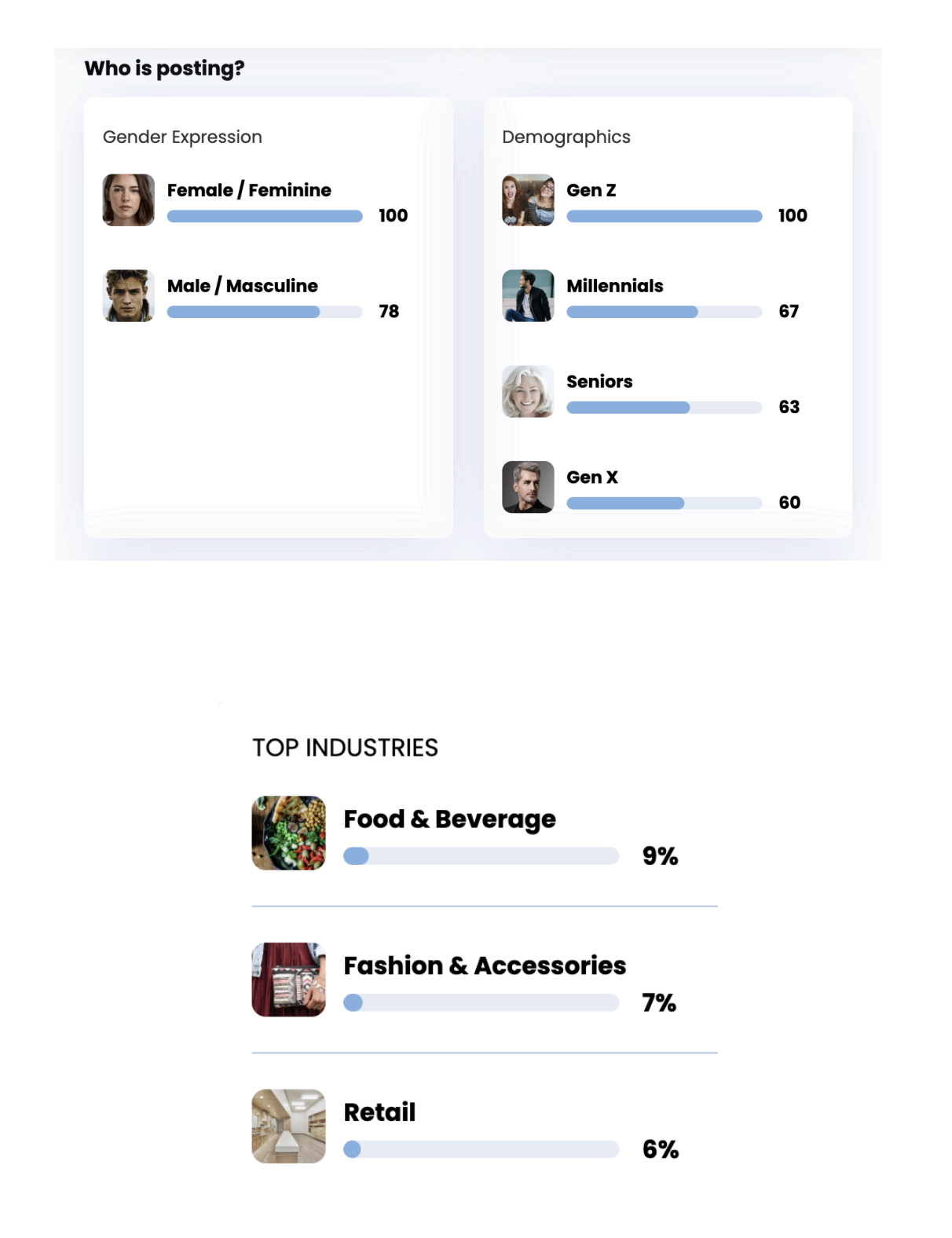
    This shift is most visible in food & beverage, fashion, and retail, industries where overproduction and disposability once defined the norm. Food companies must now design out surplus, embracing precision, seasonality, and resourcefulness as new standards of value. In fashion, longevity and modularity are replacing trend cycles, with resale and repair moving from fringe to fundamental. Retailers, in turn, are being called to transform from providers of endless choice into curators of care, offering fewer but better options that align with the values of restraint and longevity.

    For foresight practitioners, the shift underscores a key signal: in strained environments, sustainability flourishes not through moral appeal but through necessity. Efforts to design policy or governance around future-proofed systems must therefore centre not only on carbon metrics, but also on material longevity, repair ecosystems, and new models of sufficiency.

    Posted on: 23/09/2025

    Last Edited: a year ago

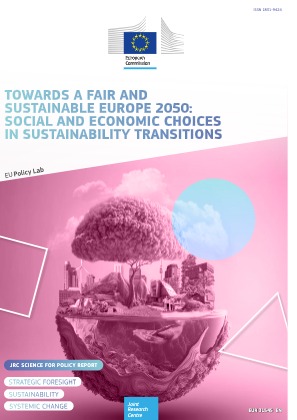
    Towards a Fair and Sustainable Europe 2050June 2023

    Social and Economic Choices in Sustainability Transitions

    This foresight study explores possible and necessary changes in the European social and economic systems as the European Union engages in managing sustainability transitions towards 2050. With this focus, the study presents strategic areas of intervention covering a new social contract, governance for sustainability, people and economy, and the global perspective on sustainability. The study reflects on the agency of EU actors (such as government at various levels, business, and communities) to address the strategic areas of intervention as part of collectively addressing sustainability transitions. The study builds on a participatory foresight exercise, which generated four foresight scenarios for a climate-neutral EU in 2050. Based on each scenario, a corresponding transition pathway was co-created and analysed through the process. The study presents and analyses these outputs of the process. The outputs can also serve as input to policymakers and practitioners interested in conducting new participatory exercises on sustainability transitions.

    Source: European Commission - JRC - JRC Publications Repository 

    Posted on: 30/04/2025

    Last Edited: a year ago

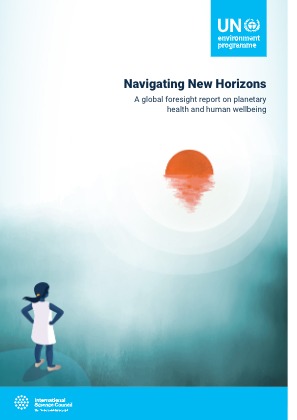
    Navigating New HorizonsJune 2024

    A Global Foresight Report on Planetary Health and Human Wellbeing

    To help navigate current and future uncertainty and disruptive change, while effectively delivering on its mandate, UNEP has been implementing an institutionalized approach to strategic foresight and horizon scanning with the view to developing an anticipatory and future-oriented culture. This mirrors the growing interest and demand for foresight that is also reinforced by the United Nations reform agenda and the Secretary-General’s report on ‘Our Common Agenda’, which calls for all UN agencies, as well as all UN member states, to engage foresight practices more deeply and apply the derived insights to address global systemic risks. This process has culminated in the development of the present report “Navigating New Horizons – A Global Foresight Report on Planetary Health and Human Wellbeing”, produced by UNEP in collaboration with the International Science Council. The report calls for the world to pay heed and respond to a range of emerging challenges that could disrupt planetary health and wellbeing. It presents insights on eight critical global shifts that are accelerating the triple planetary crisis of climate change, biodiversity and nature loss and pollution and waste. Eighteen signals of change – identified by hundreds of global experts and distilled through regional and stakeholder consultations that included youth – offer a glimpse into potential disruptions, both positive and negative, that the world needs to keep a watching brief on. 

    The report outlines how to create an enabling environment for better decision-making by creating a new social contract, embracing agile and adaptive governance, and increasing integrated accessible data and knowledge. The report offers a stark reminder of the interconnectedness and fragility of our systems in the 21st Century and warns that prioritizing short-term gains over anticipatory action and preparedness jeopardizes long-term prosperity and planetary health. However, it also points to the tremendous potential and human ingenuity that can be leveraged in the spirit of discovery and cooperation to deliver solutions across the triple crisis. The outcomes of the report will be integrated into UNEP’s strategic planning, potentially influencing the next UNEP Medium-Term Strategy, presenting an opportunity to consider expanding programmes in areas like artificial intelligence, new technology, and robotics in agriculture, prompting discussions on the level of engagement in these issues. This will ultimately serve UNEP in adopting a proactive posture and modernize tools for efficiency and cost savings.

    Source: UN Environment - Document Repository - Knowledge Repository - UNEP Publications - Technical Reports  

    Posted on: 15/04/2025

    Last Edited: a year ago

    Global Scenarios 2035April 2021

    Exploring Implications for the Future of Global Collaboration and the OECD

    In 2021, both the world and the OECD are at crossroads. The COVID-19 global pandemic has brought sudden disruption and heightened uncertainty on top of existing transformational changes such as digitalisation, geopolitical realignments, rising social inequalities and division, environmental crises and new threats to democratic governance. In this context, organisations everywhere face the challenge of modernising and adapting to remain relevant, without knowing what the future will look like or entail. The OECD in particular is entering an important period for reflection about its future, coinciding with the Organisation’s 60th anniversary and transition to a new Secretary-General.

    This report uses a strategic foresight approach to inform reflection on how best to prepare the OECD to meet the needs of a highly unpredictable future. It was developed by the OECD’s Strategic Foresight Unit to demonstrate how navigating the future of global collaboration and the Organisation’s role within it will require ongoing exploration and dialogue about what may be possible, and desirable, in the future.

    The report begins by exploring drivers of change that could significantly affect the future of global collaboration in public policy. For example, geopolitical realignments and heightened rivalries may undermine trust just as emerging risks to humanity make global collaboration more essential than ever before. The growing centrality of digital technologies may lead countries to develop separate digital ecosystems, threatening interconnection and interdependence between states. Platform companies are gaining significance in – and influence over – human lives, and may be poised to play an even greater role in shaping global standards and societal outcomes. Accelerated uptake of virtual reality could create new patterns of human settlement and interaction, and foster new powerful social movements and identities. Finally, an emerging bioeconomy and circular economy may transform global value chains, while a rapid expansion of private sector involvement in space opens new areas of economic activity.

    Next, the report presents three scenarios for how the world could be very different than expected in 2035. While representing just three of an infinite number of possibilities, these scenarios were selected and developed for their potential to challenge current assumptions and raise important questions for the future of global collaboration and the OECD.

    1.Multitrack World explores a scenario where humanity has formed into several separate and largely parallel clusters, each operating within its own data infrastructure and digital ecosystem. This scenario raises questions about how the OECD could best serve as a bridge between competing entities, and how to advance universal global principles in a context of potentially diverging values and definitions of well-being.

    2.Virtual Worlds explores a scenario where the majority of human experience takes place in highly immersive and engaging virtual reality spaces, and where there is strong pressure by citizens for such spaces to be globally connected and interoperable. This scenario raises questions about what kinds of governance may be needed to address policy issues in and concerning virtual space, and what relationships with non-state actors the OECD may need in order to make an effective contribution to global collaboration in this newly dominant dimension of human life.

    3.Vulnerable World explores a scenario where humanity faces a number of critical existential threats and opportunities that require an unprecedented level of near-perfect global collaboration in order to safeguard its vital common interests. This scenario raises questions of how effective governance of the global commons can be realised in these key areas, and the potential contribution of the OECD.

    Taken together, these scenarios suggest a number of strategic considerations for how the OECD could prepare to meet the evolving needs of the global community in the face of a highly dynamic and uncertain future. These considerations relate to the purpose, values, representation, operations and future readiness of the Organisation.

    In terms of purpose, the possibility of different future divisions and alliances in the global system suggest the OECD may need to strengthen its bridge-building role, particularly on key issues of global concern. This in turn requires an assessment of which values should guide various aspects of the Organisation’s work, with an emphasis on evidence-based analysis and well-being serving as a potential framework when working across competing economic and political systems.

    In terms of representation, the OECD may need a greater ability to work closely with non-member governments and various non-state actors in a world where these have a growing influence over global policy standards and outcomes. The scenarios also raise a number of operational considerations, including ensuring the OECD’s capacity to play a leadership role in virtual space. Finally, the scenarios suggest the OECD needs to strengthen its ability to prepare for uncertainty and respond to emerging priorities such as existential threats.

    The aim of this paper is to inform discussion on how best to prepare the OECD to meet the needs of a highly unpredictable future. Its intended audience is all those who have a stake and role in decisions about the future of the Organisation. This includes first and foremost member countries and OECD management and staff, but also the much broader community of countries, organisations and citizens who participate in and benefit from the activities of the OECD.

    Source: OECD - Publications 

    Posted on: 15/04/2025

    Last Edited: a year ago

    German Call for Papers: Foresight in Theorie und Praxis13 April - 03 May 2025

    As part of the "Foresight in Theory and Practice" track at the INFORMATIK FESTIVAL 2025 in Potsdam

    Die gegenwärtige Zeit ist geprägt von rasanten und oft gleichzeitig stattfindenden Veränderungen und
    Entwicklungen: Technologien wie Künstliche Intelligenz (KI), neue regulative Anforderungen wie die CSRD
    oder der EU AI Act sowie gesellschaftliche und politische Herausforderungen sorgen für dynamische und
    disruptive Zukunftsperspektiven mit spezifischen Anforderungen an die Resilienz und das
    Innovationsmanagement. Die strategische Vorausschau (Foresight) gewinnt aus diesem Grund sowohl in
    Unternehmen als auch in der Forschung zunehmend an Bedeutung.

    Der Workshop „Foresight in Theorie und Praxis“ dient daher als Forum, um Akteure aus Unternehmen und
    wissenschaftlichen Einrichtungen zusammenzubringen und Erfahrungswerte sowie Kooperationspotenziale
    der strategischen Vorausschau zu diskutieren. Insbesondere soll dabei auch die Bedeutung der Informatik
    für den Aufbau und die Weiterentwicklung eines Foresight-Prozesses berücksichtigt werden. 

    Folgende Fragestellungen bieten eine Orientierung über die thematischen Schwerpunkte des Workshops:

    1. Welche Forschungsansätze im Bereich Foresight existieren bereits? Wo gibt es weiteren
      Forschungsbedarf?
    2. Wie werden Forschungsansätze derzeit bereits in der Praxis angewandt? Wodurch zeichnen sich
      diese aus und wo liegen die Grenzen?
    3. Wie gestaltet sich strategische Vorausschau in Unternehmen? Wie unterscheidet sich diese in
      Großunternehmen und KMU?
    4. Wie kann strategische Vorausschau in wissenschaftlichen Einrichtungen umgesetzt werden? Wo
      liegen Unterschiede zur unternehmerischen Herangehensweise, wo gibt es Gemeinsamkeiten?
    5. Wie können digitale Technologien (z. B. IT-Anwendungen, KI) die strategische Vorausschau
      unterstützen und verbessern? Welche Ressourcen und Kompetenzen sind hierfür erforderlich?

    Die Beiträge zum Workshop können verschiedene Aspekte von Foresight bzw. strategischer Vorausschau
    behandeln. Mögliche Themen sind (nicht abschließend):

    • Methoden der strategischen Vorausschau
    • Anwendung von Foresight in Unternehmen
    • Anwendung von Foresight in wissenschaftlichen Einrichtung
    • Digitale Technologien zur Unterstützung von Foresight (z. B. KI, Big Data, Simulationen)
    • KI und Foresight
    • Simulationstechniken
    • Datenanalysen/Datenmangement
    • Szenariotechniken
    • Trendanalysen
    • Horizon Scanning
    • Innovationsmanagement
    • Organisatorische und kulturelle Herausforderungen der strategischen Vorausschau
    • Regulatorische und ethische Aspekte von Foresight
    • Unternehmensstrategie und Foresight
    • Risikomanagement mit Foresight
    • Best Practices und Praxisberichte

    Zielgruppe des Workshops sind Forschende und Anwendende aus dem Bereich strategische Vorausschau
    bzw. Foresight sowie:

    • Fach- und Führungskräfte aus Unternehmen, die strategische Vorausschau in ihre Planung
      integrieren
    • Beratende im Bereich Zukunftsforschung und Trendanalyse
    • Verantwortliche für Innovations- und Technologiemanagement
    • Entscheidungsträger*innen in Politik und Verwaltung, die zukunftsorientierte Strategien entwickeln
    • IT-Experten*innen und Entwickler*innen von digitalen Foresight-Tools
    • Wissenschaftler*innen und Studierende mit Interesse an Foresight-Methoden

    HINWEISE ZUR EINREICHUNG

    Einreichungsfrist für Workshop-Beiträge: 04.05.2025
    Benachrichtigung der Autoren: 02.06.2025
    Einreichungsfrist für LNI-Beiträge: 11.06.2025
    Workshop: 19.09.2025

    Die Einreichung der Beiträge erfolgt als PDF über EasyChair.

    Für die Beiträge sind die LNI-Vorlagen zu verwenden.

    Beiträge können in deutscher oder englischer Sprache verfasst werden und sollten folgenden Umfang nicht überschreiten:

    Full Paper: 10-12 Seiten

    Short Paper: 6 Seiten

    Work-In-Progress-Paper: 3-5 Seiten

    Praxisbeiträge aus der Industrie: 3-5 Seiten

    Posted on: 14/04/2025

    Post Image

    Last Edited: a year ago

    GIZ‘s latest foresight work on geopolitics and sustainable development

    Future-proofing the organization

    For years, the world has been described as being in a state of perma-crisis. As a federal enterprise working in the fields of international cooperation for sustainable development and international education, the Deutsche Gesellschaft für Internationale Zusammenarbeit (GIZ) GmbH is strongly affected by the political and economic environment in which it operates. This is why it is important for GIZ to understand the underlying drivers of change and possible future developments so that it can prepare for the future and the challenges it will face, ultimately making the organization and its staff more resilient.

    With its broad network of staff and international experts in over 120 partner countries, GIZ is well equipped to monitor and differentiate relevant signals and developments. At headquarters, a dedicated foresight team addresses future issues at a corporate level and contributes to the company's strategic decision-making.

    GIZ’ foresight report 2024

    Sustainable development is GIZ’s core business. The 2030 Agenda provides the framework for GIZ’s global activities. As the year 2030 is getting closer, the question is: will the negotiations on a new agenda be successful? But one thing is clear: any negotiation process and subsequent implementation will be increasingly shaped by geopolitical factors. This is why, the 2024 foresight report of GIZ, focuses on geopolitics, sustainable development and the global agenda for the next decade.

    In total, the views of more than 100 GIZ colleagues from GIZ's HQ and the field structure were incorporated into the report through various workshops. In addition, the report is based on extensive analysis of secondary sources, and interviews with more than 30 experts from various (international) institutions to ensure that the report also reflects perspectives from outside GIZ.

    The scenarios (strongly condensed for this post) are based on the four archetypes of the Manoa School of Futures Studies and Jim Dator, which represent four recurring paths of human civilization found in all cultures. Each scenario is supplemented by two to three short wildcards, some of which are listed here as examples.

    Posted on: 18/03/2025

    Last Edited: a year ago

    Vision beyond consensus - The Delphi method for collective foresightFebruary 2025

    Eye of Europe Foresight Starter Video #3

    This video introduces viewers to the Delphi method, a tool of futures research and foresight. Although it gets its name from the ancient Greek oracle, the modern incarnations of the method are powered by technology. Even so, the difficulties of reaching consensus and the influence of group dynamics on rational argumentation remain. If you are participating in a Delphi process, this video is an essential introduction to the method.

    This video is third part of a series of videos introducing foresight workshop methods for the Eye of Europe project funded by the EU.

    Posted on: 05/03/2025

    Last Edited: a year ago

    Airthings Scenarios 2040

    NICOSIA, SKOPJE, SOFIA, THESSALONIKI, TIRANA

    The study concerns the development of 4 Scenarios for 2040, for 5 Balkan cities: Thessaloniki, Nicosia, Skopje, Sofia, Tirana.

    The research team identifies the factors that influence the development of these cities and highlights those that shape the urban future, identifying both the key challenges that cities will have to face and the forces they can proactively harness and build their desired future.

    All scenarios present plausible future images of the above cities including references to their environmental status for 2040, as well as information on the specific air quality challenges.

    The development of the scenarios took place in the framework of the European project AIRTHINGS (funded by the Interreg programme). It was implemented by a project team involving Helenos Consulting and the UNESCO Chair on Futures Research (ITE/PRAXI).

    Posted on: 21/02/2025

    Post Image

    Last Edited: a year ago

    Backcasting the Future of Decentralized Education

    a short movie made with AI tools

    What if education wasn’t controlled by institutions but shaped by learners, communities, and technology? Using backcasting, I explored a future where learning is decentralized, open, and driven by collaboration—and mapped the steps to get there.

    This vision is inspired by discussions between Sara Skvirsky (IFTF Research Director) and Katherine Prince (VP of Foresight & Strategy, KnowledgeWorks), as well as the 2020 Forecast: Creating the Future of Learning - a report that, even today, feels like a glimpse into what’s coming.

    🔹 How do we get there?

    - From institutional control to collective intelligence
    - From passive learning to a culture of creation
    - From centralized credentials to peer-validated knowledge
    - From rigid curriculums to dynamic, adaptive education


    🎥 Watch the short film exploring this future!

    Posted on: 18/02/2025

    Post Image

    Last Edited: a year ago

    OECD Strategic Foresight Toolkit for Resilient Public Policy just released

    A Comprehensive Foresight Methodology to Support Sustainable and Future-Ready Public Policy

    OECD has released the Strategic Foresight Toolkit for Resilient Public Policy, designed to help policymakers anticipate and navigate future challenges and opportunities.

    By exploring 25 potential disruptions across environmental, technological, economic, social, and geopolitical domains, the Toolkit equips governments with a practical, five-step foresight methodology to challenge assumptions, create scenarios, stress-test strategies, and develop future-ready policies. It includes facilitation guides, case studies, and actionable insights to support resilience in an uncertain world.

    Posted on: 22/01/2025

    Last Edited: a year ago

    Foresight on the scientific, technological and societal conditions for the end of the COVID crisis

    COVID-19 has led to a global public health crisis and changed the course of lives for billions with ensuing social and economic damage. A foresight study was commissioned by the European Commission DG RTD in June 2020 that used Dynamic Argumentative Delphi method to explore experts’ views on what Europe may look like in 2023, in the domains relating to medicine, public health, and socio-economic conditions. Using expert responses to the survey, the points of consensus and the areas of divergence (uncertainties) were analysed, and five plausible 'exit scenarios' were developed. The report draws conclusions for EU R&I policy, but together with its data annex, it can support strategic discussions across many different policy fields.

    Link to the report: http://doi.org/10.2777/293413

    Posted on: 17/01/2025