Loading...

    sorted by publishing date

    Last Edited: 5 days ago

    Futur: Der deutsche Forschungsdialog1December 2000 - November 2005

    Futur: The German Research Dialogue

    Which research trajectories can serve future societal needs and open up new areas of scientific interest? In 2001, the participatory future dialogue “Futur” was launched as one of the first national foresight processes in Germany on behalf of the Federal Ministry of Education and Research (BMBF) with the mission to address this question. In particular, the project aimed to identify future priorities for research funding. Futur can be viewed as the third phase of national foresight activities in Germany, following an initial foresight study published in 1993 and German Delphi surveys between 1993 and 1998.

    However, the underlying objectives and methodology differed from those of the preceding processes: Futur was designed to inform research-funding decisions in Germany. Compared with earlier processes, Futur did not focus exclusively on scientific and technological aspects but also considered broader political and societal developments relevant to science policy such as demographic change and the resulting societal needs. In terms of methodology, Futur was based on an interdisciplinary dialogue and thus contributed to the advancement of participatory foresight methodology in Germany. 

    Futur established a network of up to 1,500 experts from different sectors of the economy and society. Thy were involved through various formats, including workshops, focus groups and online activities. During the first phase in early summer 2001, participants attended an initial workshop series. On the basis of the workshops, the Futur consortium was able to identify more than 60 suggestions for topics that could, were expected to, or were seen as desirable to shape the future of society. These were presented at the Futur conference in September 2001. Of these, 25 topics were selected, and detailed profiles were developed for each. Informed by the expertise of various commissions and based on the Futur guiding principles, the BMBF selected 12 topics. 

    The Futur guiding principles were:
    - Societal need and real-world relevance
    - Interdisciplinarity
    - Relevance as a research topic
    - Potential for further development and consolidation

    In order to deepen the understanding of the remaining topics and especially observe new potentials for research, focus groups were formed. They participated in futures workshops, held in-person meetings and virtual discussions. A further prioritisation stage followed, and the BMBF again selected a set of topics for the next steps of the process. Next, the focus groups participated in scenario workshops and created concrete scenarios for different societal areas, using 2020 as the time horizon. One of the first results was the adoption of the four Futur lead visions by the BMBF as guidelines for research funding, with BMBF implementation teams responsible for their realisation. 

    These four inital lead visions for future research were:
    1. Healthy and Vital throughout Life by Prevention
    2. Creating Open Access to Tomorrow's World of Learning
    3. Understanding Thought Processes
    4. Living in a Networked World: individual and secure

    Finally, the process was evaluated by a survey of participants as well as by an international foresight expert commission. They considered Futur as leading onto the right trajectory and recommended the continuation of the process. The project’s results were publicly presented in the first report in the summer of 2002. As Futur was designed in a way that allowed initially deprioritised topics to be picked up again, five additional candidates for lead visions were developed in 2004 and 2005 and the process was again evaluated by international experts. Futur continued until 2005 and was subsequently followed by several BMBF-Foresight processes such as BMBF Foresight Cycles I and II. 

    List (incomplete) of publications in English:

    Banthien, H., Cuhls, K., and Ludewig, N. (2004), “Introduction of Futur - the German Research Dialogue”. https://publica.fraunhofer.de/handle/publica/345085

    Cuhls, K. (2003), From forecasting to foresight processes—new participative foresight activities in Germany. J. Forecast., 22: 93-111. https://doi.org/10.1002/for.848 

    Cuhls, K., Georghiou, L. (2004), Evaluating a participative foresight process: ‘Futur - the German research dialogue’, Research Evaluation, 13 (3): 143–153, https://doi.org/10.3152/147154404781776437

    Posted on: 19/11/2026

    Last Edited: a month ago

    Rute Chaves1

    Posted on: 22/10/2026

    Post Image

    Last Edited: 2 months ago

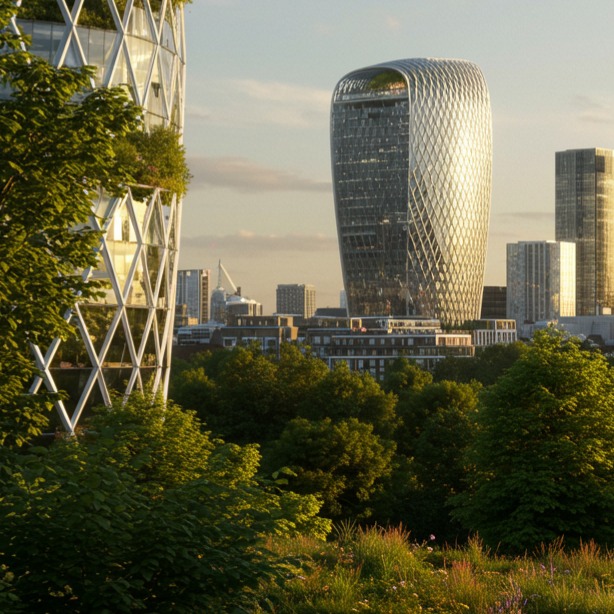
    Generative Ouroboros: A Futures Exhibition of AI-Generated Radical Alternatives of AI

    Invitation to join our side event at the Futures4Europe Conference

    In our conference contribution we explore the idea of the generative ouroboros—the automated autophage—in application to foresight. Foresight is by definition a participatory activity and made by humans. In our futures exhibition we try out what happens if we make scenarios about AI with AI.

    Together with the visitors to our exhibition, we want to find out how AI influences and changes foresight practice. Does AI increase the plausibility of future scenarios or decrease human expertise and participation?

    Will AI render foresight practice irrelevant altogether—substituting for human expertise, imitating human intuition and making participation unnecessary? Or will AI help to improve foresight processes—through better design, more efficient organisation, or more creative future scenarios?

    We invite you to visit our futures exhibition “Generative Ouroboros: A Futures Exhibition of AI-Generated Radical Alternatives of AI” taking place on 30th September, from 19:00 to 21:00 as a side event at the Futures4Europe conference and to explore not only AI generated future scenarios but to discuss together with us the role of AI in future foresight practice!

    You can start by asking yourself whether this blog was written by a person or by an AI! And would you have interpreted it the same way, before asking yourself this question?

    We look forward to seeing you at our AI futures exhibition and to discussing the automated autophage further with you! 

    Posted on: 23/09/2026

    Last Edited: 2 months ago

    Silvio Cioni1

    no more cones

    Posted on: 18/09/2026

    Post Image

    Last Edited: 2 months ago

    ParEvo

    A web-assisted process enabling the participatory exploration an evaluation of alternative futures

    I am an evaluation consultant based in Cambridge, UK. My work straddles the field of evaluation methodologies and foresight practices, including both participatory and hybrid human-AI informed approaches. For more information on my own background see https://richardjdavies.wordpress.com/

    Posted on: 14/09/2026

    Last Edited: 3 months ago

    Anne Ignatenko1

    futures journalist, future-oriented pw coach for mission-driven & non-proft orgs

    Posted on: 08/09/2026

    Last Edited: 3 months ago

    Clarice Garcia1

    Advocating for collaborative imagination to unfold pluriversal futures.

    Posted on: 03/09/2026

    Last Edited: 4 months ago

    Cara Meffert1

    Educator for Climate Justice and Social Change

    Posted on: 05/08/2026

    Post Image

    Last Edited: 6 months ago

    Thus Spoke Arta

    How Our Planet Is Entering a New Era

    We are living through a transition that feels, at once, like collapse and awakening. The crises surrounding us—ecological breakdown, technological acceleration, geopolitical fragmentation—are often treated as separate problems. But they are not. They are symptoms of a deeper rupture: a failure in how we perceive reality itself.


    This is the beginning of the “Big Shift.” Not merely a historical turning point, but a transformation in consciousness. The dominant frameworks through which humanity has understood itself—nation, progress, even “humanity” as a unified moral subject—are no longer sufficient. They fragment under pressure because they were never grounded in the deeper fabric of existence. They abstracted us from the Earth, from each other, and ultimately from being itself.


    Long before modern crises, ancient traditions understood something we have forgotten: the Earth is not an object. It is a living, sacred reality. Early liturgical texts and cosmologies did not separate matter from meaning. To speak of the Earth was already to speak of order, of balance, of participation in a larger whole. This was not “ecology” in the modern scientific sense—it was a lived metaphysics.


    What has been lost is not knowledge in the narrow sense, but a way of knowing. The modern world, in its pursuit of control and clarity, reduced reality to what can be measured, extracted, and optimized. Technology is not the root problem; it is an extension of this perception. We did not simply build machines—we built a worldview that sees the world as machine.


    And so we arrive at a strange paradox: we speak constantly of “saving humanity,” yet we do not even know what “humanity” means. It is an abstraction, a moral placeholder, often detached from real conditions and embedded inequalities. In trying to center humanity, we displaced the Earth. And in doing so, we undermined the very conditions that make human life possible.


    A different orientation is needed. Not a rejection of humanity, but a re-centering within a larger field of existence. To love the Earth is not a poetic gesture—it is an ethical necessity. It means recognizing that harm to ecosystems is not external damage but a form of self-destruction. It means reframing ethics from human-centered to Earth-centered, from domination to participation.


    This is where the future becomes most uncertain—and most significant. Artificial intelligence and emerging technologies are often framed in terms of capability and risk. But the deeper question is ontological: what kind of intelligence are we creating? If intelligence is participation, then ethical design requires more than safeguards—it requires alignment with the structures of reality itself.


    We stand, then, at a threshold. The path forward is not a return to the past, nor a blind leap into technological futurism. It is a synthesis—a planetary civilization that draws from ancient wisdom while engaging modern knowledge. A civilization that recognizes the plurality of perspectives without losing sight of underlying unity.


    This requires new forms of leadership, new frameworks of foresight, and a redefinition of progress. Not growth for its own sake, but alignment with the conditions that sustain life and meaning.


    Ultimately, the future is not something we predict. It is something we participate in. Every action, every perception, contributes to the unfolding of reality. The question is not whether change is coming—it is whether we are capable of aligning with it.


    To become planetary beings is not to transcend the Earth, but to belong to it fully. To act with awareness that we are not separate observers, but active participants in a living, dynamic cosmos.


    The shift has already begun. The only question is whether we recognize it—and whether we are willing to follow it to its conclusion.

    Posted on: 28/05/2026

    Last Edited: 7 months ago

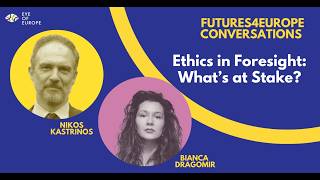
    Futures4Europe Conversations Ethics in Foresight: What's at Stake?April 2026

    In this episode of Futures4Europe Conversations, Bianca Dragomir speaks with Nikos Kastrinos, who brings over 25 years of experience at the European Commission and more than 35 years of academic work in science, technology and innovation policy and foresight.

    This conversation covers:

    • What foresight does, at its best, and how it differs from other approaches
    • Where the most difficult ethical tensions arise in foresight work
    • How foresight can engage with sustainability in ways that open up different pathways
    • The ways futures may be framed through techno-fixes
    • How the use of AI tools is changing foresight practice, and what this requires from practitioners
    • What it takes to do participatory foresight well
    • What changes in practice could help foresight remain relevant in the next decade

    Posted on: 04/05/2026

    Last Edited: 2 months ago

    Rick Davies1

    Preparedness, not prediction. Exploring alternative futures, using a participatory evolutionary process, at parevo.org

    Posted on: 11/03/2026

    Last Edited: a year ago

    Thomas Arnold1

    System thinking to help understand and act on complex and uncomfortable sustainability challenges and their interrelatedness in planetary emergency

    Posted on: 04/07/2025

    Last Edited: a year ago

    Filippo Giustini1

    Design strategist, farmer, apprentice magician. I am passionate about people's stories and dreams. Sometimes I go to the future, the rest of the time I spend in the countryside at Marchisoro Farm.

    Posted on: 10/05/2025

    Last Edited: a year ago

    Minna Takala1

    Strategist & Creative Thinker exploring emerging themes and signals of change

    Posted on: 09/05/2025

    Last Edited: a year ago

    Sveinung Sundfør Sivertsen1

    Plural futures please!

    Posted on: 03/04/2025

    Last Edited: a year ago

    Aaron B. Rosa1

    a tagline to remember

    Posted on: 06/02/2025

    Last Edited: 7 months ago

    Suzanne Whitby1

    Urban "futurer", co-creating hopeful, sustainable futures. | Experiential, embodied futures | Democratising futures | Citizen "activation"

    Posted on: 02/02/2025

    Last Edited: a year ago

    Lydia Caldana1

    Policy Analyst at EU Policy Lab - JRC

    Posted on: 18/11/2024

    Last Edited: a year ago

    Mikko Dufva1

    Futures are felt

    Posted on: 18/11/2024

    Last Edited: a year ago

    Hayley Trowbridge1

    Posted on: 18/11/2024