Loading...

    sorted by publishing date

    Last Edited: 5 days ago

    AI 2030 ScenariosMarch 2025

    Helping policy makers plan for the future of AI

    In 28 April 2025, the UK Government Office for Science published the AI 2030 Scenarios report as part of a broader series on Frontier AI: Capabilities and Risks -- see original source :

    📌 Background and scope

    • GO-Science havs developed five scenarios, exploring developments in AI up to 2030. Events at a global level are described, but the focus is on implications for the UK. 
    • The scenarios focus on Frontier AI – the most capable and general models available in 2030. Frontier AI models have created a new, uncertain dynamic due to the pace of their improvement, their adaptability across multiple tasks, and their availability to anyone to interact with in natural language. These scenarios explore how this could play out to 2030.  
    • The scenarios are designed to help policy makers, industry, and civil society test actions that might mitigate risks and navigate to a more favourable future
    • The scenarios are informed by the latest evidence and expert judgements. In drafting this Foresight report, and the Future Risks of Frontier AI paper, GO-Science consulted over 70 experts from industry, academia and policy making to ensure the scenarios and key findings were as robust and evidence based as possible.
    • These scenarios have some important limitations. Given the pace and unpredictable nature of AI development, some aspects of the scenarios may also soon become dated. Whilst they have been designed for use in different policy contexts, they may not be suitable in the form presented here for all AI policy questions. 

    🔔The AI 2030 scenarios

    The AI 2030 scenarios are built using five critical uncertainties, factors that are both important to the future of AI development, but also highly uncertain: 

    The scenarios are described by a set of narratives. These cover outcomes across the critical uncertainties, and a range of implications across the economy, society and for peoples’ daily lives. Below are brief summaries of the scenarios alongside a ‘slider’ chart to illustrate the critical uncertainty outcomes in each case. 

    Posted on: 03/02/2026

    Last Edited: 4 months ago

    Embodying the future

    Horizon scanning for emerging technologies and breakthrough innovations in the field of human-like AI systems

    This technology foresight brief documents the process and findings of a horizon scanning exercise, in the context of FUTURINNOV (FUTURe-oriented detection and assessment of emerging technologies and break-through INNOVation) a collaboration between the European Innovation Council (EIC) and the Joint Research Centre (JRC), aiming to support the EIC's strategic intelligence through foresight and other anticipatory methodologies.
    The workshop, held online on 19 June 2025, had as its primary goal the evaluation and prioritisation of trends and signals related to emerging technologies and breakthrough innovations across all technology readiness levels (TRLs) within human-like AI systems. Signals for the workshop were gathered from experts, literature review, and text/data mining of patents, publications, and EU-funded projects.
    These signals were then scrutinised for their significance to the field's future by a diverse group of sector experts, which led to the identification of twelve key topics: enhancing human-AI collaboration; trustworthy and explainable AI; neurosymbolic AI; general-purpose neuro-symbolic methods; personalised medicine; embodied intelligence; emotion-aware AI; multi-agent frameworks; human-AI collective cognition; brain-inspired AI; addressing AI’s energy demand; and next generation LLMs.
    Several contextual factors that shape the development and uptake of AI are highlighted across social, technological, economical, environmental and political and regulatory domains, including: AI literacy; inter-disciplinary and inclusive development of models; benchmarking practices; and sustainability.
    The outcomes of this exercise may be used to inform future funding topics for EIC Challenges and other EC calls. They can also provide input for EIC and EC reports, as well as supporting other EU policy initiatives.

    Posted on: 24/09/2025

    Last Edited: 5 months ago

    Emotion ecosystems 2040July 2025

    Workshop report

    The foresight workshop Emotion Ecosystems 2040 was conducted on 📅 24-25th of June 2025, as part of the project Eye of Europe

    Over the course of the two-day workshop, the participants explored the theme of emotion ecosystems by working through a structured process in three facilitated groups, whose composition shifted at key moments. The work began by framing the concept of “emotion ecosystems” in terms of a curated set of societal tensions, each expressing the strain between a shared aspiration and its undesirable consequences: 🌀 Hyperconnection vs Isolation; 🌍Craving for unity vs Tribal polarization; đŸ©č Healing collective traumas vs Solitary coping ...and more.

    To delve into these tensions, participants applied the Causal Layered Analysis (CLA) framework twice: first, 🔍to examine the present by unpacking common narratives, systemic structures, shared worldviews, and deep cultural metaphors; and then again, in a creative key, 💡to imagine preferable futures. This second phase involved reconstructing alternative metaphors, beliefs, and systemic designs, supported by a short horizon scanning exercise based on a set of pre-existing and participant-generated key drivers of change. 

    Posted on: 12/09/2025

    Last Edited: 5 months ago

    Augmented foresightJune 2025

    The transformative power of generative AI for anticipatory governance

    This briefing explores the potential of generative AI in supporting foresight analysis and strategic decision-making. Recent technological developments promise an increased role for large language models (LLMs) in policy research and analysis. From identifying trends and weak signals to fleshing out rich scenario narratives and bringing them to life in experiential and immersive ways, generative AI is empowering foresight analysts in their endeavour to anticipate uncertainties and support
    policymakers in preparing better for the future. As generative agents powered by LLMs become more adept at mimicking human behaviour, they could offer foresight practitioners and policy analysts new ways to gain additional insights at greater speed and scale, supporting their work.

    However, to effectively integrate generative AI and LLMs into foresight practice, it is crucial to critically evaluate their limitations and biases. Human oversight and expertise are essential for ensuring the reliability and validity of AI-generated outputs, as well as the need for transparency, accountability, and other ethical considerations. It is important to note that, while generative AI can augment human capabilities, it should not be seen as a replacement for human involvement and judgment.

    By combining human expertise with generative AI capabilities, foresight analysts can uncover new opportunities to enhance strategic planning in policymaking. A proactive and informed approach to adopting generative AI in foresight analysis may lead to more informed, nuanced, and effective strategies when dealing with complex futures.

    In this briefing: 📌Introduction; 📌Generative AI applications in foresight; 📌Overview of generative agents; 📌Ethical challenges and limitations; 📌Conclusions

    Posted on: 11/09/2025

    Post Image

    Last Edited: 8 months ago

    From Intuition to Immersion: The Resonant Future Self Framework Makes Foresight Felt

    What if we could test-drive our future selves?

    Most scenario workshops stay in the head. The Resonant Future Self Framework flips that script by letting participants embody possible futures through immersive narrative experiences - while their brains and bodies react in real time. Peaks of coherence in EEG and heart-rate variability become “north-star signals” that guide purpose discovery. The method weaves together generative AI, emotional storytelling, and biometric sensing to open a new path toward deeply felt, personal foresight.

    First public presentation – Vienna, May 2025
    The framework was introduced at the Futures4Europe Conference 2025 – Exploring Future-Oriented Collective Intelligence (Vienna, 15–16 May), organised by the AIT Austrian Institute of Technology as part of the Eye of Europe flagship initiative. The presentation focused on the conceptual foundations of the method, shared results from the first single-participant pilot study, and outlined how emotional resonance - measured through real-time physiological signals - can enrich scenario work with an embodied, intuitive layer of decision-making.

    Next stop – AIMEDIA, Venice, July 2025
    From 6–10 July, the project will be featured in the AI in Immersive Media track at the First International Conference on AI-based Media Innovation (AIMEDIA 2025) in Venice.

    The presentation will cover the generative narrative pipeline that produces the six personalised future-self videos, share expanded pilot-study findings (including EEG and HRV analysis), and preview ongoing efforts to partially automate the scripting, visual generation, and video assembly process using tailored AI workflows.

    While human editing and quality control remain essential, these steps point toward a future in which the method becomes faster, more scalable, and easier to adapt across educational, coaching, and wellbeing contexts.

    Read more
    To explore more about the method, goals, and future plans, visit the dedicated project page (link below).

    Posted on: 08/06/2025

    Last Edited: 9 months ago

    Being Human in 2035March 2025

    Experts predict significant change in the ways humans think, feel, act and relate to one another in the Age of AI

    Nearly 300 of the experts in this early 2025 study responded to a series of three quantitative questions, and nearly 200 wrote predictive essays in how the evolution of artificial intelligence (AI) systems and humans might affect essential qualities of being human in the next decade. Many are concerned that the deepening adoption of AI systems over the next decade will negatively alter how humans think, feel, act and relate to one another. They predicted whether change will be mostly for the better or for the worse in 12 categories:

    • Capacity and willingness to think deeply about complex concepts
    • Social and emotional intelligence
    • Confidence in our own native abilities
    • Trust in widely shared values and cultural norms
    • Mental well-being
    • Empathy and application of moral judgment
    • Individual agency, the ability to act independently in the world
    • Sense of self-identity, meaning and purpose in life
    • Native metacognition, the ability to think analytically about thinking
    • Native curiosity and capacity to learn
    • Native decision-making and problem-solving abilities
    • Native innovative thinking and creativity

    Source: Imagining the Digital Future Center 

    Posted on: 05/05/2025

    Post Image

    Last Edited: 9 months ago

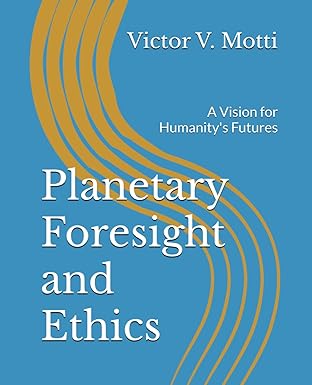
    Planetary Foresight and Ethics

    New Book

    Summary

    Core Themes
    The book reimagines humanity’s future through planetary foresight, blending historical wisdom with planetary stewardship. It critiques linear Western progress narratives and advocates for a hybrid, cyclical vision of history, emphasizing pluralistic identities and reverence for life.

    Structural Framework
    Organized into thematic sections, the work begins with “The Mysterious Lord of Time,” challenging linear temporality and introducing non-linear, culturally diverse historical perspectives. “Evolving Belief Systems” contrasts Indo-Iranic, Mesopotamian, and Hellenic thought with Abrahamic traditions, highlighting ancient influences on modern pluralism.

    Imagination and Futures
    The “Histories of Imagination” section explores myth and storytelling as drivers of civilization, while “Scenarios of Future Worlds” applies foresight methodologies to geopolitical and technological evolution, emphasizing ecological consciousness. The final chapters expand to cosmic intelligence and ethics, framing humanity’s role within universal interconnectedness.

    Ethical Vision
    Central to the thesis is a call for planetary identity and stewardship, merging forgotten wisdom traditions with modern foresight to navigate ecological and technological uncertainties. The book positions itself as both a philosophical guide and practical framework for ethical transformation in an era of global crises.

    Key Argument
    Motti asserts that humanity is transitioning from a “Second Nomad Age” (characterized by fragmentation) toward a “Second Settlement Age” marked by planetary consciousness, requiring creative complexity and ethical vigilance.

    Posted on: 23/04/2025

    Last Edited: 10 months ago

    OECD Contributions to the 2030 Agenda and BeyondJune 2024

    Shaping a Sustainable Future for All

    The world is at a critical juncture, facing an array of interconnected global challenges. These challenges affect everyone, particularly the poorest and most vulnerable, and range from the triple planetary crises of climate change, biodiversity loss, and pollution, to pandemics, food and energy shortages, large-scale forced migration, rising domestic and global inequality, and escalating armed conflicts. In this context, there has been an alarming stagnation in progress towards achieving the Sustainable Development Goals (SDGs). The rise in public debt levels in many low- and middle-income countries is concerning. The United Nations (UN) Secretary-General's 2023 special edition report on SDG progress underscored that the next five years are critical, as failure to achieve the SDGs could lead to even greater poverty and inequalities, political instability, economic upheaval, and irreversible environmental damage.

    Yet, many countries are facing challenges in ensuring that their governance systems are capable of addressing these complex and interconnected challenges. A need for better governance, effective policy integration, sustainable investment choices as well as effective use of public resources, including Official Development Assistance (ODA), - as well as better international governance of SDGs - to meet sustainable development needs has never been more urgent. Delivering these improvements will require unprecedented action and decisions from public institutions and political leaders, effective and inclusive multilateral cooperation, with the goal of uniting diverse stakeholders to deliver nothing short of a rescue plan for people and the planet, in line with the call to action made by the UN Secretary General.

    As countries approach 2030, there is increasing recognition that the SDG commitments to “leave no one behind” and “reach those furthest behind first” need to extend beyond this timeline. In this context, the UN Summit of the Future presents a unique opportunity to tackle both current and future challenges, with a view to enhancing global collaboration on critical issues. The OECD’s policy work and active global engagement demonstrates its commitment to support all countries to individually and collectively achieve this objective.

    This Report aims to provide OECD support to inform decision making ahead of the UN Summit of the Future and following high-level events. It leverages OECD knowledge, data, tools, instruments and good practices to support national and international actions to respond to future challenges and opportunities. This report addresses two major breakthroughs proposed in the UN Secretary General's Rescue Plan for People and Planet: equipping governance and institutions for sustainable and inclusive transformation, and prioritising policies and investments with multiplier effects for sustainable development. It also aligns with the bold actions outlined in the anticipated Pact for the Future, addressing three of the five key priorities: sustainable development and financing for development; science, technology, innovation, and digital co-operation; and youth and future generations.

    Governance for equitable and sustainable transformation

    Transforming governance systems for sustainable development requires overcoming sectoral silos and policy fragmentation, as well as setting practical, and where feasible, ambitious and coherent economic, social, and environmental objectives that extend beyond short-term political cycles. Establishing robust policy coherence mechanisms is therefore needed to harmonise policy priorities and promote collaboration where most effective, with a view to reducing policy fragmentation, ensuring mutually reinforcing policies across sectors and government levels, and minimising negative transboundary effects of domestic policies.

    Sound governance for sustainable transformation also calls for the strategic use of various government tools - such as strategic foresight, people-centred public policy, mechanisms for stakeholder engagement, regulatory policy, public procurement and budgeting – in order to build resilient, sustainable and inclusive societies. It also calls for ensuring information integrity and providing access to justice for all, which are critical for the sound implementation of individual rights and government commitments.

    Effective governance systems also require the alignment of public investments with the public interest and sustainability priorities, including through the use of existing planning tools, such as National Sustainable Development Strategies, National Development and Decarbonisation Plans, strategic public investment decisions to foster inclusive and sustainable futures, stimulating further investments from private and other sectors, and leveraging transition finance to build resilient infrastructure and other strategic sectors. Integrity and building trust are also core objectives, crucial for fighting corruption and illicit financial flows, essential for effective public service delivery and sustainability. There is also a need to develop and maintain regulatory frameworks that facilitate compliance with SDGs, including the integration of the SDGs across the regulatory cycle and enhancing regulatory co-operation. In addition, developing new measures of progress that focus on both people and the planet will be crucial to a more holistic understanding of global economic prosperity and progress beyond GDP. To this end, the newly established International Forum on Total Official Support for Sustainable Development (TOSSD) could play a pivotal role.

    Finally, adopting a territorial approach to the SDGs is essential as cities and regions play a critical role in promoting a paradigm shift towards sustainability. At least 105 of the 169 SDGs targets will not be achieved without proper engagement and coordination with local and regional governments. The SDGs provide the appropriate framework to define and shape local and regional development visions, strategies, plans, and re-orient existing ones towards sustainable development.

    Policies and investments for sustainable transformation

    Sustainable transformation requires prioritising policies and investments that are mutually reinforcing and can catalyse progress across social, economic, and environmental dimensions, serving as multipliers to accelerate the achievement of the SDGs. This includes closing divides to leave no one behind, through strengthening policies and investments for social inclusion and identifying areas where social inclusion initiatives can be pursued in synergy with environmental protection. A key example of this is pursuing universal social protection, in light of its significant multiplier effects across different SDGs and incomparable potential for promoting just transitions. In addition, leveraging environment-human-well-being synergies is essential for coherent and effective SDG implementation. This requires enhancing transition finance credibility, strengthening domestic enabling conditions, addressing the labour and distributional impacts of climate policies, accelerating access to clean energy, and protecting biodiversity. In addition, there is a need to strengthen measures to protect lives in disaster situations by aligning disaster risk reduction and climate change adaptation responses.

    Additional financing for sustainable transformation

    Delivering an SDG stimulus requires innovative and collaborative solutions to unlock and scale up all sources of financing – public and private, domestic and international – for sustainable development and to address interlinked global crises. These need to harness productive trade and tax revenues, as well as international flows, to support SDG financing, including through innovative financing mechanisms, ensuring that financial flows, trade, development co-operation and other policies align with SDGs and promote inclusive and equitable outcomes, as well as encouraging green budgeting, developing effective tax policies, and improving tax administration, including via digitalisation of tax processes. This may also include innovative forms of financing, such as targeting support to enhance co-operation between public and private financial institutions through blended finance instruments, green, social, and sustainability bonds, and local currency solutions. Once again, integrity, compliance, anti-corruption and the fight against illicit finance are crucial for effective domestic resource mobilisation and attracting additional external financing from both private and public sources.

    Science, technology, and innovation (STI) for sustainable and inclusive transformation

    It is essential to design and implement STI policies in a manner to address societal challenges and achieve sustainable transformation, as set out in the OECD Transformative Agenda for STI Policies. Promoting trustworthy artificial intelligence (AI) is critical for digital transformation. AI is a powerful, versatile technology which has the potential to transform how we work, learn and interact, boosting productivity and economic growth and accelerating progress towards addressing global challenges, such as food security and climate change. However, we also need to address the risks raised by AI technology, including those related to privacy, safety, security, human rights and AI-generated disinformation and manipulated content. Beyond AI, policy efforts needed in the area of digital transformation also include enhancing broadband connectivity; achieving well-performing digital health systems through digital technologies; and, strengthening data governance frameworks while upholding human rights, including women’s and girls’ human rights, which face additional risks in the digital sphere. Strategic foresight should be used for anticipatory and innovative policy exploration about multiple futures, including by assessing emerging critical risks and opportunities in the face of various technological advancements and their implications on our economy and society. Strengthening data governance frameworks will be essential to ensure high standards of data protection, and facilitate data access and sharing across jurisdictions, including in the public sector.

    Empowering youth for a more equitable and sustainable future

    Addressing the needs and rights of youth and future generations is crucial to achieve sustainable development and intergenerational justice. This requires policies that promote formal job creation, high-quality employment services, and support for youth entrepreneurship, as well as social protection systems to meet the specific needs of youth, access to affordable housing, and outreach to vulnerable and disadvantaged young people. Promoting active, meaningful, and inclusive youth participation in decision-making processes at all levels will also help ensure that policies are reflective of their needs and aspirations.

    Source: OECD - Publications  

    Posted on: 15/04/2025

    Last Edited: 10 months ago

    Emotion ecosystems 204024 June - 25 June 2025

    “The fabric of society is woven with emotional threads, from empathy to outrage, and it is these feelings that shape both harmony and conflict in the world.” — Dalai Lama

    Emotion Ecosystems 2040 — the foresight workshop hosted by Executive Agency for Higher Education, Research, Development and Innovation Funding (UEFISCDI) within the Eye of Europe project — was an inspiring, mind-expanding experience! The co-creation workshop was held on 📅24-25 June 2025 at 📌Conacul Cozieni, near Bucharest, Romania.

    💡The event explored the concept of emotion ecosystems — the dynamic, interwoven emotional currents that shape our collectives, whether in communities, institutions, or digital spaces.
    To capture this complexity, the event brought together voices from across Europe and from various disciplines: social psychology, psychotherapy, anthropology, philosophy, cultural history, spirituality, political science, art and the creative industries, journalism, media studies, science and technology studies, and robotics.

    One portion of the workshop was dedicated to surfacing emotional tensions that mark our time:
    🌀 Hyperconnection vs Isolation; 🌍Craving for unity vs Tribal polarization; đŸ©č Healing collective traumas vs Solitary coping ...and many more. Using Causal Layered Analysis, participants unpacked these tensions through multiple layers — from surface narratives and systemic structures to the deeper worldviews and metaphors/myths that sustain them.

    From there, each working group leaned into the future:
    💡 by exploring drivers of change relevant for the tension discussed in their group, and then
    💡 by discussing and proposing new metaphors, worldviews, beliefs, and systems that could soften or transform these tensions. Ultimately, the goal was to imagine what more desirable emotional futures might look like.

    Posted on: 14/04/2025

    Last Edited: a year ago

    Identifying STI developments contributing to the capability of planetary ecosystems to flourishApril 2022

    Results of a Delphi survey

    This report showcases the results of the two-round Dynamic Argumentative Delphi survey carried out within the project “S&T&I for 2050. Science, Technology and Innovation for Ecosystem Performance – Accelerating Sustainability Transitions”. The overarching ambition of this project is the “identification and mapping of future scientific and technological developments that can radically improve ecosystem performance”. The main outcome is to provide “reflections towards the 2nd Strategic Plan of Horizon Europe (HE), in its broad direction to support the Sustainable Development Goals.”

    To this end, quantitative and qualitative methods were employed, among which this report refers to:  

    • Patent and bibliometric analysis for selecting the most dynamic Science, Technology and Innovation (STI) domains; 
    • Horizon scanning through web mining and human evaluation for identifying key STI directions and specific examples of technological/scientific breakthroughs within these directions; 
    • Dynamic Argumentative Delphi engaging relevant experts from around the world in an argument-based exploration regarding the contribution of STI to the capability of ecosystems to flourish from now to 2050. 

    Posted on: 04/03/2025

    Last Edited: a year ago

    Democracy – a long term project?27 February - 27 February 2025

    Eye of Europe Pilot Workshop

    Event takeaways:

    The workshop offered a structured journey—reflecting on the past of liberal democracies, examining current research on key pillars like institutions, participation, and media, and exploring possible futures through the lens of four science fiction novels that imagine future democratic developments

    • Senior scientist at “Our World in Data”, Bastian Herre gave an alarming as well as reconciling view into the deterioration of liberal democracies worldwide as well as in Europe. Yet, he pointed out that most of our present democracies are built on solid institutions and they are most likely to be resilient against internal and external attacks.
    • Michel Debruyne of Beweging.net introduced results from comparative country research from the INVOLVE Democracy project. Among the factors stablizing liberal democracies long-term are the quality of trust in public institutions and policies as well as making participation possible for all citizens. However, when looking at public policies and social benefits, the picture is more ambiguous: while public health expenditure is considered a stabilizing factor, high expenditure in pensions might result in distrust. More definite in destabilizing democracy in a country are corruption and low quality of public transport.
    • The RECLAIM project is researching the significance of expression of information disorder and democratic stability. The protection of the public sphere is identified as a cornerstone of democracy. Of similar importance are public service social media as well as a better regulation of social media companies. In his presentation Maximilian Conrad, University of Iceland, also pointed out the significance of the education factor, not only for children but also for adults, including science education and media literacy. Destabilizing factors are, among others, disruptive technologies, fragmented public spheres and distrust in traditional journalism and science.
    • In the MeDeMAP presentation, Maren Beaufort, Austrian Academy of Sciences focused on the role of (social) media and stated that traditional information media and pluralism, thinking long-term and endorsing a culture of diversity are crucial in maintaining democratic values. Investigative journalism plays a special role as it uncovers corrupt activities and disguised the foes of democracy. What we cannot expect is a consensus in social media bubbles. Definitely destabilizing liberal democracies is the exclusion of citizens from discourses; and also the suppression of media as well as the lack of self-criticism within journalism. Still open are questions such as: How to prevent democracies dying at the hands of elected leaders—who subvert the very process that brought them to power.
    • An outlook into diverse futures of democratic values was presented in the “Literary Quartet”, where four passionate readers of science fiction literature gave their interpretation of four different novels dedicated to the longevity of democratic life in the future. What we can learn from novel like Infomocracy (2016), The Lost Cause (2023), The Left Hand of Darkness (1969), and The Ministry for the Future (2020)? The discussion extracted visions of pluralist and diverse societies where humans can change their identity, experiment with new forms of governance in local communities, where central governments are resolved and where people find ways to cope with climate change by supporting each other.

    This workshop is part of a series of “Eye of Europe” pilot activities taking place during 2025, aimed at exploring various futures and their implications for R&I policy.

    The workshop was open to a wide audience - experts and non-experts - interested in questions of future democracies.

    Posted on: 21/01/2025

    Post Image

    Last Edited: a year ago

    ORION

    Meet Your Co-Pilot in Horizon Scanning

    Paulo Carvalho has been working in the field of futures and foresight for more than 25 years. On one hand, he is a professor in foresight, strategy and innovation at the Faculty of Economics and Management at the University of Lisbon. On the other hand, he founded a foresight company five years ago, IF Insight Foresight, focussing on consulting, horizon scanning and strategic intelligence, as well as other strategy and innovation projects. He talked to Futures4Europe about Insight Foresight’s recently developed tool ORION and how it could revolutionise foresight practices.

    Posted on: 25/11/2024