Loading...

    Mentions of

    sorted by publishing date

    Last Edited: 2 months ago

    Anticipation 2026 Conference01 July - 03 July 2026

    Anticipation 2026 is an interdisciplinary conference for rethinking how ideas about futures operate within conditions of uncertainty, indeterminacy, and unknowing. Bringing together researchers, designers, philosophers, policy makers, and practitioners, the conference opens space for exploring how futures are shaped through aesthetics, ethics, epistemologies and material practices. Registration opens on the 2nd of February 2026, but the call for abstracts is open now.

    From 1st to 3rd July 2026, the 6th Conference on Anticipation will be held at the Politecnico di Milano, Design Department. Anticipation 2026 invites participants to explore the entangled relations between futures, unknowing, and design. The overarching aim of the Conference Series and of the emerging field of Anticipation Studies is to create new perspectives on how individuals, groups, institutions, systems and cultures use ideas about futures to act in the present.

    The 6th International Conference on Anticipation will be held at the Design Department of Politecnico di Milano, one of Europe's leading institutions for design research and education. Located in the heart of Milan, a global capital of design, fashion, and innovation, the department stands as a site for examining the contemporary and future roles of design within complex societal, technological, and ecological systems. Politecnico di Milano’s Design Department is renowned for fostering experimental, practice-based, and transdisciplinary approaches that challenge conventional boundaries of design. It cultivates a vision of design as a powerful mode of inquiry.

    From critical design to foresight, from service design to post-human aesthetics, design at Politecnico di Milano nurtures an ecosystem where research, pedagogy, and practice interact to explore how futures are made and contested. The department brings together a diverse network of researchers, educators, and practitioners committed to advancing critical, speculative, and anticipatory design approaches while benefitting from ongoing exchanges with industry, cultural institutions, and grassroots communities. Its interdisciplinary structure includes dedicated labs and centers focused on areas such as communication and product design, service design, sustainable transitions, and design for social innovation. These spaces foster a culture of inquiry where prototyping, material experimentation, and reflective practice converge. The Bovisa campus offers state-of-the-art facilities, from fabrication workshops to immersive environments, supporting collaborative and transdisciplinary engagement.

    Posted on: 02/12/2025

    Post Image

    Last Edited: 2 months ago

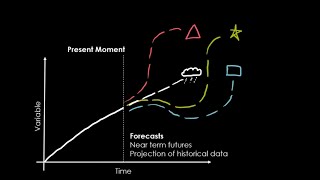
    Linking futures thinking, probability-based forecasting and decision-making: FutureCtrl methodology

    After months of development, ForgeFront has recently launched Future.Ctrl, an online course covering futures thinking, forecasting and policy delivery.

    In a world in flux, short-term firefighting often takes priority in organisations, in businesses and even in our own lives. In this context, thinking about the future can often feel nebulous and intangible. Measuring progress towards distant horizons can feel less relevant to the here and now. Data to inform long-term decision making can be scarce. Avoiding the perils of institutional ‘group think’ becomes a secondary priority, especially when time is tight.   

    Posted on: 28/11/2025

    Last Edited: 2 months ago

    THE DEMOGRAPHIC TURN09 December - 09 December 2025

    ACTIONS NEEDED FOR RESEARCH, INNOVATION, AND POLICY IN EUROPE?

    Curious about how Europe’s demographic trends may transform the R&I landscape?


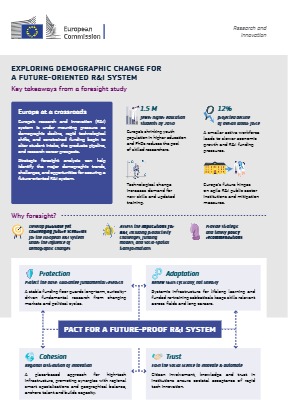
    On 10 December 2025, DG Research & Innovation hosted a hybrid event at the DG RTD Library in Brussels to present the Foresight-on-Demand (FOD) study: “The Demographic Turn: Actions Needed for Research, Innovation and Policy in Europe?”


    FOD team members guided the audience through:

    • Background data showing a shrinking youth population, a declining workforce, and growing fiscal pressures on R&I funding.
    • A six-step Foresight Process combining horizon scanning, scenario-building, and windtunneling to anticipate future challenges.
    • Four Scenarios illustrating different pathways for Europe’s R&I system.
    • Strategic actions to protect fundamental research, foster lifelong learning, strengthen regional innovation, and build societal trust in technology.


    👏 A big thank you to the panelists and speakers:

    • Erik Canton (Deputy Head of Unit – Common R&I Strategy and Foresight Service, DG Research & Innovation)
    • Nicola Francesco Dotti (Chief Economist Unit – Common R&I Strategy and Foresight Service, DG Research & Innovation)
    • Brikena Xhomaqi (The Lifelong Learning Platform)
    • Alex Petropoulos (Centre for Future Generations)
    • Thomas Estermann (European University Association)
    • Maciej Krysztofowicz (EU policy Lab, Joint Research Centres)
    • Viola Peter (FOD team, Technopolis Group)
    • Michal Nadziak (FOD team, 4CF)
    • Katarzyna Figiel (FOD team, 4CF)

    And to all participants for an engaging exchange on how to build a more adaptive and resilient EU R&I system.


    Missed the event? Explore the below documentation !


    Posted on: 27/11/2025

    Post Image

    Last Edited: 3 months ago

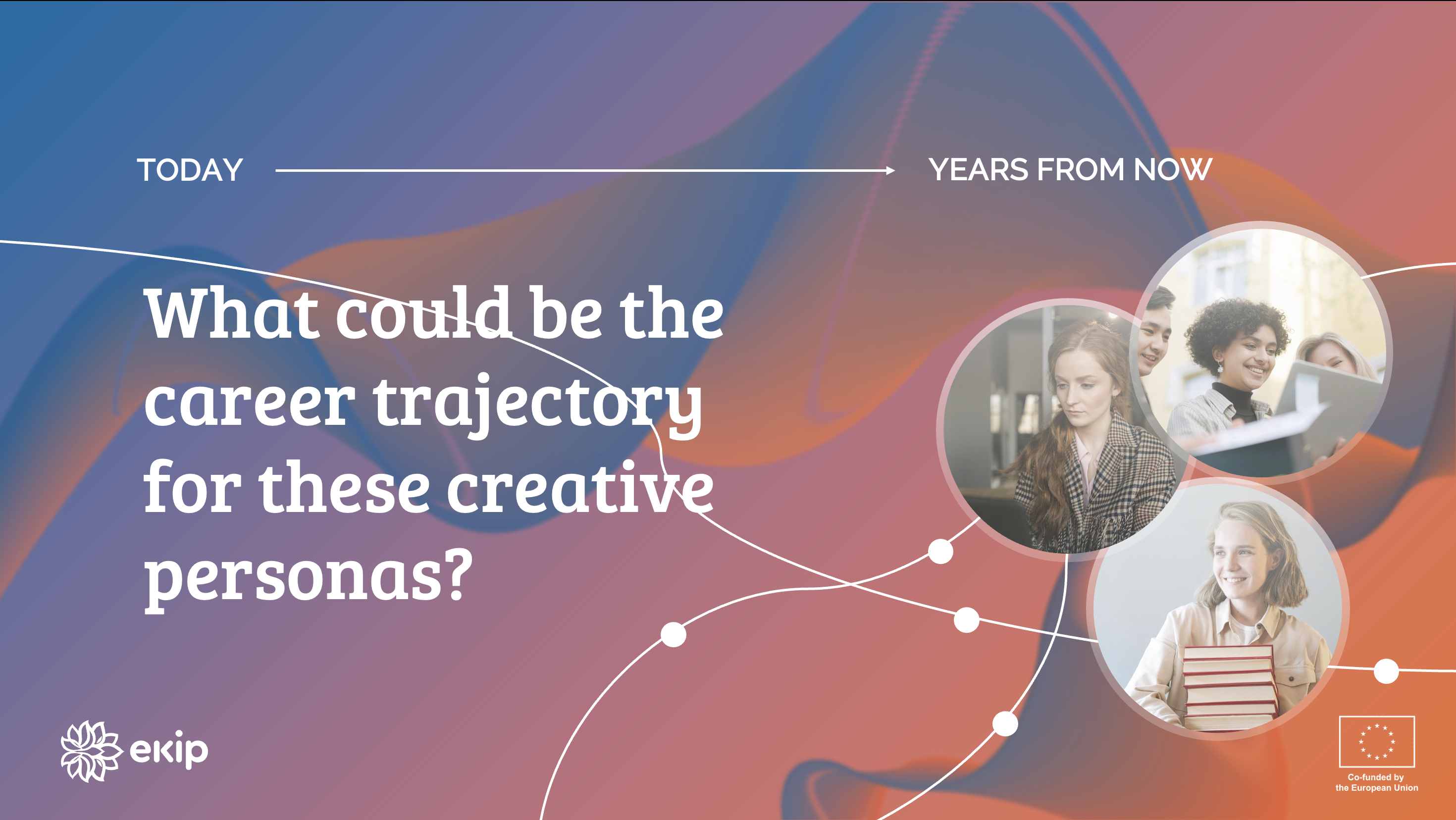
    Navigating the Future of CCIs: A Backcasting Approach to Career Design

    The Cultural and Creative Industries (CCIs) are undergoing a rapid transformation, driven by emerging technologies like AI and immersive realities. This fast-moving landscape presents a crucial challenge: how do we effectively guide current professionals toward the emerging career opportunities of tomorrow? This is one of the questions we aim to tackle within the ekip project, the European Cultural and Creative Industries Innovation Policy Platform.

    The EKIP initiative, funded by Horizon Europe, is dedicated to understanding and accelerating these transitions through research, policy, and collaboration. For each sector it studies, EKIP brings together policymakers, researchers, and creative practitioners to translate emerging needs into actionable frameworks for change.

    Our foresight exercise, conducted within ekip's identification phase , addresses this challenge by mapping actionable career paths from the future back to the present. Our method employed social media listening to track real-time conversations across sectors, helping stakeholders anticipate change and enabling the co-creation of smarter innovation policies .

    Posted on: 05/11/2025

    Last Edited: 4 months ago

    Resilience - The future of Europe as seen by EU citizensAugust 2025

    This report presents an analysis on the topic of resilience of the stories selected from the #OurFutures initiative. These stories — envisioning life in 2040 — provide unique insights into how people across the EU perceive Europe's capacity to remain resilient amid multiple transformative challenges.
    This thematic analysis supports the European Commission’s 2025 Strategic Foresight Report on resilience . It therefore focuses on stories that explicitly reference the role and position of Europe, its institutions, and its collective future.

    The report identifies eight major challenge areas shaping perceptions of Europe's resilience, with climate and democracy emerging as particularly cross-cutting themes. The analysis also explores the optimistic and pessimistic visions citizens express about Europe’s future – on the one hand those describing a Europe that has responded to its challenges through transformation, and on the other, those that foresee institutional collapse, authoritarian drift, climate catastrophe, and social fragmentation. Five key tensions structure the debates within the stories, revealing the difficult trade-offs that Europe must navigate to remain resilient. Potential shocks that citizens anticipate underscore where citizens feel Europe is most vulnerable and where resilience must be strengthened.

    Despite their concerns, storytellers propose a wide range of concrete strategies to enhance European resilience, many of them emphasizing systemic reform and long-term thinking. The report synthesizes citizens’ views on Europe’s role in the world.

    Posted on: 23/09/2025

    Post Image

    Last Edited: 5 months ago

    Playbook of Foresight

    Designing Strategic Conversations for Transformation and Resilience

    Posted on: 11/09/2025

    Post Image

    Last Edited: 8 months ago

    Imagination and metacognition in Futures & Foresight process

    The liminal dimension of anticipatory learning: imagination and metacognition in Futures & Foresight processes

    Imagination, in common discourse, is often relegated to a secondary domain of thought – a frivolous, playful, and unreliable mental activity confined to childhood, the arts, or, at best, applied creativity. A “magic box” that opens only when logical rigor relaxes, when attention drifts toward invention and fantasy. Yet this view, however seductive, is ultimately reductive – if not misleading.

    When examined through the lens of contemporary cognitive science, imagination instead reveals itself as a profound and complex cognitive function. Not only does it actively participate in processes of knowing, but it also constitutes one of their foundational dimensions. It is the mental faculty through which we construct alternative worlds, test hypothetical scenarios, and explore the unknown without needing to experience it directly. Far from being a mere appendage to rational thought, it serves as one of its key structural supports.

    Even more striking is what emerges from recent scientific research: imagination possesses a metacognitive character. This means it does not merely generate mental content that diverges from reality, but is also capable of reflecting on itself – monitoring and adjusting its own trajectories, becoming the object of awareness and intentional regulation. In other words, imagining is not just about conjuring what is absent from the world, but also about knowing one is imagining, directing that act toward specific goals, and assessing its quality, limitations, and implications.

    This represents a genuine epistemological shift – recasting imagination not as a passive or automatic process, but as a strategic ally of thought. Within this framework, imagination emerges as a faculty that weaves together multiple dimensions of our cognitive experience:

    • perception, which provides sensory input;
    • intuition, which enables rapid, non-linear associations;
    • intentionality, which channels imaginative effort toward a purpose;
    • and self-awareness, which allows us to revise and reinterpret what has been imagined, imbuing it with meaning and value.

    It is within this layered and dynamic space that imagination assumes a renewed role: no longer a retreat into the unreal, but a critical tool for probing the possible. It becomes the lens through which we may observe not only what is, but what could be – and, through this, reconfigure our relationship with the present.

    It enables us to anticipate without predicting, and to plan without constraining.

    In educational, professional, and social contexts – and even more so within the fields of Futures Thinking and Foresight – this reconceptualization of imagination as a metacognitive skill proves to be strategically essential. To anticipate the future is not to guess what will occur, but to cultivate a gaze that can recognize alternatives, navigate uncertainties, and imagine trajectories not yet in existence. Doing so requires more than creativity; it demands a deep literacy in conscious imagination.

    To rediscover imagination through a metacognitive lens is to restore its dignity as an epistemic, transformative, and educational faculty. A faculty not only capable of generating visions, but also of sustaining, interrogating, and refining them. A power to be reintegrated into our intellectual and civic formation – so that it may help us not only to imagine different worlds, but to understand the conditions that make them possible.

    Posted on: 09/06/2025

    Post Image

    Last Edited: 8 months ago

    What is Emerging Technologies Scanning and how it fits into Futures Studies practices

    Emerging Technologies Scanning (ETS) emerges as a practice within Futures & Foresight (Futures Thinking & Strategic Foresight)

    The introduction of a new technology is never an isolated event and never concerns only one market or one domain. There are invariably socio-cultural, political, economic, and environmental implications, as well as impacts, influences, “cross-pollination”, and correlations among different technologies.

    The very broad definition of technology itself betrays its intrinsic complexity: a vast field of research involving various technical and scientific disciplines, which examines the application and use of everything that can serve to solve problems. The term “technology” also refers to the aggregate of knowledge, skills, and tools used to design, create, and utilise objects, processes, systems, or services to meet human needs.

    An emerging technology, in particular, is one that is radically new and relatively fast-growing technology [it is not necessarily exponential, as the common dialectics of recent years have conditioned us to expect, yet this has little to do with the mathematical concepts of exponentiality; rapid growth does not imply exponentiality]. It is characterised by a certain degree of coherence (or consistency) that persists over time and has the potential to have a substantial impact on the socio-economic-political domains (understood as the players, institutions, and models of interactions between them, as well as all the processes of knowledge production associated with these domains).

    Its most significant impact lies in the future and thus in the emergency phase: an emerging technology is still quite uncertain and ambiguous. For this reason, it would be prudent to analyse its potential impacts in a timely manner, to avoid getting trapped in Amara’s Law.

    Posted on: 09/06/2025

    Post Image

    Last Edited: 9 months ago

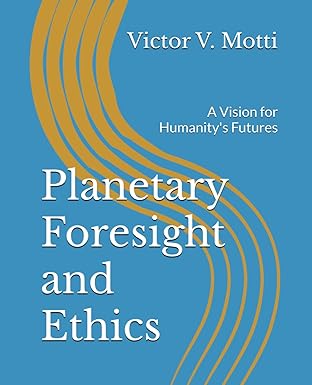
    Planetary Foresight and Ethics

    New Book

    Summary

    Core Themes
    The book reimagines humanity’s future through planetary foresight, blending historical wisdom with planetary stewardship. It critiques linear Western progress narratives and advocates for a hybrid, cyclical vision of history, emphasizing pluralistic identities and reverence for life.

    Structural Framework
    Organized into thematic sections, the work begins with “The Mysterious Lord of Time,” challenging linear temporality and introducing non-linear, culturally diverse historical perspectives. “Evolving Belief Systems” contrasts Indo-Iranic, Mesopotamian, and Hellenic thought with Abrahamic traditions, highlighting ancient influences on modern pluralism.

    Imagination and Futures
    The “Histories of Imagination” section explores myth and storytelling as drivers of civilization, while “Scenarios of Future Worlds” applies foresight methodologies to geopolitical and technological evolution, emphasizing ecological consciousness. The final chapters expand to cosmic intelligence and ethics, framing humanity’s role within universal interconnectedness.

    Ethical Vision
    Central to the thesis is a call for planetary identity and stewardship, merging forgotten wisdom traditions with modern foresight to navigate ecological and technological uncertainties. The book positions itself as both a philosophical guide and practical framework for ethical transformation in an era of global crises.

    Key Argument
    Motti asserts that humanity is transitioning from a “Second Nomad Age” (characterized by fragmentation) toward a “Second Settlement Age” marked by planetary consciousness, requiring creative complexity and ethical vigilance.

    Posted on: 23/04/2025

    Post Image

    Last Edited: a year ago

    Exploring Futures: Scenario Planning in Collective Consciousness

    Short movie made with AI Tools

    This movie is a way of connecting three domains that bring me joy currently:
    - Strategic Foresight
    - Spirituality
    - AI
    One of the goals is to draw attention to Foresight as one of the Top 5 cutting-edge skills identified in the UN 2.0 agenda, a plan that helps organizations prepare for the future.

    I adapted the Scenario Planning method to explore three possible futures and bring them to life through cinematic storytelling.
    The film also introduces two trained characters, Lina and Arun, within each scenario, making the movie less formal and more engaging.

    I also wanted to show how AI can:
    - Serve as a bridge between ideas and skills from different fields.
    - Help us discover new aspects of human potential.

    This movie isn’t flawless or complete - I’m not a filmmaker, and that’s okay. Its beauty lies in its imperfection, reminding us that sometimes, taking the step to create is more important than getting it perfect. 

    Later Edit: The film EXPLORING FUTURES: SCENARIO PLANNING IN COLLECTIVE CONSCIOUSNESS was included in the non-competition program of the International "Cartoons about the Future Festival," dedicated to films created with the help of AI. It was screened five times during the event, held on March 28-30, 2025, at the Atom Pavilion at VDNkH, Moscow. The festival, organized by the ATOM Foundation for the Promotion of Scientific, Educational, and Communication Initiatives in collaboration with the Big Cartoon Festival team, featured free screenings of short and full-length animated films over three days, offering audiences a diverse selection of forward-thinking works.

    Posted on: 10/02/2025

    Last Edited: a year ago

    Horizon scanning — tips and tricksJuly 2023

    A practical guide - Eionet Report

    This document provides guidance on how to conduct a structured horizon scanning process to identify emerging developments that could have potential impact in the future, and in particular on the environment. It starts with an overview of the guide (Chapter 1) and an introduction to horizon scanning (Chapter 2) in connection with the concept of futures literacy. It then provides a step-by-step approach for conducting a structured horizon scanning process (Chapter 3), including a variety
    of diverse sources for spotting signals, different frameworks for signal scanning and several options to unpack and analyse the collected signals and patterns of change through creative methods and exercises. It also proposes a few different and complementary ways of communicating the findings to relevant stakeholders, networks and communities. Lastly, it suggests some tools (Chapter 4) that can be used to strengthen the scanning process. The annexes offer a detailed comparison of such tools and a glossary of terms related to futures literacy.

    Posted on: 30/01/2025

    Last Edited: a year ago

    Foresight Starter VideosNovember 2024

    As part of the Eye of Europe project, the Finland Futures Research Centre is developing a brand new set of ‘Foresight Starter Videos’.

    A new series of 'Foresight Starter Sets' is an an essential part of Finland Futures Research Centre's (FFRC) contribution to the Eye of Europe project. One starter set component is a set of short videos. The videos introduce and clarify futures thinking and foresight, what to expect from a foresight workshop, and a variety of foresight workshop methods. The videos could serve as promotional material but also help organizers calibrate participants expectations prior to their participation in a foresight workshop.

    Finland Futures Research Centre is developing the video series to help participants prepare to participate in foresight workshops. The videos immediate use is related to the Eye of Europe Pilot Foresight Activities which will run through 2025 and 2026, but the videos will be freely available as a useful resource for foresight organizers outside the scope, and beyond the lifetime, of the project. 

    Reaching target audiences with foresight beyond text

    As the Work Package lead of Eye of Europe, the FFRC targets two unofficial ambitions underpinning all project activities: First, lowering the bar for organizing and participating in foresight workshops. Second, moving foresight beyond text. That is, finding new audiences via new formats compared to the classic domain of long text-based foresight reports. The set of Foresight Starter Videos aims to achieve both of these premises, as it uses a format of short videos (3-8 minutes per video) to introduce foresight, futures thinking, and futures methods to new audiences with a playful and welcoming tone. 

    The video set has two introductory videos that can be used in advance of any foresight workshop, while the ambition for the following videos relate to specific methods and approaches. The presumed use case is that foresight organizers can provide links to the introductory videos for foresight workshop participants in advance of their participation. We have found at the FFRC that sometimes people, even if they are domain experts in other fields, can be apprehensive prior to foresight workshops, as this may be unfamiliar territory for them (and for people used to being experts, unfamiliar can mean uncomfortable). 

    Foresight Starter Set Video Roadmap

    Launching the first videos

    The series of videos are developed by Martyn Richards and Zainab Yasin at the Finland Futures Research Centre. The videos will be hosted on the Finland Futures Research Centre’s YouTube Channel as well as feature on the Futures4Europe platform’s upcoming Toolbox, a set of useful methodologies and resources for advancing R&I foresight. 

    As of December 2024, the first video on “Untangling Futures and Foresight: An Essentials Guide” is now available on YouTube.  

    Posted on: 16/12/2024

    Last Edited: a year ago

    Futures of Technologies09 June - 11 June 2025

    Mutual Shaping of Socio-Technical Transformations

    Futures Conference 2025 focuses on the futures of technologies, their development, importance, role and risks as a driver of social change. What are the effects of social and environmental changes on technological development and vice versa?

    ‘Futures of Technologies’ is the 25t h international Futures Conference of the Finland Futures Research Centre and Finland Futures Academy, University of Turku. It is organised together with the VTT Technical Research Centre of Finland Ltd during 10–12 June 2025 in Turku, Finland.

    Keynote Speakers
    Ali Aslan Gümüşay is professor of Innovation, Entrepreneurship & Sustainability at LMU Munich and head of research group Innovation, Entrepreneurship & Society at the Humboldt Institute for Internet & Society Berlin. His research focuses on values, meaning and hybridity in entrepreneurship; grand challenges, sustainability and new forms of organizing; digitalization, management and innovation as well as impact, scholarship and futures.

    Cynthia Selin is a pioneering social scientist and strategic foresight expert known for developing innovative methodologies to navigate complex change and advance the theoretical boundaries of anticipation. An Associate Fellow at the Saïd Business School, University of Oxford, and core faculty in the Oxford Scenarios Programme, Dr. Selin also founded Scenaric, a consulting firm that equips organizations to tackle uncertainty and shape resilient futures.

    Philip Brey is professor of Philosophy and Ethics of Technology at the University of Twente. He is member of the management team (and former chairman) of the 4TU Center for Ethics & Technology, a partnership of the universities of Twente, Delft, Eindhoven and Wageningen with more than 60 researchers.

    Jerome C. Glenn co-founded and directs The Millennium Project, a leading global participatory think tank with over 70 Nodes around the world. He is assisting the UN Council of Presidents of the General Assembly on the UNGA’s role in governance of Artificial General Intelligence, author/editor forthcoming Global Governance of Artificial General Intelligence (De Gruyter), lead author State of the Future 20.0 and Future Work/Tech 2050: Scenarios and Actions and co-editor Futures Research Methodology 3.0 with Ted Gordon. Glenn has directed over 80 futures research projects and is a member of the IEEE SA P2863 Organizational Governance of AI working group.

    Rohit Talwar (CEO, Fast Futures, UK) was recently in the top three in 'the Global Gurus Top 30 futuris' rankings for 2025. He is an inspirational futurist and the CEO of Fast Future, delivering award-winning keynote speeches, executive education, foresight, research, consultancy, and coaching. Rohit was delivered over 2000 speeches, workshops, and consulting assignments for clients in 80+ countries across six continents. He is the co-author and lead editor of nine books and over 50 reports on the emerging future and appears regularly on TV and in print media around the world. 

    Read more about the Keynotes. 

    Conference Newsletters

    Posted on: 25/11/2024

    Last Edited: a year ago

    The Five Dimensions of Futures ConsciousnessMarch 2018

    Posted on: 09/11/2024

    Last Edited: a year ago

    On engaging meaningfully with futures with Peter BishopJune 2024

    Futures4Europe conversations

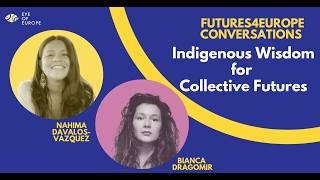
    This is the first episode of Futures4Europe conversations, initiated by the Eye of Europe project – a series of dialogues between Bianca Dragomir and professionals from all over the world, who engage in work that is future sensitive.

    About this episode - On engaging meaningfully with futures

    Often framed as a professional activity essential for 'planning', guiding 'decision making' or 'orienting strategies', futures studies could be more generously placed in the realm of humanities where, along other human capacities, imagination and anticipation should be nurtured and celebrated.

    In this light, futures education is more like a tending a garden. Like doing the soil work that turns it into the fertile ground for seeds to grow into 'flowers' such as human creativity, a heightened awareness of the mechanisms of change, agency coupled with humility, a sense of taking part into shaping something yet non-existent.

    Peter Bishop, founder of Teach the Future, argues that this garden should be welcoming everyone, including young people, or perhaps especially them.

    Posted on: 21/10/2024