Loading...

    sorted by publishing date

    Last Edited: 4 months ago

    Geopolitical & industrial decarbonisation scenarios to identify R&I opportunities for the EUMay 2025

    How can the EU navigate amidst global uncertainties to foster a more resilient and effective path toward industrial decarbonisation?

    This report presents the outcomes of the Geopolitical Industrial Decarbonisation Scenarios workshop, convened on behalf of the Eye of Europe Horizon Europe project by the Insight Foresight Institute. Bringing together 30 participants from across the European Union—including policymakers at EU, national, and regional levels, industry leaders, energy and climate specialists, and foresight and forecasting experts—the workshop explored how the EU can navigate mounting geopolitical uncertainty while accelerating industrial decarbonization on a 2050 horizon.

    The discussion was structured around two core aims. First, participants examined a suite of forward-looking geopolitical scenarios, assessing how divergent power dynamics, energy trade patterns, and technological trajectories could either hinder or catalyse the transition to a net-zero industrial base in the EU countries. Particular attention was paid to supply-chain resilience, strategic autonomy in critical materials, and the interplay between carbon border adjustments and global climate diplomacy. Second, the workshop sought to surface emergent research and innovation (R&I) needs and opportunities that would equip EU actors to thrive across the scenarios. Priorities highlighted include advanced electrification processes for hard-to-abate sectors, low-carbon hydrogen and synthetic-fuel value chains, circular-economy business models, and data-driven tools for real-time decarbonisation monitoring.

    Outputs from the session feed directly into the Eye of Europe project’s multi-workshop learning cycle. Immediate products comprise this extended report for attendees; aggregated insights captured in the public Pilot Logbook Part I – What we did and Part II – What we learned; and distilled policy recommendations to be released in the Eye of Europe Policy Brief: Foresight Perspectives on Key R&I Topics. Beyond documentation, the Insight Foresight Institute will leverage the findings to stimulate agenda-setting dialogues with EU bodies and industrial stakeholders, ensuring that identified R&I pathways inform Horizon Europe programming and other EU-level funding instruments. Workshop materials and presentations are retrievable via the futures4europe.eu knowledge-sharing portal, reinforcing the project’s commitment to an open foresight community.

    Posted on: 03/10/2025

    Last Edited: 4 months ago

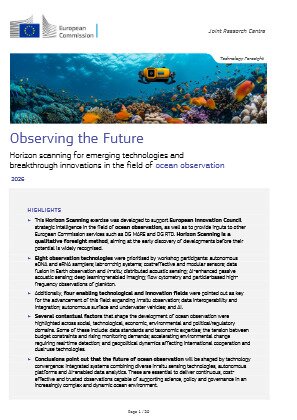
    Healing the FutureJuly 2025

    Horizon scanning for emerging technologies and breakthrough innovations in the field of cell and gene therapies

    This brief documents the process and findings of a horizon scanning exercise, in the context of FUTURINNOV (FUTURe-oriented detection and assessment of emerging technologies and break-through INNOVation) a collaboration between the European Innovation Council (EIC) and the Joint Research Centre (JRC), aiming to support the EIC's strategic intelligence through foresight and other anticipatory methodologies.

    The workshop, held online on 15 May 2025, had as its primary goal the evaluation and prioritisation of trends and signals related to emerging technologies and breakthrough innovation, across all technology readiness levels (TRLs), within cell and gene therapies.

    Signals for the workshop were gathered from experts, literature review, and text/data mining of patents, publications, and EU-funded projects. These signals were then scrutinised for their significance to the field's future by a diverse group of sector experts, which led to the identification of seven key topics: in vivo gene therapy; microphysiological pre-clinical models; stem cells in multiple applications; new tools for advanced tissue delivery; in silico & AI; conversion of tumour cells; and emerging genome and epigenome-based therapies.

    Participants also highlighted various contextual factors that could influence the development, adoption, and uptake of emerging technologies within this field, including in domains such as: competitiveness and geopolitics; talent and expertise; cross-border and cross-sector collaboration; funding, economic and market conditions; regulatory, safety and ethical challenges; health and RDI ecosystems; and infrastructure and manufacturing.

    Posted on: 24/09/2025

    Post Image

    Last Edited: 8 months ago

    What is Emerging Technologies Scanning and how it fits into Futures Studies practices

    Emerging Technologies Scanning (ETS) emerges as a practice within Futures & Foresight (Futures Thinking & Strategic Foresight)

    The introduction of a new technology is never an isolated event and never concerns only one market or one domain. There are invariably socio-cultural, political, economic, and environmental implications, as well as impacts, influences, “cross-pollination”, and correlations among different technologies.

    The very broad definition of technology itself betrays its intrinsic complexity: a vast field of research involving various technical and scientific disciplines, which examines the application and use of everything that can serve to solve problems. The term “technology” also refers to the aggregate of knowledge, skills, and tools used to design, create, and utilise objects, processes, systems, or services to meet human needs.

    An emerging technology, in particular, is one that is radically new and relatively fast-growing technology [it is not necessarily exponential, as the common dialectics of recent years have conditioned us to expect, yet this has little to do with the mathematical concepts of exponentiality; rapid growth does not imply exponentiality]. It is characterised by a certain degree of coherence (or consistency) that persists over time and has the potential to have a substantial impact on the socio-economic-political domains (understood as the players, institutions, and models of interactions between them, as well as all the processes of knowledge production associated with these domains).

    Its most significant impact lies in the future and thus in the emergency phase: an emerging technology is still quite uncertain and ambiguous. For this reason, it would be prudent to analyse its potential impacts in a timely manner, to avoid getting trapped in Amara’s Law.

    Posted on: 09/06/2025

    Last Edited: 9 months ago

    UNIDO EGM on Technology Foresight for Circular Economy18 June - 15 May 2025

    Expert Group Meeting on Technology Foresight for Inclusive and Sustainable Industrial Development - Application to Circular Economy

    The United Nations Industrial Development Organization (UNIDO) is organizing a one-day Expert Group Meeting (EGM) on Strategic Technology Foresight for policy making on 18 June, 2025 in Vienna, Austria.

    The EGM will be oriented towards drawing lessons from experience of, and identifying future trends in, the use of technology foresight for strategic decision making. It will focus on sustainable development, and particularly on transitions towards a Circular Economy (which features as an example of the most recent experience).

    Posted on: 14/05/2025

    Last Edited: 10 months ago

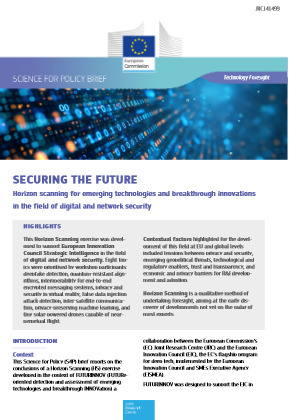
    Securing the Future

    Horizon scanning for emerging technologies and breakthrough innovations in the field of digital and network security

    This science for policy brief documents the process and findings of a horizon scanning exercise, part of a series under the FUTURINNOV (FUTURe-oriented detection and assessment of emerging technologies and break-through INNOVation) project, a collaboration between the European Innovation Council (EIC) and the Joint Research Centre (JRC), aiming to bolster the EIC's strategic intelligence through foresight and anticipatory methodologies.
    The workshop, held on 13 November 2024, had as its primary goal the evaluation and prioritisation of trends and signals on emerging technologies and breakthrough innovation, across all technology readiness levels (TRLs), within the digital and network security domain. Signals for the workshop were gathered from experts, literature review, and text/data mining of patents, publications, and EU-funded projects.
    These signals were then scrutinised for their significance to the field's future by a diverse group of sector experts which led to the identification of eight key topics: deepfake detection, quantum-resistant algorithms, interoperability for end-to-end encrypted messaging systems, privacy and security in virtual reality, false data injection attack detection, inter-satellite communication, privacy-preserving machine learning, and tiny solar-powered drones capable of near-perpetual flight.
    Participants also highlighted various factors that could influence the development, adoption, and promotion of these emerging technologies including: tensions between privacy and security, emerging geopolitical threats, technological and regulatory enablers, trust and transparency, and the economic barriers that shape technological development and adoption.

    Posted on: 16/04/2025

    Post Image

    Last Edited: 10 months ago

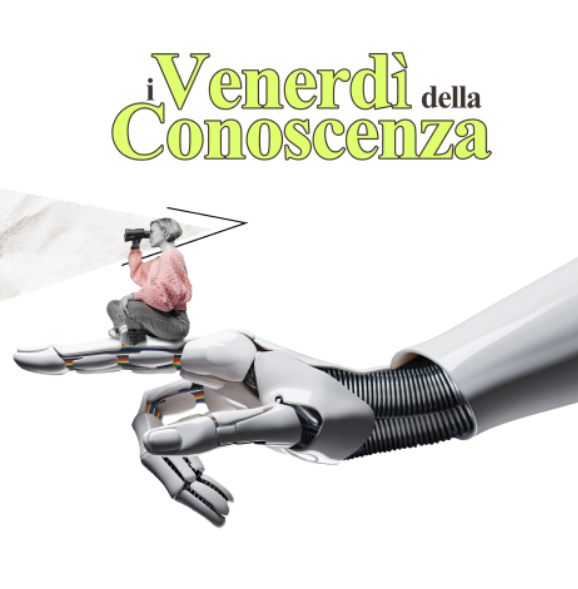
    Making the Future More Tangible for Citizens Through ‘Fridays of Knowledge’

    In the small seaside township of Diano Marina, Liguria Region, Italy, the local community has been organising frequent meetings to help people overcome growing fears of an increasingly uncertain future. This initiative, called ‘Fridays of Knowledge’, aims to equip the local community with scientific tools and knowledge to understand the risks and implications of new technologies in a dialogue together with students, academics, and journalists. Communication Manager for Fridays of Knowledge, Damiana Biga, tells Futures4Europe how this initiative sparks debates across different generations and backgrounds, fostering a sense of shared responsibility and curiosity.

    Posted on: 27/03/2025

    Last Edited: a year ago

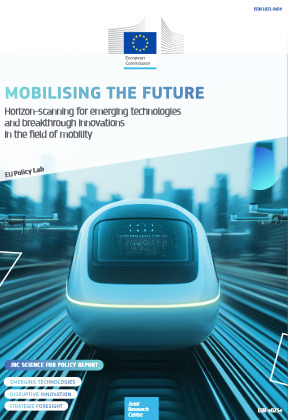
    Mobilising the future

    Horizon scanning for emerging technologies and breakthrough innovations in the field of mobility

    This report documents the process and findings of a horizon scanning exercise, part of a series under the FUTURINNOV (FUTURe-oriented detection and assessment of emerging technologies and breakthrough INNOVation) project, a collaboration between the European Innovation Council (EIC) and the Joint Research Centre (JRC), aiming to bolster the EIC's strategic intelligence through foresight and anticipatory methodologies.
    The workshop, held on 16 October 2024, had as its primary goal the evaluation and prioritisation of trends and signals on emerging technologies and breakthrough innovation, across all tech7-nology readiness levels (TRLs), within the broad Mobility domain, broken-down into four key areas: transport systems, networks and multimodality; automotive and roads; rail/freight and logistics and aviation and airports.
    Signals for the workshop were gathered from experts, literature review, and text/data mining of patents, publications, and EU-funded projects. These signals were then scrutinised for their significance to the field's future by a diverse group of sector experts which led to the identification of 22 different key topics across the key areas above. These signals can be seen as hotspots of innovation that deserve the EIC’s attention for possible future support.
    Participants also highlighted various factors that could influence the development, adoption, and promotion of these emerging technologies, which are presented in the report as drivers, enablers and barriers, and analysed specifically in each of the 4 key areas.

    Posted on: 17/03/2025