Last Edited: a month ago
SURF Tech Trends 2026
For education and research institutions
visit for more details: https://www.surf.nl/en/themes/futuring/tech-trends
see also: https://video.edu.nl/w/5wWDUqoE2XtYgoT1d167hk

Posted on: 09/09/2026
sorted by publishing date
Last Edited: a month ago
visit for more details: https://www.surf.nl/en/themes/futuring/tech-trends
see also: https://video.edu.nl/w/5wWDUqoE2XtYgoT1d167hk
Posted on: 09/09/2026
Last Edited: 4 months ago
We are living through a transition that feels, at once, like collapse and awakening. The crises surrounding us—ecological breakdown, technological acceleration, geopolitical fragmentation—are often treated as separate problems. But they are not. They are symptoms of a deeper rupture: a failure in how we perceive reality itself.
This is the beginning of the “Big Shift.” Not merely a historical turning point, but a transformation in consciousness. The dominant frameworks through which humanity has understood itself—nation, progress, even “humanity” as a unified moral subject—are no longer sufficient. They fragment under pressure because they were never grounded in the deeper fabric of existence. They abstracted us from the Earth, from each other, and ultimately from being itself.
Long before modern crises, ancient traditions understood something we have forgotten: the Earth is not an object. It is a living, sacred reality. Early liturgical texts and cosmologies did not separate matter from meaning. To speak of the Earth was already to speak of order, of balance, of participation in a larger whole. This was not “ecology” in the modern scientific sense—it was a lived metaphysics.
What has been lost is not knowledge in the narrow sense, but a way of knowing. The modern world, in its pursuit of control and clarity, reduced reality to what can be measured, extracted, and optimized. Technology is not the root problem; it is an extension of this perception. We did not simply build machines—we built a worldview that sees the world as machine.
And so we arrive at a strange paradox: we speak constantly of “saving humanity,” yet we do not even know what “humanity” means. It is an abstraction, a moral placeholder, often detached from real conditions and embedded inequalities. In trying to center humanity, we displaced the Earth. And in doing so, we undermined the very conditions that make human life possible.
A different orientation is needed. Not a rejection of humanity, but a re-centering within a larger field of existence. To love the Earth is not a poetic gesture—it is an ethical necessity. It means recognizing that harm to ecosystems is not external damage but a form of self-destruction. It means reframing ethics from human-centered to Earth-centered, from domination to participation.
This is where the future becomes most uncertain—and most significant. Artificial intelligence and emerging technologies are often framed in terms of capability and risk. But the deeper question is ontological: what kind of intelligence are we creating? If intelligence is participation, then ethical design requires more than safeguards—it requires alignment with the structures of reality itself.
We stand, then, at a threshold. The path forward is not a return to the past, nor a blind leap into technological futurism. It is a synthesis—a planetary civilization that draws from ancient wisdom while engaging modern knowledge. A civilization that recognizes the plurality of perspectives without losing sight of underlying unity.
This requires new forms of leadership, new frameworks of foresight, and a redefinition of progress. Not growth for its own sake, but alignment with the conditions that sustain life and meaning.
Ultimately, the future is not something we predict. It is something we participate in. Every action, every perception, contributes to the unfolding of reality. The question is not whether change is coming—it is whether we are capable of aligning with it.
To become planetary beings is not to transcend the Earth, but to belong to it fully. To act with awareness that we are not separate observers, but active participants in a living, dynamic cosmos.
The shift has already begun. The only question is whether we recognize it—and whether we are willing to follow it to its conclusion.
Posted on: 28/05/2026
Last Edited: 10 months ago
This technology foresight brief documents the process and findings of a horizon scanning exercise, in the context of FUTURINNOV (FUTURe-oriented detection and assessment of emerging technologies and break-through INNOVation) a collaboration between the European Innovation Council (EIC) and the Joint Research Centre (JRC), aiming to support the EIC's strategic intelligence through foresight and other anticipatory methodologies.
The workshop, held online on 19 June 2025, had as its primary goal the evaluation and prioritisation of trends and signals related to emerging technologies and breakthrough innovations across all technology readiness levels (TRLs) within human-like AI systems. Signals for the workshop were gathered from experts, literature review, and text/data mining of patents, publications, and EU-funded projects.
These signals were then scrutinised for their significance to the field's future by a diverse group of sector experts, which led to the identification of twelve key topics: enhancing human-AI collaboration; trustworthy and explainable AI; neurosymbolic AI; general-purpose neuro-symbolic methods; personalised medicine; embodied intelligence; emotion-aware AI; multi-agent frameworks; human-AI collective cognition; brain-inspired AI; addressing AI’s energy demand; and next generation LLMs.
Several contextual factors that shape the development and uptake of AI are highlighted across social, technological, economical, environmental and political and regulatory domains, including: AI literacy; inter-disciplinary and inclusive development of models; benchmarking practices; and sustainability.
The outcomes of this exercise may be used to inform future funding topics for EIC Challenges and other EC calls. They can also provide input for EIC and EC reports, as well as supporting other EU policy initiatives.
Posted on: 24/09/2025
Last Edited: 10 months ago
This brief documents the process and findings of a horizon scanning exercise, in the context of FUTURINNOV (FUTURe-oriented detection and assessment of emerging technologies and break-through INNOVation) a collaboration between the European Innovation Council (EIC) and the Joint Research Centre (JRC), aiming to support the EIC's strategic intelligence through foresight and other anticipatory methodologies.
The workshop, held online on 15 May 2025, had as its primary goal the evaluation and prioritisation of trends and signals related to emerging technologies and breakthrough innovation, across all technology readiness levels (TRLs), within cell and gene therapies.
Signals for the workshop were gathered from experts, literature review, and text/data mining of patents, publications, and EU-funded projects. These signals were then scrutinised for their significance to the field's future by a diverse group of sector experts, which led to the identification of seven key topics: in vivo gene therapy; microphysiological pre-clinical models; stem cells in multiple applications; new tools for advanced tissue delivery; in silico & AI; conversion of tumour cells; and emerging genome and epigenome-based therapies.
Participants also highlighted various contextual factors that could influence the development, adoption, and uptake of emerging technologies within this field, including in domains such as: competitiveness and geopolitics; talent and expertise; cross-border and cross-sector collaboration; funding, economic and market conditions; regulatory, safety and ethical challenges; health and RDI ecosystems; and infrastructure and manufacturing.
Posted on: 24/09/2025
Last Edited: 10 months ago
This literature review is part of the FUTURINNOV project—a collaboration between the European Commission’s Joint Research Centre and the European Innovation Council and SMEs Executive Agency—focuses on surfacing signals of emerging technologies and some breakthrough innovations.
This literature review report focuses on signals based on emerging technologies developed by non-EU countries and summarises findings in a final selection of 30 signals and trends clustered according to the 10 critical technology areas defined by the European Commission, as well as through other frameworks such as the Strategic Technologies for Europe Platform and the EIC’s portfolios and specific taxonomy. The report identifies topics, including climate-adaption tech, neurotech, digital and network security and critical raw materials, as areas deserving of further research and development.
The report provides insights for the EIC to anticipate technological developments and address potential security concerns, ensuring the EU's position at the forefront of global innovation.
Posted on: 23/09/2025
Last Edited: 3 months ago
The Eye of Europe project conducted a pilot workshop focused on Aging and Assisted Living Technologies (AALT) to examine their potential impact on European society and research and innovation (R&I) policy, particularly in the context of demographic changes such as aging populations and increased chronic health issues. The workshop aimed to anticipate the societal and policy implications of integrating smart and digital technologies into assisted living and care for older adults. Using the futures wheel method, participants explored future developments across three main areas: institutional long-term care, home-based care, and the inclusion of individuals with special needs in the workplace. The workshop was structured around three future assumptions for the year 2035, envisioning that AALT will become standard practice in long-term care facilities, widely used in private households, and successfully integrated in workplaces to support employees with special needs. Through this anticipatory approach, the workshop identified overarching effects of AALT on society and highlighted the importance of these technologies in shaping future policy and innovation strategies. This workshop was part of a broader series of foresight pilots designed to engage diverse stakeholders, test foresight methodologies, and contribute lessons to the Eye of Europe community and its online foresight platform. The attached report summarizes the results of the workshop and discusses the findings in the context of Europe R&I policy.
Posted on: 04/09/2025
Last Edited: a year ago
In today’s volatile and interdependent world, uncertainty is not a temporary disruption. It is a defining feature. Strategic foresight has become a critical capability for navigating complexity, enabling decision-makers to anticipate change, surface emerging risks, and imagine alternative futures. At this inflection point, Large Language Models (LLMs) offer a profound augmentation to how we conduct foresight, but not a replacement. In this context, the Policy Foresight Unit of the European Parliamentary Research Service has recently published “Augmented foresight: The transformative power of generative AI for anticipatory governance ”.
Let’s be clear. AI cannot foresee the future. It does not reason with intent or understand human values. What it can do is dramatically increase our speed, scale, and scope in making sense of potential futures, if used judiciously and critically.
The cognitive extension of human futures thinking
Generative AI can be understood as a cognitive prosthetic, a tool that extends human perception, memory, and pattern recognition. LLMs excel at identifying latent patterns in unstructured data, surfacing weak signals, and generating coherent narratives based on probabilistic inference. These capacities are particularly useful in exploratory foresight, where practitioners seek to widen the aperture of plausible futures. That is why, at 4CF we have created 4CF Sprawlr - the next-generation AI-powered debate and ideation platform designed to transform the way we brainstorm, strategize, and make decisions, as well as to challenge the assumptions of participants.
Moreover, during horizon scanning, LLMs can process thousands of documents across domains in real-time, clustering insights, filtering noise, and flagging emergent issues. This ability to synthesize vast and diverse information ecosystems supports faster and more responsive foresight cycles. But raw data synthesis is not foresight. True anticipatory intelligence requires contextual judgment, ethical discernment, and interpretive framing, capacities that remain uniquely human.
Narrative construction and scenario intelligence
Scenario planning, a cornerstone of foresight, benefits from AI in powerful ways. GenAI can help identify key drivers, test interdependencies, and co-develop scenarios that are internally consistent and plausibly disruptive. When used in parallel (“AI swarms”), different models can triangulate and refine assumptions, improving narrative robustness.
From a cognitive science perspective, LLMs excel at narrative generation because human cognition is fundamentally narrative-driven. We make sense of complex information by constructing stories, and AI's narrative fluency can mirror and support this innate process. However, plausibility does not equal probability or desirability, and this is where human oversight is critical.
Moreover, GenAI can model second- and third-order effects, encouraging deeper exploration of cascading impacts. But it struggles with ambiguity and values-laden trade-offs, areas where human foresight is indispensable.
New frontiers
One of the most intriguing applications of GenAI in foresight is the use of generative agents, simulated personas capable of expressing realistic, contextually grounded responses. These tools can be embedded in scenario narratives to create dynamic, dialogical futures. Emerging research shows that synthetic respondents can replicate human survey responses with high fidelity in controlled environments. They enable simulations of behavioral dynamics in policymaking, urban planning, or public health where direct access to participants is limited. Yet, the epistemic status of these agents remains debated. Are they truly proxies for human complexity, or merely statistical echoes? Their outputs must be seen as exploratory artifacts, not empirical evidence, informing, but not determining, foresight conclusions.
Bias, blind spots, and the illusion of objectivity
Despite their capabilities, LLMs come with significant epistemological risks. Their training data is historically bounded and socioculturally skewed. Without critical intervention, they risk amplifying dominant worldviews and suppressing marginalized perspectives, exactly the opposite of what good foresight should do. This reinforces what foresight scholars have long argued: that the future is not a neutral space, but one shaped by power, values, and competing imaginaries. AI outputs can reflect and reproduce systemic biases unless de-biased through intentional prompt design, algorithmic transparency, and participatory governance frameworks.
Moreover, the fluency of LLM-generated text can create a false sense of authority, leading to overreliance or reduced critical engagement. Practitioners must remain reflexive and iterative, treating AI outputs as inputs for dialogue, not doctrine.
Augmented intelligence, not artificial intuition
There’s a philosophical tension at the heart of this conversation. Foresight is not merely an analytical process, it is also a normative, imaginative, and ethical act. It involves asking: What kind of future do we want? Whose futures are we considering? What trade-offs are we willing to make? Generative AI does not possess values. It does not dream, hope, or fear. These are deeply human faculties, and they are essential to meaningful foresight. That said, when used well, GenAI can be a strategic co-pilot: accelerating discovery, enabling richer scenario exploration, and expanding access to foresight methods across disciplines and organizations.
Co-evolving with the machine
In sum, the integration of GenAI into foresight practice should be viewed not as a technological leap, but as a sociotechnical evolution. The most effective foresight processes will be those that combine human insight, ethical reasoning, and narrative richness with the analytic power and generative capabilities of AI. To paraphrase a growing sentiment: the future will not be written by AI alone, but by humans who know how to work with it wisely. The real promise of GenAI lies in partnership, not replacement. Because while AI may help us see further, it is still up to us to choose the path, interpret the terrain, and navigate uncertainty with courage, care, and imagination.
Posted on: 07/08/2025
Last Edited: a year ago
The introduction of a new technology is never an isolated event and never concerns only one market or one domain. There are invariably socio-cultural, political, economic, and environmental implications, as well as impacts, influences, “cross-pollination”, and correlations among different technologies.
The very broad definition of technology itself betrays its intrinsic complexity: a vast field of research involving various technical and scientific disciplines, which examines the application and use of everything that can serve to solve problems. The term “technology” also refers to the aggregate of knowledge, skills, and tools used to design, create, and utilise objects, processes, systems, or services to meet human needs.
An emerging technology, in particular, is one that is radically new and relatively fast-growing technology [it is not necessarily exponential, as the common dialectics of recent years have conditioned us to expect, yet this has little to do with the mathematical concepts of exponentiality; rapid growth does not imply exponentiality]. It is characterised by a certain degree of coherence (or consistency) that persists over time and has the potential to have a substantial impact on the socio-economic-political domains (understood as the players, institutions, and models of interactions between them, as well as all the processes of knowledge production associated with these domains).
Its most significant impact lies in the future and thus in the emergency phase: an emerging technology is still quite uncertain and ambiguous. For this reason, it would be prudent to analyse its potential impacts in a timely manner, to avoid getting trapped in Amara’s Law.
Posted on: 09/06/2025
Last Edited: 10 months ago
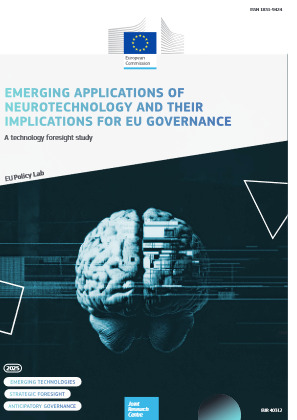
This report sums up recent developments in neurotechnology, that is, technology that can read and modify activity from the central nervous system. Some devices record information from the brain, and others deliver stimulation to the brain (and some do both).
These technologies are rapidly advancing and are likely to have a profound impact on various aspects of society. In the near future, neurotechnology is set to revolutionise the way we approach a range of policy areas, from healthcare, education, employment, law enforcement and security, to more obvious areas such as technology, digital and research.
The report analyses advances in the technologies for monitoring and stimulating the brain, some of which are incorporated into neurotechnology devices. It acts as a horizon-scan of new and emerging uses of these technologies, and takes these as inputs to pose a range of questions for the consideration of policymakers.
Read more from the blogpost by the author.
Posted on: 28/05/2025
Last Edited: a year ago
Summary
Core Themes
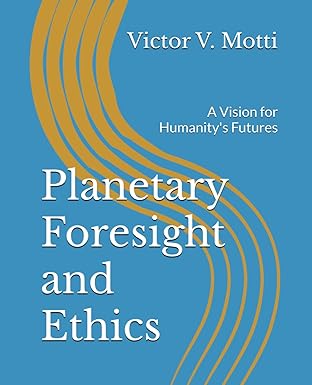
The book reimagines humanity’s future through planetary foresight, blending historical wisdom with planetary stewardship. It critiques linear Western progress narratives and advocates for a hybrid, cyclical vision of history, emphasizing pluralistic identities and reverence for life.
Structural Framework
Organized into thematic sections, the work begins with “The Mysterious Lord of Time,” challenging linear temporality and introducing non-linear, culturally diverse historical perspectives. “Evolving Belief Systems” contrasts Indo-Iranic, Mesopotamian, and Hellenic thought with Abrahamic traditions, highlighting ancient influences on modern pluralism.
Imagination and Futures
The “Histories of Imagination” section explores myth and storytelling as drivers of civilization, while “Scenarios of Future Worlds” applies foresight methodologies to geopolitical and technological evolution, emphasizing ecological consciousness. The final chapters expand to cosmic intelligence and ethics, framing humanity’s role within universal interconnectedness.
Ethical Vision
Central to the thesis is a call for planetary identity and stewardship, merging forgotten wisdom traditions with modern foresight to navigate ecological and technological uncertainties. The book positions itself as both a philosophical guide and practical framework for ethical transformation in an era of global crises.
Key Argument
Motti asserts that humanity is transitioning from a “Second Nomad Age” (characterized by fragmentation) toward a “Second Settlement Age” marked by planetary consciousness, requiring creative complexity and ethical vigilance.
Posted on: 23/04/2025
Last Edited: 2 years ago
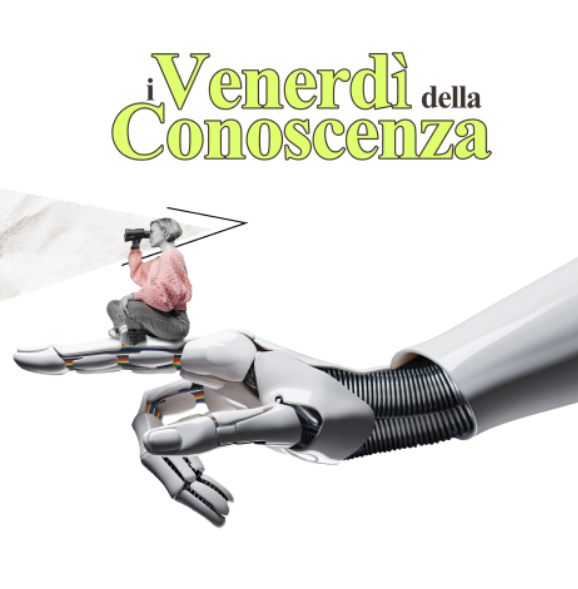
In the small seaside township of Diano Marina, Liguria Region, Italy, the local community has been organising frequent meetings to help people overcome growing fears of an increasingly uncertain future. This initiative, called ‘Fridays of Knowledge’, aims to equip the local community with scientific tools and knowledge to understand the risks and implications of new technologies in a dialogue together with students, academics, and journalists. Communication Manager for Fridays of Knowledge, Damiana Biga, tells Futures4Europe how this initiative sparks debates across different generations and backgrounds, fostering a sense of shared responsibility and curiosity.
Posted on: 27/03/2025
Last Edited: 10 months ago
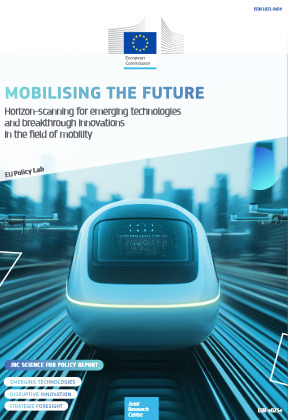
This report documents the process and findings of a horizon scanning exercise, part of a series under the FUTURINNOV (FUTURe-oriented detection and assessment of emerging technologies and breakthrough INNOVation) project, a collaboration between the European Innovation Council (EIC) and the Joint Research Centre (JRC), aiming to bolster the EIC's strategic intelligence through foresight and anticipatory methodologies.
The workshop, held on 16 October 2024, had as its primary goal the evaluation and prioritisation of trends and signals on emerging technologies and breakthrough innovation, across all tech7-nology readiness levels (TRLs), within the broad Mobility domain, broken-down into four key areas: transport systems, networks and multimodality; automotive and roads; rail/freight and logistics and aviation and airports.
Signals for the workshop were gathered from experts, literature review, and text/data mining of patents, publications, and EU-funded projects. These signals were then scrutinised for their significance to the field's future by a diverse group of sector experts which led to the identification of 22 different key topics across the key areas above. These signals can be seen as hotspots of innovation that deserve the EIC’s attention for possible future support.
Participants also highlighted various factors that could influence the development, adoption, and promotion of these emerging technologies, which are presented in the report as drivers, enablers and barriers, and analysed specifically in each of the 4 key areas.
Posted on: 17/03/2025
Last Edited: 2 years ago
This report explores the transformative potential of Key Enabling Technologies in addressing
emerging security challenges within the European Union. By conducting foresight analysis, the report
evaluates technologies such as artificial intelligence, advanced sensing, blockchain, and drones,
highlighting their ability to enhance law enforcement and critical infrastructure resilience, and fighting
crime and terrorism, while exposing vulnerabilities, such as misuse by criminal actors or regulatory
gaps.
The findings emphasise the need for proactive EU policies to both support technology transformation
and mitigate risks, including strategic investments in secure innovation, legal harmonisation, and
addressing societal resilience. This report aligns with the Commission’s 2024–2029 priorities,
supporting a prosperous, secure, and resilient Europe through actionable insights into emerging
security challenges. The recommendations aim to foster effective public-private collaborations,
ensure regulatory coherence across Member States, and promote technological solutions that balance
security needs with ethical and societal values, reinforcing the EU’s position as a leader in sustainable,
innovation-driven policy-making in internal security.
Posted on: 11/03/2025
Last Edited: 2 years ago
This movie is a way of connecting three domains that bring me joy currently:
- Strategic Foresight
- Spirituality
- AI
One of the goals is to draw attention to Foresight as one of the Top 5 cutting-edge skills identified in the UN 2.0 agenda, a plan that helps organizations prepare for the future.
I adapted the Scenario Planning method to explore three possible futures and bring them to life through cinematic storytelling.
The film also introduces two trained characters, Lina and Arun, within each scenario, making the movie less formal and more engaging.
I also wanted to show how AI can:
- Serve as a bridge between ideas and skills from different fields.
- Help us discover new aspects of human potential.
This movie isn’t flawless or complete - I’m not a filmmaker, and that’s okay. Its beauty lies in its imperfection, reminding us that sometimes, taking the step to create is more important than getting it perfect.
Later Edit: The film EXPLORING FUTURES: SCENARIO PLANNING IN COLLECTIVE CONSCIOUSNESS was included in the non-competition program of the International "Cartoons about the Future Festival," dedicated to films created with the help of AI. It was screened five times during the event, held on March 28-30, 2025, at the Atom Pavilion at VDNkH, Moscow. The festival, organized by the ATOM Foundation for the Promotion of Scientific, Educational, and Communication Initiatives in collaboration with the Big Cartoon Festival team, featured free screenings of short and full-length animated films over three days, offering audiences a diverse selection of forward-thinking works.
Posted on: 10/02/2025
Last Edited: 2 years ago
In a world pervaded by the rapid entrance and development of new technologies, the pace at which ethical concerns are addressed is not always in sync. TechEthos, a Horizon 2020 project, wants to facilitate “ethics-by-design” in order to push forward ethical and societal values into the design and development of new and emerging technologies at the very beginning of the process.
Posted on: 25/11/2024
Last Edited: 10 months ago
Futures Conference 2025 focuses on the futures of technologies, their development, importance, role and risks as a driver of social change. What are the effects of social and environmental changes on technological development and vice versa?
‘Futures of Technologies’ is the 25t h international Futures Conference of the Finland Futures Research Centre and Finland Futures Academy, University of Turku. It is organised together with the VTT Technical Research Centre of Finland Ltd during 10–12 June 2025 in Turku, Finland.
Keynote Speakers
Ali Aslan Gümüşay is professor of Innovation, Entrepreneurship & Sustainability at LMU Munich and head of research group Innovation, Entrepreneurship & Society at the Humboldt Institute for Internet & Society Berlin. His research focuses on values, meaning and hybridity in entrepreneurship; grand challenges, sustainability and new forms of organizing; digitalization, management and innovation as well as impact, scholarship and futures.
Cynthia Selin is a pioneering social scientist and strategic foresight expert known for developing innovative methodologies to navigate complex change and advance the theoretical boundaries of anticipation. An Associate Fellow at the Saïd Business School, University of Oxford, and core faculty in the Oxford Scenarios Programme, Dr. Selin also founded Scenaric, a consulting firm that equips organizations to tackle uncertainty and shape resilient futures.
Philip Brey is professor of Philosophy and Ethics of Technology at the University of Twente. He is member of the management team (and former chairman) of the 4TU Center for Ethics & Technology, a partnership of the universities of Twente, Delft, Eindhoven and Wageningen with more than 60 researchers.
Jerome C. Glenn co-founded and directs The Millennium Project, a leading global participatory think tank with over 70 Nodes around the world. He is assisting the UN Council of Presidents of the General Assembly on the UNGA’s role in governance of Artificial General Intelligence, author/editor forthcoming Global Governance of Artificial General Intelligence (De Gruyter), lead author State of the Future 20.0 and Future Work/Tech 2050: Scenarios and Actions and co-editor Futures Research Methodology 3.0 with Ted Gordon. Glenn has directed over 80 futures research projects and is a member of the IEEE SA P2863 Organizational Governance of AI working group.
Rohit Talwar (CEO, Fast Futures, UK) was recently in the top three in 'the Global Gurus Top 30 futuris' rankings for 2025. He is an inspirational futurist and the CEO of Fast Future, delivering award-winning keynote speeches, executive education, foresight, research, consultancy, and coaching. Rohit was delivered over 2000 speeches, workshops, and consulting assignments for clients in 80+ countries across six continents. He is the co-author and lead editor of nine books and over 50 reports on the emerging future and appears regularly on TV and in print media around the world.
Conference Newsletters
Posted on: 25/11/2024
Last Edited: 10 months ago
This publication is a Science for Policy report by the Joint Research Center (JRC), the European Commissions's science and knowledge service.
It aims to provide evidence-based scientific support to the European policymaking process. The contents of this publication do not necessarily reflect the position or opinion of the European Commission. Neither the European Commission nor any person acting on behalf of the Commission is responsible for the use that might be made of this publication. This report is based on research of the JRC. It does neither include any information or data collected in the context of the EU Observatory of Critical Technologies, nor does it prejudge the future work of the Observatory. For information on the methodology and quality underlying the data used in this publication for which the source is neither Eurostat nor other Commission services, users should contact the referenced source. The designations employed and the presentation of material on the maps do not imply the expression of any opinion whatsoever on the part of the European Union concerning the legal status of any country, territory, city or area or of its authorities, or concerning the delimitation of its frontiers or boundaries.
Posted on: 10/11/2024
Last Edited: 10 months ago
The chemical industry is a significant contributor to the EU’s economy. It is simultaneously instrumental to the green and digital transition and exposed to its effects. A steady supply of (green) chemicals is required to deploy renewable energy generators, insulate Europe’s building stock and create reusable and recyclable consumer goods. On the other hand, chemical synthesis is an energy-intensive process inherently dependent on carbon-based feedstock (currently derived almost exclusively from fossil fuels). In addition, chemistry is a global industry with international value chains, where the EU both collaborates and competes with other countries for materials, knowledge and skills. Transforming the European chemical industry into a sustainable motor for the green and digital transition will require investments in infrastructure, assets and skills. Focus should be placed on chemicals that are crucial to this Twin Transition, Europe’s resilience, or both. The long lead time required for the deployment of infrastructure and the development of skills means that such investments must be made now to achieve targets set for 2050. In connection with these issues, the report at hand aims to give insights into a number of value chains that are strategic to EU economy. It considers which chemicals and innovations are vital to transforming these value chains as well as rendering them more resilient and future-fit. To this end, a participatory workshop-based foresight approach was implemented to provide a unique set of insights from stakeholders and translate them into actions and policy recommendations.
Posted on: 09/11/2024
Last Edited: 10 months ago
The twelve scenarios in this deep dive are informed by transhumanism, portraying futures in which the human condition – our bodies, functions, and lives – and the features of societies are fundamentally transformed by technology. Even though scenarios are built along the lines of particular scientific and/or technological advancements, the discussion spreads over sociotechnical ensembles and the re-conceptualization of the relationship between technology and society by 2040.
The work leading to this report started with a horizon scanning exercise to identify a series of technological innovations and scientific breakthroughs that may be considered key factors towards re-engineering human nature. In parallel, the authors explored diverse narratives regarding the human condition and significance in the world, dreams and fears embodied in the so-called collective imaginary, echoing through myths and fantasies to literature, cinematography and the wider culture. At the intersection of these explorations, twelve topics were selected and further expanded into scenarios. They are not intended to cover the full spectrum of themes regarding human enhancement, but present a relevant ‘sample’ of potential future trajectories.
We propose these narratives as exploratory scenarios, describing futures where both positive and negative consequences are palpable. They are not normative, outlininga vision of the future deemed desirable. We invite readers to regard them as devices for imagining the future and debating the future. They aim to nurture a reflection on the dynamics of change, future opportunities and potential threats, and in doing so they contribute to future preparedness.
Three types of scenarios were developed:
Posted on: 28/10/2024
Last Edited: 10 months ago
Growing volatility, uncertainty, complexity and ambiguity, present leading challenges in policy-making nowadays. Anticipatory thinking and foresight are of utmost importance to help explore trends, risks, emerging issues, and their potential implications and opportunities in order to draw useful insights for strategic planning, policy-making and preparedness.
This report is a part of the “Anticipation and monitoring of emerging technologies and disruptive innovation” (ANTICIPINNOV) project, a collaboration between the European Commission Joint Research Centre with the European Innovation Council (EIC).
The findings include a set of 106 signals and trends on emerging technologies and disruptive innovations across several areas of application based on a review of key reports on technology and innovation trends and signals produced by public and private entities outside of the EU institutions. Its goal is to strengthen the EIC’s strategic intelligence capacity through the use and development of anticipatory approaches that will - among other goals – support innovation funding prioritisation. Other insights were extracted, namely those related with the scope of the EIC Programme Manager portfolios.
Posted on: 28/10/2024
Last Edited: 10 months ago
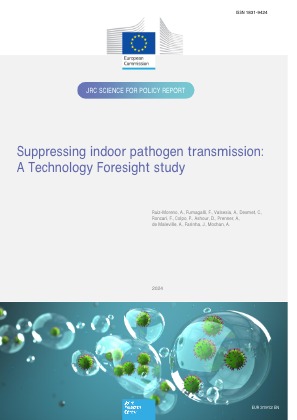
Airborne transmission is considered one of the most common ways of transmitting respiratory viruses. The reach of airborne pathogens and persistence of aerosolized particles suspended in the air are a significant concern for the spread of pandemic and seasonal respiratory diseases. This is particularly relevant in indoor spaces where most respiratory infections occur.
Controlling the transmission of airborne pathogens is therefore a cornerstone of public health efforts to manage and prevent the spread of infectious diseases, ensuring safety and health for individuals and communities. Technologies that allow such control are essential to address the challenge. This report is the output of a comprehensive study which evaluates the potential of the current technology landscape for suppressing indoor airborne pathogen transmission.
The analysis outlines two main technology groups: those for detecting airborne pathogens and those for decontaminating air and surfaces. It identifies several key technologies in each group, and assesses their maturity, impact, and potential priority for funding. It outlines the drivers, enablers, and barriers for the development and adoption of these technologies, providing insights into factors that may influence their future implementation. It also explores forward-looking perspectives with scenarios for future health crises and offers recommendations for policy and research to address the challenges and leverage the opportunities in the field of indoor air quality.
The study was conducted during 2024 by European Commission Joint Research Centre (JRC) and Health Emergency Preparedness and Response Authority (HERA).
Posted on: 22/10/2024