Loading...

    Mentions of

    sorted by publishing date

    Last Edited: 2 days ago

    Erik Knol1

    Mapping, Connecting, Activating

    Posted on: 06/02/2026

    Post Image

    Last Edited: 5 months ago

    The Future of Sustainability in a Post-Global World

    A New Sustainability Agenda Rooted in Access and Stability

    Sustainability in the Post-Global Era

    In the aftermath of decades of global integration, the model of hyperconnected markets is showing signs of retreat. Geopolitical instability, trade disputes, and resource scarcity are catalysing a structural shift that could reshape not only economies, but the very principles underpinning sustainability. Drawing from trend intelligence by Nextatlas, two pivotal developments emerge, developments that invite foresight professionals to rethink sustainability not as a static ideal, but as a dynamic field responsive to systemic transformation.


    The post-global era is not simply a reconfiguration of trade routes or supply chains; it marks a fundamental reframing of what society deems “sustainable.” In a world where inflation, scarcity, and volatility dominate headlines, environmental goals are becoming increasingly intertwined with economic and geopolitical concerns. 

    Nowhere is this reframing more evident than in the European Union, which has positioned itself as a global leader in linking sustainability with regulatory and economic frameworks. Through initiatives such as the European Green Deal, the Carbon Border Adjustment Mechanism, and stricter ESG reporting standards, the EU is setting benchmarks that extend far beyond its borders and reshape how sustainability is understood in practice.


    Nextatlas’ foresight model suggests a pivot: environmental degradation is no longer perceived as the singular sustainability threat. Instead, resource access, economic resilience, and supply chain transparency are becoming the new fault lines. This conclusion is grounded in more than a decade of Nextatlas’ machine learning work in cultural trend forecasting, built on a proprietary pipeline that ingests millions of data points each month from over 300,000 carefully selected sources, including social media users, niche influencers, scientific literature, design portfolios, and startup ecosystems. 


    Through natural language processing, semantic clustering, and visual analysis, these unstructured signals are structured into a dynamic semantic knowledge graph of thousands of interconnected micro-trends. By identifying early adopters with a demonstrated history of trend foresight, the model captures weak signals and emergent cultural dynamics before they reach the mainstream. With a 93% accuracy rate in trend prediction, this methodology provides a robust foundation for understanding the evolution from ecological awareness as individual virtue to sustainability as collective infrastructure.

    The Wasteless Economy
    The intentional rejection of overconsumption

    What was once framed as consumer minimalism is evolving into a more resilient, system-conscious behaviour: the Wasteless Economy. As global citizens face the tangible consequences of rising costs and diminished availability, consumption habits are adjusting accordingly. But unlike past recessions where thrift was reactive, today’s restraint is increasingly proactive and value-driven. In this new context, value is redefined by longevity, utility, and purpose. Careful selection, durability, and circular practices now consciously outweigh constant acquisition.


    This transformation has implications beyond market dynamics. It reflects a recalibration of what constitutes value and well-being in an era of systemic constraint. The Wasteless Economy aligns closely with long-term sustainability goals, emphasising durability, circularity, and resource efficiency, not just as ethical choices, but as strategies for social and economic stability. Amid persistent inflation and renewed tariffs on consumer goods, households are tightening their belts and are naturally drawn to buying less, buying smarter, and investing in lasting value. 

    Feeling the squeeze of both rising operational costs and evolving regulations, businesses are pivoting toward circular models, designing for durability, repairability, and reuse, not for sustainability branding, but as a smart financial strategy. Circular design reduces exposure to volatile supply chains and tariff-prone imports, while reinforcing consumer loyalty through accountability.


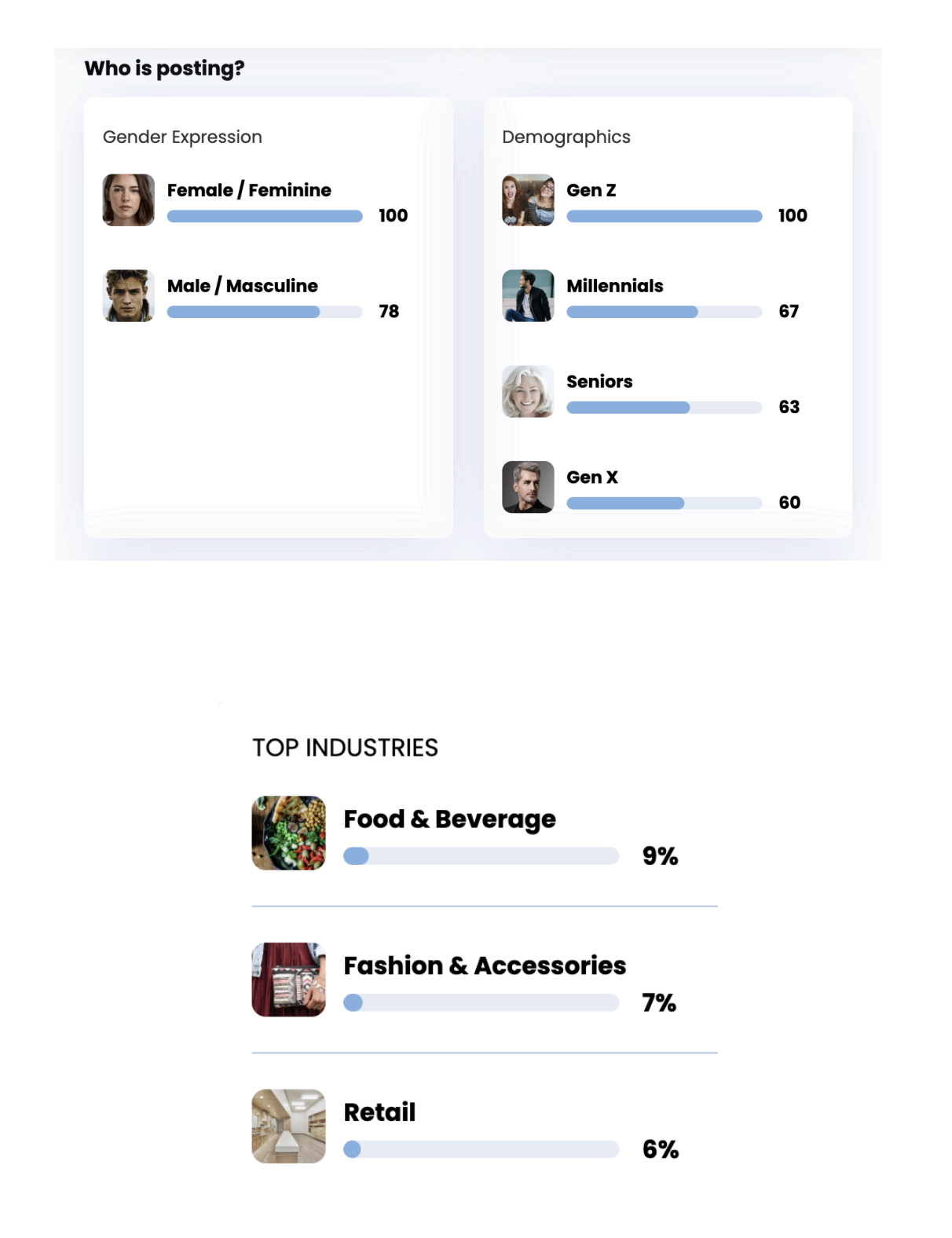
    This shift is most visible in food & beverage, fashion, and retail, industries where overproduction and disposability once defined the norm. Food companies must now design out surplus, embracing precision, seasonality, and resourcefulness as new standards of value. In fashion, longevity and modularity are replacing trend cycles, with resale and repair moving from fringe to fundamental. Retailers, in turn, are being called to transform from providers of endless choice into curators of care, offering fewer but better options that align with the values of restraint and longevity.

    For foresight practitioners, the shift underscores a key signal: in strained environments, sustainability flourishes not through moral appeal but through necessity. Efforts to design policy or governance around future-proofed systems must therefore centre not only on carbon metrics, but also on material longevity, repair ecosystems, and new models of sufficiency.

    Posted on: 23/09/2025

    Post Image

    Last Edited: 9 months ago

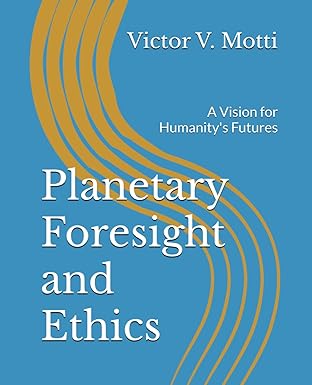
    Planetary Foresight and Ethics

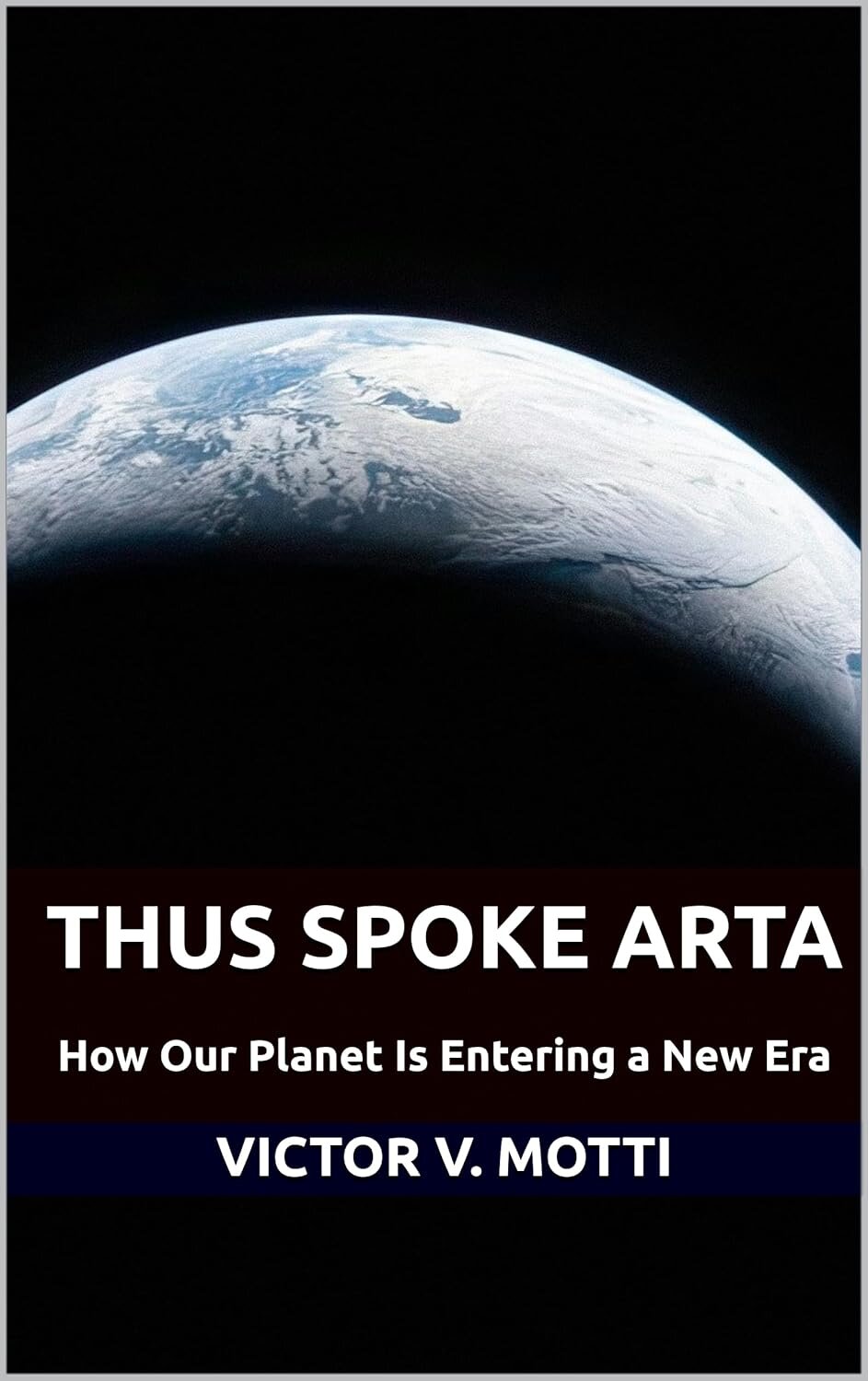
    New Book

    Summary

    Core Themes
    The book reimagines humanity’s future through planetary foresight, blending historical wisdom with planetary stewardship. It critiques linear Western progress narratives and advocates for a hybrid, cyclical vision of history, emphasizing pluralistic identities and reverence for life.

    Structural Framework
    Organized into thematic sections, the work begins with “The Mysterious Lord of Time,” challenging linear temporality and introducing non-linear, culturally diverse historical perspectives. “Evolving Belief Systems” contrasts Indo-Iranic, Mesopotamian, and Hellenic thought with Abrahamic traditions, highlighting ancient influences on modern pluralism.

    Imagination and Futures
    The “Histories of Imagination” section explores myth and storytelling as drivers of civilization, while “Scenarios of Future Worlds” applies foresight methodologies to geopolitical and technological evolution, emphasizing ecological consciousness. The final chapters expand to cosmic intelligence and ethics, framing humanity’s role within universal interconnectedness.

    Ethical Vision
    Central to the thesis is a call for planetary identity and stewardship, merging forgotten wisdom traditions with modern foresight to navigate ecological and technological uncertainties. The book positions itself as both a philosophical guide and practical framework for ethical transformation in an era of global crises.

    Key Argument
    Motti asserts that humanity is transitioning from a “Second Nomad Age” (characterized by fragmentation) toward a “Second Settlement Age” marked by planetary consciousness, requiring creative complexity and ethical vigilance.

    Posted on: 23/04/2025

    Last Edited: a year ago

    Identifying STI developments contributing to the capability of planetary ecosystems to flourishApril 2022

    Results of a Delphi survey

    This report showcases the results of the two-round Dynamic Argumentative Delphi survey carried out within the project “S&T&I for 2050. Science, Technology and Innovation for Ecosystem Performance – Accelerating Sustainability Transitions”. The overarching ambition of this project is the “identification and mapping of future scientific and technological developments that can radically improve ecosystem performance”. The main outcome is to provide “reflections towards the 2nd Strategic Plan of Horizon Europe (HE), in its broad direction to support the Sustainable Development Goals.”

    To this end, quantitative and qualitative methods were employed, among which this report refers to:  

    • Patent and bibliometric analysis for selecting the most dynamic Science, Technology and Innovation (STI) domains; 
    • Horizon scanning through web mining and human evaluation for identifying key STI directions and specific examples of technological/scientific breakthroughs within these directions; 
    • Dynamic Argumentative Delphi engaging relevant experts from around the world in an argument-based exploration regarding the contribution of STI to the capability of ecosystems to flourish from now to 2050. 

    Posted on: 04/03/2025

    Last Edited: a year ago

    Final Report: S&T&I 2050April 2023

    Science, technology and innovation for ecosystem performance: accelerating sustainability transitions

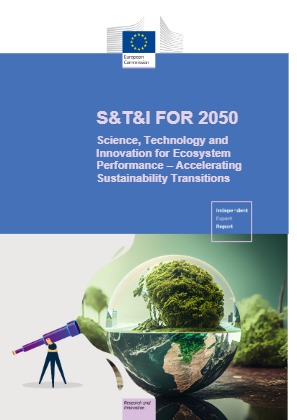
    This report presents the results of a the project S&T&I for 2050: science, technology and innovation for ecosystem performance – accelerating sustainability transitions. The project’s overarching goal was to identify and map future scientific and technological developments, which can radically improve ecosystem performance.

    The project was conducted along several phases:

    • Based on literature review, the project team developed three perspectives on future relations between humans and nature and humans’ role in the flourishing of planetary ecosystems. The three perspectives are: i) protecting and restoring ecosystems, ii) co-shaping socio-ecological systems, and iii) caring within hybrid collectives
    • A two-round Dynamic Argumentative Delphi (DAD) online survey explored the most dynamic scientific and technological developments. The survey engaged over 600 experts globally in enriching, assessing and prioritizing STI directions in terms of their potential to contribute to the capability of planetary ecosystems to flourish from now to 2050.
    • Drawing in on the three perspectives and the results of the DAD survey, six case studies on core sustainability issues explored the three perspectives. Reflections on implications for R&I policies in the context of the European Green Deal conclude each of the six case studies: i) Law for Nature; ii) Land Use Futures; iii) Soil to Soul; iv) Accelerating transitions to regenerative economy; v) Ecosystems and Micro-and Nano Cosmos; vi) Data as Representation

    Posted on: 12/12/2024

    Post Image

    Last Edited: a year ago

    S&T&I for 2050 Perspectives on Ecosystem Performance

    “S&T&I for 2050” aims at broadening the focus of STI to encompass multiple conceptualisations of human-nature relations. To do this, a framework was constructed around the concept of ecosystem performance as driver of STI, instead of human performance. This places the attention on the flourishing of ecosystems that is deeply connected to human needs and wellbeing.

    Posted on: 25/11/2024

    Post Image

    Last Edited: a year ago

    S&T&I for 2050

    Deep-Sea Mining and Ecosystem Performance

    There are an estimated billions of tonnes of strategic minerals such as nickel, cobalt and copper, lying on the ocean’s floor. Technological advance, financial viability, and regulatory frameworks are slowly aligning to permit deep-sea mining (DSM). While many rejoice in these developments, a variety of actors are calling for a moratorium on the nascent industry. Most notably, the European Commission released a Joint Communication stating that not enough knowledge about the risks of DSM is available and that more research is to be conducted to make DSM sustainable. With deep-sea mining closer than ever to becoming a reality on the one hand, and calls for a moratorium on the other hand, it is important to discuss future directions of Science, Technology and Innovation (STI) for a flourishing deep-sea ecosystem. 

    Posted on: 25/11/2024

    Last Edited: a year ago

    Global Futures of ClimateJune 2023

    Online Course

    Welcome to "Global Futures of Climate”, the first Course in our series on Global Systems designed for individuals and organisations committed to facing global challenges and finding solutions.

    This self-paced, online Climate Education Course is scientifically-based, and incredibly well researched to give you a deep understanding of our emerging world, providing a solid basis for you to build your personal, professional, and family futures. The innovative solutions offered align with the UN Sustainable Development Goals (SDGs). Course Content includes 12 Lessons across 3 Modules: Climate Change, Energy Systems, and Ecosystem. There are two lessons in each, examining the challenges, and addressing the alternatives. 

    The Course Content incorporates over 100 learning resources, including:

    • 12 Lessons over 3 Modules: Climate Change, Energy Systems, Ecosystem.
    • 12 Lessons over 3 Modules: Climate Change, Energy Systems, Ecosystem.
    • Four lessons per Module, two on the challenges, two addressing the solutions.
    • 12 Instructor videos (one per Lesson) to guide you through the Course Content and Resources .
    • Over 40 expert videos (climate and ocean scientists, EC, UN, OECD, European Parliament, Carbon Brief, WWF, World Bank, Universities)
    • Over 50 expert articles/reports (NASA, UN, IPCC, UNFCC, UNSDGs, State of the Planet, Blue Carbon Initiative, Greenpeace,
    • Universities, UNDP, Global Commission for Adaptation, to name a few).
    • 36 reflection questions to journal your progress.
    • 60 fun quiz Qs to test knowledge gained.
    • Certificate of Completion.

    Posted on: 10/11/2024

    Last Edited: a year ago

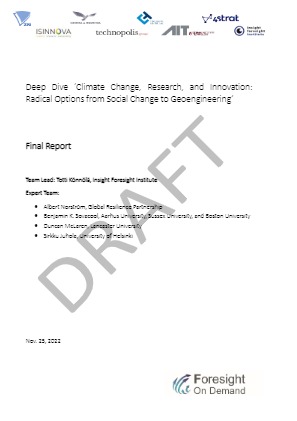
    Deep Dive: Climate & Geo-EngineeringOctober 2022

    Climate change impacts are one of the main threats to human society and natural ecosystems. Even though natural dynamics also have a substantial effect on climate, there is no doubt that current alterations of climate with the correlated impacts are manmade. Alongside continuing efforts to reduce emissions and adapt to climate change, there may be possibilities to geoengineer climate systems to reduce or mask the impacts of climate change. There are also strong arguments for large-scale changes in social practices for adapting to and mitigating climate change. The big challenge comes with the necessary scale of interventions as those changes need to be large-scale and global, putting new challenges to all levels of governance from local to global.

    Many present drivers seem to indicate a gloomy future for the climate. The current individualistic mindsets drive overconsumption and overproduction. The offsetting of carbon emissions is sometimes used to compensate for dirty activities. Intense competition for natural resources is not safeguarding their sustainability. Bio-holistic worldviews confront anthropocentric views, but climate delay has emerged as the new denial and the lack of courage to address climate supremacists, i.e. the global wealthy, shows little change of direction. According to a 2020 report from Oxfam and the Stockholm Environment Institute, the wealthiest top 1% were responsible for 15% of global emissions, nearly twice as much as the world’s poorest 50%, who were responsible for just 7%. Overly optimistic beliefs in tech or social transformation to solve it prevail, and there is a wide reluctance to consider broad system change.

    There are also drivers towards desired futures. Improved understanding of climate and global change and the capacity and knowledge to purposefully shape nature and society provide better means to address climate change. Climate anxiety and perception of government inaction have triggered, for instance, the ‘Fridays for future’ movement, which contributes to the emergence of global conscience on the climate and biodiversity crisis and the need for justice. New understandings of human purpose and fairness also encourage the development of a wider range of responses like de-desertification, seaweed permaculture, ocean fertilization, carbon capture and storage, and solar radiation management. We may learn to protect the global commons, including indigenous cultures and atmospheric commons.

    Economic growth in societies based on individual material gain, here-and-now-thinking, short political cycles, and lack of broad political agreement on alternative paths seem to keep us on the path to the climate crisis. Furthermore, exacerbated social inequalities may lead many to have no willingness or ability to participate in transitions. While we are overconfident with systems’ design, we underestimate natural forces and ecosystems. Emerging options for large-scale ‘geoengineering’ interventions in the climate system promise new opportunities and new risks, including novel geopolitical tensions.There are diverse perceptions on geoengineering and possible social change towards potential acceptance or societal rejection. The planet lacks a fair and appropriate governance structure providing a framework on who might be entitled to carry out geoengineering projects in the name of the planet and what their responsibility is. There is no sufficient dialogue on what it means to be a responsible company, researcher, research organisation, or policy-maker in this context.

    This deep dive is part of the Foresight towards the 2nd Strategic Plan of Horizon Europe project.

    Posted on: 28/10/2024