Last Edited: 9 days ago
Rita Himmel1
Posted on: 21/10/2026
sorted by publishing date
Last Edited: 3 months ago
Posted on: 23/07/2026
Last Edited: 4 months ago
Posted on: 16/06/2026
Last Edited: 7 months ago
Posted on: 22/03/2026
Last Edited: 8 months ago
In this episode of Futures4Europe Conversations, Bianca Dragomir speaks with George Cârstocea, who teaches in the Cinema and Media Studies Program at the University of Southern California. His courses range from an Introduction to Cinema—exploring film in dialogue with other arts and technologies—to classes on comedy and animation, Romanian cinema, and science fiction.
This video interview explores film as a powerful mediator of futures: how speculative stories play with current assumptions about what is possible, desirable, or inevitable; how imaginaries of the future are constructed and circulated; why some narratives lean toward heroic salvation while others turn to comedy or irony; and how dark or hopeful visions affect our emotional and collective orientation toward what lies ahead.
The interview is structured into eight chapters:
• Chapter 1. Teaching Cinema: How It All Began
• Chapter 2. Students in Uncertain Times
• Chapter 3. What Makes a Movie Worthwhile?
• Chapter 4. Do SF Movies See Into the Future?
• Chapter 5. What Happens When Stories Stir Us?
• Chapter 6. Do Dark Stories Limit Our Imagination?
• Chapter 7. How Do Films Imagine Hopeful Futures?
• Chapter 8. “Flexibility Is Life — Hardening Is Death”
The conversation is also sprinkled with film recommendations—some may be familiar, others perhaps unexpected. Give it a listen. And if you’re planning a movie night, you might want to take George’s recommendations into account.
Posted on: 17/02/2026
Last Edited: 10 months ago
Posted on: 11/01/2026
Last Edited: a year ago
The World Futures Studies Federation offers its standards to institutions interested in achieving accreditation in futures studies. Institutions offering programmes which meet the Federation’s standards will be credentialed as an Accredited Foresight Programme. Accreditation will extend for a period of five (5) years. Review of accreditation will be available every five (5) years to ensure programmes continue to maintain high quality standards of the Federation.
We provide accreditation only to education providers that have been recognized by the relevant department or ministry of education in their country as a tertiary education provider.
How To Apply: https://wfsf.org/accreditation-services/
Posted on: 11/09/2025
Last Edited: a year ago
Posted on: 28/05/2025
Last Edited: a year ago
Posted on: 02/05/2025
Last Edited: 2 years ago
Summary
Core Themes
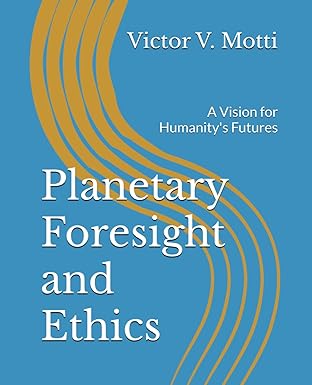
The book reimagines humanity’s future through planetary foresight, blending historical wisdom with planetary stewardship. It critiques linear Western progress narratives and advocates for a hybrid, cyclical vision of history, emphasizing pluralistic identities and reverence for life.
Structural Framework
Organized into thematic sections, the work begins with “The Mysterious Lord of Time,” challenging linear temporality and introducing non-linear, culturally diverse historical perspectives. “Evolving Belief Systems” contrasts Indo-Iranic, Mesopotamian, and Hellenic thought with Abrahamic traditions, highlighting ancient influences on modern pluralism.
Imagination and Futures
The “Histories of Imagination” section explores myth and storytelling as drivers of civilization, while “Scenarios of Future Worlds” applies foresight methodologies to geopolitical and technological evolution, emphasizing ecological consciousness. The final chapters expand to cosmic intelligence and ethics, framing humanity’s role within universal interconnectedness.
Ethical Vision
Central to the thesis is a call for planetary identity and stewardship, merging forgotten wisdom traditions with modern foresight to navigate ecological and technological uncertainties. The book positions itself as both a philosophical guide and practical framework for ethical transformation in an era of global crises.
Key Argument
Motti asserts that humanity is transitioning from a “Second Nomad Age” (characterized by fragmentation) toward a “Second Settlement Age” marked by planetary consciousness, requiring creative complexity and ethical vigilance.
Posted on: 23/04/2025
Last Edited: a year ago
Event takeaways:
The workshop offered a structured journey—reflecting on the past of liberal democracies, examining current research on key pillars like institutions, participation, and media, and exploring possible futures through the lens of four science fiction novels that imagine future democratic developments
This workshop is part of a series of “Eye of Europe” pilot activities taking place during 2025, aimed at exploring various futures and their implications for R&I policy.
The workshop was open to a wide audience - experts and non-experts - interested in questions of future democracies.
Posted on: 21/01/2025