Loading...

    sorted by publishing date

    Last Edited: 19 days ago

    Future Forward Webinar12 February - 12 February 2026

    Preparing for the future starts with recognizing small, often-overlooked signals that have the potential to spark major change. This half-day virtual program will delve into what the future holds through the lens of hand-picked experts adept at separating signals from the noise on the internet.

    The Agenda: February 12, 2026 | 04:00 PM - 08:30 PM CET

    The Great Beauty Blur
    Presenter: Olivia Houghton, Insights and Engagement Director, The Future Laboratory

    The Dichotomies: Brand Trends 2026
    Presenter: Nick Vaus, Co-Founder + Managing Partner, Free The Birds

    Inside China Beauty: The Trends Driving the Market
    Presenter: Elisa Harca, Co-Founder, Red Ant Asia

    The Face of the Future: A Journey Into Beauty in 2036
    Presenter: Alex Bee, Project Director, Foresight and Strategy, Space Doctors

    LIVE - Round Table Discussion + Q&A
    From Vanity to Vibe: How Experience is Rewriting Beauty
    Presenter: Neda Daneshzadeh Whitney, President + Managing Director, MATTE Projects

    Demographics. Culture. Emotion.
    Presenter: lynn casey, Founder + CEO, Shine Scout

    Future Forward: What Matters and What’s Next
    Presenter: Kelly Kovack, Founder + CEO, BeautyMatter

    Posted on: 09/02/2026

    Post Image

    Last Edited: 24 days ago

    The Futures of Researchers Careers1

    The future of the European science system fundamentally depends on its researchers, and it is therefore essential to continue fostering attractive and sustainable research careers. Yet, a wide range of challenges is currently shaping both researchers’ professional trajectories and the broader EU research and innovation ecosystem.

    Against this backdrop, DG Research & Innovation commissioned the Foresight On Demand team to conduct a study examining the long term trends, disruptions, and challenges likely to influence researchers’ careers in Europe. 

    The overall aim is to identify the long term challenges facing research careers in the European Union. More specifically, the study pursues the following objectives:

    • Identify long term trends and disruptions affecting researchers’ careers in Europe.
    • Develop plausible scenarios (to 2040) for the evolution of the EU’s researcher workforce.
    • Propose policy pathways and identify challenges. The study will outline potential EU level policy approaches and governance reforms that could generate added value through coordinated action.

    By informing policymaking, the study’s findings will aim to support greater coordination among Member States and strengthen the effectiveness of governance structures, funding mechanisms, and frameworks for research career development across Europe.

    Posted on: 04/02/2026

    Last Edited: 5 months ago

    Exploring Demographic Change for a Future-Oriented EU R&I SystemNovember 2025

    Presentation of a foresight study

    Europe’s Research and Innovation (R&I) system is entering a period of profound change. Demographic decline, rapid technological shifts, and constrained funding are beginning to alter student intake, the graduate pipeline, and research career prospects. By 2050, Europe’s population structure will look markedly different:

    • The share of people aged 85+ will more than double, reaching around 10% of the population.
    • The workforce is expected to shrink by 12%—equivalent to roughly 25 million people.
    • The EU will have over 3 million fewer young people under 20, reducing the talent pool entering education and research.

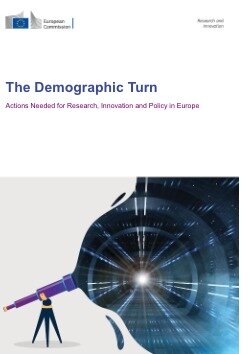
    These shifts raise fundamental questions for the future of Europe’s R&I landscape. To address them, DG Research & Innovation commmissioned a study “The Demographic Turn: Actions Needed for Research, Innovation and Policy in Europe”, which explores possible futures for Europe's R&I system and highlights how demographic pressure could become a driver of renewal and transformation. 

    The study delivers:

    • Background data showing a shrinking youth population, a declining workforce, and growing fiscal pressures on R&I funding.
    • A six-step foresight approach combining horizon scanning, scenario-building, and windtunneling to anticipate future challenges.
    • Four Scenarios illustrating different pathways for Europe’s R&I system.
    • Strategic actions to protect fundamental research, enable lifelong learning, strengthen regional innovation, and build societal trust in technology

    Posted on: 25/09/2025

    Post Image

    Last Edited: 5 months ago

    The Future of Sustainability in a Post-Global World

    A New Sustainability Agenda Rooted in Access and Stability

    Sustainability in the Post-Global Era

    In the aftermath of decades of global integration, the model of hyperconnected markets is showing signs of retreat. Geopolitical instability, trade disputes, and resource scarcity are catalysing a structural shift that could reshape not only economies, but the very principles underpinning sustainability. Drawing from trend intelligence by Nextatlas, two pivotal developments emerge, developments that invite foresight professionals to rethink sustainability not as a static ideal, but as a dynamic field responsive to systemic transformation.


    The post-global era is not simply a reconfiguration of trade routes or supply chains; it marks a fundamental reframing of what society deems “sustainable.” In a world where inflation, scarcity, and volatility dominate headlines, environmental goals are becoming increasingly intertwined with economic and geopolitical concerns. 

    Nowhere is this reframing more evident than in the European Union, which has positioned itself as a global leader in linking sustainability with regulatory and economic frameworks. Through initiatives such as the European Green Deal, the Carbon Border Adjustment Mechanism, and stricter ESG reporting standards, the EU is setting benchmarks that extend far beyond its borders and reshape how sustainability is understood in practice.


    Nextatlas’ foresight model suggests a pivot: environmental degradation is no longer perceived as the singular sustainability threat. Instead, resource access, economic resilience, and supply chain transparency are becoming the new fault lines. This conclusion is grounded in more than a decade of Nextatlas’ machine learning work in cultural trend forecasting, built on a proprietary pipeline that ingests millions of data points each month from over 300,000 carefully selected sources, including social media users, niche influencers, scientific literature, design portfolios, and startup ecosystems. 


    Through natural language processing, semantic clustering, and visual analysis, these unstructured signals are structured into a dynamic semantic knowledge graph of thousands of interconnected micro-trends. By identifying early adopters with a demonstrated history of trend foresight, the model captures weak signals and emergent cultural dynamics before they reach the mainstream. With a 93% accuracy rate in trend prediction, this methodology provides a robust foundation for understanding the evolution from ecological awareness as individual virtue to sustainability as collective infrastructure.

    The Wasteless Economy
    The intentional rejection of overconsumption

    What was once framed as consumer minimalism is evolving into a more resilient, system-conscious behaviour: the Wasteless Economy. As global citizens face the tangible consequences of rising costs and diminished availability, consumption habits are adjusting accordingly. But unlike past recessions where thrift was reactive, today’s restraint is increasingly proactive and value-driven. In this new context, value is redefined by longevity, utility, and purpose. Careful selection, durability, and circular practices now consciously outweigh constant acquisition.


    This transformation has implications beyond market dynamics. It reflects a recalibration of what constitutes value and well-being in an era of systemic constraint. The Wasteless Economy aligns closely with long-term sustainability goals, emphasising durability, circularity, and resource efficiency, not just as ethical choices, but as strategies for social and economic stability. Amid persistent inflation and renewed tariffs on consumer goods, households are tightening their belts and are naturally drawn to buying less, buying smarter, and investing in lasting value. 

    Feeling the squeeze of both rising operational costs and evolving regulations, businesses are pivoting toward circular models, designing for durability, repairability, and reuse, not for sustainability branding, but as a smart financial strategy. Circular design reduces exposure to volatile supply chains and tariff-prone imports, while reinforcing consumer loyalty through accountability.


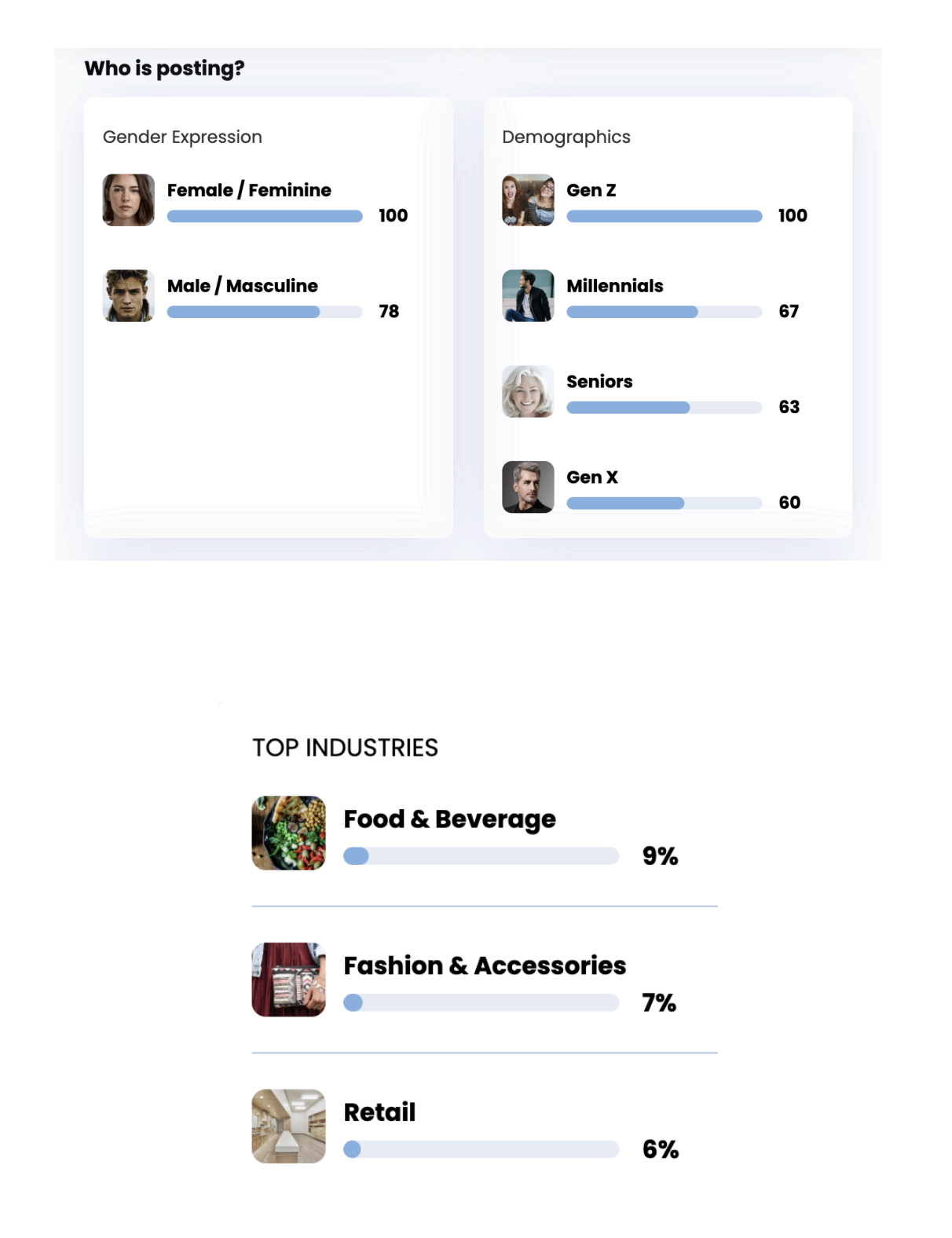
    This shift is most visible in food & beverage, fashion, and retail, industries where overproduction and disposability once defined the norm. Food companies must now design out surplus, embracing precision, seasonality, and resourcefulness as new standards of value. In fashion, longevity and modularity are replacing trend cycles, with resale and repair moving from fringe to fundamental. Retailers, in turn, are being called to transform from providers of endless choice into curators of care, offering fewer but better options that align with the values of restraint and longevity.

    For foresight practitioners, the shift underscores a key signal: in strained environments, sustainability flourishes not through moral appeal but through necessity. Efforts to design policy or governance around future-proofed systems must therefore centre not only on carbon metrics, but also on material longevity, repair ecosystems, and new models of sufficiency.
    Posted on: 23/09/2025

    Last Edited: 10 months ago

    German Call for Papers: Foresight in Theorie und Praxis13 April - 03 May 2025

    As part of the "Foresight in Theory and Practice" track at the INFORMATIK FESTIVAL 2025 in Potsdam

    Die gegenwärtige Zeit ist geprägt von rasanten und oft gleichzeitig stattfindenden Veränderungen und
    Entwicklungen: Technologien wie Künstliche Intelligenz (KI), neue regulative Anforderungen wie die CSRD
    oder der EU AI Act sowie gesellschaftliche und politische Herausforderungen sorgen für dynamische und
    disruptive Zukunftsperspektiven mit spezifischen Anforderungen an die Resilienz und das
    Innovationsmanagement. Die strategische Vorausschau (Foresight) gewinnt aus diesem Grund sowohl in
    Unternehmen als auch in der Forschung zunehmend an Bedeutung.

    Der Workshop „Foresight in Theorie und Praxis“ dient daher als Forum, um Akteure aus Unternehmen und
    wissenschaftlichen Einrichtungen zusammenzubringen und Erfahrungswerte sowie Kooperationspotenziale
    der strategischen Vorausschau zu diskutieren. Insbesondere soll dabei auch die Bedeutung der Informatik
    für den Aufbau und die Weiterentwicklung eines Foresight-Prozesses berücksichtigt werden. 

    Folgende Fragestellungen bieten eine Orientierung über die thematischen Schwerpunkte des Workshops:

    1. Welche Forschungsansätze im Bereich Foresight existieren bereits? Wo gibt es weiteren
      Forschungsbedarf?
    2. Wie werden Forschungsansätze derzeit bereits in der Praxis angewandt? Wodurch zeichnen sich
      diese aus und wo liegen die Grenzen?
    3. Wie gestaltet sich strategische Vorausschau in Unternehmen? Wie unterscheidet sich diese in
      Großunternehmen und KMU?
    4. Wie kann strategische Vorausschau in wissenschaftlichen Einrichtungen umgesetzt werden? Wo
      liegen Unterschiede zur unternehmerischen Herangehensweise, wo gibt es Gemeinsamkeiten?
    5. Wie können digitale Technologien (z. B. IT-Anwendungen, KI) die strategische Vorausschau
      unterstützen und verbessern? Welche Ressourcen und Kompetenzen sind hierfür erforderlich?

    Die Beiträge zum Workshop können verschiedene Aspekte von Foresight bzw. strategischer Vorausschau
    behandeln. Mögliche Themen sind (nicht abschließend):

    • Methoden der strategischen Vorausschau
    • Anwendung von Foresight in Unternehmen
    • Anwendung von Foresight in wissenschaftlichen Einrichtung
    • Digitale Technologien zur Unterstützung von Foresight (z. B. KI, Big Data, Simulationen)
    • KI und Foresight
    • Simulationstechniken
    • Datenanalysen/Datenmangement
    • Szenariotechniken
    • Trendanalysen
    • Horizon Scanning
    • Innovationsmanagement
    • Organisatorische und kulturelle Herausforderungen der strategischen Vorausschau
    • Regulatorische und ethische Aspekte von Foresight
    • Unternehmensstrategie und Foresight
    • Risikomanagement mit Foresight
    • Best Practices und Praxisberichte

    Zielgruppe des Workshops sind Forschende und Anwendende aus dem Bereich strategische Vorausschau
    bzw. Foresight sowie:

    • Fach- und Führungskräfte aus Unternehmen, die strategische Vorausschau in ihre Planung
      integrieren
    • Beratende im Bereich Zukunftsforschung und Trendanalyse
    • Verantwortliche für Innovations- und Technologiemanagement
    • Entscheidungsträger*innen in Politik und Verwaltung, die zukunftsorientierte Strategien entwickeln
    • IT-Experten*innen und Entwickler*innen von digitalen Foresight-Tools
    • Wissenschaftler*innen und Studierende mit Interesse an Foresight-Methoden

    HINWEISE ZUR EINREICHUNG

    Einreichungsfrist für Workshop-Beiträge: 04.05.2025
    Benachrichtigung der Autoren: 02.06.2025
    Einreichungsfrist für LNI-Beiträge: 11.06.2025
    Workshop: 19.09.2025

    Die Einreichung der Beiträge erfolgt als PDF über EasyChair.

    Für die Beiträge sind die LNI-Vorlagen zu verwenden.

    Beiträge können in deutscher oder englischer Sprache verfasst werden und sollten folgenden Umfang nicht überschreiten:

    Full Paper: 10-12 Seiten

    Short Paper: 6 Seiten

    Work-In-Progress-Paper: 3-5 Seiten

    Praxisbeiträge aus der Industrie: 3-5 Seiten

    Posted on: 14/04/2025

    Post Image

    Last Edited: a year ago

    What will Research and Teaching look like in 2050? Take the survey !

    This seems far away but you will be shaping the path to the future!

    Have you ever wondered how you will (still) be conducting research or teaching in 2050? 

    The Foresight on Demand consortium (FOD2) invites you to participate in a survey in context to “Demographic change: implications and opportunities for Europe’s R&I system by 2050”.


    Your input will help identify weak signals, early trends, and unexpected ideas that could shape research careers, higher education, and innovation systems in Europe by 2050.


    Whether you are noticing shifts in work culture, research or teaching models, funding landscapes, please take 10-15 minutes and share your thoughts ! The survey is open until April 18.

    Posted on: 25/03/2025

    Post Image

    Last Edited: a year ago

    Addressing Underlying Assumptions

    Tips and Tricks on Horizon Scanning

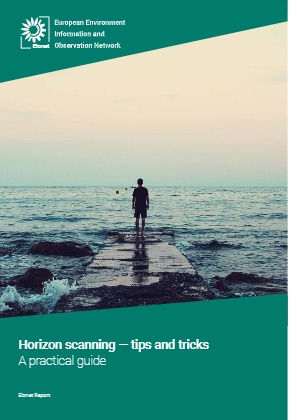
    The 'Horizon Scanning – Tips and Tricks' publication provides an insightful step-by-step support on how to run an effective horizon scan - and how to address underlying biases while doing so.

    Posted on: 25/11/2024