Loading...

    sorted by publishing date

    Post Image

    Last Edited: a year ago

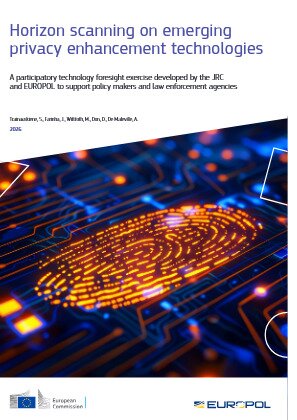
    Emerging risks and opportunities for EU internal security stemming from new technologies

    A technology foresight exercise to support EU policy development and Law Enforcement Agencies in the fields of Resilience of Critical Entities and Fighting Crime and Terr...

    This report explores the transformative potential of Key Enabling Technologies in addressing
    emerging security challenges within the European Union. By conducting foresight analysis, the report
    evaluates technologies such as artificial intelligence, advanced sensing, blockchain, and drones,
    highlighting their ability to enhance law enforcement and critical infrastructure resilience, and fighting
    crime and terrorism, while exposing vulnerabilities, such as misuse by criminal actors or regulatory
    gaps.
    The findings emphasise the need for proactive EU policies to both support technology transformation
    and mitigate risks, including strategic investments in secure innovation, legal harmonisation, and
    addressing societal resilience. This report aligns with the Commission’s 2024–2029 priorities,
    supporting a prosperous, secure, and resilient Europe through actionable insights into emerging
    security challenges. The recommendations aim to foster effective public-private collaborations,
    ensure regulatory coherence across Member States, and promote technological solutions that balance
    security needs with ethical and societal values, reinforcing the EU’s position as a leader in sustainable,
    innovation-driven policy-making in internal security. 

    Posted on: 11/03/2025

    Last Edited: a year ago

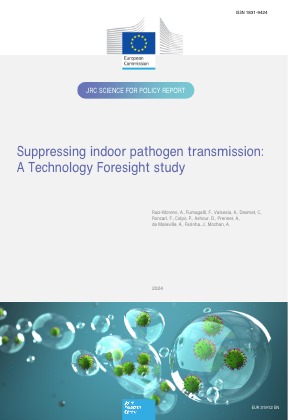
    Suppressing Indoor Pathogen TransmissionMarch 2024

    A Technology Foresight Study

    Airborne transmission is considered one of the most common ways of transmitting respiratory viruses. The reach of airborne pathogens and persistence of aerosolized particles suspended in the air are a significant concern for the spread of pandemic and seasonal respiratory diseases. This is particularly relevant in indoor spaces where most respiratory infections occur. Controlling the transmission of airborne pathogens is therefore a cornerstone of public health efforts to manage and prevent the spread of infectious diseases, ensuring safety and health for individuals and communities. Technologies that allow such control are essential to address the challenge.


    This report is the output of a comprehensive study which evaluates the potential of the current technology landscape for suppressing indoor airborne pathogen transmission. The analysis outlines two main technology groups: those for detecting airborne pathogens and those for decontaminating air and surfaces. It identifies several key technologies in each group, and assesses their maturity, impact, and potential priority for funding. It outlines the drivers, enablers, and barriers for the development and adoption of these technologies, providing insights into factors that may influence their future implementation. It also explores forward-looking perspectives with scenarios for future health crises and offers recommendations for policy and research to address the challenges and leverage the opportunities in the field of indoor air quality.

    Posted on: 13/11/2024

    Last Edited: a year ago

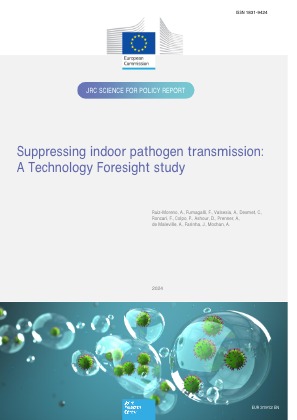
    Suppressing indoor pathogen transmission

    A Technology Foresight study

    Airborne transmission is considered one of the most common ways of transmitting respiratory viruses. The reach of airborne pathogens and persistence of aerosolized particles suspended in the air are a significant concern for the spread of pandemic and seasonal respiratory diseases. This is particularly relevant in indoor spaces where most respiratory infections occur. 

    Controlling the transmission of airborne pathogens is therefore a cornerstone of public health efforts to manage and prevent the spread of infectious diseases, ensuring safety and health for individuals and communities. Technologies that allow such control are essential to address the challenge. This report is the output of a comprehensive study which evaluates the potential of the current technology landscape for suppressing indoor airborne pathogen transmission. 

    The analysis outlines two main technology groups: those for detecting airborne pathogens and those for decontaminating air and surfaces. It identifies several key technologies in each group, and assesses their maturity, impact, and potential priority for funding. It outlines the drivers, enablers, and barriers for the development and adoption of these technologies, providing insights into factors that may influence their future implementation. It also explores forward-looking perspectives with scenarios for future health crises and offers recommendations for policy and research to address the challenges and leverage the opportunities in the field of indoor air quality. 

    The study was conducted during 2024 by European Commission Joint Research Centre (JRC) and Health Emergency Preparedness and Response Authority (HERA).

    Posted on: 22/10/2024