Loading...

    Mentions of

    sorted by publishing date

    Post Image

    Last Edited: 13 days ago

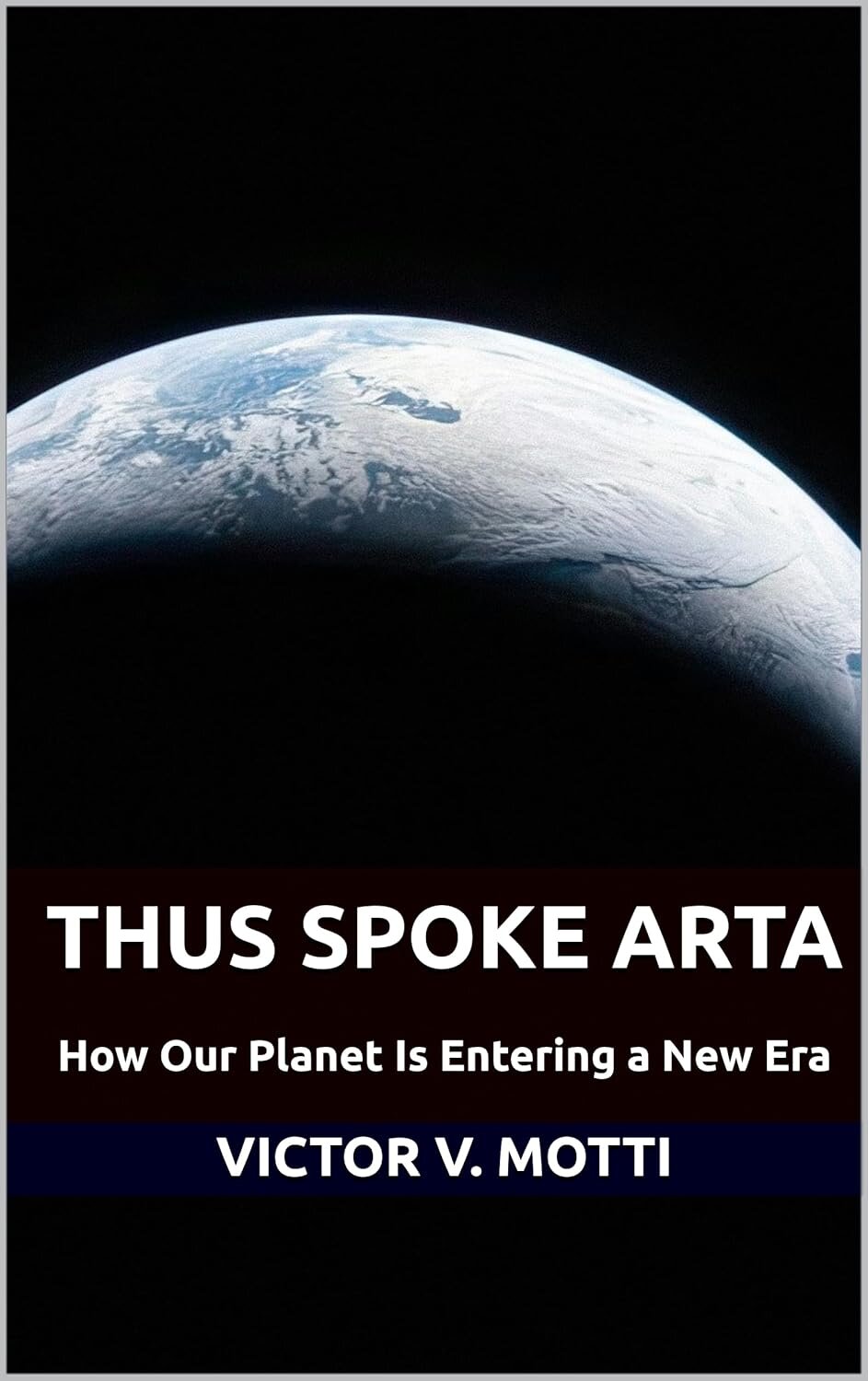
    Thus Spoke Arta

    How Our Planet Is Entering a New Era

    We are living through a transition that feels, at once, like collapse and awakening. The crises surrounding us—ecological breakdown, technological acceleration, geopolitical fragmentation—are often treated as separate problems. But they are not. They are symptoms of a deeper rupture: a failure in how we perceive reality itself.


    This is the beginning of the “Big Shift.” Not merely a historical turning point, but a transformation in consciousness. The dominant frameworks through which humanity has understood itself—nation, progress, even “humanity” as a unified moral subject—are no longer sufficient. They fragment under pressure because they were never grounded in the deeper fabric of existence. They abstracted us from the Earth, from each other, and ultimately from being itself.


    Long before modern crises, ancient traditions understood something we have forgotten: the Earth is not an object. It is a living, sacred reality. Early liturgical texts and cosmologies did not separate matter from meaning. To speak of the Earth was already to speak of order, of balance, of participation in a larger whole. This was not “ecology” in the modern scientific sense—it was a lived metaphysics.


    What has been lost is not knowledge in the narrow sense, but a way of knowing. The modern world, in its pursuit of control and clarity, reduced reality to what can be measured, extracted, and optimized. Technology is not the root problem; it is an extension of this perception. We did not simply build machines—we built a worldview that sees the world as machine.


    And so we arrive at a strange paradox: we speak constantly of “saving humanity,” yet we do not even know what “humanity” means. It is an abstraction, a moral placeholder, often detached from real conditions and embedded inequalities. In trying to center humanity, we displaced the Earth. And in doing so, we undermined the very conditions that make human life possible.


    A different orientation is needed. Not a rejection of humanity, but a re-centering within a larger field of existence. To love the Earth is not a poetic gesture—it is an ethical necessity. It means recognizing that harm to ecosystems is not external damage but a form of self-destruction. It means reframing ethics from human-centered to Earth-centered, from domination to participation.


    This is where the future becomes most uncertain—and most significant. Artificial intelligence and emerging technologies are often framed in terms of capability and risk. But the deeper question is ontological: what kind of intelligence are we creating? If intelligence is participation, then ethical design requires more than safeguards—it requires alignment with the structures of reality itself.


    We stand, then, at a threshold. The path forward is not a return to the past, nor a blind leap into technological futurism. It is a synthesis—a planetary civilization that draws from ancient wisdom while engaging modern knowledge. A civilization that recognizes the plurality of perspectives without losing sight of underlying unity.


    This requires new forms of leadership, new frameworks of foresight, and a redefinition of progress. Not growth for its own sake, but alignment with the conditions that sustain life and meaning.


    Ultimately, the future is not something we predict. It is something we participate in. Every action, every perception, contributes to the unfolding of reality. The question is not whether change is coming—it is whether we are capable of aligning with it.


    To become planetary beings is not to transcend the Earth, but to belong to it fully. To act with awareness that we are not separate observers, but active participants in a living, dynamic cosmos.


    The shift has already begun. The only question is whether we recognize it—and whether we are willing to follow it to its conclusion.

    Posted on: 28/05/2026
    Last Edited: a year ago

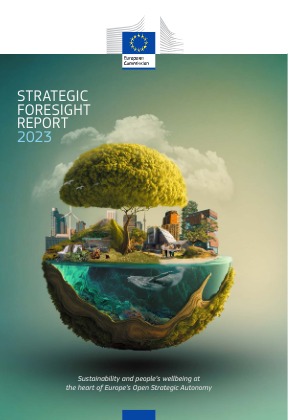
    Strategic Foresight ReportJune 2023

    Sustainability and People’s Wellbeing at the Heart of Europe’s Open Strategic Autonomy

    The EU is engaged in a profound and ambitious transition to achieve climate neutrality and sustainability in the next few decades. This sustainability transition will be key to strengthen the EU's Open Strategic Autonomy, ensure its long-term competitiveness, uphold its social market economy model and consolidate its global leadership in the new net-zero economy. To succeed, the EU will need to address several challenges and make choices that will affect our societies and economies at an unprecedented pace and scale.

    The 2023 report provides an overview of the challenges we face and proposes ten areas for action to achieve a successful transition. To equip policymakers with economic indicators which also consider wellbeing, it proposes to adjust Gross Domestic Product (GDP) to take account of different factors such as health and the environment.

    This approach will bolster the EU's Open Strategic Autonomy and global standing in its pursuit of a resilient net-zero economy. 

    Overcoming key social and economic challenges

    As it goes through the sustainability transition – which encompasses both economic and social sustainability ­– the EU is facing several challenges. For example:

    • Evolving geopolitical shifts are shaping public opinion and how governments across the globe act, challenging international cooperation on global issues, such as climate change or the energy transition.
    • The need for a new economic model, focused on the wellbeing of people and nature, decoupling economic growth from resource use and shifting to more sustainable production and consumption. Up to 75% of Eurozone businesses are highly dependent on natural resources. Economic, social and environmental sustainability are inextricably linked.
    • Growing demand for adequate skills for a sustainable future. The availability of workers equipped with appropriate technical and soft skills will be crucial for the EU's competitiveness: 85% of EU firms today lack staff with the competences needed to navigate the green and digital transitions.
    • The sustainability transition requires unprecedented investments. Achieving it will depend on securing sufficient funding both from the public and private sectors.

    Ten areas for action
    Today's report identifies ten areas where our policy response is needed to ensure that the sustainability transition remains focused on the wellbeing of people and society:

    1. Ensure a new European social contract with renewed welfare policies and a focus on high-quality social services.
    2. Deepen the Single Market to champion a resilient net-zero economy, with a focus on Open Strategic Autonomy and economic security.
    3. Boost the EU's offer on the global stage to strengthen cooperation with key partners.
    4. Support shifts in production and consumption towards sustainability, targeting regulation and fostering balanced lifestyles.
    5. Move towards a ‘Europe of investments' through public action to catalyse financial flows for the transitions.
    6. Make public budgets fit for sustainability through an efficient tax framework and public spending.
    7. Further shift policy and economic indicators towards sustainable and inclusive wellbeing, including by adjusting GDP for different factors.
    8. Ensure that all Europeans can contribute to the transition by increasing labour market participation and focusing on future skills.
    9. Strengthen democracy with generational fairness at the heart of policymaking to reinforce the support for the transitions.
    10. Complement civil protection with ‘civil prevention' by reinforcing the EU's toolbox on preparedness and response.

    Source: European Commission - Press Corner - 2023 Strategic Foresight Report

    Posted on: 15/04/2025

    Last Edited: a year ago

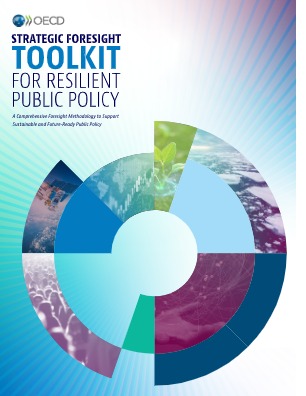
    Strategic Foresight Toolkit for Resilient Public PolicyDecember 2024

    A Comprehensive Foresight Methodology to Support Sustainable and Future-Ready Public Policy

    By exploring 25 evidence-based potential disruptions across environmental, technological, economic, social, and geopolitical domains, the Strategic Foresight Toolkit for Resilient Public Policy helps anticipate challenges and opportunities that could reshape the policy landscape between 2030 and 2050. These disruptions are not predictions, but hypothetical future developments identified through extensive research, expert consultations, and workshops. The Strategic Foresight Toolkit features a five-step foresight process, guiding users to challenge assumptions, create scenarios, stress-test strategies, and develop actionable plans. It includes facilitation guides and case studies to support effective implementation. Each disruption is accompanied by insights on emerging trends, potential future impacts, and both immediate and long-term policy options to ensure resilience and preparedness. Designed for policymakers, public administrators, and foresight practitioners, this publication is designed to promote holistic, strategic and evidence-informed decision-making. It aims to support countries and organisations in using strategic foresight to design and prepare robust and adaptable public policies for a range of possible futures. With its practical methodology and forward-looking approach, the Strategic Foresight Toolkit is a vital resource for building sustainable, resilient, and effective public policies.

    Source: OECD - Publications 

    Posted on: 15/04/2025

    Last Edited: 2 years ago

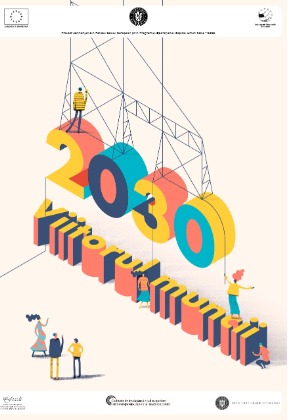
    The future of work in 2030March 2020

    An argument-based top of emerging professions

    There is a fascination with the future, as a repository of both opportunities and threats that affects all of us. Concern for what we call "the future of work" is part of this mosaic. Regardless of their geographical space, people think of their work as being, in varying doses, a source of material well-being, but also a component of their identity. Uncertainties about how will people work in the future – how will they earn income and build a purpose, a meaning through their work – is an important topic, and often a source of concern.
    What are we heading for? What kind of future is desirable? What is possible, respectively probable, from what we deem desirable? What can be done to get there? All these are legitimate questions that deserve our attention.
    In the context of recent waves of technological progress, the future of work is the subject of intensive controversy. Often in the public space there is an overwhelming emphasis on the impact of new technologies on work, neglecting other shaping forces relevant to labor market dynamics. Therefore, the purpose of this study is to open a wider conversation about the future of work on the 2030 horizon.

    The perspective used in this paper is a causal and hierarchical one: from drivers of change towards their impact on labor. Most studies on labor market developments start from a context modeled by several global megatrends. Following this logic, the second chapter describes the four main trends identified in literature: i) technological developments, especially automation; ii) globalization, especially cross-border flows and widening inequalities; iii) demographic changes, in particular the ageing population in the global North; iv) climate change, environmental degradation and the development of the green economy.
    Within these trends, ongoing or likely transformations have been identified that have or could have an impact on global labor market dynamics. The section describing each megatrend is accompanied by a box with what we call "signals of change" - contextualizing empirical data that serve as justifications/explanations of the phenomena described in that section. In the context of the global transformations we outline here, the fourth chapter presents a catalogue of emerging occupations, by which we mean both existing (highly dynamic) or incipient occupations and occupations that do not yet exist but are likely to exist in 2030 or beyond
    The third chapter was added later in the context of the Covid-19 pandemic and is a brief overview of the transformations in the global labor market – some already visible, others likely - due to this global crisis.

    ***

    The study was published in Romanian as part of the project POCU INTL - Quality in higher education: internationalization and databases for the development of Romanian higher education.

    Project webpage: pocu-intl.uefiscdi.ro

    Posted on: 09/12/2024