Loading...

    Mentions of

    sorted by publishing date

    Last Edited: 17 hours ago

    Building Regional Foresight Capability in Antofagasta, ChileFebruary 2016

    lessons from a multi-layered regional foresight programme

    This report of the European Foresight Platform (EFP) reports on a regional foresight programme carried out in 2011–2013 in the Antofagasta region of Chile (Dufva et al., 2016). Organised by VTT Technical Research Centre of Finland and funded by the Ministry for Foreign Affairs of Finland, the programme formed part of a broader joint project with the Chilean Mining Technological and Scientific Research Centre (CICITEM) that aimed at innovation-driven, sustainable economic development of the region. Its purposes were to improve foresight capability in the region, especially among the partner organisations, to enhance collaboration between industry, government and research organisations, and to support the creation of a strategic research agenda on a topic chosen by the partners. The time horizon was 2040.

    The programme built on the Pact for Regional Development and Innovation signed by public and private actors in the Antofagasta region in March 2008, which sought economic growth and equality, better jobs and a path towards sustainable development. Chile looked to Finland as an example of how a resource-driven economy can become knowledge-driven when development strategies and policies are well chosen. Antofagasta is also an extreme risk area for ecological change: climate change and contamination from mining have had lasting effects on regional water supplies, and melting glaciers and the overuse of groundwater call for a significant redesign of water use.

    The foresight activities had two parts. A three-day hands-on workshop in Antofagasta trained participants in futures thinking and in methods such as scenarios, roadmapping and Delphi, supported by a learning package with a glossary and a project website, and ended with group work on planning a foresight project for the region. On this basis, VTT and CICITEM selected the topic of a foresight pilot for its importance and relevance to different stakeholders. The pilot combined scenario and roadmapping work through a conference, two stakeholder workshops, a stakeholder survey, interviews with mining companies and a reflection discussion with CICITEM experts. VTT provided guidance and support, but the emphasis was on learning by doing for CICITEM researchers, who worked with researchers from local universities, representatives of local SMEs, government officials and mining companies.

    Drawing on the process and the foresight literature, the authors developed a multi-layered framework for analysing the contributions of foresight (Dufva et al., 2015). At the landscape layer, foresight connects the region to the global context, helping participants to see Antofagasta as part of a larger system and to find its niche in global markets. At the innovation-system layer, it supports joint strategy formulation and a shared vision; stakeholder analysis helped to choose a suitably controversial topic that was interesting for all stakeholder groups and committed them to the process. At the organisational layer, the pilot generated new ideas about the role and mission of CICITEM, although not every researcher saw its benefit and some were reluctant to participate, which shows how a foresight process is entangled with organisational dynamics. At the individual layer, learning by doing gave participants experience in scoping, designing, implementing and documenting foresight; one CICITEM researcher reflected that he had learned to bring ideas 'high up in the sky down to earth'.

    The report draws three implications for policy-making and practice. Foresight should be designed with multiple layers in mind, with particular attention to individuals, since changes in mindsets and worldviews through learning are what carry change into organisations and innovation systems. The nature of the effects varies between layers: knowledge produced weighs more at the landscape and innovation-system layers, whereas capabilities gained matter more at the organisational and individual layers. Finally, the layers can be used to structure the effects of foresight, showing that there is more to foresight than its immediate tangible outcomes and that a successful process can change the capacity of an organisation or a community to anticipate the future and, through that, contribute to regional transformation.

    References

    Dufva, M., Könnölä, T., & Koivisto, R. (2015). Multi-layered foresight: Lessons from regional foresight in Chile. Futures, 73, 100–111. https://doi.org/10.1016/j.futures.2015.08.010 

    Dufva, M., Könnölä, T., & Koivisto, R. (2016). Building regional foresight capability in Antofagasta, Chile (EFP Brief No. 260). European Foresight Platform. https://if-institute.org/wp-content/uploads/2016/04/Building_Regional_Foresight_in_Antofagasta_Chile_EFP-Brief-No.260.pdf 

    Posted on: 29/10/2026

    Post Image

    Last Edited: 18 hours ago

    Foresight Methods and Practice: Lessons Learned from International Foresight Exercises

    Four key messages from a talk at the MICA Foresight Methodology Workshop, Las Palmas, May 2017

    La Palma Research Centre hosted the Foresight Methodology Workshop of the Horizon 2020 project Mineral Intelligence Capacity Analysis (MICA) in Las Palmas de Gran Canaria on 10–11 May 2017. The project was concerned with intelligence on mineral raw materials, and the workshop looked at how foresight methods could serve that purpose. My contribution drew on a set of international foresight exercises carried out over the previous decade, ranging from regional foresight in a Chilean mining region to European horizon scanning and global roadmapping in manufacturing (Könnölä, 2017). This post revisits the presentation and its four key messages: foresight serves the whole policy cycle, foresight designs are always customised, foresight tools are never the first step, and the value of foresight depends on engaging the 'client'. The slides are attached.

    1. Foresight for the whole policy cycle

    Foresight is often associated with the early stages of policy-making, when agendas are set and long-term visions are articulated. Its contribution, however, extends across the whole policy cycle. In agenda setting, foresight offers visions, a better understanding of change and greater legitimacy and transparency in the choice of priorities. In policy definition, it generates policy options and new ideas and builds ownership among those who will implement them. Ex-ante impact assessment benefits from the exploration of impacts under alternative futures, while implementation can draw on new policy configurations and a more responsive system. Evaluation, in turn, gains from prospective considerations, closing a learning loop that feeds the next round of agenda setting (Könnölä, 2017).

    Underlying this is a view of the future as open. The 'futures cone' distinguishes between possible, plausible, probable and preferable futures, with business as usual forming only a narrow strand within a much wider space of potential developments (Voros, 2003). Foresight exercises differ in which part of the cone they address. Some concentrate on probable developments to support planning, others explore the plausible and the possible to test strategies against surprise, and many seek to articulate preferable futures that stakeholders are willing to work towards.

    The regional foresight programme in Antofagasta, Chile, illustrated these contributions in a setting close to the interests of the raw materials community. Between 2011 and 2013, VTT Technical Research Centre of Finland cooperated with the Chilean Mining Technological and Scientific Research Centre (CICITEM) to improve the human capacities of CICITEM as a facilitator of regional innovation, especially in knowledge and technology management. The cooperation pursued capacity building in institutional leadership, knowledge management, innovation culture and innovation capabilities; self-sustained innovation capacity at CICITEM; and the capability to create a strategic vision for regional innovation and to facilitate joint innovation activities in the mining cluster (Dufva et al., 2016). Water, under pressure from climate change and mining, became the focus of the foresight pilot.

    The contributions of the exercise can be read at four levels (Dufva et al., 2015). At the landscape level, participants gained a better understanding of global developments and networks and of Antofagasta's position in the global system, together with skills to scan and project these developments and engagement with international stakeholders. At the innovation-system level, the exercise identified key barriers and drivers in the regional system and its water-related sub-systems, actions to overcome the barriers and a vision of a desired future, and it brought stakeholders from different sectors together for the first time. At the organisational level, it produced a roadmap for research related to water and mining, strengthened the foresight culture and capability of CICITEM and improved its contacts and status. At the individual level, participants improved their understanding of the regional context and of futures thinking and learnt to conduct foresight through training and hands-on engagement in the design and management of the exercise. VTT's own innovation programme on the mineral economy pointed in a similar direction, combining competences such as hydrometallurgy, powder metallurgy and life cycle assessment with business models and foresight, and working towards a circular mineral economy based on valuable element recovery, residue utilisation, substitution of critical raw materials, remanufacturing, reuse and recycling (Könnölä, 2017).

    2. Foresight designs are always customised

    There is no single foresight method and no standard design. In the mapping of regional foresight exercises presented in the talk, literature review, scenarios, expert panels, futures workshops, brainstorming and SWOT analysis were the most frequently used methods, followed by questionnaires and surveys, trend extrapolation, interviews, environmental scanning, Delphi and megatrend analysis, while backcasting, stakeholder mapping, key technologies, structural analysis and technology roadmapping were used less often (Könnölä, 2017). Methods can be positioned along several dimensions: quantitative and qualitative, face-to-face and online, intuitive and rational, subjective and objective, creative and evidence-based. Good designs tend to combine methods across these dimensions rather than settle at one end of each.

    Much of the value lies in integration. A typical integrated process begins with the search for signals and moves on to creating, curating and evaluating drivers. The drivers are clustered and structured into scenarios, from which success scenarios are defined. Roadmaps then reorganise the drivers, create solutions and evaluate them against the scenarios before the most promising ones are selected, after which the process turns to analysing future markets, identifying partners and defining actions (Könnölä, 2017). Three cases from the talk show how such combinations are tailored to purpose.

    The first, 'Facing the Future', was a horizon scanning exercise carried out in 2009 by the Institute for Prospective Technological Studies of the European Commission's Joint Research Centre (JRC-IPTS) for the Bureau of European Policy Advisers (BEPA) (Boden et al., 2010). Horizon scanning was organised around four interlinked activities: scoping, scanning, synthesising and coordinating. BEPA and JRC-IPTS selected six areas of analysis in February; forward-looking reports were reviewed and synthesised to identify issues in March; an online survey of 270 experts assessed the issues in April; multi-criteria analyses of the survey results followed in May; an expert workshop with 19 experts and 22 policy-makers combined the issues in June; and the final report was compiled by November. The multi-criteria analysis used RPM Screening (Könnölä et al., 2007) to compare issues under alternative preference structures. A mean-oriented analysis ranked relevance above novelty and probability, a rare-event-oriented analysis gave priority to inverse probability, and a variance-oriented analysis highlighted issues on which expert views diverged. Issues that scored well independently of the criteria preferences could thus be distinguished from those whose position depended on how the criteria were weighted, which made the prioritisation transparent and traceable (Könnölä et al., 2012).

    The second case was a Web 2.0 foresight platform set up by JRC-IPTS for the European Institute of Innovation and Technology (EIT) (Haegeman et al., 2012). After preparation and a pilot, the platform opened a first phase for collecting ideas and a second phase for assessing them. Once the platform closed, a first report on the ideas was presented to the EIT Governing Board, and a background document prepared the ground for a workshop with selected experts and Board members, which led to the final report. The online and face-to-face stages were designed to complement each other, so that broad participation could be combined with focused deliberation among decision-makers.

    The third case, the IMS2020 project on intelligent manufacturing systems, showed the particular challenges of global foresight (Cagnin & Könnölä, 2014). The process combined mapping, two online surveys, workshops on key area topics (KAT) and interviews. Drivers were grouped under policy and governance (e.g. aligned and coordinated policy and regulation, global multi-level collaboration, collective values and behaviours), industrial and international R&D cooperation (e.g. breakthrough technologies, cooperation across value chains, new markets, standardisation and knowledge management) and knowledge and society (e.g. education, competences and skills, energy, natural resources and environmental footprint). Scenario design options ranged from two-axis matrices to morphological combinations of factors. The IMS2020 scenarios were built on a policy and governance axis and an international industrial R&D axis, nested with knowledge society and environmental sustainability dimensions, and four snapshots were positioned within this space. The resulting vision called for rapid and adaptive user-centred manufacturing leading to customised and 'eternal' life-cycle solutions, for highly flexible and self-organising value chains, and for sustainable manufacturing made possible by cultural change among individuals and corporations and by a regulatory framework co-designed by governments, industries and societies. The final roadmap linked research and technological development topics, research actions and their expected impacts, and KAT visions and objectives to the IMS2020 vision over horizons of one to three, three to seven, seven to ten and ten to fifteen years.

    3. Foresight tools are never the first step

    A wide range of tools is available to support foresight, many of them digital. Technology maps visualise technology and patent landscapes at different levels of detail, helping clients to define strategic objectives, explore their position and follow innovation dynamics; at the Insight Foresight Institute these were developed in partnership with Tecmine. Online foresight platforms, developed with Orchidea, support structured engagement of stakeholders and experts through the submission, commenting and assessment of emerging issues, innovation ideas and challenges, with filtering and graphical presentation of results. RPM Screening, based on Robust Portfolio Modelling, allows interactive multi-criteria analysis of issues according to relevance, novelty, feasibility or other criteria (Könnölä et al., 2007, 2012). Online surveys run on commercial platforms make consultation user-friendly and efficient to manage, with flexible export of results (Könnölä, 2017).

    None of these tools should be the starting point. They are always tailored to the needs of the client, and their value depends on the quality of the scoping, the questions asked and the people engaged. A technology map without a clear strategic question, or an online platform without a community willing to contribute, tends to produce data rather than insight. The choice of tools follows from the purpose of the exercise and from the policy or strategy process it is meant to inform.

    4. Engaging the 'client'

    The conclusions drew these experiences together. Complexity and uncertainty call for foresight and resilience. Different future-oriented technology analysis (FTA) systems are complementary, and their diversification strengthens the capacity to anticipate. Methods are best combined in a modular and responsive way, so that the design can adapt as the process unfolds. Close interaction with sponsors and clients is needed throughout, from scoping to the use of results, because foresight creates value only when its insights are taken up in decisions (Könnölä, 2017). For the raw materials community, these lessons suggest building foresight into the policy cycle, combining scanning, scenarios and roadmaps in designs tailored to the questions at hand, and engaging policy-makers, industry and researchers from the outset.

    Access to the presentation: https://www.slideshare.net/slideshow/foresight-methods-and-practice-lessons-learned-from-international-foresight-exercises/76021158?utm_source=clipboard_share_button&utm_campaign=slideshare_make_sharing_viral_v2&utm_variation=control&utm_medium=share 

    References

    Boden, J. M., Cagnin, C., Carabias, V., Haegeman, K., & Könnölä, T. (2010). Facing the future: Time for the EU to meet global challenges (EUR 24364 EN). Publications Office of the European Union. https://doi.org/10.2791/4223

    Cagnin, C., & Könnölä, T. (2014). Global foresight: Lessons from a scenario and roadmapping exercise on manufacturing systems. Futures, 59, 27–38. https://doi.org/10.1016/j.futures.2014.01.007

    Dufva, M., Könnölä, T., & Koivisto, R. (2015). Multi-layered foresight: Lessons from regional foresight in Chile. Futures, 73, 100–111. https://doi.org/10.1016/j.futures.2015.08.010

    Dufva, M., Könnölä, T., & Koivisto, R. (2016). Building regional foresight capability in Antofagasta, Chile (EFP Brief No. 260). European Foresight Platform. https://if-institute.org/wp-content/uploads/2016/04/Building_Regional_Foresight_in_Antofagasta_Chile_EFP-Brief-No.260.pdf

    Haegeman, K., Cagnin, C., Könnölä, T., & Collins, D. (2012). Web 2.0 foresight for innovation policy: A case of strategic agenda setting in European innovation. Innovation: Management, Policy & Practice, 14(3), 446–466. https://doi.org/10.5172/impp.2012.14.3.446

    Könnölä, T. (2017, May 10–11). Foresight methods and practice: Lessons learned from international foresight exercises [Presentation slides]. Foresight Methodology Workshop, Mineral Intelligence Capacity Analysis project, Las Palmas, Spain. https://www.slideshare.net/slideshow/foresight-methods-and-practice-lessons-learned-from-international-foresight-exercises/76021158

    Könnölä, T., Brummer, V., & Salo, A. (2007). Diversity in foresight: Insights from the fostering of innovation ideas. Technological Forecasting and Social Change, 74(5), 608–626. https://doi.org/10.1016/j.techfore.2006.11.003

    Könnölä, T., Salo, A., Cagnin, C., Carabias, V., & Vilkkumaa, E. (2012). Facing the future: Scanning, synthesizing and sense-making in horizon scanning. Science and Public Policy, 39(2), 222–231. https://doi.org/10.1093/scipol/scs021

    Voros, J. (2003). A generic foresight process framework. Foresight, 5(3), 10–21. https://doi.org/10.1108/14636680310698379
    Posted on: 29/10/2026

    Last Edited: 17 hours ago

    Building regional foresight capability in Antofagasta, Chile1December 2010 - November 2013

    Foresight capability in Antofagasta

    Between 2011 and 2013, VTT Technical Research Centre of Finland and the Chilean Mining Technological and Scientific Research Centre (CICITEM) carried out a regional foresight programme in Antofagasta, Chile's leading mining region, funded by the Ministry for Foreign Affairs of Finland. The programme was part of a broader joint project to enhance innovation-driven, sustainable economic development in the region. It built on the 2008 Pact for Regional Development and Innovation in the Antofagasta Region and on Chile's interest in how Finland moved from a resource-driven to a knowledge-driven economy. The region also faces acute ecological pressures, not least on water supplies affected by climate change and mining.

    The foresight activities pursued three aims: improving foresight capability in the region, especially among the partner organisations; strengthening collaboration between industry, government and research organisations; and supporting a strategic research agenda on a topic chosen by the partners. A three-day hands-on workshop in Antofagasta introduced futures thinking and methods such as scenarios, roadmapping and Delphi. A foresight pilot followed, combining scenario and roadmapping work through a conference, two stakeholder workshops, a stakeholder survey, interviews with mining companies and a final reflection session. VTT experts guided the process, but the emphasis was on learning by doing for CICITEM researchers, working alongside local universities, SMEs, government officials and mining companies, with a time horizon of 2040.

    Reflecting on the process, the team developed a four-layer framework (landscape, innovation system, organisation and individual) for analysing how foresight contributes to new knowledge, capabilities and networks. The experience underlines that individuals are the key: changes in their mindsets and skills are what carry foresight into organisations and, ultimately, into regional transformation. The results are reported in EFP Brief No. 260 (Dufva, Könnölä & Koivisto, 2016) and in Dufva, M., Könnölä, T., & Koivisto, R. (2015). Multi-layered foresight: Lessons from regional foresight in Chile. Futures, 73, 100–111. https://doi.org/10.1016/j.futures.2015.08.010 

    Posted on: 29/10/2026

    Last Edited: 17 hours ago

    Scenarios and Roadmapping on Intelligent Manufacturing Systems (IMS)1

    Scenarios and Roadmapping on Intelligent Manufacturing Systems (IMS)

    IMS2020 was an FP7 project funded by the NMP division of the European Commission within the Intelligent Manufacturing Systems (IMS) framework. It was conducted by an international consortium of 15 core partners and a large group of supporting members from Europe, Japan, Korea, Switzerland and the USA. The main objective was the creation of five research roadmaps towards IMS by 2020 and beyond, in the key areas of sustainable manufacturing, products and services; energy-efficient manufacturing; key technologies; standardisation; and innovation, competence development and education.

    JRC-IPTS devised and coordinated the scenario work. Four scenario snapshots for 2025 were built on four impact dimensions, and a joint vision drew on the scenario features that partners rated desirable and at least somewhat likely. Research topics were refined through an open wiki and prioritised in an online survey with 359 participants, and the roadmaps set out research topics and supporting actions for international cooperation.

    Posted on: 21/10/2026

    Last Edited: 17 hours ago

    Global Foresight: Lessons from a Scenario and Roadmapping Exercise on Manufacturing SystemsJanuary 2014

    Four principles for designing and managing international foresight, drawn from the IMS2020 project

    International foresight exercises are characterised by geographical dispersion, organisational and cultural differences, and the diversity arising from a large number of participants with different expectations and needs. Building on the experience of designing and managing the Intelligent Manufacturing Systems (IMS) 2020 project, this article develops four principles for the design and management of global foresight exercises.

    The first principle, understanding interconnected innovation systems, ensures that participants position the foresight exercise and their own activities in a global context. The second, responsiveness towards diverse languages and cultures, strengthens commitment and encourages learning and creative problem solving. The third, capacity to reconfigure international networks, takes advantage of existing organisational structures and facilitates the timely and efficient mobilisation of stakeholder communities. The fourth, 'glocal' impact orientation, connects foresight activities to both local and international decision-making structures. Because global projects are heterogeneous, all four principles need to be implemented with a scalable design approach.

    IMS2020 combined scenarios, vision-building and roadmapping on intelligent and sustainable manufacturing systems. Four scenario snapshots for 2025 informed a shared vision, and research topics were refined through an open wiki and prioritised in an online survey with 359 participants.

    Cagnin, C., & Könnölä, T. (2014). Global foresight: Lessons from a scenario and roadmapping exercise on manufacturing systems. Futures, 59, 27–38. https://doi.org/10.1016/j.futures.2014.01.007 

    Posted on: 20/10/2026

    Last Edited: a month ago

    Gaia Brenna1

    Strategic foresight and future thinking for better present

    Posted on: 29/09/2026

    Last Edited: a month ago

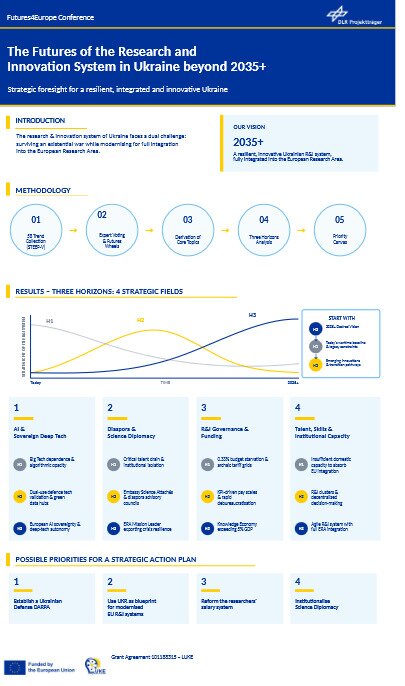
    The Futures of the Research and Innovation System in Ukraine beyond 2035+

    Strategic Foresight for a resilient, integrated and innovative Ukraine

    Poster illustration of the first insights in strategic foresight within the LUKE project. 

    Posted on: 22/09/2026

    Last Edited: a month ago

    Henriette Kirch1

    If you want to have a prosperous future - shape it by using imagination. Imagination leads to feelings and emotions - emotions create action.

    Posted on: 15/09/2026

    Last Edited: 2 months ago

    Sena ŞAHİNER1

    STEM Educator | Futures Thinking, Sustainability & International Collaboration

    Posted on: 12/09/2026

    Last Edited: 4 months ago

    Philipp Kürten1

    Doctoral Researcher in the ERC Starting Grant Project „FutureSpace“ - Department for Science & Technology Studies - University of Vienna - Researching and Applying Strategic Foresight to the European Space Sector

    Posted on: 16/06/2026

    Last Edited: 7 months ago

    L'Atelier des Futurs1

    Créer demain, ensemble

    Posted on: 23/03/2026

    Last Edited: 7 months ago

    Eva-Maria Pusch1

    Industry Hubs of the Future are the new Silicon Valleys!

    Posted on: 22/03/2026

    Last Edited: 7 months ago

    Giusy Grieco1

    Posted on: 20/03/2026

    Last Edited: 8 months ago

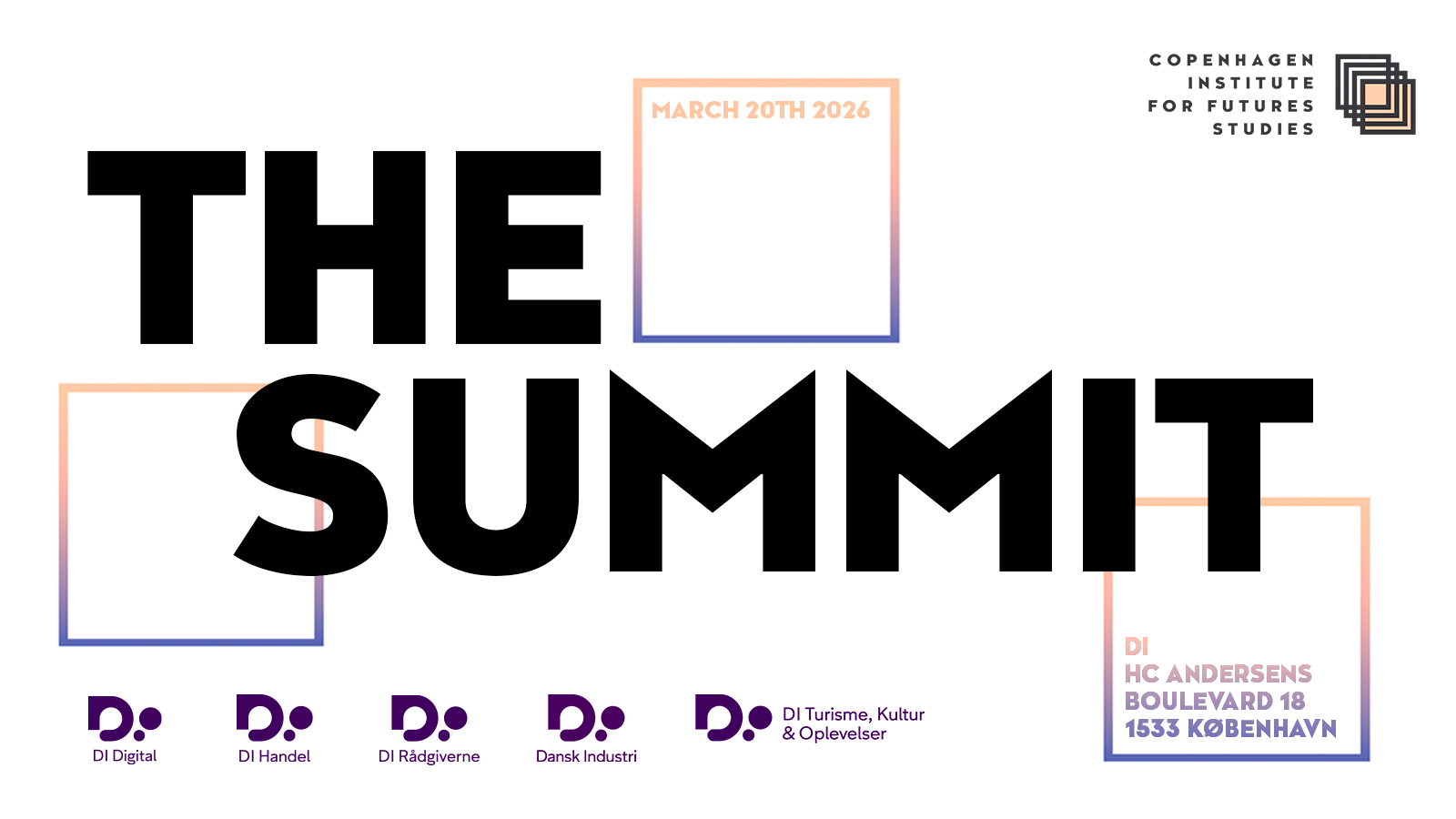
    The Summit 202620 March - 20 March 2026

    An annual gathering exploring the possible futures of emerging technologies. The Summit is a Nordic gathering for leaders, innovators, and forward-thinking organisations who want to explore the futures of emerging technologies and understand their profound impact on business, society, and organisational readiness. It serves as a meeting point for those who not only wish to follow developments in artificial intelligence, immersive experiences, and emerging technologies, but also want to shape how these forces influence the way we work, make decisions, and build future ecosystems. ‍ Hosted by the Confederation of Danish Industry (DI) and curated by the Copenhagen Institute for Futures Studies (CIFS), the conference focuses on foresight, technologies, preparedness, and futures-driven innovation. Through keynotes, panel discussions and focused dialogues, we examine both opportunity and risk, asking how innovation can be aligned with responsibility and long-term value creation. ‍ The Summit focuses on what lies ahead: Possible futures, strategic choices, and the readiness it takes to act responsibly as technologies evolve. It is not only about trends and tools, but about strategic foresight - identifying possible futures, and understanding the readiness it takes to act wisely and courageously as technologies continue to evolve.

    The 2026 edition takes place in Copenhagen on 20 March 2026 (09:00–18:00 CET) at H. C. Andersens Blvd. 18, 1553 København - Industriens Hus. Themes include the AI-mediated workplace, leadership in the future, emerging technologies (including AI agents, simulations and humanoids), the future consumer, retail in transformation, and the futures of foresight.

    The Summit is a Nordic gathering for leaders, innovators, and forward-thinking organisations exploring the futures of emerging technologies and their impact on business, society, and organisational readiness. Co-hosted by Danish Industry (DI) and curated by the Copenhagen Institute for Futures Studies (CIFS), the conference brings together keynotes, Nordic cases, and conversations on preparedness and responsible, meaningful action.

    The Summit 2026 – Industriens Hus, Copenhagen – exploring the possible futures of emerging technologies.

    Posted on: 23/02/2026

    Last Edited: 10 months ago

    Fondazione IIF-Italian Institute for the Future1

    IIF

    Posted on: 11/01/2026

    Last Edited: a year ago

    Geopolitical & industrial decarbonisation scenarios to identify R&I opportunities for the EUMay 2025

    How can the EU navigate amidst global uncertainties to foster a more resilient and effective path toward industrial decarbonisation?

    This report presents the outcomes of the Geopolitical Industrial Decarbonisation Scenarios workshop, convened on behalf of the Eye of Europe Horizon Europe project by the Insight Foresight Institute. Bringing together 30 participants from across the European Union—including policymakers at EU, national, and regional levels, industry leaders, energy and climate specialists, and foresight and forecasting experts—the workshop explored how the EU can navigate mounting geopolitical uncertainty while accelerating industrial decarbonization on a 2050 horizon.

    The discussion was structured around two core aims. First, participants examined a suite of forward-looking geopolitical scenarios, assessing how divergent power dynamics, energy trade patterns, and technological trajectories could either hinder or catalyse the transition to a net-zero industrial base in the EU countries. Particular attention was paid to supply-chain resilience, strategic autonomy in critical materials, and the interplay between carbon border adjustments and global climate diplomacy. Second, the workshop sought to surface emergent research and innovation (R&I) needs and opportunities that would equip EU actors to thrive across the scenarios. Priorities highlighted include advanced electrification processes for hard-to-abate sectors, low-carbon hydrogen and synthetic-fuel value chains, circular-economy business models, and data-driven tools for real-time decarbonisation monitoring.

    Outputs from the session feed directly into the Eye of Europe project’s multi-workshop learning cycle. Immediate products comprise this extended report for attendees; aggregated insights captured in the public Pilot Logbook Part I – What we did and Part II – What we learned; and distilled policy recommendations to be released in the Eye of Europe Policy Brief: Foresight Perspectives on Key R&I Topics. Beyond documentation, the Insight Foresight Institute will leverage the findings to stimulate agenda-setting dialogues with EU bodies and industrial stakeholders, ensuring that identified R&I pathways inform Horizon Europe programming and other EU-level funding instruments. Workshop materials and presentations are retrievable via the futures4europe.eu knowledge-sharing portal, reinforcing the project’s commitment to an open foresight community.

    Posted on: 03/10/2025

    Last Edited: a year ago

    Accreditation Services1

    Foresight Programs and Courses

    The World Futures Studies Federation offers its standards to institutions interested in achieving accreditation in futures studies. Institutions offering programmes which meet the Federation’s standards will be credentialed as an Accredited Foresight Programme. Accreditation will extend for a period of five (5) years. Review of accreditation will be available every five (5) years to ensure programmes continue to maintain high quality standards of the Federation.


    We provide accreditation only to education providers that have been recognized by the relevant department or ministry of education in their country as a tertiary education provider.

    How To Apply: https://wfsf.org/accreditation-services/ 

    Posted on: 11/09/2025

    Last Edited: 6 months ago

    Josephine Schwab1

    Futures are built (from the ground up) – not predicted

    Posted on: 06/09/2025

    Last Edited: a year ago

    Oliver Gnad1

    Changing Minds – Creating Futures

    Posted on: 28/07/2025

    Last Edited: a year ago

    Johnny Waterschoot1

    Helping companies survive and thrive

    Posted on: 30/06/2025

    Last Edited: a year ago

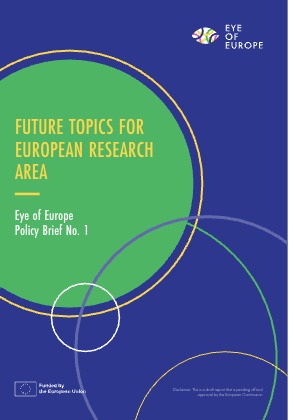
    Future Topics for European Research AreaMay 2025

    Eye of Europe Policy Brief No. 1

    This policy brief provides insights into the thematic areas addressed in the first five Eye of Europe workshops. It also informs about the upcoming workshops and the futures4europe platform, the online home of the European foresight community, where visitors can explore a rich collection of foresight projects, showcase their work, and discover foresight-related upcoming events.

    Posted on: 17/06/2025

    Last Edited: 15 days ago

    Schaltzeit GmbH1

    Experiences for Forward Thinking

    We empower you to work with the futures. Our ideas show organizations how to deal with terms like weak signals, trends or white spots, and at the same time energizing to position themselves. We like discussing new developments and trends, with their respective effects on the organization, in order to design frameworks for actions and strenghten the matching future-attitude and accompanying measures.Schaltzeit has successfully provided consulting and operational services within the areas of foresight, ideation, experiences, software and design, to organizations in sectors such as telecommunication, automotive, biotechnology, software development, medicine, cosmetics and others.
    We ignite and accompany you on your way to success.
    Schaltzeit fills gaps, optimizes processes and forms the link between actors and processes in order to make results transparent and usable and sustainably establishes future-oriented thinking and acting.

    Posted on: 06/06/2025

    Last Edited: a year ago

    Dr. Matthew J. Spaniol1

    Senior Researcher at Roskilde University

    Posted on: 28/05/2025

    Last Edited: a year ago

    Adam Gasparovic1

    Posted on: 27/05/2025

    Last Edited: a year ago

    Tech4Future1

    Futures & Foresight (Futures Thinking & Strategic Foresight)

    WE HAVE A SOCIAL MISSION: TO STIMULATE CRITICAL THINKING ABOUT EMERGING TECHNOLOGIES.
    We focus on Futures & Foresight (Futures Thinking / Futures Studies & Strategic Foresight), with a specialization in Technology Foresight and ETS, Emerging Technologies Scanning. We are also dedicated to Futures Literacy, which involves the theoretical and practical literacy of Futures Studies and Futures Thinking. Through a Slow Journalism model, we disseminate and promote knowledge of emerging technologies, analyzing their potential impacts on our possible and alternative futures.

    Posted on: 26/05/2025

    Last Edited: a year ago

    SAMI Consulting Ltd1

    Robust decisions in uncertain times

    Futures thinking is in our DNA. SAMI was created as the St Andrews Management Institute in 1989, as a joint venture between Shell, the pioneers in scenario planning, and St Andrews University. That powerful mix of academic rigour and practical delivery continues in work and with our people today: Experienced practitioners, world-renowned futures authors, and consultants with first-hand experience of the public sector and the challenges facing it.

    SAMI was commissioned by the Government Office for Science to overhaul its Futures Toolkit. We have reviewed and re-written many of the core tools, adding new ones and advising on more advanced techniques.

    SAMI Consulting Ltd are futures domain specialists. We have 30 years’ experience of working internationally, with the European Commission and with HM Government on futures projects. We understand the specific needs of Government in formulating and reaching decisions at both the policy and delivery levels. We have worked with the Cabinet Office, the Government Office for Science and HMG central departments; agencies; Local Government, Local Enterprise Partnerships, NDPBs, police forces and security agencies, universities and charities.

    We work with you using a wide range of foresight tools including scenario planning. We identify
    major drivers of change impacting your organisation, develop different futures and test alternative
    strategies. This participative approach builds capability in your team, enabling them to become
    more innovative and more able to react rapidly to unexpected change.


    We offer the full range of Futures capability from gathering intelligence, to making sense of it, to
    testing and developing your strategy, making decisions and taking action. We use the full range of
    Futures and Foresight tools, conduct our own research and maintain our own knowledge acquisition
    mechanisms. This means we can deliver a faster, tailored and more sophisticated response to your
    needs and avoid ‘reinventing the wheel.’


    SAMI’s experienced facilitators are adept at managing the unique challenges of futures workshops.
    We enable participants to step outside their present-bias into a futures-mode of thinking

    Posted on: 13/05/2025

    Last Edited: 6 months ago

    Foresight Cube1

    Posted on: 12/05/2025

    Last Edited: a year ago

    Elena Aminova1

    I will know how

    Posted on: 09/05/2025

    Last Edited: a year ago

    CARMINE1January 2024 - December 2027

    Climate-Resilient Development Pathways in Metropolitan Regions of Europe

    CARMINE’s overarching goal is to help the metropolitan communities become more climate resilient, by co-producing knowledge-based tools, strategies and plans for enhanced adaptation and mitigation actions addressing the Charter of the EU Mission on Adaptation to Climate Change by 2030.

    To achieve this goal, focusing on a 2030-2035 timeframe and with longer perspectives up to 2050, CARMINE aims to:

    ✅ Co-create and co-develop decision-support services and guidelines for enhanced resilience and adaptive capacity, including early warning and disaster risk management systems;

    ✅ Cooperate closely with local to regional communities (stakeholders and users), decision and policy-makers (local authorities) to co-develop cross-sectoral frameworks for adaptation and mitigation actions;

    ✅ Deliver science-based R&I roadmaps for multi-level climate governance supporting local adaptation assessments and plans.

    Obj. 1. Review the available resources, tools, practices, policies, and methodologies, and identify the gaps, challenges and barriers that hamper the successful advance of the resilience pathways in the Metropolitan Regions of Europe.

    Obj. 2. Develop high-resolution risk assessment models linking climate, earth system processes, and socio-economic drivers, for enriched data fusion and effectiveness of adaptation and mitigation actions in the Metropolitan Regions of Europe.

    Obj. 3. Co-produce a climate adaptation and resilience framework combining Living Labs and Digital Twins approaches that supports decision making processes for resilience and disaster risk management in the Metropolitan Regions of Europe, including Nature-Based Solutions.

    Obj. 4 Provide state-of-the-art Impact-based Decision Support Services blending climate and environmental data into socioeconomic impact and risk assessments, for user-friendly access to high spatially resolved modelling outputs in support of local adaptation assessments and plans.

    Obj. 5 Conduct the participatory development of better coordinated and impactful modelling and risk assessment, in support of roadmaps of R&I priorities on adaptation, informed policies, and cross-sectoral plans towards the 2030-2035 timeframe and beyond (i.e., 2050).

    CARMINE establishes synergies and complementarities with ongoing projects funded under the calls HORIZON-MISS-2021-CLIMA-02-03: ICARIA, MIRA CA, and R ISKADAPT, and HO RIZON-MISS-2021-CLIMA-02-01: CLIMAAX. 

    Posted on: 01/05/2025

    Last Edited: a year ago

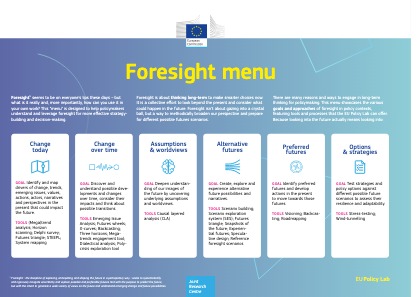
    Foresight MenuJanuary 2025

    Foresight Processes for Policymaking

    Foresight seems to be on everyone’s lips these days – but what is it really and, more importantly, how can you use it in your own work? This “menu” is designed to help policymakers understand and leverage foresight for more effective strategy- building and decision-making.

    Foresight is about thinking long-term to make smarter choices now. It is a collective effort to look beyond the present and consider what could happen in the future. Foresight isn’t about gazing into a crystal ball, but a way to methodically broaden our perspective and prepare for different possible futures scenarios.

    There are many reasons and ways to engage in long-term thinking for policymaking. This menu showcases the various goals and approaches of foresight in policy contexts, featuring tools and processes that the EU Policy Lab can offer. 

    Source: European Commission - Knowledge for policy  

    Posted on: 15/04/2025

    Last Edited: a year ago

    LifeFactFuture1

    LFF

    About

    The LifeFactFuture (LFF) project combines world class-excellence of Finnish life science companies, technology companies and academic researchers. It seeks to enhance advanced pharmaceutical and life science manufacturing in Finland.

    The LFF consortium includes research teams at the University of Turku and the University of Helsinki, as well as some of Finland’s leading life science manufacturers, data and technology companies. The goal of the project collaboration is to speed up the introduction of digital solutions and more efficient utilization of data and to make Finland the most attractive place in the world for investments in data-driven life science manufacturing.

    Current global vendors for pharmaceutical manufacturing are not able to provide the critical future data capabilities already identified by the sector in Finland. The data-driven capabilities offered by life science manufacturing vendors are assessed as less mature than similar solutions for other manufacturing sectors such as the automotive industry.

    If Finland becomes the lighthouse for exploiting new data-driven capabilities in advanced life sciences manufacturing, new billion-euro export opportunities are on the horizon. The export potential is considerable within the life science sector itself as well as within technology industry companies supplying the life science sector with data-driven capabilities.

    LFF is designed to fulfill the following objectives:

    World-class, interdisciplinary research published in high-level journals.
    Map the transformative potential of data-driven capabilities in pharmaceutical manufacturing.
    Facilitate the design and adoption of regulatory practices in favor of agile/adaptive manufacturing.
    Support the development of technology Proofs of Concept advancing data-driven life science manufacturing.
    Progress made in developing sustainable business competencies in digital production environment.


    The consortium is led by the Finland Futures Research Centre, University of Turku and
    funded by Business Finland during 2024–2026.

    Posted on: 08/04/2025

    Last Edited: a year ago

    FutureCraft1

    Empowering Visionaries for Tomorrow's Dynamic Landscape

    FutureCraft project aims to foster entrepreneurial mindsets and enhance the capacity of ecosystem enablers while promoting futures literacy and global collaboration.

    The project aspires to cultivate innovative thinking, provide effective guidance to entrepreneurs, and increase awareness of future trends and sustainability challenges. Ultimately, the goal is to drive economic growth by developing vibrant and sustainable entrepreneurial ecosystems, fostering prosperity and innovation.

    The project is funded by EU program Erasmus+ during 12/2024–11/2026.

    https://erasmus-plus.ec.europa.eu/projects/search/details/2024-1-TR01-KA220-ADU-000251939

    Posted on: 04/04/2025

    Last Edited: a year ago

    Tolga Karayel1

    Doctoral Researcher - Project Researcher at Finland Futures Research Centre, TSE - University of Turku

    Posted on: 04/04/2025

    Last Edited: a year ago

    Romanian Mountain Areas 20351May 2023 - August 2023

    The stages of the implemented process were as follows:

    1. Shared understanding of the current situation in the mountain areas
    The discussions within the working groups started from a set of summarized information from the extensive analyses previously conducted, structured by strengths and weaknesses, along with additional synthetic data on the tourism, agriculture, forestry, and wood industry sectors.

    2. Selection of the drivers of change
    The working groups explored and enriched a list of factors/trends that influence the contextual change toward the 2035 horizon, across various dimensions: social, technological, economic, ecological, geopolitical, and values-based factors.

    3. Scenario projection for 2035
    Based on thematically grouped change drivers, the working groups envisioned and described the state of mountain areas in 2035 under the influence of these drivers, in the absence of strategic corrective interventions.

    4. Identification of aspirations – key values, opportunities, best practices
    The groups proposed and debated a series of values and aspirations for the future of mountain areas by 2035, including inspiration from best practices in other countries.

    5. Consolidation of aspirations into clear directions for transforming mountain areas
    This stage involved grouping aspirations by thematic areas, more clearly articulating the transformation vector, and partially exploring concrete actions that would enable these transformations. The sum of these transformation directions forms the **Vision for mountain areas by 2035**.

    6. Roadmapping - includes the set of actions that support progress toward the desirable transformation of the mountain areas, across multiple levels.

    7. Priority directions
    Participants in the workshops identified the actions perceived as the most impactful and/or urgent in transforming mountain areas.

    Posted on: 01/04/2025

    Last Edited: a year ago

    Fisheries and Aquaculture 20351

    Collaborative development of the vision and roadmap

    The project relies on a foresight methodology that involves a number of co-creation workshops with stakeholders in the sector. The workshops engaged participants in a step-by-step process, as follows:

    1. Building a common understanding of the current societal/consumer behaviors and attitudes (level of fish and seafood consumption, types of products consumed, preference for local products, expectations regarding traceability, environmental concerns etc.);
    2. Assessing the evolution of societal/consumer expectations by 2035 (on the same parameters as above);
    3. Mapping the current fishing and aquaculture system, in terms if strengths and weaknesses;
    4. Sketching the inertial future scenario of the fishing and aquaculture sector in Romania, meaning the likely scenario for 2035 in the absence of corrective policy interventions;
    5. Identifying future opportunities that would allow the system to progress towards more desirable scenarios than the inertial scenario;
    6. Collaboratively developing normative scenarios, capitalizing on selected opportunities;
    7. Based on the normative scenarios, extracting the main pillars of a future vision for 2035;
    8. Describing, in more depth, the vision components;
    9. Identifying the areas of transformation that enble achieving the vision;
    10. Calibrating strategic objectives for 2030, taking into account the pace of transformation;
    11. Identifying governance principles.

    Posted on: 01/04/2025

    Last Edited: a year ago

    Copenhagen Institute for Futures Studies1

    CIFS an independent, non-profit futures think tank

    We help people and organisations imagine, work with, and shape their future. 

    CIFS is one of the worlds oldest think tanks exclusively focusing on foresight. CIFS teach very popular courses in foresight, gives key notes and launch various initiatives and do research projects. CIFS is a self-owned think tank, completely independent of special interests. 

    Posted on: 31/03/2025

    Last Edited: a year ago

    Kai Kaasalainen1

    CEO | Leadership | Strategy | Futurist | Foresight & Insight author | Researcher | Speaker | Ai | Health & Pharma |

    Posted on: 16/03/2025

    Last Edited: a year ago

    Fundamental Rights in Foresight 20401November 2024 - October 2025

    With this project, the EU Agency for Fundamental Rights (FRA) aims to systematically integrate fundamental rights into EU foresight processes and activities. The project explores reference scenarios for fundamental rights and considers how different drivers of change could impact on fundamental rights in the period up until 2040. The scenarios will form the basis for a set of foresight policy briefs for selected megatrends. The project builds on the reference foresight scenarios developed by the European Commission’s Joint Research Centre, with a view to complement them with fundamental rights considerations.

    The project includes horizon scanning, retrofitting scenarios, visioning, developing future pathways and policy options stress-testing. In all the activities, the project utilizes FRA’s draft guidance on inclusive, non-discriminatory and participatory foresight. Outputs comprise of a set of fundamental rights scenarios, foresight policy briefs and a guidance on embedding fundamental rights into foresight.

    This project and the foresight knowledge it generates will enable FRA and other stakeholders to support EU institutions and Member States in addressing future challenges by creating a foresight framework that incorporates a fundamental rights perspective and ensures that policies remain inclusive, forward-looking and in line with the EU's core values.

    Posted on: 13/03/2025

    Last Edited: a year ago

    Twinning Light Project: Strengthening the science and research ecosystem in Albania1

    The Twinning Light project (2023-2024) redefined the future role of the Albanian Agency for Scientific Research and Innovation (NASRI) in the research and innovation ecosystem. The foresight component addressed the following questions What will a future research and innovation ecosystem in Albania look like and what role will NASRI play in it? How can NASRI position itself in this dynamic environment? What concrete steps are needed to achieve NASRI's goals? Together, project experts, NASRI staff and stakeholders developed a roadmap outlining concrete actions and milestones for the strategic reorientation of the agency. The developed roadmap includes recommendations for positioning NASRI in a dynamic environment as well as steps for implementing these goals - with the involvement of relevant partners in the ecosystem. 

    Posted on: 17/02/2025

    Last Edited: a year ago

    Mission Area: Cancer Foresight on Demand Brief in Support of the Horizon Europe Mission BoardJuly 2021

    The activities reported in this foresight brief reflect the foresight knowledge in support of the Mission Board and its strategies towards a consolidated mission within the broader goal to fight cancer in the European Union. The support of the FOD Cancer project team consisted of several interactive events with the Mission Board, horizon scanning, and the provision of three specific reports. This synthesis report gives a concise overview of the deliverables, which are provided in full as annexes.

    Based on the “Scoping Paper” (Annex I) this synthesis report demonstrates the challenges for future cancer research. It summarises some major aspects behind the urgency of the cancer topic – not only medical aspects but a broader spectrum that includes prevention, prediction, care, diagnosis and treatment as well as other economic and social aspects. The report is the result of a targeted literature review of recent documents where the future of the fight against cancer is discussed. The main goal of the review was to identify and assess both consolidated trends and drivers, and other phenomena at the periphery that are likely to have impacts on the future of cancer. Mission Board members revised the report and gave additional inputs online (since an onsite scoping meeting had to be sacrificed to meet the COVID-19 containment measures).

    Building on the outcome of the revised Scoping Paper, two scenarios were developed discussing diverging directions of cancer development and the measures to fight cancer (Annex II). The two future health scenarios were based on scenarios from an earlier EU-funded project entitled "FRESHER - FoResight and Modelling for European HEalth Policy and Regulation", which aimed to identify future research policies to effectively address the burden of noncommunicable diseases (NCD) using emerging health scenarios with a time horizon up to 2050. 

    Within the online scenario workshop with members from the Mission Board on ‘Fighting Cancer’ and members from the European Commission, the two FRESHER scenarios were discussed, revised and feedback for desirable futures with regard to fighting cancer was collected. The two scenarios are briefly presented in this report as well. Under the impression of the two scenarios, the Mission Board members and EC representatives were guided by the FOD Cancer team to discuss online in five focus groups - in parallel - different stakeholder perspectives with regard to desirable milestones that may be achieved in the future to make prevention, diagnosis, treatment and survival of cancer more effective. These stakeholder perspectives comprised “Members of the European Parliament against Cancer”, “General Practitioners”, “Pharmaceutical Companies”, “Patient Organisations”, and “Survivors”. Out of these discussions, the FOD team developed three roadmaps (Annex III): milestones for prevention, milestones for diagnosis and treatment, and milestones for survivorship. The roadmaps are also briefly summarised.

    Posted on: 28/01/2025

    Last Edited: a year ago

    Martin Kruse1

    Posted on: 02/01/2025

    Last Edited: a year ago

    Technology Foresight on Biometrics for the Future of Travel1December 2020 - August 2021

    Millions of travellers cross the EU’s external borders every year and their numbers will likely increase even further. Thus, border checks will need to undergo significant transformations in the coming years, both to effectively safeguard the EU’s external borders and to improve the border crossing experience for travellers. Biometrics is one of the fields expected to significantly contribute to the attainment of these goals.

    In light of the above, Frontex, the European Border and Coast Guard Agency delivered a Technology Foresight Research Study on Biometrics for the Future of Travel. The main objective of this research was the delivery of a study on the future of biometrics for its implementation in border control systems that may benefit the work of the European Border and Coast Guard (EBCG) community in a short (1-5 years), medium (5-10 years) and long term (10+ years) perspective. In particular, this research was to produce a research study that includes the prioritization and roadmapping of emerging relevant biometric technologies with the strongest potential to influence the strategic components of Integrated Border Management and the work of Border Guards themselves. The research study also produced comprehensive tailored technology foresight methodology and supporting tools, properly adapted to Frontex capabilities and organization. Furthermore, it delivered a technology taxonomy for biometrics and biometrics-enabled technological systems.


    The obtained findings were to support Frontex in identifying specific research and innovation initiatives which could accelerate the integration of novel biometrics-enabled technological solutions for border checks. This study provides knowledge on how to maximize future benefits of biometrics technology in the border management environment while minimizing its risks and ensuring full compliance with the existing legal, ethical and technological constraints.

    The research study consisted of five phases, which all produced their own set of insights intended to support the EBCG community in decision-making processes, compiled in the main report available here . 

    Posted on: 30/12/2024

    Last Edited: a year ago

    Chem4EU1December 2021 - February 2023

    Foresight for Chemicals

    The chemical industry is a significant contributor to the EU economy. It is simultaneously instrumental to the green and digital transition and exposed to its effects. A steady supply of (green) create reusable and recyclable consumer goods. On the other hand, chemical synthesis is an energy-intensive process inherently dependent on carbon-based feedstock (currently derived almost exclusively from fossil fuels). In addition, chemistry is a global industry with international value chains, where the EU both collaborates and competes with other countries for materials, knowledge and skills.

    Transforming the European chemical industry into a sustainable motor for the green and digital transition will require investments in infrastructure, assets and skills. Focus should be placed on chemicals that are crucial to this Twin Transition, , or both. The long lead time required for the deployment of infrastructure and the development of skills means that such investments must be made now to achieve targets set for 2050.

    In connection with these issues, the report at hand aims to give insights into a number of value chains that are strategic to EU economy. It considers which chemicals and innovations are vital to transforming these value chains as well as rendering them more resilient and future-fit. To this end, a participatory workshop-based foresight approach was implemented to provide a unique set of insights from stakeholders and translate them into actions and policy recommendations.
    Chapter 1 provides a general introduction into foresight and an overview of the project, the definitions used, the methodology applied and the approach to project implementation.

    Chapter 2 details the 20 Critical Chemicals and 10 key Future Innovations, needed to secure the four Strategic Value Chains under consideration: Batteries, Connected Clean & Autonomous Vehicles, Hydrogen Technologies & Systems, and Microelectronics & Industrial IoT. These value chains were selected as highly dependent on chemicals and non-overlapping with other EC research initiatives. Those Critical Chemicals and Future Innovations are listed in the tables below.

    Chapter 3 presents In addition, each so-called factsheet contains roadmaps of actions needed to increase those value chains resilience as well as describes chemicals and the implementation of innovations. Thus, the roadmaps enable the identification and assessment of potential future actions.

    Chapter 4 contains a set of key policy recommendations addressed to policy stakeholders. They focus on accelerating the digital and green transformation of the entire chemical industry, and were collected from experts throughout the project.

    Finally, the Annex details methodologies and underlying analyses.

    Chem4EU Foresight for chemicals : final report 

    Posted on: 30/12/2024

    Last Edited: a year ago

    Jeroen de Jong1

    In action, we both discover and produce transformative possibility

    Posted on: 20/12/2024

    Last Edited: a year ago

    4CF The Futures Literacy Company1

    4CF The Futures Literacy Company is a consultancy entirely focused on strategic foresight and long-term strategies. For nearly two decades, 4CF has been on the mission to help its clients prepare for an uncertain tomorrow. The Company has executed hundreds of projects for private companies, public institutions and international entities, including the European Commission and its agencies (EUDA, ENISA), FAO, UNFCCC, UNESCO, UNEP and UNDP. 4CF is at the forefront of global innovation, and actively contributes to the development of cutting-edge foresight tools, including 4CF HalnyX (Delphi platform), 4CF Sprawlr, 4CF FLEx.

    Posted on: 17/12/2024

    Last Edited: 3 days ago

    Miquel Banchs-Piqué1

    Better late than never

    Posted on: 09/12/2024

    Last Edited: a year ago

    Fundação para a Ciência e a Tecnologia (FCT)1

    Foundation for Science and Technology

    Posted on: 04/12/2024

    Last Edited: a year ago

    Strategic Foresight in the Western BalkansSeptember 2021

    Recovery on the Horizon

    The report outlines three scenarios of possible futures for Research and Innovation (R&I) policies in the Western Balkans in 2035. Using a Strategic Foresight approach, the report supports policy makers in creating an enabling environment for R&I policies to thrive and in deciding on priorities for strategic investments for the future. 

    The scenarios in the report are based on an extensive co-creation process with more than 700 R&I experts from the Western Balkans, representing academia, civil society, the private sector, international organisations, and central and sub-national governments. To provide inspiration for the implementation of future-proof R&I policies, the report also includes initial roadmaps. 

    These are designed to inspire decision-makers by setting targets and the actions needed to develop their R&I systems for the benefit of all citizens in the Western Balkans. The project was launched in July 2020 and the final study was presented at the EU-WB Ministerial Meeting in October 2021.

    Posted on: 04/12/2024

    Last Edited: 7 days ago

    DLR Projektträger (DLR-PT)1

    German service provider for the management of research, education and innovation

    Posted on: 25/11/2024

    Last Edited: a year ago

    Foresight on Demand I1

    EC framework contract Foresight on Demand 2018-2022

    Established by the European Commission, Foresight-on-Demand is a mechanism to respond to the demand for quick inputs to policy-making by drawing on the best available foresight knowledge.

    FoD aims at offering the European Commission services with timely and effective support related to crisis situations, emerging risks, and policy challenges.

    Posted on: 08/11/2024

    Last Edited: a year ago

    Radu Gheorghiu1

    Foresight is a reflective journey into who we are and where we're headed

    Posted on: 05/11/2024

    Last Edited: a year ago

    Road-STEAMer1

    Road-STEAMer attempts to develop a STEAM Roadmap for Science Education in Horizon Europe and in educational policy across the continent in order to: 

    • To produce better knowledge and shared understanding of Europe’s particular educational needs and how STEAM can address them.
    • To explore the opportunities arising through STEAM for integrated science learning approaches and synergies.
    • To study those policy deficiencies that hinter the impactful adoption of STEAM approaches in Europe’s science education landscape.

    Posted on: 04/11/2024

    Last Edited: a year ago

    Prospectiva1

    Institutul de Prospectiva

    Institutul de Prospectiva is a research organisation (NGO) with the mission to stimulate future-awareness aimed at addressing the challenges of contemporary societies. To this end, we implement tailored foresight exercises supporting strategic orientation in the public sector, with a focus on foresight for R&I policy at European and national level.

    Prospectiva is part of the Foresight-on-Demand (FOD) consortium, tasked with advising the European Commission and fourteen other EU organisations on science and technology policy programming for a period of four years (April 2024 – March 2028).
    This is an extension of the previous successful cooperation within the Foresight on Demand framework contract (2019-2023); during this period Prospectiva has contributed to numerous projects, on components related to horizon scanning, large scale Delphi consultations, scenario building, co-creation workshops, speculative design, and the elaboration of various briefs, in-depth case studies and reports. These projects addressed a range of themes, among which the future of food, of retail, of ecosystems’ flourishing, and even of the human condition.

    Posted on: 14/10/2024