Last Edited: 2 months ago
Project Page Test1
The Research and Innovation Foresight Community
Test 123 Post content rich 1
Test 123 Post content rich 2
Test 123 Post content rich 3
Posted on: 06/11/2025
sorted by publishing date
Last Edited: 2 months ago
Test 123 Post content rich 1
Test 123 Post content rich 2
Test 123 Post content rich 3
Posted on: 06/11/2025
Last Edited: 2 months ago
Test 123 Post content rich 1
Test 123 Post content rich 2
Test 123 Post content rich 3
Posted on: 06/11/2025
Last Edited: 2 months ago
Test 123 Post content rich 1
Test 123 Post content rich 2
Test 123 Post content rich 3
Posted on: 06/11/2025
Last Edited: 2 months ago
The Faculty of Computer Science at Alexandru Ioan Cuza University of Iași, established in 1992 as the first Computer Science Faculty in Romania, is a center of innovation and excellence in education and research. With over 1400 students and more than 50 professors, it offers programs in Artificial Intelligence, Software Engineering, Cybersecurity, Cloud Computing, Distributed Systems, and more. Students obtain access to contemporary laboratories, internships, and joint projects through robust industry partnerships. The Faculty is committed to training future leaders and innovators, leading digital transformation on both national and international levels.
The name of the Faculty in Romanian is Facultatea de Informatică din Iași, having the acronym FII.
Bachelor's Programs
3 years of full-time studies in Romanian or English:
Master’s Programs
2 years of full-time studies in English:
Doctoral Programs
4 years, in varios research areas: Artificial Intelligence, Distributed Systems, Computer Networks, Cloud/Edge Computing, Knowledge Representation and Management, Human-Computer Interaction, Intelligent Data Analysis, Combinatorial and Computational Optimization, Nature-Inspired Optimization Methods, Formal Methods in Software Engineering, Programming Language Semantics.
Student Life and Community
With a vibrant student community, supported by professors with expertise in various fields, we ensure an environment of collaboration, creativity, and personal development.
Student life thrives through access to:
Research and Innovation
We host dynamic research groups in areas such as Artificial Intelligence, Computer Vision, Natural Language Processing, Formal Methods, Data Optimization and Mining, Distributed Systems, Cloud Computing, Blockchain.
Additionally, through the iTransfer Technology Transfer Center we link this research to industry, supporting innovation, entrepreneurship, and the development of prototypes with real-world impact.
Strong Industry Connections
Annually, more than 80 IT business partners collaborate with us in educational initiatives, internships, joint projects. Students may attend courses and events conducted directly by industry experts.
Connecting Minds Worldwide
With 70+ Erasmus partnerships across 25 European countries and global collaborations with universities and research centers worldwide, our Faculty offers students and staff unique opportunities for mobility, cultural exchange, and joint research projects.
We are committed to openness, innovation, and meaningful cooperation - preparing our community to thrive in an interconnected world.
Posted on: 04/11/2025
Last Edited: 4 months ago
𝗙𝘂𝘁𝘂𝗿𝗲𝘀 𝗼𝗳 𝗥&𝗜 𝗙𝗼𝗿𝗲𝘀𝗶𝗴𝗵𝘁 𝘄𝗼𝗿𝗸𝘀𝗵𝗼𝗽 unfolded on September 18-19th on Romania’s seaside coast — two breezy summer days that provided the perfect setting for a rich exploration of “foresight about foresight.”
Co-hosted by Executive Agency for Higher Education, Research, Development and Innovation Funding - UEFISCDI and AIT Austrian Institute of Technology, and part of the 𝗘𝘆𝗲 𝗼𝗳 𝗘𝘂𝗿𝗼𝗽𝗲 𝗽𝗿𝗼𝗷𝗲𝗰𝘁 (a Coordination and Support Action funded by the European Commission), the event brought together the community of practice working to 𝘀𝘁𝗿𝗲𝗻𝗴𝘁𝗵𝗲𝗻 𝗥𝗲𝘀𝗲𝗮𝗿𝗰𝗵 & 𝗜𝗻𝗻𝗼𝘃𝗮𝘁𝗶𝗼𝗻 (𝗥&𝗜) 𝗳𝗼𝗿𝗲𝘀𝗶𝗴𝗵𝘁 𝗶𝗻 𝗘𝘂𝗿𝗼𝗽𝗲.
Our shared ambition was to imagine a vision that is grounded in reality and lived experience, yet bold enough to inspire the next decade of foresight’s contribution to R&I.
Discussions flowed through several stages:
🌍 reflecting on today’s foresight landscape, particularly within R&I in Europe
🔎 identifying likely drivers of change for R&I in society by 2040
🧭 probing the forces that could reshape foresight itself by 2040 and finally,
🚀 envisioning the role and capabilities foresight will need to support R&I in 2040.
A vision document capturing the outcomes of the workshop will be shared in due course, once the many insights, contributions, and reflections have been carefully woven together.
Posted on: 17/08/2025
Last Edited: 5 months ago
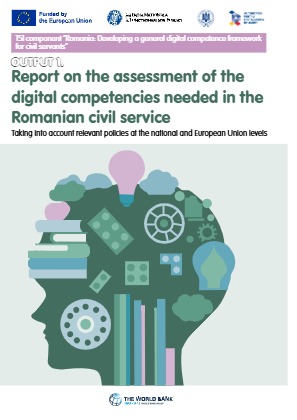
Romania’s public administration faces deep-rooted structural challenges that hinder the development of digital competencies and slow progress in both digital transformation and human resources management (HRM) reforms. While digital competencies are essential to achieving Romania’s public sector modernization goals, they are not a standalone solution. In this context, the government of Romania, assisted by the World Bank through the Technical Support Instrument (TSI), aims to develop a General Digital Competence Framework for Civil Servants.
This report if one of the outputs of the TSI project; its goal is to identify the digital competencies necessary at the intersection of Romania’s digital transformation and HRM reform agendas, laying the groundwork for a more capable and future-ready public administration. The report employs a comprehensive multi-layered analysis, incorporating: a top-down review of national and EU strategies, policies, and regulations; a bottom-up analysis of job descriptions, focus groups, interviews, and working groups; international best practices in public sector digital competencies; and a foresight perspective to anticipate future digital skill needs.
Chapter VI | Foresight: fit-for-future digital roles in the public administration describes the foresight exercise carried out by Institutul de Prospectiva and the World Bank, which was aimed at ensuring that the proposed digital competency framework will remain future-ready, enabling civil servants to navigate digital transformation, deliver citizen-centric services, and address complex policy challenges with agility and innovation. The process was meant to inform the definition of specific digital roles that are needed in the future, but also to allow the formulation of recommendations regarding the general digital competencies of public administration employees.
The foresight methodology utilized horizon scanning and scenarios (both explorative and normative), as essential tools in helping policymakers navigate uncertainty by exploring various probable and/or desirable futures. This foresight exercise focused on the year 2032, a timeframe suited for significant structural transformation in public administration, allowing for the development and maturity of complex digital systems.
In terms of process, the scenario-building process was based on an iterative consultation process. It built on inputs developed by the foresight team from Institutul de Prospectiva and was progressively refined through three online working sessions with international experts from the World Bank and the Joint Research Centre (JRC) and a final in-person workshop with local experts from the public administration and the private sector in Romania.
The figure below provides a concise overview of the scenario-building steps.
📌The Baseline Scenario “Romanian Digital Administration in 2032” provides a ‘current paradigm’ case: It takes the current Romanian strategic documents in the field of digital transformation as a starting point. It assumes that the key goals set in these
documents are generally met by 2032. The logic is the following: assuming Romania’s current digitalization paradigm (and
associated digital roles) turn out mostly as planned, what is the gap between this best-case baseline and the digital society scenarios for 2032?
📌The Context Scenario about the “Digital society in Romania in 2032” is an exploratory scenario, meaning it describes a probable future rather than one driven by a deliberate vision of a desirable future society. The core scenario integrates high-impact, high-probability trends - or drivers of change -identified in the initial horizon scanning phase. While these drivers describe the evolution of the European and global contexts, their advancement has been partially adjusted to reflect specific conditions in Romania. In addition to the core scenario, four other narratives were built around drivers of change previously identified as having high impact as well as a rather high degree of uncertainty. These new dimensions largely complement rather than challenge the core scenario.
📌The five Aspirational Scenarios 2032 describe visions regarding the digital transformation of the Romanian public administration, going beyond the trajectory set in the baseline scenario. They examine a range of potential paths/options that could contribute, individually or in various combinations, to a more ambitious and impactful digital transformation in the public administration. Each scenario revolves around a key dimension. Primarily, these dimensions emerge from Romania’s current policy discourse and strategic documents, where they are often mentioned but with limited precision or commitment. Additionally, they reflect elements of the context scenario, incorporating anticipated societal developments by 2032, as
well as digital trends and paradigm shifts observed in public administrations in the EU and worldwide.
A list of key digital roles follows the baseline and aspirational scenarios, outlining the expertise civil servants need to bring them to life. These roles do not distinguish between in-house and outsourced expertise, as that remains a separate decision.
Posted on: 11/08/2025
Last Edited: 6 months ago
Posted on: 01/07/2025
Last Edited: 8 months ago
Posted on: 08/05/2025
Last Edited: 9 months ago
Posted on: 11/04/2025
Last Edited: 9 months ago
The stages of the implemented process were as follows:
1. Shared understanding of the current situation in the mountain areas
The discussions within the working groups started from a set of summarized information from the extensive analyses previously conducted, structured by strengths and weaknesses, along with additional synthetic data on the tourism, agriculture, forestry, and wood industry sectors.
2. Selection of the drivers of change
The working groups explored and enriched a list of factors/trends that influence the contextual change toward the 2035 horizon, across various dimensions: social, technological, economic, ecological, geopolitical, and values-based factors.
3. Scenario projection for 2035
Based on thematically grouped change drivers, the working groups envisioned and described the state of mountain areas in 2035 under the influence of these drivers, in the absence of strategic corrective interventions.
4. Identification of aspirations – key values, opportunities, best practices
The groups proposed and debated a series of values and aspirations for the future of mountain areas by 2035, including inspiration from best practices in other countries.
5. Consolidation of aspirations into clear directions for transforming mountain areas
This stage involved grouping aspirations by thematic areas, more clearly articulating the transformation vector, and partially exploring concrete actions that would enable these transformations. The sum of these transformation directions forms the **Vision for mountain areas by 2035**.
6. Roadmapping - includes the set of actions that support progress toward the desirable transformation of the mountain areas, across multiple levels.
7. Priority directions
Participants in the workshops identified the actions perceived as the most impactful and/or urgent in transforming mountain areas.
Posted on: 01/04/2025
Last Edited: 9 months ago
The project relies on a foresight methodology that involves a number of co-creation workshops with stakeholders in the sector. The workshops engaged participants in a step-by-step process, as follows:
Posted on: 01/04/2025
Last Edited: 9 months ago
This foresight study aims to support the design of a robust and adaptable digital competency framework that aligns with the long-term strategic priorities of the public administration in Romania. Additionally, it seeks to ensure the framework remains future-ready, enabling civil servants to navigate digital transformation, deliver citizen-centric services, and address complex policy challenges with agility and innovation.
The foresight methodology utilized horizon scanning and scenarios (both explorative and normative) as essential tools in strategic planning, helping organizations and policymakers navigate uncertainty by exploring various probable and/or desirable futures.
This study focuses on the year 2032, a timeframe suited for structural transformation in public administration, allowing for the development and maturity of complex digital systems.
The scenario-building process was based on inputs developed by the foresight team at Institutul de Prospectiva and was progressively refined through three online working sessions and a final in-person workshop.
The figure below provides a concise overview of the scenario-building steps, followed by a detailed explanation of the characteristics and objectives of each scenario type.
Posted on: 01/04/2025
Last Edited: 10 months ago
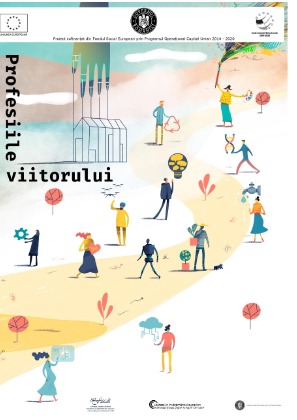
Like everywhere in the world, in Romania, people perceive their work, to varying degrees, as both a source of material well-being and a fundamental aspect of their identity. Uncertainties about how people will work in the future—how they will earn their income and build meaning and purpose through their jobs—are important concerns and often a source of anxiety.
Where are different industries and sectors headed? What is possible, and what is likely regarding the evolution of professions by 2030? Which of these developments are desirable? What can universities and the business sector do to facilitate these changes? These questions motivated our research.
This study encourages futures thinking, understood as an informed exploration of the evolution of a set of professions across various fields. These professions were identified through a dedicated process that included, among other methods, horizon scanning—tracking societal and technological trends that are shaping the global labor market.
The set of professions expected to undergo significant transformation by 2030 was the focus of participatory exercises, fulfilling the foresight function of debating the future. Through interviews with diverse stakeholders—employers from various industries and coordinators of academic programs relevant to the professions analyzed—we aimed to integrate different perspectives and interests into discussions about future developments and strategic choices. This debate was further expanded through a broader online consultation using the Dynamic Argumentative Delphi method, which examined both the expected demand for each profession by 2030 and the adequacy of the current educational offer to meet this demand.
In addition to these foresight efforts, the study presents an analysis of higher education specializations in Romania relevant to the professions of the future. This is illustrated through visual representations of the trends in university graduates who could enter the identified professions.
Through these efforts, we approach the future-shaping function of foresight, which translates into strategic advisory support, integrating insights from both individual and institutional actors into policy-related knowledge. Moreover, this approach aims to facilitate the implementation of public policies by fostering networks, knowledge platforms, and other foresight intelligence infrastructures.
***
The study was published in Romanian as part of the project POCU INTL - Quality in higher education: internationalization and databases for the development of Romanian higher education.
Project webpage: pocu-intl.uefiscdi.ro
Posted on: 13/03/2025
Last Edited: 10 months ago
Posted on: 28/02/2025
Last Edited: a year ago
Posted on: 30/12/2024
Last Edited: a year ago
The general objective of the project was of strengthening the anticipatory capacity for the development of evidence-based public policies in the field of Research, development and Innovation (RDI) in Romania.
A considerable part of the project consisted in the elaboration of the National Strategy for Research, Innovation and Smart Specialization 2022-2027 and the key implementation instrument, namely The National Plan for Research, Development and Innovation 2022-2027.
The foresight components of the project included:
- A Vision building process for setting the sistemic transformations by 2030
- The foresight based entrepreneurial discovery process for selecting national smart specializations
- The priority setting for the National Research Agenda, which is focused on societal challanges.
The foresight results have been integrated in the final documents (e.g. national strategy and plan) and adopted by Governmental decision.
Posted on: 09/12/2024
Last Edited: a year ago
The National Strategy for Research, Innovation, and Smart Specialisation (SNCISI) 2022–2027 represents Romania’s comprehensive approach to fostering a modern, sustainable, and impactful research and innovation ecosystem. Coordinated by the Ministry of Research, Innovation, and Digitalization (MCID), this strategy aligns with Romania’s national development goals and its commitments under the European Research Area (ERA). SNCISI is designed to address pressing societal challenges, stimulate economic transformation, and elevate Romania’s global standing in research and innovation.
This strategy highlights the pivotal role of research, development, and innovation (RDI) in driving sustainable growth, advancing scientific discovery, and creating new technologies that directly enhance quality of life, productivity, and economic competitiveness. At its core, the SNCISI aims to integrate the principles of open science, ensure inclusivity in research priorities, and align Romania’s efforts with global and European benchmarks.
Through SNCISI, Romania emphasises a dual commitment: first, to support foundational and applied research excellence by creating favourable conditions for researchers, institutions, and private stakeholders; second, to catalyse public-private collaboration that addresses challenges like climate change, digitalization, and health crises. The strategy views science and innovation not merely as tools for economic growth but as vital contributors to societal well-being and global problem-solving.
SNCISI’s development is rooted in an extensive consultative process involving regional and national stakeholders, ensuring that the strategy is representative of Romania’s diverse socioeconomic landscape. It integrates input from academia, government, industry, and civil society to outline actionable pathways that connect research activities with tangible societal and economic outcomes.
The strategy is framed around four major objectives (OGs) and five smart specialisation domains that align with regional and national strengths. These axes ensure a coherent alignment of resources, infrastructure, and expertise to drive both regional and national priorities forward.
Objectives include:
OG1: Developing the research, development, and innovation system.
OG2: Supporting innovation ecosystems tied to smart specialisations.
OG3: Mobilising towards innovation by enhancing collaboration with the private sector.
OG4: Increasing European and international collaboration.
The SNCISI underscores a commitment to modernising infrastructure, attracting and retaining talented researchers, and fostering an innovation-driven economy. Through its structured framework, it also ensures that public funds are allocated effectively to stimulate high-impact, sustainable outcomes.
Posted on: 09/12/2024
Last Edited: a year ago
The Vision was developed as part of the project Elaboration of the Strategy on Strengthening the Efficiency of Public Administration 2014-2020.
The vision building process involved over 40 representatives of public administration agencies and a variety of stakeholders in two day-long workshops. The process comprised four main stages:
In the same project, a Dynamic Argumentative Delphi was deployed for assesing the future impact of a set of policy measures in relation the established vision.
The resulting vision document and the selected policies has been included in the National Strategy on Strengthening the Efficiency of Public Administration 2014-2020, which has been adopted by Governement Decision.
Posted on: 09/12/2024
Last Edited: a year ago
The I. L. Caragiale National University of Theatre and Film is a public university in Bucharest, Romania, founded in 1954. It is named in honour of playwright Ion Luca Caragiale
Posted on: 03/12/2024
Last Edited: a year ago
Posted on: 02/12/2024
Last Edited: a year ago
Posted on: 01/12/2024
Last Edited: a year ago
Posted on: 18/11/2024
Last Edited: a year ago
Posted on: 09/11/2024
Last Edited: a year ago
Posted on: 05/11/2024
Last Edited: a year ago
Posted on: 31/10/2024
Last Edited: a year ago
The Executive Agency for Higher Education, Research, Development and Innovation Funding (UEFISCDI) is a public institution with legal personality subordinate to the Ministry of National Education in Romania.
Attributions:
Posted on: 28/10/2024
Last Edited: a year ago
Posted on: 14/10/2024
Last Edited: a year ago
Institutul de Prospectiva is a research organisation (NGO) with the mission to stimulate future-awareness aimed at addressing the challenges of contemporary societies. To this end, we implement tailored foresight exercises supporting strategic orientation in the public sector, with a focus on foresight for R&I policy at European and national level.
Prospectiva is part of the Foresight-on-Demand (FOD) consortium, tasked with advising the European Commission and fourteen other EU organisations on science and technology policy programming for a period of four years (April 2024 – March 2028).
This is an extension of the previous successful cooperation within the Foresight on Demand framework contract (2019-2023); during this period Prospectiva has contributed to numerous projects, on components related to horizon scanning, large scale Delphi consultations, scenario building, co-creation workshops, speculative design, and the elaboration of various briefs, in-depth case studies and reports. These projects addressed a range of themes, among which the future of food, of retail, of ecosystems’ flourishing, and even of the human condition.
Posted on: 14/10/2024