Loading...

    Mentions of

    sorted by publishing date

    Last Edited: 20 days ago

    Building Regional Foresight Capability in Antofagasta, ChileFebruary 2016

    lessons from a multi-layered regional foresight programme

    This report of the European Foresight Platform (EFP) reports on a regional foresight programme carried out in 2011–2013 in the Antofagasta region of Chile (Dufva et al., 2016). Organised by VTT Technical Research Centre of Finland and funded by the Ministry for Foreign Affairs of Finland, the programme formed part of a broader joint project with the Chilean Mining Technological and Scientific Research Centre (CICITEM) that aimed at innovation-driven, sustainable economic development of the region. Its purposes were to improve foresight capability in the region, especially among the partner organisations, to enhance collaboration between industry, government and research organisations, and to support the creation of a strategic research agenda on a topic chosen by the partners. The time horizon was 2040.

    The programme built on the Pact for Regional Development and Innovation signed by public and private actors in the Antofagasta region in March 2008, which sought economic growth and equality, better jobs and a path towards sustainable development. Chile looked to Finland as an example of how a resource-driven economy can become knowledge-driven when development strategies and policies are well chosen. Antofagasta is also an extreme risk area for ecological change: climate change and contamination from mining have had lasting effects on regional water supplies, and melting glaciers and the overuse of groundwater call for a significant redesign of water use.

    The foresight activities had two parts. A three-day hands-on workshop in Antofagasta trained participants in futures thinking and in methods such as scenarios, roadmapping and Delphi, supported by a learning package with a glossary and a project website, and ended with group work on planning a foresight project for the region. On this basis, VTT and CICITEM selected the topic of a foresight pilot for its importance and relevance to different stakeholders. The pilot combined scenario and roadmapping work through a conference, two stakeholder workshops, a stakeholder survey, interviews with mining companies and a reflection discussion with CICITEM experts. VTT provided guidance and support, but the emphasis was on learning by doing for CICITEM researchers, who worked with researchers from local universities, representatives of local SMEs, government officials and mining companies.

    Drawing on the process and the foresight literature, the authors developed a multi-layered framework for analysing the contributions of foresight (Dufva et al., 2015). At the landscape layer, foresight connects the region to the global context, helping participants to see Antofagasta as part of a larger system and to find its niche in global markets. At the innovation-system layer, it supports joint strategy formulation and a shared vision; stakeholder analysis helped to choose a suitably controversial topic that was interesting for all stakeholder groups and committed them to the process. At the organisational layer, the pilot generated new ideas about the role and mission of CICITEM, although not every researcher saw its benefit and some were reluctant to participate, which shows how a foresight process is entangled with organisational dynamics. At the individual layer, learning by doing gave participants experience in scoping, designing, implementing and documenting foresight; one CICITEM researcher reflected that he had learned to bring ideas 'high up in the sky down to earth'.

    The report draws three implications for policy-making and practice. Foresight should be designed with multiple layers in mind, with particular attention to individuals, since changes in mindsets and worldviews through learning are what carry change into organisations and innovation systems. The nature of the effects varies between layers: knowledge produced weighs more at the landscape and innovation-system layers, whereas capabilities gained matter more at the organisational and individual layers. Finally, the layers can be used to structure the effects of foresight, showing that there is more to foresight than its immediate tangible outcomes and that a successful process can change the capacity of an organisation or a community to anticipate the future and, through that, contribute to regional transformation.

    References

    Dufva, M., Könnölä, T., & Koivisto, R. (2015). Multi-layered foresight: Lessons from regional foresight in Chile. Futures, 73, 100–111. https://doi.org/10.1016/j.futures.2015.08.010 

    Dufva, M., Könnölä, T., & Koivisto, R. (2016). Building regional foresight capability in Antofagasta, Chile (EFP Brief No. 260). European Foresight Platform. https://if-institute.org/wp-content/uploads/2016/04/Building_Regional_Foresight_in_Antofagasta_Chile_EFP-Brief-No.260.pdf 

    Posted on: 29/10/2026
    Last Edited: 20 days ago

    Building regional foresight capability in Antofagasta, Chile1December 2010 - November 2013

    Foresight capability in Antofagasta

    Between 2011 and 2013, VTT Technical Research Centre of Finland and the Chilean Mining Technological and Scientific Research Centre (CICITEM) carried out a regional foresight programme in Antofagasta, Chile's leading mining region, funded by the Ministry for Foreign Affairs of Finland. The programme was part of a broader joint project to enhance innovation-driven, sustainable economic development in the region. It built on the 2008 Pact for Regional Development and Innovation in the Antofagasta Region and on Chile's interest in how Finland moved from a resource-driven to a knowledge-driven economy. The region also faces acute ecological pressures, not least on water supplies affected by climate change and mining.

    The foresight activities pursued three aims: improving foresight capability in the region, especially among the partner organisations; strengthening collaboration between industry, government and research organisations; and supporting a strategic research agenda on a topic chosen by the partners. A three-day hands-on workshop in Antofagasta introduced futures thinking and methods such as scenarios, roadmapping and Delphi. A foresight pilot followed, combining scenario and roadmapping work through a conference, two stakeholder workshops, a stakeholder survey, interviews with mining companies and a final reflection session. VTT experts guided the process, but the emphasis was on learning by doing for CICITEM researchers, working alongside local universities, SMEs, government officials and mining companies, with a time horizon of 2040.

    Reflecting on the process, the team developed a four-layer framework (landscape, innovation system, organisation and individual) for analysing how foresight contributes to new knowledge, capabilities and networks. The experience underlines that individuals are the key: changes in their mindsets and skills are what carry foresight into organisations and, ultimately, into regional transformation. The results are reported in EFP Brief No. 260 (Dufva, Könnölä & Koivisto, 2016) and in Dufva, M., Könnölä, T., & Koivisto, R. (2015). Multi-layered foresight: Lessons from regional foresight in Chile. Futures, 73, 100–111. https://doi.org/10.1016/j.futures.2015.08.010 

    Posted on: 29/10/2026

    Last Edited: 3 months ago

    Youth4Foresight in Chile: helping young people define their role, priorities and influenceJuly 2026

    Young people should be able to shape their own future. That is the idea behind the Youth4Foresight (Y4F) toolkit, which was developed by DG International Partnerships (European Commission) to give youth practical methods to think beyond immediate challenges, explore long-term change, and identify concrete ways to act. This approach is closely linked to the EU Youth Action Plan (2022–2027), which aims to empower, engage and connect young people around the world. It also reflects a wider commitment to bringing longer-term and intergenerational perspectives into EU policymaking. By using foresight tools, youth can better understand emerging trends, imagine desirable futures, and translate those reflections into recommendations and action. This is exactly what the EU Delegation in Chile set out to do with “Voces del Futuro”, the EU’s Youth Sounding Board in the country.

    Youth looking ahead

    Created in 2025, Voces del Futuro brings together 21 young people from 13 regions of Chile, from as far north as Arica and as far south as Aysén. Since its launch, the group has participated in a range of activities with the EU Delegation, including thematic training, capacity-building, and work focused on sustainability, transparency and governance, gender equality, and other priority issues.

    As the initiative moved into its second year, members wanted to take a step back and think more strategically about their own role. Which issues are most relevant for young people in Chile in the coming years? Where can the Youth Sounding Board bring the most value? And how can its contributions to the work of the EU in Chile become more structured, targeted and actionable?
    The foresight exercise was designed to support precisely this process. Its objective was not only to strengthen futures-thinking skills, but also to help the group define the kind of influence it wants to have in Chile and clarify concrete next steps for collaboration with the EU Delegation.

    Training youth to facilitate the process

    An important part of the exercise was the preparation phase. Before the main session, a facilitation training was held for a small group of facilitators. This meant that the final workshop was led entirely by YSB members themselves.
    This is an important element to the process, as training youth facilitators in partner countries helps build a pool of youth foresight practitioners who can potentially reuse these methods in other local, regional or community settings. It also strengthened participants’ ownership of the process from the outset.

    Using the Three Horizons tool

    The main workshop took place on 23 June 2026 and used the Three Horizons method from the Youth4Foresight toolkit. This method helps participants move between three perspectives:

    - the future they would like to see,
    - the current system and what is no longer fit for purpose,
    - and the innovations and actions needed to bridge the gap.

    Participants reflected on the future of the initiative itself: what role the YSB wants to play, how it wants to influence discussions in Chile, and what practical steps are needed to strengthen its impact and coordination with the EU Delegation.

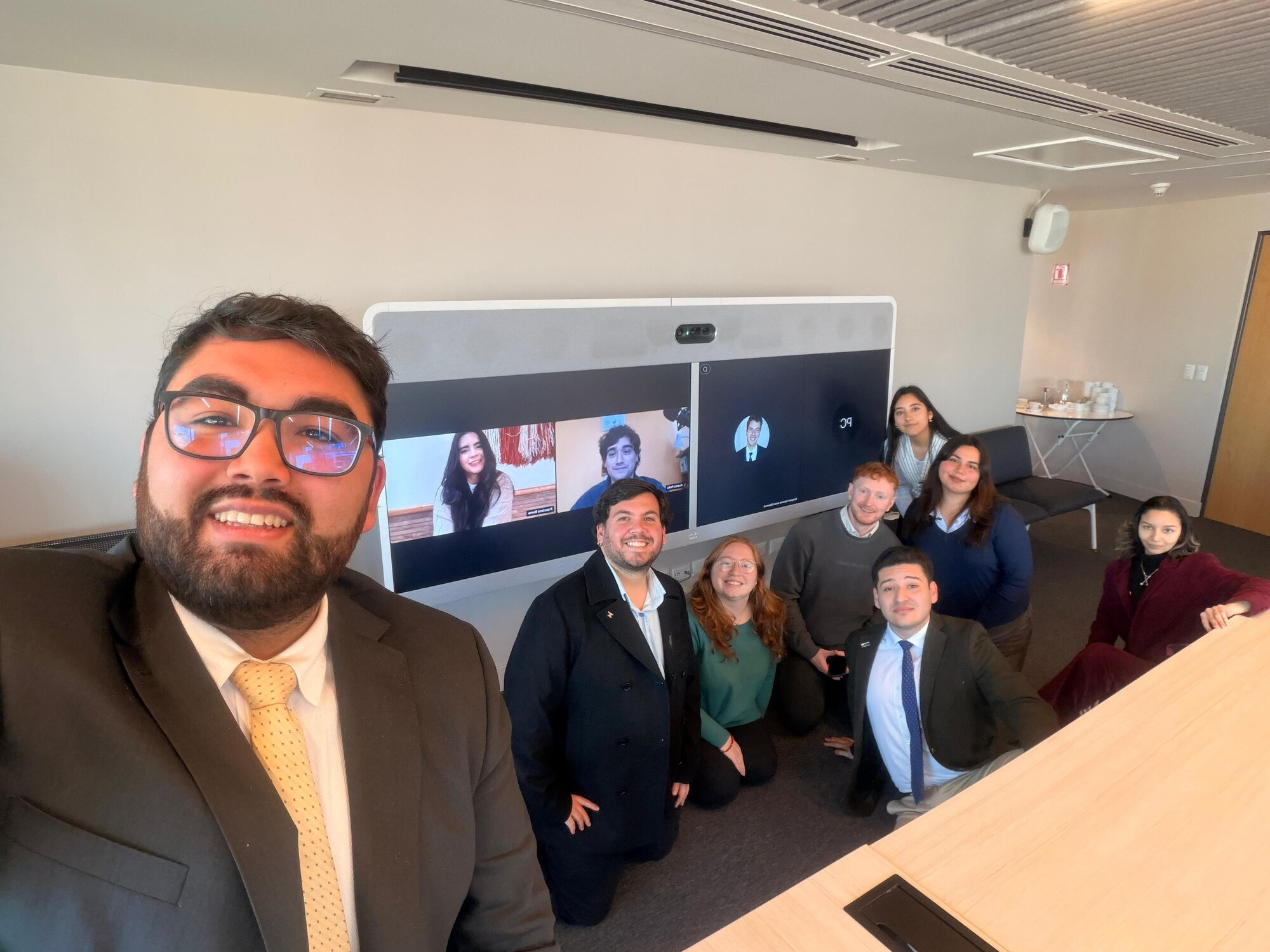
    The workshop took place in a hybrid format, with 7 participants in the room and 4 joining online. This made it the first successful hybrid Youth4Foresight session with a Youth Sounding Board in an EU Delegation. The experience suggests that hybrid delivery can work effectively for foresight exercises when technology, facilitation and participant engagement are strong and well managed.

    Furthermore, in a country such as Chile, where events and activities are largely concentrated in the capital, Santiago, and where the country's long and narrow geography results in considerable distances between cities and regions, the hybrid format proved particularly effective in ensuring the broadest possible participation of YSB members from across the country. This approach also contributed to strengthening territorial inclusion by broadening participation beyond the capital and ensuring that the perspectives of young people from Chile's regions were better represented.

    What did the workshop achieve?

    The workshop aimed to create a structured space for reflection and helped participants move from general aspirations to more concrete thinking.

    Several outcomes stood out:
    - clearer reflection on influence: participants discussed what kind of role and influence they would like the YSB to have in Chile;
    - greater ownership: youth facilitators led different parts of the process themselves, increasing confidence and participation;
    - stronger internal coordination: the session helped identify practical steps for moving the initiative forward;
    - useful input for the EU Delegation: the discussion clarified how the YSB could be more actively involved in EU activities in Chile.

    Feedback from participants was highly positive. They appreciated being able to lead the conversation on the future of their own initiative. The exercise also helped reactivate the group and highlighted the importance of setting sufficiently concrete objectives to move beyond critique and towards action.

    Otcomes and next steps

    A roadmap for YSB Chile, based on this foresight exercise, represents the next step in the process. It will guide the group’s priorities and support a more strategic and structured relationship with the EU Delegation.
    The application of the Y4F toolkit in this case shows the value of foresight as a tool which moves beyond imagining the long term but also functions as a practical tool for strengthening youth participation in the present. By combining structured reflection, youth-led facilitation and concrete follow-up, the workshop helped “Voces del Futuro” group take an important step towards defining its role, voice and influence more clearly.

    Check out the Youth4Foresight toolkit and more use cases 

    Posted on: 10/08/2026