Loading...

    sorted by publishing date

    Last Edited: 18 hours ago

    Building Regional Foresight Capability in Antofagasta, ChileFebruary 2016

    lessons from a multi-layered regional foresight programme

    This report of the European Foresight Platform (EFP) reports on a regional foresight programme carried out in 2011–2013 in the Antofagasta region of Chile (Dufva et al., 2016). Organised by VTT Technical Research Centre of Finland and funded by the Ministry for Foreign Affairs of Finland, the programme formed part of a broader joint project with the Chilean Mining Technological and Scientific Research Centre (CICITEM) that aimed at innovation-driven, sustainable economic development of the region. Its purposes were to improve foresight capability in the region, especially among the partner organisations, to enhance collaboration between industry, government and research organisations, and to support the creation of a strategic research agenda on a topic chosen by the partners. The time horizon was 2040.

    The programme built on the Pact for Regional Development and Innovation signed by public and private actors in the Antofagasta region in March 2008, which sought economic growth and equality, better jobs and a path towards sustainable development. Chile looked to Finland as an example of how a resource-driven economy can become knowledge-driven when development strategies and policies are well chosen. Antofagasta is also an extreme risk area for ecological change: climate change and contamination from mining have had lasting effects on regional water supplies, and melting glaciers and the overuse of groundwater call for a significant redesign of water use.

    The foresight activities had two parts. A three-day hands-on workshop in Antofagasta trained participants in futures thinking and in methods such as scenarios, roadmapping and Delphi, supported by a learning package with a glossary and a project website, and ended with group work on planning a foresight project for the region. On this basis, VTT and CICITEM selected the topic of a foresight pilot for its importance and relevance to different stakeholders. The pilot combined scenario and roadmapping work through a conference, two stakeholder workshops, a stakeholder survey, interviews with mining companies and a reflection discussion with CICITEM experts. VTT provided guidance and support, but the emphasis was on learning by doing for CICITEM researchers, who worked with researchers from local universities, representatives of local SMEs, government officials and mining companies.

    Drawing on the process and the foresight literature, the authors developed a multi-layered framework for analysing the contributions of foresight (Dufva et al., 2015). At the landscape layer, foresight connects the region to the global context, helping participants to see Antofagasta as part of a larger system and to find its niche in global markets. At the innovation-system layer, it supports joint strategy formulation and a shared vision; stakeholder analysis helped to choose a suitably controversial topic that was interesting for all stakeholder groups and committed them to the process. At the organisational layer, the pilot generated new ideas about the role and mission of CICITEM, although not every researcher saw its benefit and some were reluctant to participate, which shows how a foresight process is entangled with organisational dynamics. At the individual layer, learning by doing gave participants experience in scoping, designing, implementing and documenting foresight; one CICITEM researcher reflected that he had learned to bring ideas 'high up in the sky down to earth'.

    The report draws three implications for policy-making and practice. Foresight should be designed with multiple layers in mind, with particular attention to individuals, since changes in mindsets and worldviews through learning are what carry change into organisations and innovation systems. The nature of the effects varies between layers: knowledge produced weighs more at the landscape and innovation-system layers, whereas capabilities gained matter more at the organisational and individual layers. Finally, the layers can be used to structure the effects of foresight, showing that there is more to foresight than its immediate tangible outcomes and that a successful process can change the capacity of an organisation or a community to anticipate the future and, through that, contribute to regional transformation.

    References

    Dufva, M., Könnölä, T., & Koivisto, R. (2015). Multi-layered foresight: Lessons from regional foresight in Chile. Futures, 73, 100–111. https://doi.org/10.1016/j.futures.2015.08.010 

    Dufva, M., Könnölä, T., & Koivisto, R. (2016). Building regional foresight capability in Antofagasta, Chile (EFP Brief No. 260). European Foresight Platform. https://if-institute.org/wp-content/uploads/2016/04/Building_Regional_Foresight_in_Antofagasta_Chile_EFP-Brief-No.260.pdf 

    Posted on: 29/10/2026
    Last Edited: 18 hours ago

    Building regional foresight capability in Antofagasta, Chile1December 2010 - November 2013

    Foresight capability in Antofagasta

    Between 2011 and 2013, VTT Technical Research Centre of Finland and the Chilean Mining Technological and Scientific Research Centre (CICITEM) carried out a regional foresight programme in Antofagasta, Chile's leading mining region, funded by the Ministry for Foreign Affairs of Finland. The programme was part of a broader joint project to enhance innovation-driven, sustainable economic development in the region. It built on the 2008 Pact for Regional Development and Innovation in the Antofagasta Region and on Chile's interest in how Finland moved from a resource-driven to a knowledge-driven economy. The region also faces acute ecological pressures, not least on water supplies affected by climate change and mining.

    The foresight activities pursued three aims: improving foresight capability in the region, especially among the partner organisations; strengthening collaboration between industry, government and research organisations; and supporting a strategic research agenda on a topic chosen by the partners. A three-day hands-on workshop in Antofagasta introduced futures thinking and methods such as scenarios, roadmapping and Delphi. A foresight pilot followed, combining scenario and roadmapping work through a conference, two stakeholder workshops, a stakeholder survey, interviews with mining companies and a final reflection session. VTT experts guided the process, but the emphasis was on learning by doing for CICITEM researchers, working alongside local universities, SMEs, government officials and mining companies, with a time horizon of 2040.

    Reflecting on the process, the team developed a four-layer framework (landscape, innovation system, organisation and individual) for analysing how foresight contributes to new knowledge, capabilities and networks. The experience underlines that individuals are the key: changes in their mindsets and skills are what carry foresight into organisations and, ultimately, into regional transformation. The results are reported in EFP Brief No. 260 (Dufva, Könnölä & Koivisto, 2016) and in Dufva, M., Könnölä, T., & Koivisto, R. (2015). Multi-layered foresight: Lessons from regional foresight in Chile. Futures, 73, 100–111. https://doi.org/10.1016/j.futures.2015.08.010 

    Posted on: 29/10/2026

    Last Edited: 23 days ago

    Mapping the Future Extremist Landscape in Nordic CountriesAugust 2026

    Challenges and Resources

    Violent radicalisation and extremism are constantly evolving phenomena, significantly shaped by developments in the wider society in which they emerge. In recent years, this evolution has accelerated considerably. We are witnessing a shift from radicalisation centred primarily around ideologies towards increasingly diverse and hybridised forms of individualised radicalisation, in which ideological boundaries have become increasingly blurred. These developments are strongly influenced, on the one hand, by global conflicts and, on the other, by locally experienced grievances and perceived injustices—often simultaneously.

    This transformation has created new conditions for the emergence and spread of extremist ideas, while making it increasingly difficult to identify individuals at risk of radicalisation, as well as the issues and narratives that may rapidly and sometimes unexpectedly encourage or inspire engagement in violent extremist activity. This evolving landscape presents a significant challenge to the prevention of violent extremism and further underlines the importance of foresight.

    Posted on: 07/10/2026

    Last Edited: a month ago

    Sibilla Studio1

    Futures Sensemaking Collective

    Posted on: 30/09/2026

    Last Edited: 3 months ago

    Youth4Foresight in Chile: helping young people define their role, priorities and influenceJuly 2026

    Young people should be able to shape their own future. That is the idea behind the Youth4Foresight (Y4F) toolkit, which was developed by DG International Partnerships (European Commission) to give youth practical methods to think beyond immediate challenges, explore long-term change, and identify concrete ways to act. This approach is closely linked to the EU Youth Action Plan (2022–2027), which aims to empower, engage and connect young people around the world. It also reflects a wider commitment to bringing longer-term and intergenerational perspectives into EU policymaking. By using foresight tools, youth can better understand emerging trends, imagine desirable futures, and translate those reflections into recommendations and action. This is exactly what the EU Delegation in Chile set out to do with “Voces del Futuro”, the EU’s Youth Sounding Board in the country.

    Youth looking ahead

    Created in 2025, Voces del Futuro brings together 21 young people from 13 regions of Chile, from as far north as Arica and as far south as Aysén. Since its launch, the group has participated in a range of activities with the EU Delegation, including thematic training, capacity-building, and work focused on sustainability, transparency and governance, gender equality, and other priority issues.

    As the initiative moved into its second year, members wanted to take a step back and think more strategically about their own role. Which issues are most relevant for young people in Chile in the coming years? Where can the Youth Sounding Board bring the most value? And how can its contributions to the work of the EU in Chile become more structured, targeted and actionable?
    The foresight exercise was designed to support precisely this process. Its objective was not only to strengthen futures-thinking skills, but also to help the group define the kind of influence it wants to have in Chile and clarify concrete next steps for collaboration with the EU Delegation.

    Training youth to facilitate the process

    An important part of the exercise was the preparation phase. Before the main session, a facilitation training was held for a small group of facilitators. This meant that the final workshop was led entirely by YSB members themselves.
    This is an important element to the process, as training youth facilitators in partner countries helps build a pool of youth foresight practitioners who can potentially reuse these methods in other local, regional or community settings. It also strengthened participants’ ownership of the process from the outset.

    Using the Three Horizons tool

    The main workshop took place on 23 June 2026 and used the Three Horizons method from the Youth4Foresight toolkit. This method helps participants move between three perspectives:

    - the future they would like to see,
    - the current system and what is no longer fit for purpose,
    - and the innovations and actions needed to bridge the gap.

    Participants reflected on the future of the initiative itself: what role the YSB wants to play, how it wants to influence discussions in Chile, and what practical steps are needed to strengthen its impact and coordination with the EU Delegation.

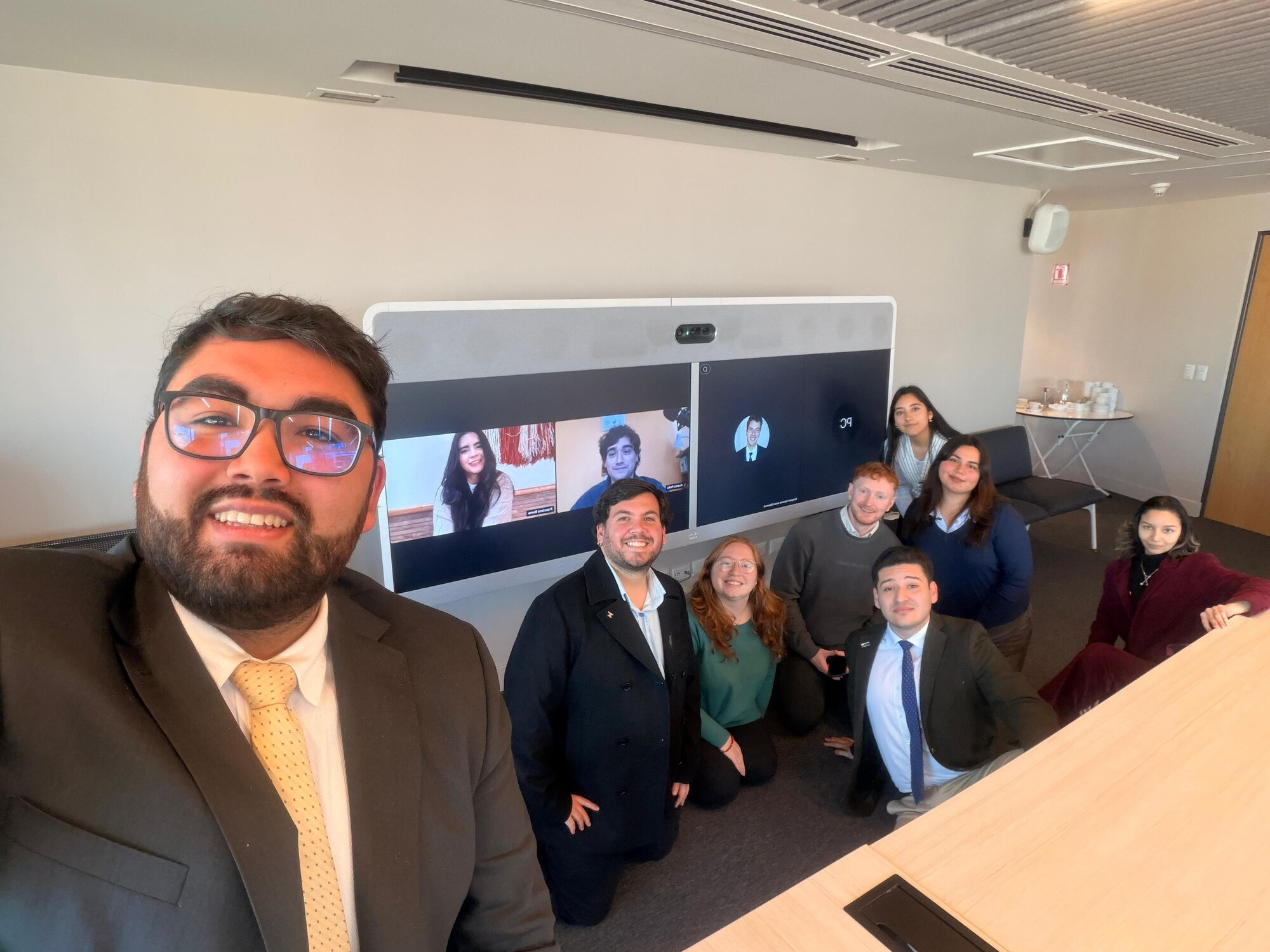
    The workshop took place in a hybrid format, with 7 participants in the room and 4 joining online. This made it the first successful hybrid Youth4Foresight session with a Youth Sounding Board in an EU Delegation. The experience suggests that hybrid delivery can work effectively for foresight exercises when technology, facilitation and participant engagement are strong and well managed.

    Furthermore, in a country such as Chile, where events and activities are largely concentrated in the capital, Santiago, and where the country's long and narrow geography results in considerable distances between cities and regions, the hybrid format proved particularly effective in ensuring the broadest possible participation of YSB members from across the country. This approach also contributed to strengthening territorial inclusion by broadening participation beyond the capital and ensuring that the perspectives of young people from Chile's regions were better represented.

    What did the workshop achieve?

    The workshop aimed to create a structured space for reflection and helped participants move from general aspirations to more concrete thinking.

    Several outcomes stood out:
    - clearer reflection on influence: participants discussed what kind of role and influence they would like the YSB to have in Chile;
    - greater ownership: youth facilitators led different parts of the process themselves, increasing confidence and participation;
    - stronger internal coordination: the session helped identify practical steps for moving the initiative forward;
    - useful input for the EU Delegation: the discussion clarified how the YSB could be more actively involved in EU activities in Chile.

    Feedback from participants was highly positive. They appreciated being able to lead the conversation on the future of their own initiative. The exercise also helped reactivate the group and highlighted the importance of setting sufficiently concrete objectives to move beyond critique and towards action.

    Otcomes and next steps

    A roadmap for YSB Chile, based on this foresight exercise, represents the next step in the process. It will guide the group’s priorities and support a more strategic and structured relationship with the EU Delegation.
    The application of the Y4F toolkit in this case shows the value of foresight as a tool which moves beyond imagining the long term but also functions as a practical tool for strengthening youth participation in the present. By combining structured reflection, youth-led facilitation and concrete follow-up, the workshop helped “Voces del Futuro” group take an important step towards defining its role, voice and influence more clearly.

    Check out the Youth4Foresight toolkit and more use cases 

    Posted on: 10/08/2026

    Last Edited: 3 months ago

    Threats from new and emerging plant pests - Options for EU management of pest outbreaks1August 2025 - May 2026

    New and emerging plant pests can undermine EU food security and farm/forestry incomes through yield losses, trade disruption and costly control measures, while also causing major environmental impacts through biodiversity loss, landscape change and increased pressure to use pesticides.  

    Using a comprehensive foresight methodology, this study examines how global trade and tourism, climate change and agricultural systems contribute to the introduction and spread of new and emerging plant pests, assesses current and future pest risks, as well as scientific and technological options for their prevention, detection, and management, and reviews existing EU mechanisms.  

    The study develops four scenarios up to 2050 to explore how key uncertainties may shape pest risks and system responses. Based on these insights, it identifies policy options to strengthen prevention, preparedness, and response capacities, supporting future EU policymaking.

    This foresight study was conducted by Technopolis Group with experts from the Julius Kühn-Institute for the European Parliament's Panel for the Future of Science and Technology and commissioned by Scientific Foresight Unit (STOA) of the European Parliamentary Research Service. 

    The report is published on the website of the European Parliament: https://www.europarl.europa.eu/thinktank/en/document/EPRS_STU(2026)788146.

    Posted on: 31/07/2026

    Last Edited: 6 months ago

    Albert Postma1

    Professor of transformative foresight in leisure, tourism and hospitality

    Posted on: 21/04/2026

    Last Edited: a year ago

    Agathe Acchiardo1

    Health Futurist

    Posted on: 30/10/2025

    Last Edited: a year ago

    Accreditation Services1

    Foresight Programs and Courses

    The World Futures Studies Federation offers its standards to institutions interested in achieving accreditation in futures studies. Institutions offering programmes which meet the Federation’s standards will be credentialed as an Accredited Foresight Programme. Accreditation will extend for a period of five (5) years. Review of accreditation will be available every five (5) years to ensure programmes continue to maintain high quality standards of the Federation.


    We provide accreditation only to education providers that have been recognized by the relevant department or ministry of education in their country as a tertiary education provider.

    How To Apply: https://wfsf.org/accreditation-services/ 

    Posted on: 11/09/2025

    Last Edited: a year ago

    Oliver Gnad1

    Changing Minds – Creating Futures

    Posted on: 28/07/2025

    Last Edited: a year ago

    Dr. Matthew J. Spaniol1

    Senior Researcher at Roskilde University

    Posted on: 28/05/2025

    Last Edited: a year ago

    Olga Shaeva1

    Cofounder, Algorithm trend intelligence, PhD in Sociology

    Posted on: 14/05/2025

    Last Edited: a year ago

    Elena Aminova1

    I will know how

    Posted on: 09/05/2025

    Last Edited: a year ago

    CARMINE1January 2024 - December 2027

    Climate-Resilient Development Pathways in Metropolitan Regions of Europe

    CARMINE’s overarching goal is to help the metropolitan communities become more climate resilient, by co-producing knowledge-based tools, strategies and plans for enhanced adaptation and mitigation actions addressing the Charter of the EU Mission on Adaptation to Climate Change by 2030.

    To achieve this goal, focusing on a 2030-2035 timeframe and with longer perspectives up to 2050, CARMINE aims to:

    ✅ Co-create and co-develop decision-support services and guidelines for enhanced resilience and adaptive capacity, including early warning and disaster risk management systems;

    ✅ Cooperate closely with local to regional communities (stakeholders and users), decision and policy-makers (local authorities) to co-develop cross-sectoral frameworks for adaptation and mitigation actions;

    ✅ Deliver science-based R&I roadmaps for multi-level climate governance supporting local adaptation assessments and plans.

    Obj. 1. Review the available resources, tools, practices, policies, and methodologies, and identify the gaps, challenges and barriers that hamper the successful advance of the resilience pathways in the Metropolitan Regions of Europe.

    Obj. 2. Develop high-resolution risk assessment models linking climate, earth system processes, and socio-economic drivers, for enriched data fusion and effectiveness of adaptation and mitigation actions in the Metropolitan Regions of Europe.

    Obj. 3. Co-produce a climate adaptation and resilience framework combining Living Labs and Digital Twins approaches that supports decision making processes for resilience and disaster risk management in the Metropolitan Regions of Europe, including Nature-Based Solutions.

    Obj. 4 Provide state-of-the-art Impact-based Decision Support Services blending climate and environmental data into socioeconomic impact and risk assessments, for user-friendly access to high spatially resolved modelling outputs in support of local adaptation assessments and plans.

    Obj. 5 Conduct the participatory development of better coordinated and impactful modelling and risk assessment, in support of roadmaps of R&I priorities on adaptation, informed policies, and cross-sectoral plans towards the 2030-2035 timeframe and beyond (i.e., 2050).

    CARMINE establishes synergies and complementarities with ongoing projects funded under the calls HORIZON-MISS-2021-CLIMA-02-03: ICARIA, MIRA CA, and R ISKADAPT, and HO RIZON-MISS-2021-CLIMA-02-01: CLIMAAX. 

    Posted on: 01/05/2025

    Last Edited: a year ago

    Foresight Study on Fishers of the FutureNovember 2024

    Final Report

    The study represents the Commission’s commitment, outlined in its 2023 Communication on the functioning of the Common Fisheries Policy (CFP), to address emerging challenges in the sector. It aligns with the Commission's definition of foresight as “the discipline of exploring, anticipating, and shaping the future to inform today’s decision-making.” This participatory study places fishers at its core, integrating their perspectives into the development of future scenarios and fisher profiles to inform strategic policymaking for a sustainable, competitive and resilient EU fishing sector, as part of the wider blue economy. It does not present policy proposals, which was never the intention, rather it serves to stimulate further the important debate on securing and giving a perspective on the future of EU fishers.

    European Commission: European Climate, Infrastructure and Environment Executive Agency, F&S, IPSOS, POSEIDON, Tetra Tech, Davies, M., Macfadyen, G., Brugere, C., Chiarelli, N., Dale, F.Caillart, B., Foresight study on fishers of the future – Final report , Publications Office of the European Union, 2024;

    Posted on: 15/04/2025

    Last Edited: a year ago

    Constructing Scenarios for the Future of Teaching in WalesFebruary 2025

    After an extensive synthesis of the OECD’s existing work on the teaching profession over the years, the need to explore professional roles and identity became obvious. The roles and responsibilities of teachers have seen significant changes over the past decade. Education, childhood, labour markets and society as a whole have experienced considerable changes, prompting the need to think about the effects of changes on the teaching profession. The OECD Centre for Educational Research and Innovation (CERI) project on New Professionalism and the Future of Teaching project researched how professionalism has evolved, including the importance of working with others to confront increasingly complex contexts, so called “connective professionalism”. Based on the evidence base and ideas for next practice, the project developed a methodology to help diverse stakeholders in education to construct a shared vision on what the teaching profession could look like in the future.

    This study in Wales (United Kingdom) is the second in a series of three education system studies conducted in 2023 and 2024. Various stakeholders, including teachers, school leaders, researchers, teacher educators, teacher unions, and professionals (potentially) supporting teachers and schools provided feedback on their ambitions for the future of teaching in Wales. Choosing among a set of ambitions to better connect teachers with other professionals within the school community, other education providers (such as universities and teacher education colleges) and broader society, they shared their judgements of what would be high priority and also how big a change this would be from the current context. Would it be an ambition for transformation over a period of many years? Or would it be possible to build on existing mechanisms or initiatives? Or could this ambition be achieved by improvements over the short term?

    Different perspectives were gathered in two main ways. First, via an online survey. Second, via two stakeholder workshops in Bangor and Cardiff where a total of six working groups collectively constructed scenarios for the future of teaching. Each working group comprised individuals with different roles and responsibilities in or around schools. They worked with the results of the survey and selected priority ambitions to support their vision on the future of teaching. These provided stimulus for their discussions, but their specific visions grew out of a mutual exchange of professional experiences from different perspectives within and surrounding teaching in Wales.

    Of course, this study in no way aims to be representative or comprehensive. It draws on the work of a group of willing professionals with a stake in Wales education who offered to share their expertise. This initial effort to anticipate and increase deeper, structured thinking about medium- and long-term scenarios for teacher professionalism and empowerment offers input on how to strengthen the teaching profession in Wales. Potential benefits for the system include long-term strategic thinking regarding the Welsh teacher workforce and finding solutions to issues that transcend the short term.

    While constructing their scenarios for the future of teaching, stakeholders reflected on four research questions set for this study by the team at Welsh Government in consultation with the OECD.

    How do we develop teacher professional identity and a more collaborative profession? The set of future scenarios envisage a focus on collective professional identity at a school level. There would be particular focuses on peer-to-peer interactions as well as school-to-school exchanges. Time and space would be provided to support a variety of exploration that involves building innovations, following passions and interests, engaging in shared learning, working with colleagues, communities and other partners.

    How could a career development perspective for all staff in schools contribute to a vibrant and thriving workforce? Career development would be an integral focus to support the workforce. This would include visible and diverse career pathways that follow and invest in career journeys. Teachers would be supported to engage in their own professional growth journey and collaborations that enrich their professional work. Career pathways would allow for flexibility and lifelong learning opportunities that support a dynamic workforce.

    How can all who work in schools encourage innovation and the examination of professional roles in schools as learning organisations? Valuing innovative practices requires alignment at all levels to define what innovation looks like at a school level. This includes strengthening collaborative practices that support reflection, experimentation, partnering and sharing. Support includes time and space to work as part of a professional community. It is important to build connections across innovations to reduce duplication of effort and to maximise shared learning.

    And how could investment in the professional identity of teachers, especially in secondary schools, make the profession in those settings more attractive? Teachers should be able to align their intrinsic motivation to their teaching, keeping their practice closer to their professional interests and qualities, and having a sense of autonomy in their work. Investing in continuous, bespoke support and professional development enhances teacher well-being, strengthens their professional identity, and makes the teaching profession more attractive and rewarding. Meaningful development opportunities, recognition, and leadership roles enhances the profession’s appeal and fosters long-term commitment.

    The OECD identified seven key elements that feature across a set of four preferred future scenarios for the future of teaching in Wales. Arguably, all would be important to the future of teaching and many are common to several of the scenarios. In particular, diverse professional roles and careers, healthy working environment, school leadership, community support/ partnerships, school-university partnerships, innovation and communication feature to some extent across all four scenarios. Governance and accountability were explicitly featured in three scenarios.

    The study also underlines the importance of thinking in more nuanced ways about the existing teacher workforce and potential new recruits. There is a rich diversity of professionals working within schools in Wales, with different motivations, life phases, passions, ambitions and professional development needs. An evidence-informed set of seven Welsh teacher personas provides input to stress test the set of future scenarios. What would different teachers find attractive in the future scenarios that were developed? Would it be particularly attractive to experienced teachers? Would newer recruits hold some reservations? Would it match what younger people will be looking for in their working lives? Overall, the Welsh teacher personas responded positively to the suggested scenarios for the teaching profession in Wales.

    This report presents results of the initial reflection and provides tools to extend the exercise going forward.

    Source: OECD - Publications  

    Posted on: 15/04/2025

    Last Edited: a year ago

    CROSSEU1December 2023 - November 2026

    Cross-sectoral Framework for Socio-Economic Resilience to Climate Change and Extreme Events in Europe

    The CROSSEU project was launched in response to growing societal needs for effective climate action and stronger socio-economic resilience. As climate change continues to impact our world, it becomes crucial to understand and manage its complex effects. 

    Objective(s)
    CROSSEU aims to respond to increasing societal needs to reduce climate-damaging actions, adapt to the expected consequences, and increase socio-economic resilience.

    The main ambition of the project is to provide a science based and ready to use decision support system built on enhanced understanding of the biogeophysical risks from climate change, and their socioeconomic impacts in Europe, fully co-produced and implemented with practice stakeholders to ensure its uptake, and support effective coping with sectoral and cross sectoral climate risks within the context of the European green transition.

    It will do this by delivering a climate-sensitive framework, including a ready-to-use decision support system platform and technical recommendations, to inform investment decisions, cost-effective adaptation and mitigation options and policy response to climate change.

    The project will contribute to advancing the understanding of the socio-economic risks and response options associated with climate change impact in Europe in different timeframes, including the post-COVID-19 societal-environmental transformation, and derive practical recommendations for political and societal action.

    The solutions proposed are based on an extensive assessment of the socio-economic risks of climate change in a cross-sectoral hierarchical approach, based on storylines addressing key categories of climate hazards in different socio-economic sectors and climate change-sensitive areas across countries and European regions.

    The project will offer a ready-to-use solution that integrates complex information from available climate risk data sets and non-climatic sectoral data collected during the project implementation and derived through modelling based on demand-driven climate-socio-economic pathways.

    CROSSEU is designed to bridge the science-based information about the economic impacts of climate change, and the unique contributions of the project will be:

    1. the quantification of costs of existent and emergent socio-economic risks and opportunities at NUTS3 level
    2. an improved representation of adaptation within biogeophysical climate change risk
    3. a better consideration of modelling uncertainties by identifying their nature, assessing their characteristics in a systematic way to determine a better informed and robust decision-making. 

    The project's foresight component is crucial for projecting how various climate impacts will unfold under different global pathways (RCP-SSP). By examining future scenarios, it allows decision-makers to anticipate and plan for the most critical challenges, helping societies prepare for the compounded effects of climate change across sectors. The focus on cross-sectoral linkages emphasizes the need for integrated, multi-dimensional strategies to address both immediate and long-term climate risks, while ensuring social equity and resilience.
    Future scenarios involve identifying and evaluating highly vulnerable areas across Europe in terms of their exposure to climate change, sensitivity to its impacts, and adaptive capacity. It focuses on key sectors—such as biodiversity, health, agriculture, forests, and water—and examines how these areas are likely to experience intense climate changes, particularly extreme events, in the future (2030, 2050, 2100).

    Outputs

    • Enhance the modelling of mitigation and adaptation strategies in relation to projected bio-geo-physical processes and socioeconomic risks to different sectors for different time horizons (i.e. 2030, 2050 and 2100) considering both the individual characteristics and interactions between the various sectors
    • Co-assess synergies conflicts and trade-offs between mitigation and adaptation strategies across different sectors regions
    • Co-produce ready to use tools integrated in a science based decision support system for assessing the social and economic impacts of climate change, and support mitigation and adaptation options towards a climate resilient Europe
    • Consolidate the European union's response to climate change challenges and social and economic impacts in the context of the transformation related to the post COVID-19 crisis and geopolitical challenges


    Expected outcomes
    1. The project delivers a science based and ready to use decision support system built on enhanced understanding of the biogeophysical risks from climate change, and their socioeconomic impacts in Europe, fully co-produced and implemented with practice stakeholders to ensure its uptake.
    2. The project consistently contributes to enhancing the overall impact of the destination climate across the EU
    3. The project facilitates an improved understanding of the nature and extent of physical risks climate change driven hazards and their socio economic impacts at different levels of warming with or without adaptation
    4. CrossEU integrates social sciences and humanities perspectives and insights throughout its entire workflow, engaging stakeholders including representatives of communities or citizen groups, sectoral policymakers, businesses, the scientific community, and civil society, through the entire project cycle.

    CROSSEU is an EU funded project, with UK partners funded by UKRI.

    Posted on: 10/11/2024