Last Edited: 5 months ago
Shaping Angola's Future: Foresight and Youth EmpowermentJuly 2024
Youth4Foresight Use Case

The future of Angola and its youth are inextricably linked, as the country looks to capitalise on its demographic dividend, with over two-thirds of its population under the age of 25. The National Development Plan (2023-2027) prioritizes youth and human capital development to overcome barriers to long-term growth. The Youth4Foresight Toolkit, developed by Directorate General for International Partnerships of the European Commission, youth experts and EU Delegations worldwide proved to be instrumental in engaging young Angolans.
Engaging Young Voices for Change
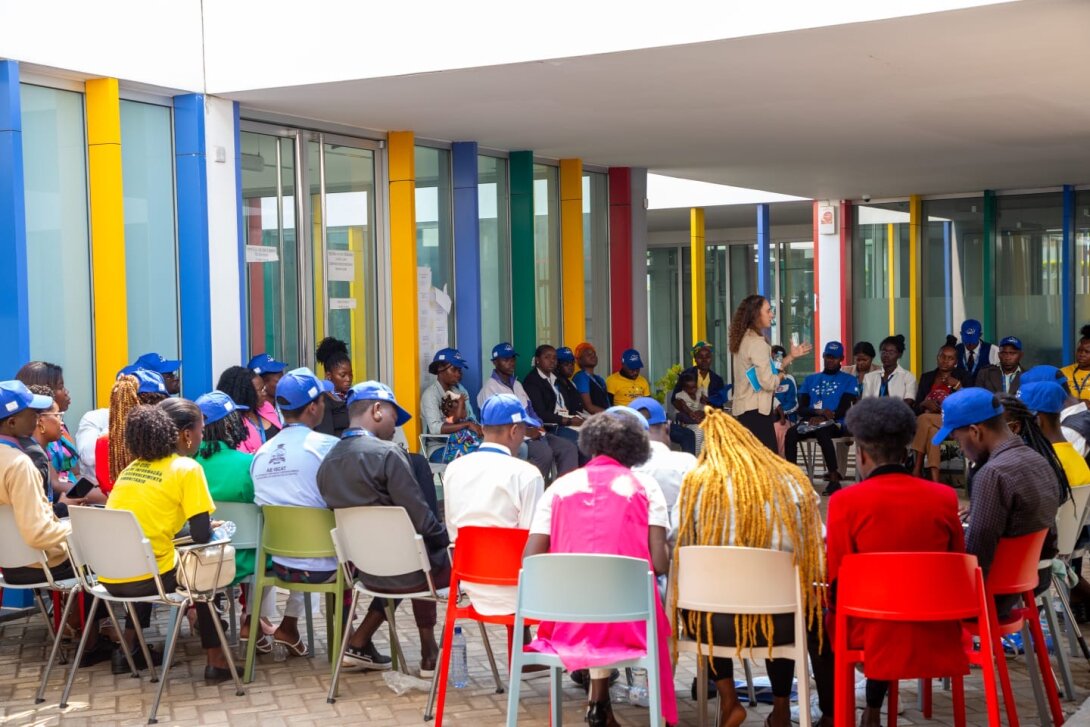
The Youth Forum in Malanje (in July 2024) centred on "Youth participation in local governance and its impact on human capital development" and brought together 52 youth participants (including 24 women and some young mothers) from five municipalities in Malanje province. The event focused on helping youth better understand national policies and explore ways how they can contribute meaningfully to local governance.
The Youth Forum was one of the events organised under the EU funded “Support to Civil Society in Local Governance in Angola (PASCAL)” action, which aims to contribute to economic growth and social development through an inclusive, heterogeneous and effective participation of civil society in the governance process.
A key element of the forum was the application of structured long-term thinking by using the techniques and guidance from the Youth4Foresight Toolkit. Through Three Horizons methodology, young participants explored different future scenarios and created actionable recommendations.
This same tool was also applied during the Youth Forum in Huambo, another Angolan province, where it proved equally successful in engaging youth and fostering forward-looking dialogue.
Foresight in Action: Three Horizons Methodology
The Three Horizons technique enabled participants to envision a preferred future for their region and Angola. Divided into groups, they assessed the present, identified trends and challenges, and developed transition ideas.
Discussions highlighted youth concerns: education, healthcare, and local economic development, alongside challenges like poor infrastructure, inadequate education quality and limited access to essential services.
Participants formulated key recommendations for policymakers, such as creating youth-centred programs, youth centres and vocational training facilities, and stressed the importance of policies that improve access to education, healthcare, and economic opportunities, particularly in rural areas.
Yong people found the forum groundbreaking and meaningful, with one stating, "We have never participated in such an experience," emphasizing the importance of youth voice. Young mothers expressed hope for their children's futures and appreciated meeting others outside their villages, reflecting the workshop's deep impact in fostering hope and agency and ownership over their future.
The Impact of Youth4Foresight
The structured, adaptable methodologies of the toolkit encouraged inclusive discussions, giving youth a voice in shaping the strategies outlined in Angola’s National Development Plan 2023-2027. As a result, the recommendations produced in the workshop were directly relevant to local realities and can guide policymakers in enhancing youth participation and development.
Using foresight techniques empowered young people to reflect on their aspirations, critically analyse their present situation, and propose realistic solutions. The Youth4Foresight Toolkit has been successfully used in several countries by EU Delegations to engage with youth as a part of the Youth Action Plan in EU external action.
Posted on: 26/03/2026
