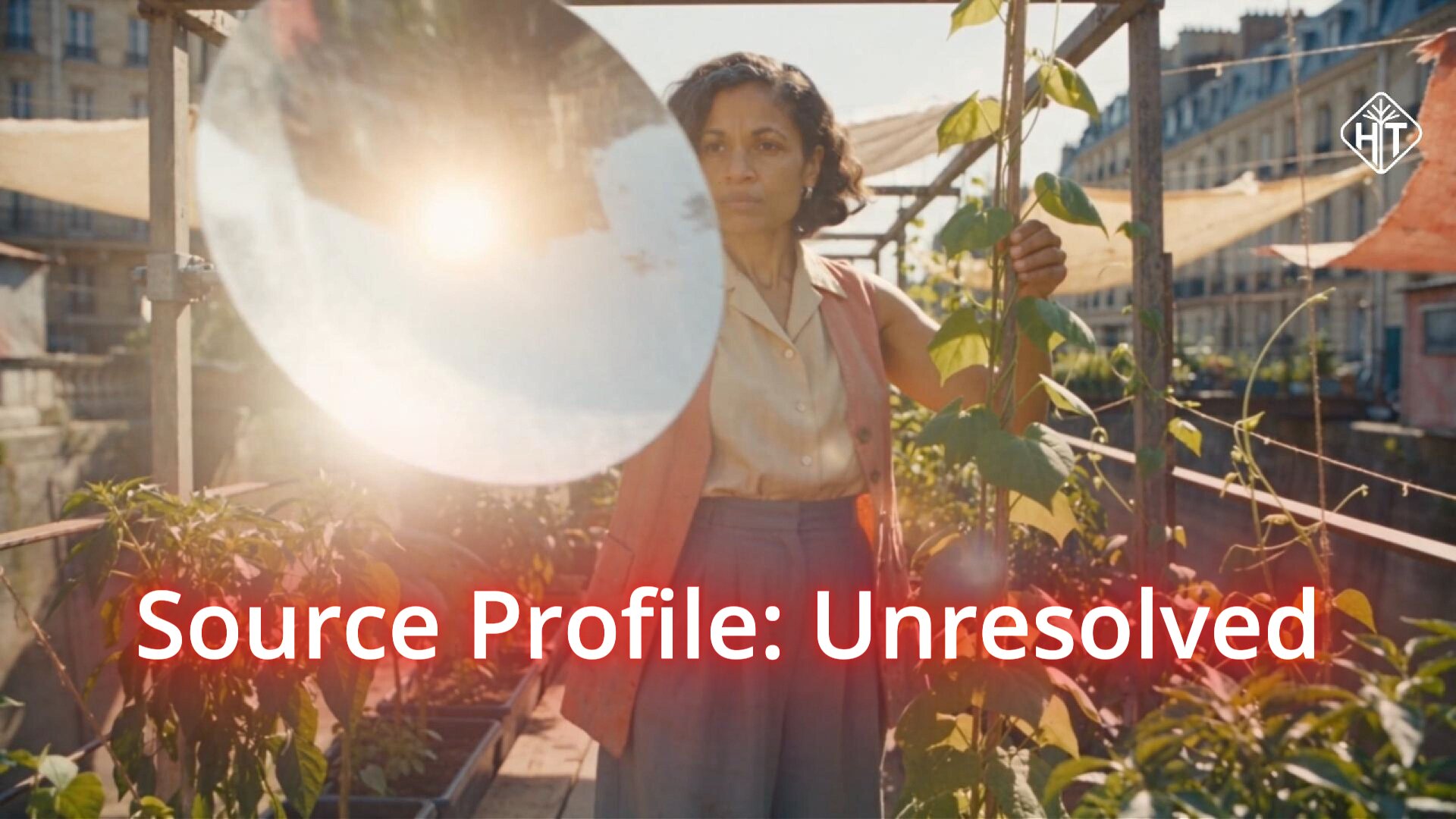
What happens when 10 people encounter the same unfinished future, imagine what comes next, and then meet one another's interpretations?
At Futures4Europe 2026 in Rome, Recognizing the Future in the Room invites conference attendees to explore this question alongside the participants in an ongoing Emotional Foresight experiment. The workshop will bring short films based on individual continuations into a shared space for viewing, reflection and discussion.
You do not need to have taken part in the earlier phase to contribute your perspective.
This article shares the thinking behind the experiment and its early observations. The next part happens together in Rome.
Name: Recognizing the Future in the Room, Emotional Foresight through a Group-Based Adaptation of the Resonant Future Self Framework - Iuliana Adina Apostol
Where: Sala Marconi
Date: 30.09.2026
Time: 17:30
The same film provides a shared starting point. It does not guarantee a shared future.
What this experiment examines
The experiment asks what changes when a person moves from watching a future to imagining how it continues, and then encounters someone else's version. It connects three things: emotional response, interpretation and perceived possibility for action.
This is the specific role of Emotional Foresight here. Participants encounter a possible future, attend to what it evokes, and explore what happens to that response as they give the future meaning. The analysis follows both their emotional ratings and their explanations of what changed. Hope, fear, uncertainty and resistance all matter; becoming more optimistic is not the criterion for success.
The pilot develops the Resonant Future Self Framework presented in Vienna in 2025 into a group format. Participants supply the interpretations and continuations that make the collective experiment possible.
Why begin with a film?
An earlier pilot at AIMEDIA 2026 in Nice used guided imagination without a seed film. Five researchers took part in individual sessions, then joined fifteen others in a workshop. The twenty researchers spent eight minutes with their eyes closed, listening to meditation music and imagining how it felt to inhabit 2032.
In the five individual accounts, familiar rooms and work routines predominated. AI appeared explicitly in only one scene. In the workshop accounts, family, homes and personal experiences became more prominent, while AI remained peripheral despite its prominence at the conference. These exploratory observations raised a design question: how can we help people imagine beyond an extension of their present?
Rome introduces an unfamiliar shared starting point. The seed film’s themes were drawn from responses to a three-minute poll circulated to all conference participants, grounding the scenario in the futures and emotions respondents described. The 90-second seed film, "Profile Source: Unresolved", depicts a world in which people receive periodically updated Future Profiles. Mara discovers that an apparently personal future image is appearing in other people's profiles too. The film ends without explaining why.
Participants are asked:
“What do you believe is happening, and what happens next?”
The film was designed to leave both the explanation and the emotional response open. The anomaly might evoke curiosity, unease, hope or several feelings at once. Participants can question the system, reinterpret what they have seen or introduce a possibility the film leaves unstated. Its imagery and sound still influence interpretation: ambiguity does not make the stimulus neutral.
Give imagination somewhere unfamiliar to begin, while leaving the meaning open.
What participants have reported so far
One participant described a shift from feeling “depressed and scared” to “optimistic and more at ease.” Another reported feeling “more empowered and hopeful.” A third explained what made a different response possible:
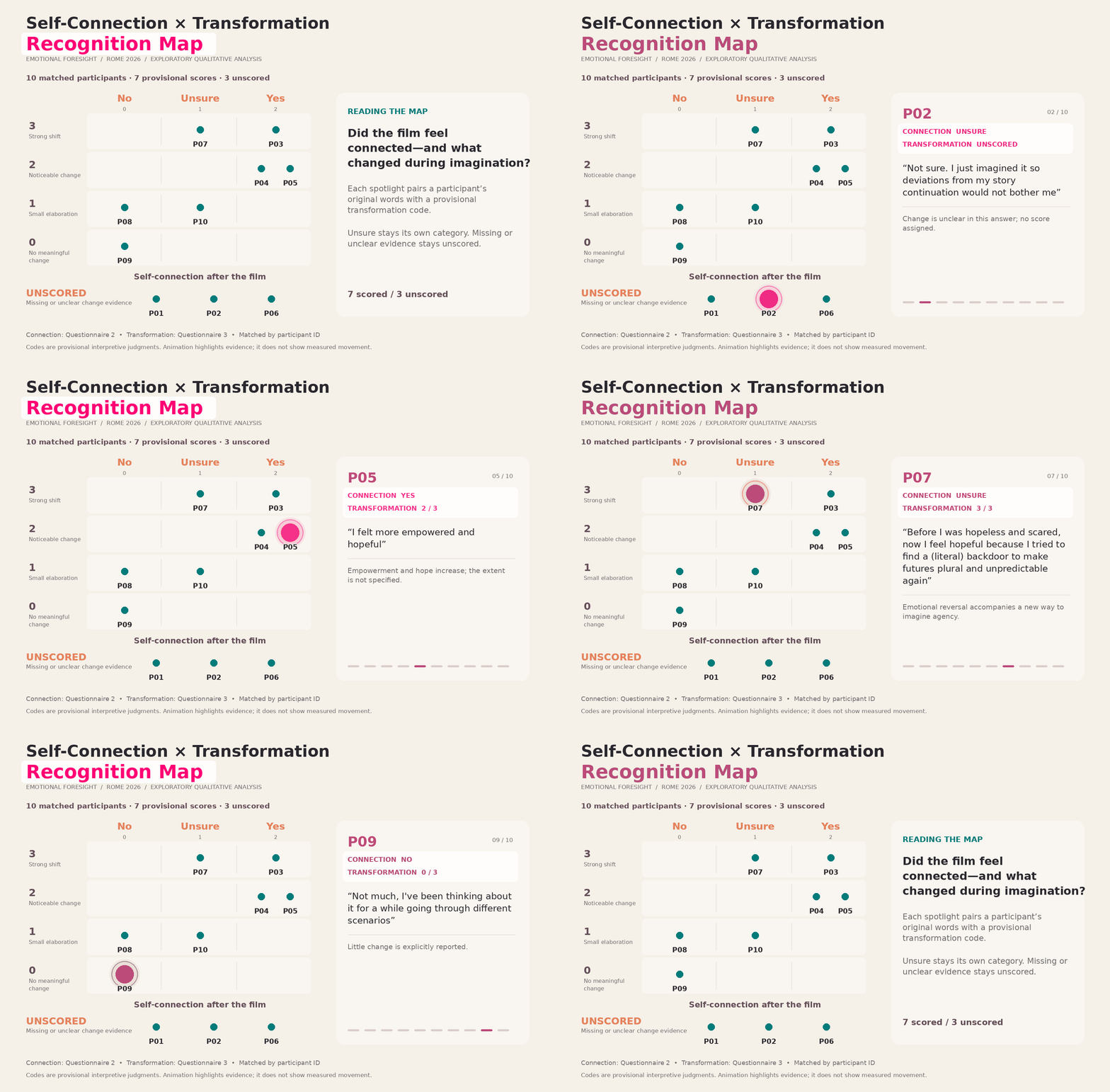
“Before I was hopeless and scared, now I feel hopeful because I tried to find a (literal) backdoor to make futures plural and unpredictable again.”
The backdoor matters. In this account, renewed hope is connected to an imagined opening in a system that had initially felt closed. The participant had introduced a way to act within the scenario.
This gives the experiment a concrete question to pursue: does constructing a continuation change what a person believes is possible, and how does that relate to what they feel?
A change in feeling becomes more informative when we can trace the change in meaning behind it.
The individual trajectories also differ. Some ratings move relatively little; others shift substantially. A group average cannot show all of those differences, and a stable emotional rating does not necessarily mean that nothing changed in a person's interpretation. The maps therefore retain individual responses alongside participants' words.
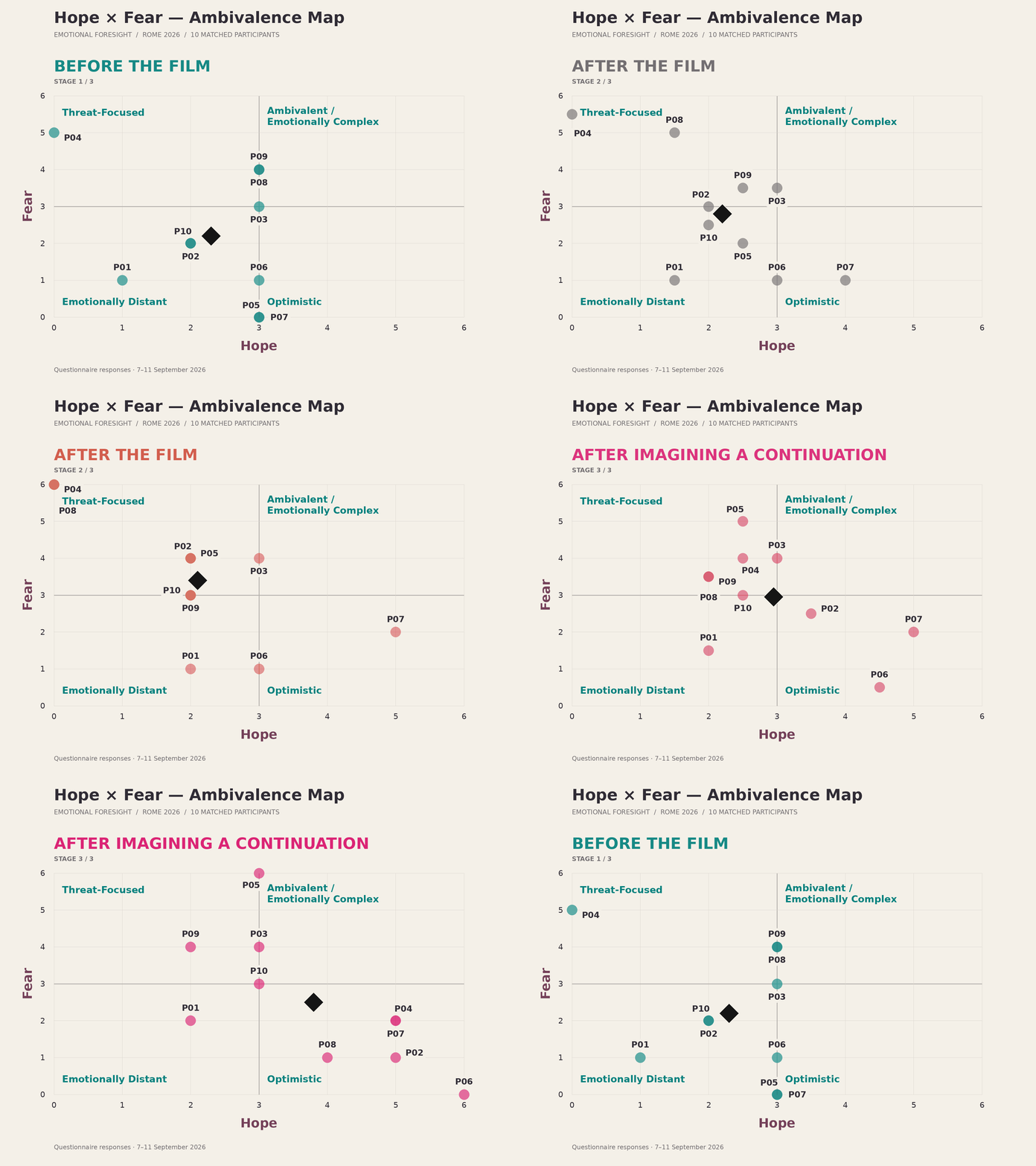
The Ambivalence Map: how do hope and fear move?
The map follows each participant's hope and fear ratings, both on a 0–6 scale, across the three stages. It allows us to examine changes in each emotion separately, including whether hope increases while fear remains present.
Hope can rise without fear disappearing. A single positivity score would miss that distinction.
The quadrant labels are shorthand. Low hope and low fear, labelled “emotionally distant,” cannot establish distance by themselves: someone could still feel strong curiosity or another emotion.
The Recognition Map: what felt personal, and what changed?
This map combines participants' answers to two questions:
--- “Did anything in the film feel connected to you, your life or your own future?”
--- “What, if anything, changed in how you saw or felt about this future while imagining what happened next?”
Self-connection is coded No = 0, Unsure = 1 and Yes = 2. Descriptions of change are manually coded from 0, no meaningful change, to 3, a strong reported shift. Quotations remain attached so readers can examine the interpretation; insufficient or missing responses remain unscored.
Personal connection and change are different dimensions. A future can feel familiar without prompting reconsideration. An unfamiliar future can still change how someone understands their possibilities. The map organises these relationships for discussion; its provisional scores are not a validated measure of psychological transformation.
The Resonance Map: how strongly does this future matter to me?
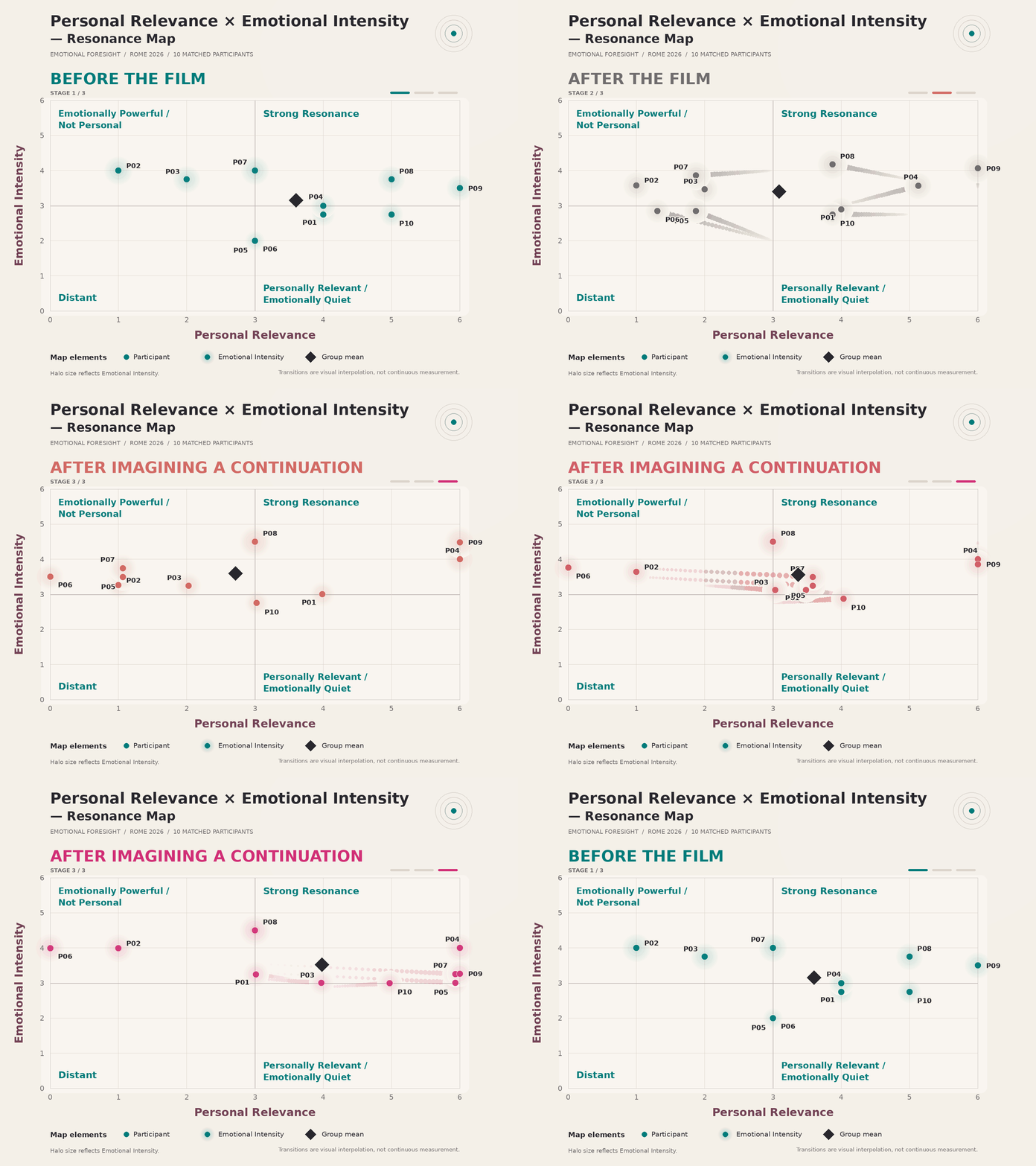
The Resonance Map brings together personal relevance and emotional intensity across the three stages: before the seed film, immediately afterward and after imagining a continuation. It explores whether a future becomes more personally meaningful, more emotionally intense, or both.
A future can move us without feeling like our future.
Viewed together, these dimensions help distinguish a strong emotional reaction from a personally relevant experience. Individual trajectories show how that relationship develops through viewing and imagination. High resonance does not necessarily mean approval: a future can feel deeply relevant and emotionally powerful because it is troubling.
Research connections and limits
The approach connects with Candy and Kornet's ethnographic experiential futures, which links eliciting people's imagined futures, giving them experiential form and examining subsequent responses. Rome uses a shared seed, individual continuations and repeated emotional self-reports within its own sequence. Candy & Kornet, 2019, Turning Foresight Inside Out.
Research on mixed emotions also supports examining positive and negative feelings separately. Larsen, McGraw and Cacioppo investigated the coexistence of happiness and sadness. Although these differ from hope and fear, their work informs the decision to avoid reducing emotional responses to one positive-to-negative score. Larsen, McGraw & Cacioppo, 2001, Can People Feel Happy and Sad at the Same Time?.
These are preliminary observations from ten participants. The design cannot separate the effects of the film, imagination and conversation, or demonstrate lasting changes in agency or decision-making. Participants may also be rating a future they have reinterpreted across stages. Nice and Rome are successive design iterations, not a controlled comparison showing that a seed film works better.
What happens in Rome?
The workshop will bring the ten participants together, with additional conference attendees invited into the discussion. Films based on the continuations will be shown without identifying whose account generated each one.
Will participants recognise their own imagined future? Could someone else's feel closer to them? What changes when an interpretation that seemed obvious is placed beside a different one?
The films introduce another layer of interpretation through their production. Recognition and misrecognition may therefore reveal something about both the original account and its cinematic translation. Additional attendees bring a fresh perspective; their responses will be distinguished from those of participants who completed the individual phase.
The workshop may deepen, complicate or challenge the early observations. Those findings are still to come.
For organisational foresight, the practical question is whether this process can make apparent agreement easier to examine. Teams can share a description of the future while holding different ideas about what they hope to preserve, fear losing and believe they can influence.
Before asking people to agree on a future, it helps to understand what each person believes they are agreeing to.
***** Join Recognizing the Future in the Room at Futures4Europe 2026 in Rome, and bring your interpretation into the experiment.*****
The people behind the experiment
Contributors
Oliver Lauenstein · Federal Ministry of Labour and Social Affairs
Oliver helped sharpen the experiential framing: how film can invite people beyond familiar analytical routines and into a future that feels immediate. Our discussion explored narrative tension and grounded hope, including how difficult futures can still leave room for action.
Richard “Rick” Davies · Independent Evaluation Consultant
Richard contributed an evaluation perspective, encouraging attention to recurring themes, outliers, omissions and the boundaries of participants’ imagination. He also suggested exploring what participants remember afterward, why it matters and whether it influences their actions. His ParEvo approach informed the use of a shared seed and individual continuations.
Sheila Pontis · School of Radical Imagination
Sheila contributed guidance on preparing participants to imagine, making assumptions and self-judgment more visible, and recognising the importance of trust when discussing emotions. She suggested comparing responses before and after the film and helped sharpen the question of what the experiment should enable us to learn.
Participants
With thanks to the ten participants whose imagination and reflections made this experiment possible. Names are presented in a mixed order that does not correspond to the anonymous participant codes P01–P10 used in the maps.
Riel Miller - one of the world's leading independent strategic foresight designers and practitioners
Ângela Antunes — EUDA, Research, Innovation and Foresight team
Jonas Antanavičius — Visionary Analytics
Corelia Baibarac-Duignan — University of Twente
Cristiano Cagnin — ETF
Armando Dal Colletto — Instituto Prospectiva, Inspro
Ania Hildebrandt
Lacramioara Hristache — Eye of Europe project
Katharina Kleine — Bavarian Foresight-Institute
Arianna Mereu — Fondazione IIF, Italian Institute for the Future
Pier Francesco Moretti — CNR-DSSTTA
Special thanks to Pier Francesco Moretti and Luigi Mazari Villanova for helping bring this project to life and connecting me with its participants and contributors. Their support made it possible to turn an initial idea into a shared experiment at Futures4Europe in Rome.
***** WATCH down below the 90-second seed film: PROFILE SOURCE. UNRESOLVED. What do you believe is happening, and what happens next? Bring your interpretation to the workshop in Rome.