Loading...

    sorted by publishing date

    Last Edited: a month ago

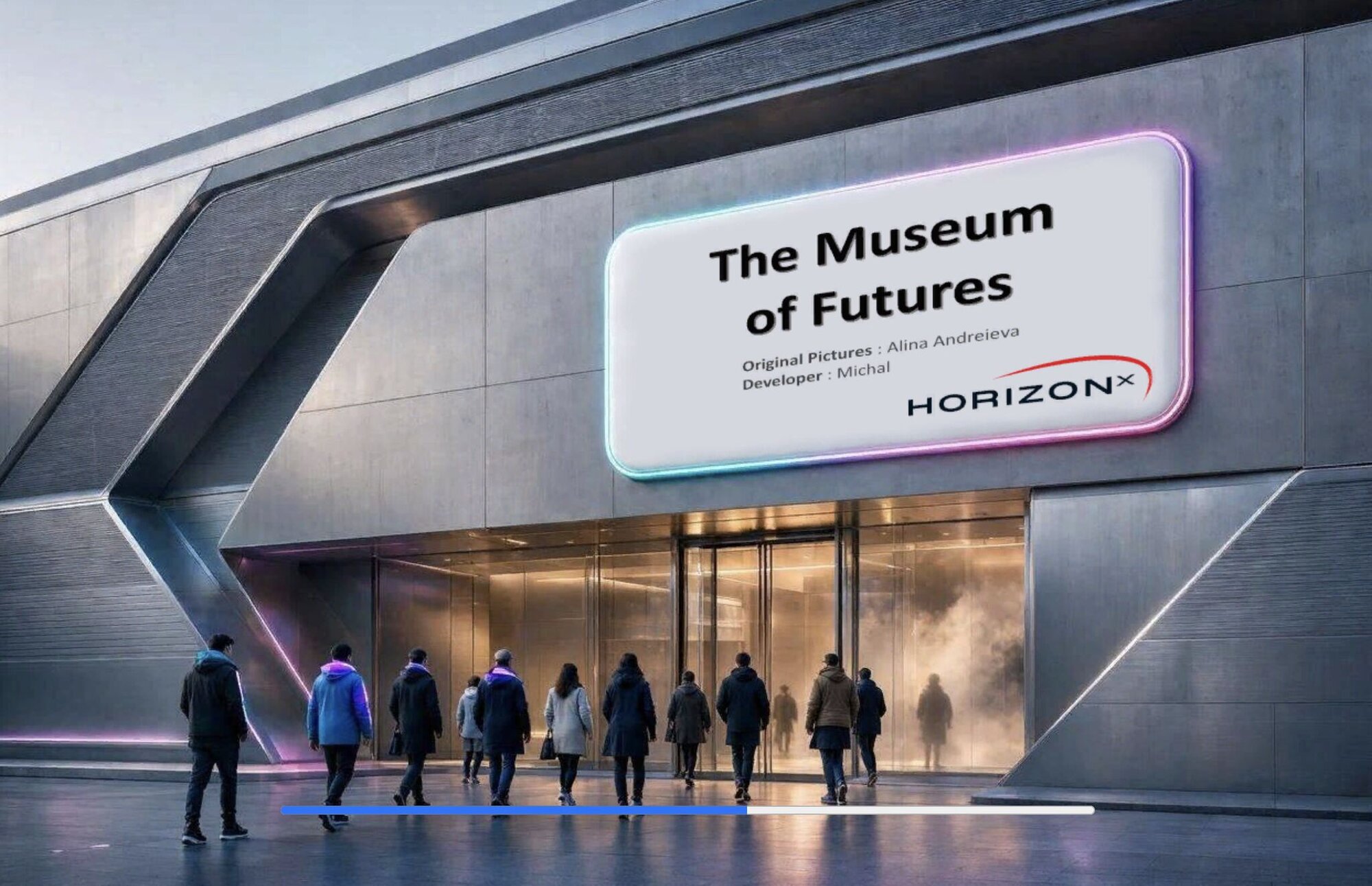
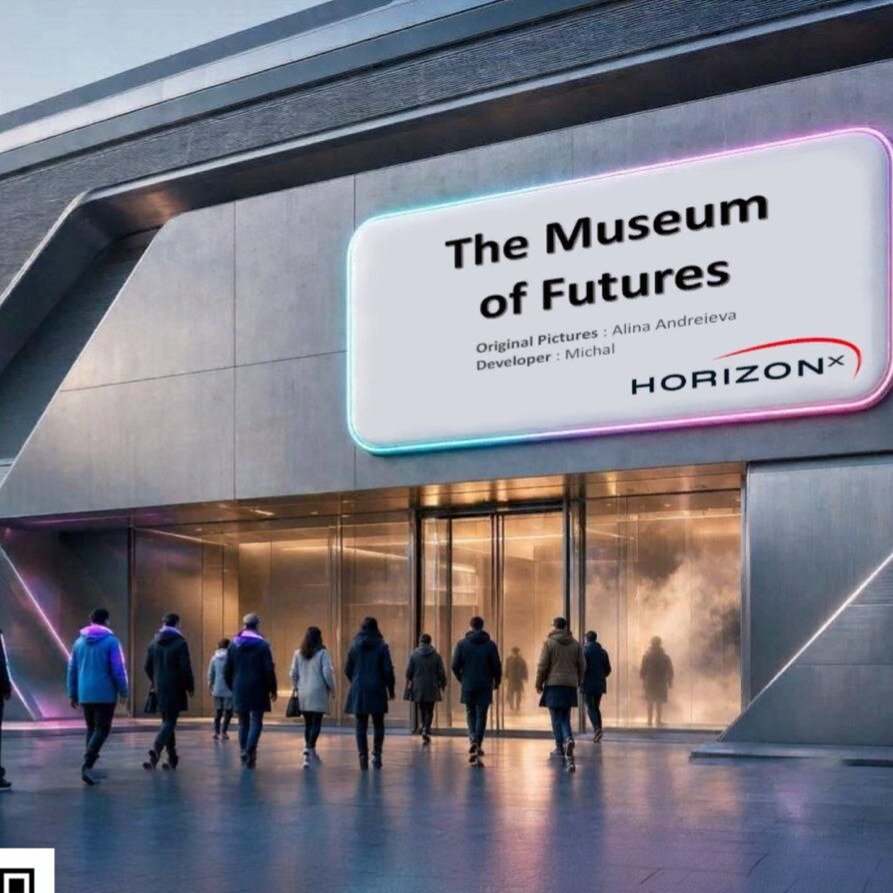
    Museum of Futures Presentation06 October - 06 October 2026

    Presentation and hands-on exploration of the Museum of Futures Forsight and Innovation tool

    Join us for the presentation and hands-on exploration of the Museum of Futures, a tool designed to help people expand their thinking beyond the obvious, notice signals of change, explore uncertainties and imagine alternative futures.

    ​Agenda:

    ​Why we created the Museum of Futures: the idea behind it and the challenge it is designed to address.

    ​Museum tour & demonstration: how the tool works and how it can be used in practice.

    ​Hands-on testing: exploring the Museum and working with its artifacts.

    ​Learn to notice & analyse: What need might have emerged in this future? What driver could have led to it? What uncertainty sits behind it?

    ​Idea generation: together, we’ll explore other ways and contexts in which the Museum could be used.

    Posted on: 02/10/2026

    Last Edited: a month ago

    Sibilla Studio1

    Futures Sensemaking Collective

    Posted on: 30/09/2026

    Last Edited: a month ago

    Makēda Gershenson1

    Building futures and weaving worlds that educators and leaders have yet to imagine

    Posted on: 30/09/2026

    Post Image

    Last Edited: 2 months ago

    Recognizing the Future in the Room @Futures4Europe

    Invitation to join the Emotional Foresight Workshop & Early Insights

    What happens when 10 people encounter the same unfinished future, imagine what comes next, and then meet one another's interpretations?

    At Futures4Europe 2026 in Rome, Recognizing the Future in the Room invites conference attendees to explore this question alongside the participants in an ongoing Emotional Foresight experiment. The workshop will bring short films based on individual continuations into a shared space for viewing, reflection and discussion. 

    You do not need to have taken part in the earlier phase to contribute your perspective.

    This article shares the thinking behind the experiment and its early observations. The next part happens together in Rome.

    Name: Recognizing the Future in the Room, Emotional Foresight through a Group-Based Adaptation of the Resonant Future Self Framework - Iuliana Adina Apostol 

    Where: Sala Marconi

    Date: 30.09.2026

    Time: 17:30

    The same film provides a shared starting point. It does not guarantee a shared future.

    What this experiment examines

    The experiment asks what changes when a person moves from watching a future to imagining how it continues, and then encounters someone else's version. It connects three things: emotional response, interpretation and perceived possibility for action.

    This is the specific role of Emotional Foresight here. Participants encounter a possible future, attend to what it evokes, and explore what happens to that response as they give the future meaning. The analysis follows both their emotional ratings and their explanations of what changed. Hope, fear, uncertainty and resistance all matter; becoming more optimistic is not the criterion for success.

    The pilot develops the Resonant Future Self Framework presented in Vienna in 2025 into a group format. Participants supply the interpretations and continuations that make the collective experiment possible.

    Why begin with a film?

    An earlier pilot at AIMEDIA 2026 in Nice used guided imagination without a seed film. Five researchers took part in individual sessions, then joined fifteen others in a workshop. The twenty researchers spent eight minutes with their eyes closed, listening to meditation music and imagining how it felt to inhabit 2032.

    In the five individual accounts, familiar rooms and work routines predominated. AI appeared explicitly in only one scene. In the workshop accounts, family, homes and personal experiences became more prominent, while AI remained peripheral despite its prominence at the conference. These exploratory observations raised a design question: how can we help people imagine beyond an extension of their present?

    Rome introduces an unfamiliar shared starting point. The seed film’s themes were drawn from responses to a three-minute poll circulated to all conference participants, grounding the scenario in the futures and emotions respondents described. The 90-second seed film, "Profile Source: Unresolved", depicts a world in which people receive periodically updated Future Profiles. Mara discovers that an apparently personal future image is appearing in other people's profiles too. The film ends without explaining why.

    Participants are asked:

    “What do you believe is happening, and what happens next?”

    The film was designed to leave both the explanation and the emotional response open. The anomaly might evoke curiosity, unease, hope or several feelings at once. Participants can question the system, reinterpret what they have seen or introduce a possibility the film leaves unstated. Its imagery and sound still influence interpretation: ambiguity does not make the stimulus neutral.

    Give imagination somewhere unfamiliar to begin, while leaving the meaning open.

    What participants have reported so far

    One participant described a shift from feeling “depressed and scared” to “optimistic and more at ease.” Another reported feeling “more empowered and hopeful.” A third explained what made a different response possible:

    “Before I was hopeless and scared, now I feel hopeful because I tried to find a (literal) backdoor to make futures plural and unpredictable again.”

    The backdoor matters. In this account, renewed hope is connected to an imagined opening in a system that had initially felt closed. The participant had introduced a way to act within the scenario.

    This gives the experiment a concrete question to pursue: does constructing a continuation change what a person believes is possible, and how does that relate to what they feel?

    A change in feeling becomes more informative when we can trace the change in meaning behind it.

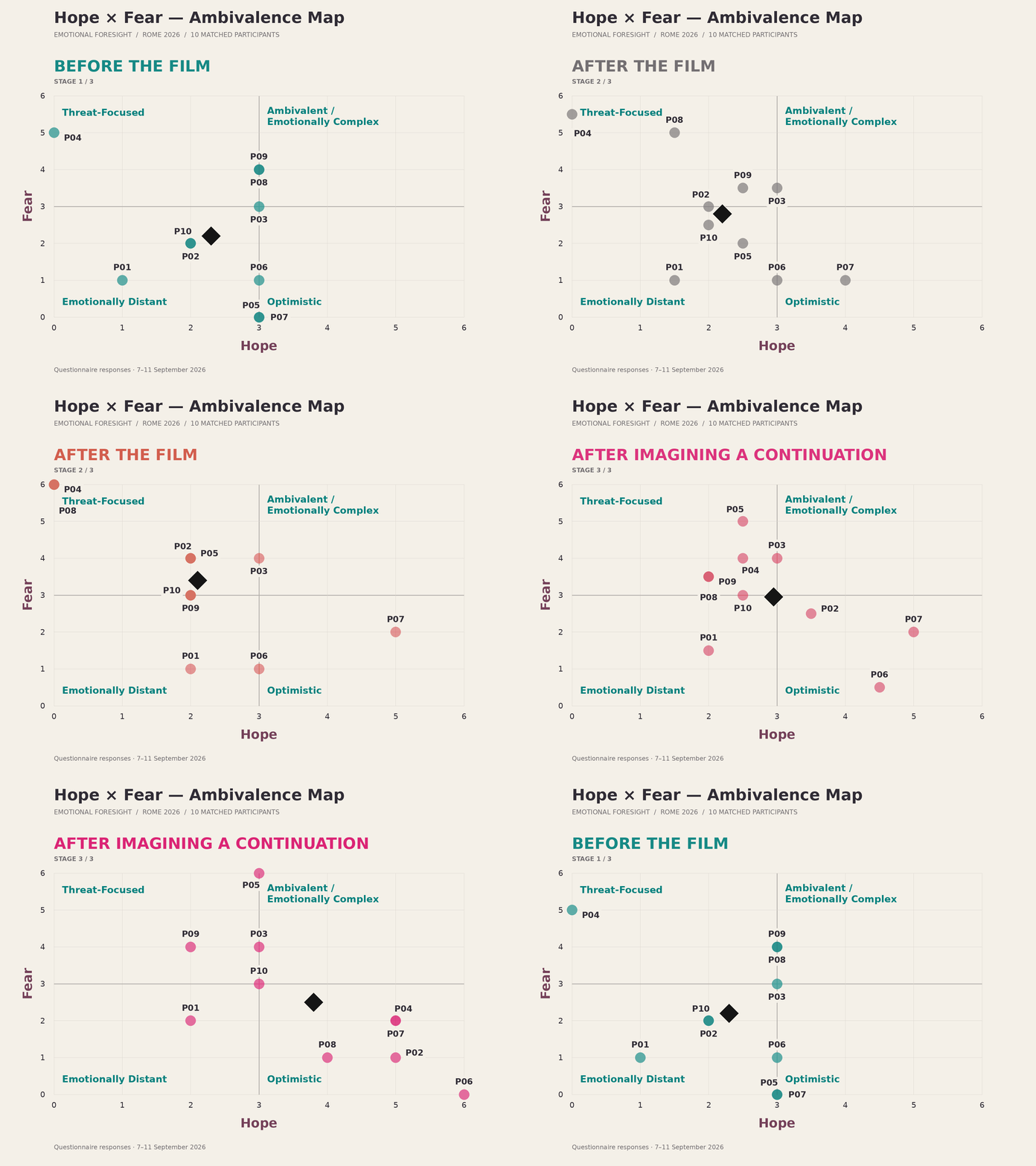
    The individual trajectories also differ. Some ratings move relatively little; others shift substantially. A group average cannot show all of those differences, and a stable emotional rating does not necessarily mean that nothing changed in a person's interpretation. The maps therefore retain individual responses alongside participants' words.

    The Ambivalence Map: how do hope and fear move?

    The map follows each participant's hope and fear ratings, both on a 0–6 scale, across the three stages. It allows us to examine changes in each emotion separately, including whether hope increases while fear remains present.

    Hope can rise without fear disappearing. A single positivity score would miss that distinction.

    The quadrant labels are shorthand. Low hope and low fear, labelled “emotionally distant,” cannot establish distance by themselves: someone could still feel strong curiosity or another emotion.

    Posted on: 14/09/2026

    Last Edited: 3 months ago

    Walk the Futures – entdecke vier mögliche Zukünfte für Innsbruck im Zeichen des Klimawandels21 August - 21 August 2026

    Begleite uns auf einem geführten Walkshop (👣Spaziergang + Workshop) durch Innsbruck und erlebe vier mögliche Klimazukünfte für deine Stadt.

    Gemeinsam tauchen wir ins Jahr 2056 ein, probieren Speisen aus der Zukunft, riechen die Düfte der Altstadt und lesen die Schlagzeilen von morgen – mithilfe von Geschichten und multisensorischen Objekten aus möglichen Zukünften.

    Freu dich auf einen Spaziergang durch die Stadt, Zeit zum Nachdenken, gute Gespräche, ein gemeinsames Essen (), einen kreativen Workshop – und vielleicht auf einen neuen Blick auf das, was vor uns liegt.

    📅 August 21
    🕛 8h30-14h30
    📍 Rennweg, Innsbruck (in der Nähe des ORF)
    🔗 Mehr Infos & kostenlose Anmeldung hier: https://walkthefutures.org/innsbruck/

    Du brauchst kein Vorwissen. Bring einfach deine Neugier mit.

    Die Veranstaltung steht allen offen, die mindestens 18 Jahre alt sind, in Innsbruck leben oder arbeiten und keine Vollzeitstudierenden sind. Die Teilnahme ist kostenlos und findet im Rahmen einer Pilotstudie statt (endet im Oktober 2026).

    Weitere Informationen:
    Besuche www.walkthefutures.org oder schreib eine E-Mail an Zukunftsforscherin Suzanne Whitby unter hi@walkthefutures.org. 

    Posted on: 13/08/2026

    Last Edited: 3 months ago

    Walk the Futures – entdecke vier mögliche Zukünfte für Innsbruck im Zeichen des Klimawandels08 September - 08 September 2026

    Begleite uns auf einem geführten Walkshop (👣Spaziergang + Workshop) durch Innsbruck und erlebe vier mögliche Klimazukünfte für deine Stadt.

    Gemeinsam tauchen wir ins Jahr 2056 ein, probieren Speisen aus der Zukunft, riechen die Düfte der Altstadt und lesen die Schlagzeilen von morgen – mithilfe von Geschichten und multisensorischen Objekten aus möglichen Zukünften.

    Freu dich auf einen Spaziergang durch die Stadt, Zeit zum Nachdenken, gute Gespräche, ein gemeinsames Essen (), einen kreativen Workshop – und vielleicht auf einen neuen Blick auf das, was vor uns liegt.

    📅 September 8
    🕛 8h30-14h30
    📍 Rennweg, Innsbruck (in der Nähe des ORF)
    🔗 Mehr Infos & kostenlose Anmeldung hier: https://walkthefutures.org/innsbruck/

    Du brauchst kein Vorwissen. Bring einfach deine Neugier mit.

    Die Veranstaltung steht allen offen, die mindestens 18 Jahre alt sind, in Innsbruck leben oder arbeiten und keine Vollzeitstudierenden sind. Die Teilnahme ist kostenlos und findet im Rahmen einer Pilotstudie statt (endet im Oktober 2026).

    Weitere Informationen:
    Besuche www.walkthefutures.org oder schreib eine E-Mail an Zukunftsforscherin Suzanne Whitby unter hi@walkthefutures.org .

    Posted on: 13/08/2026

    Last Edited: 3 months ago

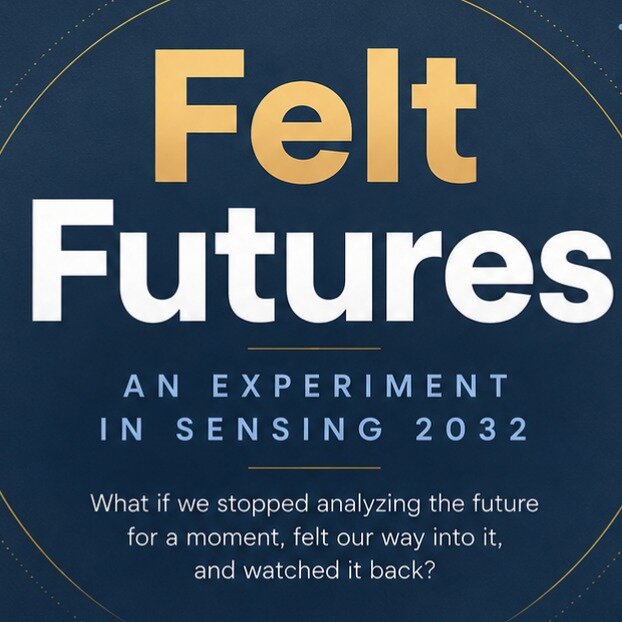
    Felt Futures1April 2026 - July 2026

    An Experiment in Sensing 2032

    Concept & facilitation: Iuliana Adina Apostol 

    AIMEDIA 2026 - The Second International Conference on AI-based Media Innovation 

    Nice, 5–9 July 2026 

    part of IARIA - International Academy, Research, and Industry Association


    Felt Futures is an experiential foresight project taking place at AIMEDIA 2026, the Second International Conference on AI-based Media Innovation, in Nice, France in July 2026. It begins from a proposition most foresight leaves untouched: a future is not only something a team analyses, but something they can be brought to feel — in the body, in the present tense — before the analysis begins.


    Conventional foresight maps the terrain. It produces scenarios, trends and probabilities, and tells a group what is plausible. What it rarely settles is whether anyone in the room recognises themselves in the future being described. Teams routinely assemble an intellectualised future — mapped, weighted, argued — that no one actually inhabits, and then wonder why it fails to move them. The gap between an abstract projection and a future as it is felt from the inside is what Experiential Futures scholarship calls the experiential gulf. Felt Futures is an attempt to work directly in that gap.


    Method. The project applies an adapted version of the Resonant Future Self Framework (RFSF), a facilitated protocol that guides a participant into a present-tense, sensory inhabitation of an ordinary working day in 2032 — not a forecast of it. Across five positions, the session moves from a temporal warm-up into the texture of the day itself, the relational field of who else is present, the threshold of what in the 2026 self is no longer recognised, and finally a single sentence sent from 2032 back to now. The wager is that a vividly simulated future runs on much the same emotional and physiological circuitry as a real one, so that a person — and, in application, a team — can try a future on at the level of sensation rather than argument.

    Two capacities are easily collapsed into one. Affective foresight is the anticipatory projection of a future emotional state: a reading, made now, of how a coming situation is likely to feel. It works predictively, which is why it inherits the fragilities catalogued in the affective-forecasting literature — we overestimate intensity and duration, and we fixate on the triggering event while the rest of life fades from view. Emotional foresight, as I use it, works on the near side of the same process. Here the affect is generated in the present through simulation and registered in the body: a felt state produced now, and treated as evidence about the future it belongs to. Affective foresight estimates a future feeling; emotional foresight elicits one. RFSF operates entirely in the second register.


    This is deliberately not affective forecasting, the well-documented and error-prone act of predicting how one will feel later. The relevant construct is affective episodic future thinking, or pre-experiencing: generating a genuine present affective response through simulation, rather than a cold estimate of a distant one. The distinction is what keeps the method out of reach of the classic "impact bias" critique — the claim here is about present elicitation, not predictive accuracy. It also has a current mechanistic basis: under predictive accounts of emotion, affect is constructed partly from the brain's reading of internal bodily signals, which is why the felt channel carries information an analytical read-out skips.


    Lineage. Felt Futures does not claim to invent this terrain; it stands on it and says so. Its overall arc — interview participants about their felt futures, mediate the material into concrete artefacts, and show it back to a wider audience — independently reconstructs the Ethnographic Experiential Futures cycle described by Candy and Kornet, within the broader Experiential Futures tradition developed by Candy and Dunagan. What RFSF contributes is a tightened five-position protocol and, because the setting is a media-innovation conference, a specific role for AI-generated film and sound: here they are treated as part of the method, not merely its output — a way to reach senses and emotions that pure analysis passes over.


    The pilot. Ahead of the conference, a first phase of individual sessions brings together five participants from different fields and countries: 

    Prof. Dr. Stephan Böhm (RheinMain University of Applied Sciences),

    Prof. Dr. Petra Ahrweiler (TISSS Lab, JGU Mainz), 

    Prof. Dr. Matthias Harter (Hochschule RheinMain), 

    Prof. Dr. Júlio Monteiro Teixeira (UFSC, Brazil), and 

    Dr. Andy Banburski-Fahey (OCTO & MSR Deep Learning, Microsoft). 

    They are deliberately not a leadership team. Comparing the felt futures of five people who share no company, no decision and no stake in the same outcome is the harder case; a team that already shares context stops looking like the difficult part.


    On site, and what follows. The centrepiece takes place in person in Nice, where the group convenes — original participants plus new voices — to work through where their felt futures converge, diverge, or do not match at all. As a pilot (n = 5), its outputs are provisional interpretive instruments, not measurements: the affective maps drawn across participants encode ordering and resemblance, not coordinates, and any applied use is aggregate and anonymised by design. Findings from the Nice sessions will be reported in a second contribution.

    Results to follow.

    References
    Barrett & Simmons (2015) — Nature Reviews Neuroscience 16(7), 419–429
    https://doi.org/10.1038/nrn3950

    Candy (2010) — dissertation, The Futures of Everyday Life
    https://doi.org/10.13140/RG.2.1.1840.0248

    Candy & Dunagan (2017) — Futures 86, 136–153
    https://doi.org/10.1016/j.futures.2016.05.006

    Candy & Kornet (2019) — Journal of Futures Studies 23(3), 3–22 (open access)
    https://jfsdigital.org/articles-and-essays/vol-23-no-3-march-2019/turning-foresight-inside-out-an-introduction-to-ethnographic-experiential-futures/

    Moeck, Grewal, Mehta, Greenaway, Koval & Kalokerinos (2026) — Affective Science
    https://doi.org/10.1007/s42761-026-00364-x

    Schacter, Kalinowski & Wilson (2025) — Cerebral Cortex 35(1), 77–83
    https://doi.org/10.1093/cercor/bhae388

    Schreiber, Schneider, Newen & Voigt (2024) — Emotion 24(6), 1481–1493
    https://doi.org/10.1037/emo0001345

    Wilson & Gilbert (2005) — Current Directions in Psychological Science 14(3), 131–134
    https://doi.org/10.1111/j.0963-7214.2005.00355.x — free PDF: https://dtg.sites.fas.harvard.edu/WILSON%20&%20GILBERT%20(2005).pdf
    Posted on: 02/07/2026

    Last Edited: 5 months ago

    Adina-Iuliana Deacu1

    Environmental Psychologist and Social Entrepreneur building alternative futures through actions today | 80% practitioner, 20% mentor

    Posted on: 18/06/2026

    Last Edited: a year ago

    Accreditation Services1

    Foresight Programs and Courses

    The World Futures Studies Federation offers its standards to institutions interested in achieving accreditation in futures studies. Institutions offering programmes which meet the Federation’s standards will be credentialed as an Accredited Foresight Programme. Accreditation will extend for a period of five (5) years. Review of accreditation will be available every five (5) years to ensure programmes continue to maintain high quality standards of the Federation.


    We provide accreditation only to education providers that have been recognized by the relevant department or ministry of education in their country as a tertiary education provider.

    How To Apply: https://wfsf.org/accreditation-services/ 

    Posted on: 11/09/2025

    Last Edited: a year ago

    Dr. Matthew J. Spaniol1

    Senior Researcher at Roskilde University

    Posted on: 28/05/2025

    Last Edited: a year ago

    Travis Kupp1

    Navigating Complexity

    Posted on: 13/05/2025

    Last Edited: a year ago

    Pedro de Senna1

    Performance for Futures

    Posted on: 16/04/2025

    Last Edited: a year ago

    Aaron B. Rosa1

    a tagline to remember

    Posted on: 06/02/2025

    Last Edited: a year ago

    Wenzel Mehnert1

    The future ain't what it used to be.

    Posted on: 29/01/2025

    Last Edited: a year ago

    FLOW1December 2022 - November 2024

    Future Lives with Oceans and Waters

    Humans establish highly diverse and situated relationships with nature. Over generations, these human-nature relations transform dynamically. In doing so, future imaginaries, expectations and visions accompany our commitment to, action in and representation of nature. Genres such as climate fiction and practices such as ocean clean-ups provide insights into (re-)emerging social, cultural and emotional connections between people and nature.

    Future Lives with Oceans and Waters (FLOW) looks forward and explores changing human-nature relationships in the context of aquatic ecosystems. The transdisciplinary project brings together foresight, research on socio-ecological interactions, marine science and natural resource management with young people from across Europe. FLOW aims to create new knowledge and connections to reinforce a new perception of the importance of aquatic ecosystems in the Anthropocene. To do so, the project combines horizon scanning, ethnographic fieldwork, experiential futures workshops and co-creation in an innovative way. As a Research and Innovation Action, FLOW supports the Restore Our Oceans Mission of the EU.

    Posted on: 20/12/2024