Facing uncertainty around climate change, AI, and job security, youth in Vietnam took part in two foresight workshops where they explored future trends, used strategic tools, and built skills to respond to challenges and shape long-term solutions.
Why Futures Thinking Skills Matter for the Youth in Vietnam
Young people across Vietnam and Southeast Asia are navigating a future shaped by climate change, environmental degradation, and the rapid rise of automation and AI. Many are concerned about job security and feel uncertain about what lies ahead. There’s also a growing sense of mistrust toward institutions and doubts about whether a sustainable and just future is truly being safeguarded. In the face of these realities, learning how to think strategically about the future - and take action - is becoming an essential skillset for youth.
Exploring the Future Through Youth Collaboration & Foresight
With the support of the European Commission, the EU Delegation in Vietnam organised two online foresight workshops for the Vietnam Youth Advisory Board (VYAB). The sessions were held in September 2024 and each session lasted 1.5 hours, tailored to the participants’ availability across time zones.
The workshops brought together young people from VYAB and participants from neighboring countries to explore how futures thinking could help youth shape Southeast Asia’s future, especially around three EU priorities: the digital and circular economy, responsible entrepreneurship, and governance.
Using the Youth4Foresight toolkit, participants engaged in interactive sessions via Miro, an online collaboration tool that was well received. The energy was high, especially as youth connected across the region and from different professional backgrounds to share ideas and build new perspectives.
Tools to Shift Mindsets and Spark Ideas
To kick off, participants explored three warm-up exercises: imagining the world in 2050, rating uncertainties about the future, and identifying trends likely to shape the region. These activities encouraged reflection and helped shift thinking from the present to long-term possibilities. The future holds many paths, but once we begin to recognize them and take action, we can shape those possibilities into something better.
From Trends to Actions
The workshops introduced two main foresight tools: the Futures Wheel and 3 Horizons.
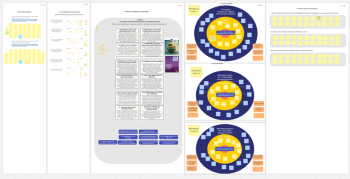
With the Futures Wheel, participants mapped the ripple effects of trends like digital transition, shifting global power dynamics, and resource scarcity. This helped them understand how one change could lead to another, revealing both risks and opportunities for regional action.
The 3 Horizons exercise invited participants to reflect on current realities, imagine more desirable futures, and propose ways to get there. Working in teams based on EU priorities, they turned broad visions into concrete ideas and short-term actions.
Shared Futures, Shared Responsibility: A Key Takeaway
Futures thinking proved to be a powerful tool in times of uncertainty. It allowed participants to think more strategically, adaptively, and collaboratively. As they described: "It gave structure to our ideas. We felt more in control of shaping what’s next."
One of the strongest takeaways was the value of working together. By sharing ideas across the region and professional backgrounds, participants saw how collective thinking leads to more creative, inclusive, and actionable outcomes. It’s not just about imagining what’s coming - it’s about imagining it together.
Youth left the workshops with stronger skills, renewed motivation, and a clearer sense of how they can lead change in their communities and beyond.
Check out the toolkit and start building your future-thinking muscles!