Last Edited: 9 days ago
Evaldo Costa1
Posted on: 26/10/2026
sorted by publishing date
Last Edited: a month ago
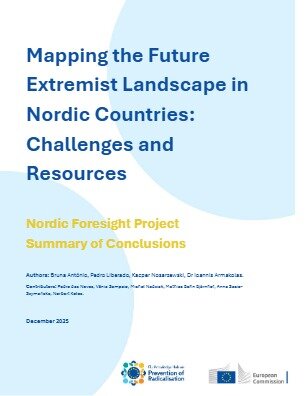
Violent radicalisation and extremism are constantly evolving phenomena, significantly shaped by developments in the wider society in which they emerge. In recent years, this evolution has accelerated considerably. We are witnessing a shift from radicalisation centred primarily around ideologies towards increasingly diverse and hybridised forms of individualised radicalisation, in which ideological boundaries have become increasingly blurred. These developments are strongly influenced, on the one hand, by global conflicts and, on the other, by locally experienced grievances and perceived injustices—often simultaneously.
This transformation has created new conditions for the emergence and spread of extremist ideas, while making it increasingly difficult to identify individuals at risk of radicalisation, as well as the issues and narratives that may rapidly and sometimes unexpectedly encourage or inspire engagement in violent extremist activity. This evolving landscape presents a significant challenge to the prevention of violent extremism and further underlines the importance of foresight.
Posted on: 07/10/2026
Last Edited: a month ago
The EU Knowledge Hub on Prevention of Radicalisation’s first strategic foresight study, commissioned by Denmark, Finland, Sweden, and Norway, examines evolving regional threats, ranging from declining public trust to exclusionary rhetoric. By applying scenario planning, this foundational report provides policymakers and practitioners with actionable tools to strengthen democratic resilience and cross-border prevention strategies.
Posted on: 07/10/2026
Last Edited: a month ago
Posted on: 29/09/2026
Last Edited: 6 months ago
Posted on: 21/04/2026
Last Edited: 7 months ago
Posted on: 22/03/2026
Last Edited: 10 months ago
Posted on: 11/01/2026
Last Edited: a year ago
The World Futures Studies Federation offers its standards to institutions interested in achieving accreditation in futures studies. Institutions offering programmes which meet the Federation’s standards will be credentialed as an Accredited Foresight Programme. Accreditation will extend for a period of five (5) years. Review of accreditation will be available every five (5) years to ensure programmes continue to maintain high quality standards of the Federation.
We provide accreditation only to education providers that have been recognized by the relevant department or ministry of education in their country as a tertiary education provider.
How To Apply: https://wfsf.org/accreditation-services/
Posted on: 11/09/2025
Last Edited: a year ago
What was the challenge?
The Research Council of Norway (RCN) identified five strategic areas in pursuit of ground-breaking research, radical innovation and sustainable development. RCN required a robust evidence base to help develop long-term, priority missions to help solve one or more societal challenges, as well as underpinning structural measures of the research environment in Norway. The five strategic areas include: Oceans; Green transition; Health and welfare; Cohesion and globalisation; and Technology and digitalisation.
How did we approach it?
We adopted a mixed method, participatory approach involving a variety of research tools such as trend analyses, literature reviews, stakeholder interviews, focus groups, crowdsourcing ideas from experts, a survey of the public, future scenario analyses and workshops.
The core foresight work allowed us to examine what might happen in the next ten years in the different strategic areas and wider R&I system in Norway. Scenarios of future states were used as the basis for workshop discussions to stress test potential missions and structural measures that the RCN could consider developing and implementing in the future.
What was the outcome or impact of the work?
Extensive findings from this research were published in a series of nine reports. The research was cited as evidence in the RCN’s input to the 2022 revision of the Long-Term Plan for Research and Higher Education 2019–2028, which specifies the Norwegian government’s ambitions, key objectives and priority areas for research and higher education.
The study also helped inform the RCN’s internal decision making, strategies and organisational activities. In addition, a summary of the findings and proposals was presented to the relevant Norwegian minister.
Project webpage: https://www.rand.org/randeurope/research/projects/2021/future-research-innovation-norway.html
Research outputs:
Posted on: 18/06/2025
Last Edited: a year ago
Posted on: 28/05/2025
Last Edited: a year ago
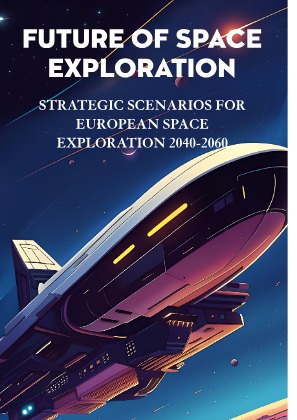
To discern the trends that will influence space exploration in the long term, the European Space Policy Institute (ESPI) and the Copenhagen Institute for Future Studies (CIFS) collaboratively conducted a foresight analysis on the Future of Space Exploration in Europe between 2040-2060.
The study delineates four scenarios for the long-term future of space exploration, emphasizing the critical uncertainties and forces that will shape its trajectory and underscore its significance. As the future of European space exploration is anticipated to incorporate elements from each of these scenarios, strategic foresight is essential for current decision-making that aspires to be alert, enduring and forward-thinking.
Source: ESPI - Home- Reports
Posted on: 30/04/2025